


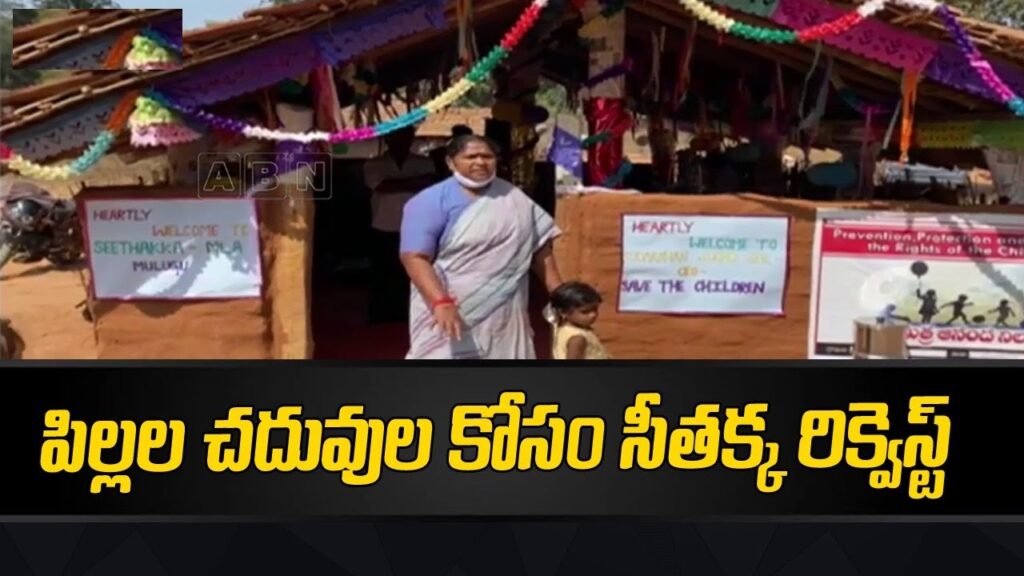
The importance of student nutrition has been a hot topic in educational reforms, and Telangana’s minister Danasari Anasuya, also known as Seethakka, is making a compelling case for the introduction of a school breakfast scheme. This initiative, modeled after the successful mid-day meals programme, could significantly improve both student attendance and their overall nutritional health. In a recent address at a conclave in Agra, organized by the departments of Social Justice and Empowerment and Empowerment of Persons with Disabilities, Seethakka passionately advocated for this much-needed reform.
The Need for a Breakfast Scheme in Schools
Seethakka emphasized that many students, particularly those attending government schools, come from economically disadvantaged backgrounds. These students often arrive at school without having eaten breakfast, which is a crucial meal for mental focus and energy. This situation leads to poor concentration and diminished learning capabilities throughout the day. By providing breakfast, schools could improve student attendance and academic performance.
“Government school students, many from poor families, come to school hungry. Ensuring they have breakfast will not only increase their attendance but will also help them focus better in class, which will lead to better learning outcomes,” Seethakka stated.
Nutritional Impact and Academic Benefits
Numerous studies show a direct correlation between proper nutrition and student performance. Providing breakfast ensures that students start their day with the necessary energy to engage actively in their education. Nutritional interventions like this could lead to:
- Enhanced concentration: Students who eat breakfast are more alert, improving their ability to absorb and retain information.
- Increased attendance: Students may be more likely to attend school regularly if they know a meal is provided.
- Higher academic success: Nutritional programs have been linked to improved scores in reading and mathematics.
Mid-Day Meals Programme: A Proven Success
India’s mid-day meals programme has already shown its effectiveness in increasing school enrollment, reducing absenteeism, and improving nutritional levels among students. Implementing a similar breakfast scheme would provide children with two essential meals during the school day, covering both their morning and afternoon nutritional needs.
Seethakka believes that such a program could be rolled out nationwide, starting in regions with high poverty rates and low school attendance. Nutritional security is essential for building a brighter future for children, and a breakfast scheme would take India’s educational system one step closer to achieving this goal.
Expanding Healthcare in Rural Areas: The Mulugu Model
In addition to her push for the breakfast scheme, Seethakka highlighted the success of an innovative healthcare solution that has been implemented in the Mulugu district. This district, located in a remote part of Telangana, faced challenges in providing primary healthcare services to its residents due to poor infrastructure and accessibility issues. To tackle this, the government introduced a small hospital housed in a container.
“The container hospital has been a game changer in Mulugu. It offers primary healthcare in an area where traditional brick-and-mortar hospitals are difficult to build due to geographic constraints,” Seethakka said.
Scaling the Container Hospital Model
Given the success of the container hospital in Mulugu, Seethakka called for this model to be replicated in other remote and rural areas across India. By doing so, the government could provide primary healthcare services to underserved communities that currently lack access to essential medical care. This innovative approach could be particularly effective in addressing healthcare disparities in India’s rural regions, where residents often struggle to find proper medical treatment.
The container hospital concept offers several advantages:
- Low cost: Compared to building traditional hospitals, setting up a container hospital is significantly cheaper and faster.
- Portability: These hospitals can be easily transported and set up in remote areas.
- Immediate access to care: With basic medical equipment and staff, they can address common health concerns and offer critical services like vaccinations, maternal care, and emergency first aid.
Urging for Expansion of the National Maternity Benefit Scheme
Seethakka’s efforts to support vulnerable populations didn’t stop at nutrition and healthcare. She also urged the Centre to extend the National Maternity Benefit Scheme to include women who are expecting their second child. Currently, the scheme provides a financial aid of Rs 6,000 to pregnant women from poor families, but it is limited to their first child.
“This benefit needs to be extended to the second child. Many women from impoverished backgrounds have multiple children and struggle to make ends meet. Extending this scheme would provide much-needed support for these families,” Seethakka argued.
Importance of Expanding Maternity Support
The National Maternity Benefit Scheme plays a crucial role in ensuring that women from poor families receive financial support during pregnancy. Extending this benefit to cover the second child would have far-reaching benefits:
- Improved maternal health: Financial support can reduce stress and help women access better healthcare services during pregnancy.
- Better infant care: The additional support can be used to provide essential care and nutrition for newborns.
- Economic relief for poor families: Extending the scheme helps alleviate some of the financial burdens that come with raising multiple children in economically disadvantaged households.
The Path Forward: A Call to Action
Seethakka’s passionate plea to the Central Government reflects a deep commitment to addressing the interconnected issues of education, nutrition, and healthcare in India. Her call for the implementation of a school breakfast scheme, the expansion of rural healthcare through container hospitals, and the extension of the National Maternity Benefit Scheme for the second child represents a comprehensive strategy to uplift marginalized communities.
For India to truly prosper, it must invest in the well-being of its future generations. The introduction of a breakfast scheme in schools and the replication of successful healthcare models like the container hospital would represent significant steps toward a more inclusive and equitable society. It is now up to the government to heed Seethakka’s call and take decisive action to create a brighter, healthier future for all.
Conclusion
By advocating for these essential reforms, Seethakka is not just addressing the immediate needs of the present but is laying the foundation for long-term social and economic improvements. Her proposals, if adopted by the Centre, could help bridge the gap between the privileged and the underprivileged, ensuring that every child and family in India has the opportunity to thrive. The future of India’s educational and healthcare systems depends on such forward-thinking initiatives.