


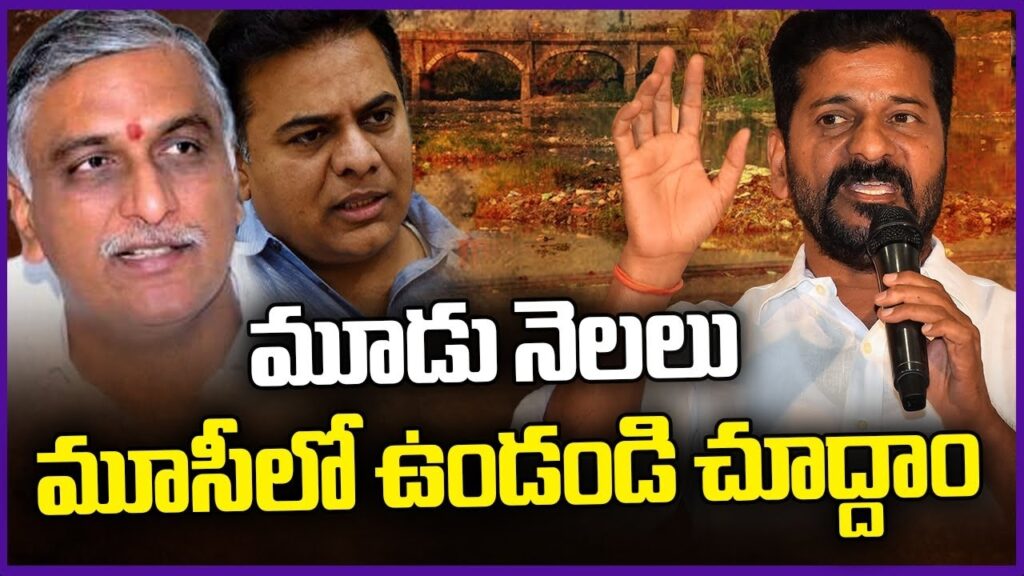
Telangana Chief Minister A. Revanth Reddy has passionately defended the Musi Riverfront Development project, emphasizing that it is aimed at rejuvenating the river, not just beautifying it. During a press conference on October 17, the Chief Minister responded to opposition parties, accusing them of hindering a project designed to improve the lives of those living along the polluted Musi River. His remarks shed light on the scale and importance of the initiative and highlighted the challenges the government is facing from political opponents.
A Unique Riverfront in the Heart of Telangana’s Capital
Chief Minister Revanth Reddy pointed out the unique geographical advantage Hyderabad enjoys due to the Musi River flowing through its center, a rare feature among Indian state capitals. The river, stretching over 300 kilometers, has deep historical significance, and the project aims to restore its former glory. However, the project has been met with resistance from various political quarters, most notably from leaders of the Bharat Rashtra Samithi (BRS) and the Bharatiya Janata Party (BJP).
Opposition Criticism and Government Response
Opposition leaders, including KT Rama Rao, Harish Rao, and BJP MP Eatala Rajender, have raised concerns about the project’s feasibility and its cost. Some have suggested that the project might cost as much as ₹1.50 lakh crore. However, Revanth Reddy was quick to dismiss these claims, accusing his critics of trying to obstruct progress. He issued a challenge to these leaders, asking them to live by the Musi River for three months if they truly believe the project is unnecessary.
“If you stay by the Musi for three months, I will scrap the project and bear all legal expenses for this tender,” Reddy declared.
Clarifying Financial Misconceptions
The Chief Minister directly addressed claims regarding the project’s financial burden, particularly the opposition’s assertion that it would cost ₹1.50 lakh crore. Reddy clarified that the government has only allocated ₹141 crore for the preparation of a Detailed Project Report (DPR), which includes the revival, cost estimates, and fund mobilization for the Musi Riverfront project. He emphasized that a consortium of five companies has been selected to prepare the DPR, with plans to submit their findings within 18 months.
He stated that 33 teams visited the communities along the Musi River to study the living conditions, discovering that many residents are living in squalor. The project’s primary goal, he stressed, is to rehabilitate these people and provide them with better living conditions.
Rehabilitating Communities Along the Musi River
The Musi Riverfront project is not just about urban development. It is also aimed at improving the quality of life for those residing along the river. More than 1,600 houses located directly in the riverbed have already been identified for relocation. The government has sanctioned new homes for these families and provided financial assistance to help them transition. Additionally, around 10,000 families living in the buffer zone of the Musi will be rehabilitated, ensuring that the project benefits a broad swath of the population.
Reddy highlighted how the previous government, led by BRS, forcibly relocated people for the construction of projects like the Mallanna Sagar and Kondapochamma reservoirs without providing them with adequate support. In contrast, he promised that the current project would focus on ensuring proper resettlement and support for those affected.
Political Tensions Over the Musi River Project
The opposition to the Musi project appears to be rooted in broader political dynamics. Revanth Reddy accused leaders of the previous government of plundering Telangana’s resources during their time in power, describing them as “bandits.” He suggested that their opposition to the Musi project was a result of their bitterness after losing power. Reddy also claimed that their criticisms were filled with “poison,” which he said was more harmful than the pollution in the Musi River itself.
Reddy further stated that a special session of the state Assembly would be convened to discuss the Musi Riverfront Development project. He invited opposition leaders from the BRS, BJP, and other parties to present their concerns and suggestions in writing, expressing the government’s willingness to address their doubts. He also encouraged them to submit an action plan by the upcoming Saturday to move the project forward collaboratively.
The Future of Hyderabad’s Musi River
The Musi River project is undeniably ambitious. Spanning one kilometer on both sides of the river, the project plans include expressways, walkways, cycling tracks, parks, plazas, and architectural landmarks inspired by global designs. The Telangana Congress government, under Revanth Reddy’s leadership, envisions this project transforming a 110 square kilometer area into a world-class growth center.
However, public skepticism has grown due to the potential displacement of residents and the lack of clarity surrounding land acquisition. Estimates suggest that over 10,000 buildings may need to be demolished to make way for the project. Although the government has promised compensation and relocation efforts, many residents fear they may not receive adequate support.
Additionally, there are concerns over discrepancies in the project’s estimated cost. While the opposition has cited figures as high as ₹1.50 lakh crore, official tender documents mention a significantly lower estimate of ₹58,000 crore. To fund the project, the government is reportedly looking to secure loans from international financial institutions such as the World Bank, the Asian Infrastructure Investment Bank (AIIB), and the National Development Bank (NDB).
Controversies Surrounding the Project’s Execution
Another significant point of contention is the alleged favoritism in awarding the project’s consultancy contract. Critics claim that initial tenders were canceled to benefit Mainhardt Consortium, the consultancy firm responsible for the master planning of the Musi project. These allegations have fueled accusations that the government is not being transparent with the public about the project’s execution.
Conclusion: A Vision for Hyderabad’s Future
While the Musi Riverfront Development project promises to breathe new life into Hyderabad’s urban landscape, it has become a flashpoint for political and public debate. With issues of land acquisition, financial transparency, and community displacement at the forefront, the project’s success will depend on the government’s ability to address these concerns. However, if executed effectively, it could reshape Hyderabad, positioning it as a global urban center while uplifting the thousands of people who currently live in the river’s shadow.Telangana Chief Minister A. Revanth Reddy has passionately defended the Musi Riverfront Development project, emphasizing that it is aimed at rejuvenating the river, not just beautifying it. During a press conference on October 17, the Chief Minister responded to opposition parties, accusing them of hindering a project designed to improve the lives of those living along the polluted Musi River. His remarks shed light on the scale and importance of the initiative and highlighted the challenges the government is facing from political opponents.
A Unique Riverfront in the Heart of Telangana’s Capital
Chief Minister Revanth Reddy pointed out the unique geographical advantage Hyderabad enjoys due to the Musi River flowing through its center, a rare feature among Indian state capitals. The river, stretching over 300 kilometers, has deep historical significance, and the project aims to restore its former glory. However, the project has been met with resistance from various political quarters, most notably from leaders of the Bharat Rashtra Samithi (BRS) and the Bharatiya Janata Party (BJP).
Opposition Criticism and Government Response
Opposition leaders, including KT Rama Rao, Harish Rao, and BJP MP Eatala Rajender, have raised concerns about the project’s feasibility and its cost. Some have suggested that the project might cost as much as ₹1.50 lakh crore. However, Revanth Reddy was quick to dismiss these claims, accusing his critics of trying to obstruct progress. He issued a challenge to these leaders, asking them to live by the Musi River for three months if they truly believe the project is unnecessary.
“If you stay by the Musi for three months, I will scrap the project and bear all legal expenses for this tender,” Reddy declared.
Clarifying Financial Misconceptions
The Chief Minister directly addressed claims regarding the project’s financial burden, particularly the opposition’s assertion that it would cost ₹1.50 lakh crore. Reddy clarified that the government has only allocated ₹141 crore for the preparation of a Detailed Project Report (DPR), which includes the revival, cost estimates, and fund mobilization for the Musi Riverfront project. He emphasized that a consortium of five companies has been selected to prepare the DPR, with plans to submit their findings within 18 months.
He stated that 33 teams visited the communities along the Musi River to study the living conditions, discovering that many residents are living in squalor. The project’s primary goal, he stressed, is to rehabilitate these people and provide them with better living conditions.
Rehabilitating Communities Along the Musi River
The Musi Riverfront project is not just about urban development. It is also aimed at improving the quality of life for those residing along the river. More than 1,600 houses located directly in the riverbed have already been identified for relocation. The government has sanctioned new homes for these families and provided financial assistance to help them transition. Additionally, around 10,000 families living in the buffer zone of the Musi will be rehabilitated, ensuring that the project benefits a broad swath of the population.
Reddy highlighted how the previous government, led by BRS, forcibly relocated people for the construction of projects like the Mallanna Sagar and Kondapochamma reservoirs without providing them with adequate support. In contrast, he promised that the current project would focus on ensuring proper resettlement and support for those affected.
Political Tensions Over the Musi River Project
The opposition to the Musi project appears to be rooted in broader political dynamics. Revanth Reddy accused leaders of the previous government of plundering Telangana’s resources during their time in power, describing them as “bandits.” He suggested that their opposition to the Musi project was a result of their bitterness after losing power. Reddy also claimed that their criticisms were filled with “poison,” which he said was more harmful than the pollution in the Musi River itself.
Reddy further stated that a special session of the state Assembly would be convened to discuss the Musi Riverfront Development project. He invited opposition leaders from the BRS, BJP, and other parties to present their concerns and suggestions in writing, expressing the government’s willingness to address their doubts. He also encouraged them to submit an action plan by the upcoming Saturday to move the project forward collaboratively.
The Future of Hyderabad’s Musi River
The Musi River project is undeniably ambitious. Spanning one kilometer on both sides of the river, the project plans include expressways, walkways, cycling tracks, parks, plazas, and architectural landmarks inspired by global designs. The Telangana Congress government, under Revanth Reddy’s leadership, envisions this project transforming a 110 square kilometer area into a world-class growth center.
However, public skepticism has grown due to the potential displacement of residents and the lack of clarity surrounding land acquisition. Estimates suggest that over 10,000 buildings may need to be demolished to make way for the project. Although the government has promised compensation and relocation efforts, many residents fear they may not receive adequate support.
Additionally, there are concerns over discrepancies in the project’s estimated cost. While the opposition has cited figures as high as ₹1.50 lakh crore, official tender documents mention a significantly lower estimate of ₹58,000 crore. To fund the project, the government is reportedly looking to secure loans from international financial institutions such as the World Bank, the Asian Infrastructure Investment Bank (AIIB), and the National Development Bank (NDB).
Controversies Surrounding the Project’s Execution
Another significant point of contention is the alleged favoritism in awarding the project’s consultancy contract. Critics claim that initial tenders were canceled to benefit Mainhardt Consortium, the consultancy firm responsible for the master planning of the Musi project. These allegations have fueled accusations that the government is not being transparent with the public about the project’s execution.
Conclusion: A Vision for Hyderabad’s Future
While the Musi Riverfront Development project promises to breathe new life into Hyderabad’s urban landscape, it has become a flashpoint for political and public debate. With issues of land acquisition, financial transparency, and community displacement at the forefront, the project’s success will depend on the government’s ability to address these concerns. However, if executed effectively, it could reshape Hyderabad, positioning it as a global urban center while uplifting the thousands of people who currently live in the river’s shadow.