


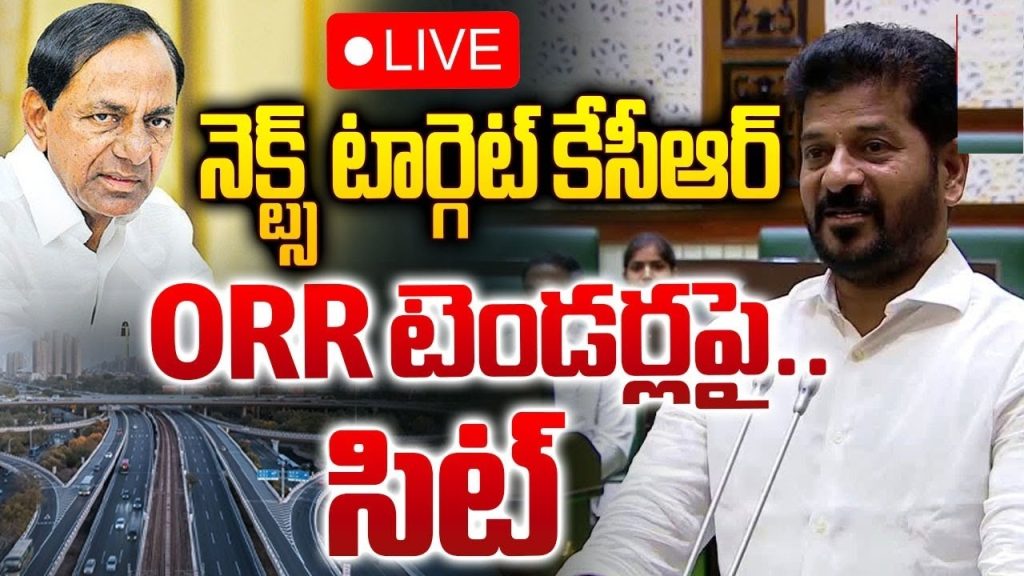
The Outer Ring Road (ORR) toll contract has become a focal point of political and administrative discussions in Telangana. Chief Minister Revanth Reddy announced a Special Investigation Team (SIT) to probe the privatization of the ORR toll contract by the previous government. The move, initiated ahead of the legislative assembly elections, aims to address allegations of procedural irregularities and ensure transparency.
Investigation Ordered on Harish Rao’s Suggestion
During a legislative session, CM Revanth Reddy stated that the SIT investigation was suggested by opposition leader and former Finance Minister Harish Rao. The decision was announced after deliberations in the cabinet, showcasing the government’s intent to prioritize accountability. Reddy emphasized that the investigation is necessary to examine claims of procedural lapses and potential undue benefits granted during the tendering process.
Backdrop of the ORR Toll Contract Controversy
The ORR toll contract was privatized under the “Toll Operate Transfer” (TOT) model for a period of 30 years. In April 2023, the previous government awarded the contract to a private entity, IRB Infra Limited, following a competitive bidding process. The contract involved a one-time payment of ₹7,380 crores to the government. Despite the financial closure deadline being September 27, 2023, the payment was made ahead of schedule on August 11, 2023, granting the company control over toll collection and maintenance responsibilities.
This swift privatization drew criticism, with opposition parties alleging that the process was rushed and lacked transparency. They questioned the motives behind handing over a ₹1 lakh crore asset to a private entity just before elections.
Key Responsibilities Under the Contract
The contract granted IRB Infra Limited authority over the following:
- Toll collection for 30 years.
- Maintenance of electrical lighting, interchanges, service roads, and safety measures.
However, the upkeep of greenery along the ORR remains under the Hyderabad Metropolitan Development Authority (HMDA), with an annual expenditure of ₹25 crores allocated for this purpose.
ORR: A Significant Revenue Source
Spanning 158 kilometers, the ORR encircles Hyderabad and serves as a crucial transportation corridor. With daily traffic exceeding 1.3 lakh vehicles, the ORR generates an annual toll revenue of approximately ₹700 crores. This figure is expected to increase yearly by 5% under the terms of the contract. Previously, the HMDA operated and maintained the ORR, making it a major revenue contributor to the state government. Critics argue that leasing the road for 30 years undermines long-term public revenue interests.
Congress Highlights Past Contributions
During the legislative session, CM Revanth Reddy credited Congress-led governments for significant contributions to Hyderabad’s development. He noted the construction of the ORR under the leadership of Y.S. Rajasekhara Reddy, funded through a ₹6,500 crore loan from JICA (Japan International Cooperation Agency). The loan was repaid successfully, emphasizing the project’s financial viability.
Revanth Reddy also highlighted other developmental initiatives by Congress, including:
- Introduction of Krishna and Godavari river water to meet the city’s needs.
- Establishment of IT and pharma industries.
- Implementation of 24-hour electricity supply to industries.
- Launch of prestigious projects like the Metro Rail and international stadiums.
These measures, he argued, laid the foundation for Hyderabad’s rise as an international hub and significantly boosted state revenues.
Opposition’s Demands and Government’s Response
Former Finance Minister Harish Rao insisted that the ORR toll contract be canceled before initiating an investigation. He argued that the privatization benefited a select few at the expense of public interest. In response, CM Reddy reassured the assembly of an impartial probe by the SIT to uncover any irregularities.
The Lapse in the TOT Model
The TOT model, widely adopted for national highways across India, allows private entities to operate toll roads while undertaking maintenance responsibilities. The previous government defended the move, asserting that the lump-sum payment from the private entity would exceed long-term toll revenue. HMDA Commissioner Arvind Kumar backed this claim, stating that the financial arrangement ensured better returns for the state.
Despite these justifications, critics argue that the model prioritizes short-term gains over sustainable revenue generation. The opposition raised concerns about potential undervaluation of the ORR’s revenue potential over the 30-year lease period.
What Lies Ahead for the ORR Toll Contract?
With the SIT investigation underway, the focus will be on evaluating:
- The procedural integrity of the tendering process.
- Potential conflicts of interest in awarding the contract.
- Financial implications of the privatization deal.
The findings will play a pivotal role in shaping public perception and may influence the broader discourse on public asset management.
Conclusion
The ORR toll contract controversy underscores the importance of transparency and accountability in public asset management. As the SIT delves into the details, it remains to be seen whether the investigation will validate the privatization or unearth irregularities. Regardless of the outcome, this issue serves as a reminder of the need for robust governance practices to safeguard public resources.