


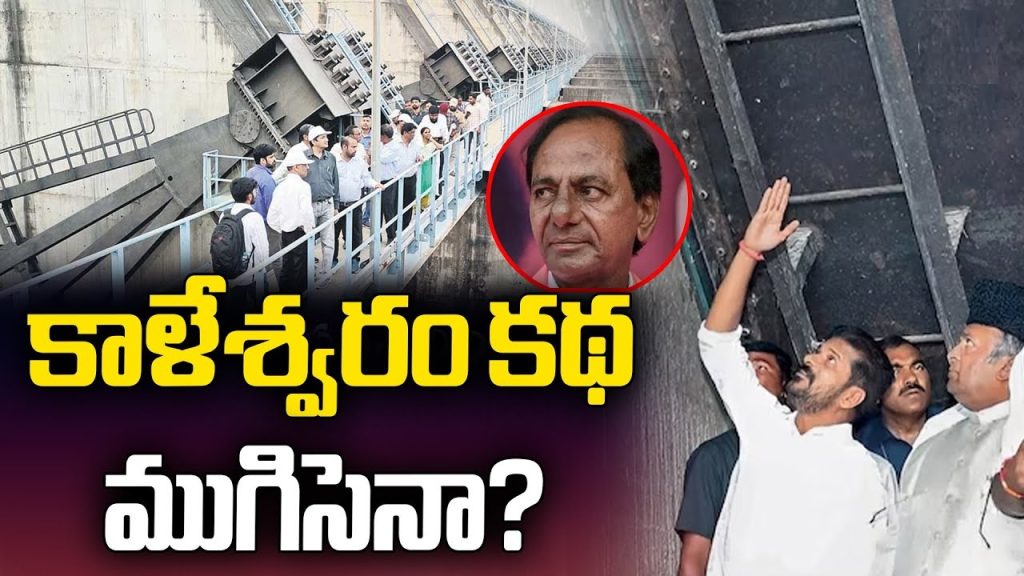
Introduction: Unveiling the Structural Challenges of Kaleshwaram Barrages
The Kaleshwaram Project, a monumental irrigation initiative along the Godavari River, showcases three critical barrages—Medigadda, Annaram, and Sundilla—that have recently faced significant structural distress. Initiated with administrative approval in March 2016, these barrages aimed to enhance water management across Telangana. However, the project has encountered severe setbacks, prompting a thorough inspection by the National Dam Safety Authority (NDSA) and a specialized committee. This article dives deep into the issues plaguing these structures, offering expert insights and innovative solutions to ensure their long-term stability and safety.
On February 13, 2024, the Irrigation and CAD Department of the Telangana government requested the NDSA to conduct a detailed study of the design and construction of the Kaleshwaram Project barrages. The committee, comprising experts from the Central Water Commission (CWC), NDSA, CSMRS, CWPRS, and IIT Delhi, conducted site visits in March 2024. Their findings, drawn from 30 internal meetings and extensive stakeholder interactions, reveal a troubling narrative of design flaws, construction deficiencies, and operational challenges. This article explores these issues, providing a roadmap for rehabilitation and resilience.
The Genesis of the Kaleshwaram Project: A Vision Realized and Challenged
The Kaleshwaram Project’s barrages form a cascading system, channeling water from Medigadda to Annaram, then to Sundilla, and finally into the Yellampally reservoir. Construction began in August 2016, with completion targeted within 24 months for each barrage. Medigadda’s works commenced on August 26, 2016, Annaram’s on August 26, 2016, and Sundilla’s on July 15, 2016. All three became operational by 2019. However, the initial promise of improved irrigation has been overshadowed by emerging structural vulnerabilities.
Site inspections highlighted significant distress across all three barrages. Medigadda, the first in the series, suffered from severe settlement and cracking of piers in Block-7, alongside hydro-mechanical compromises due to piping and energy dissipation issues. Annaram and Sundilla exhibited similar patterns of seepage and piping distress, raising serious concerns about their resilience under operational and environmental stresses. This section analyzes the project’s origins and the early warning signs that demanded immediate attention.
Structural Distress: Unraveling the Weaknesses in Medigadda Barrage
Medigadda Barrage stands as the most affected structure, with Block-7 experiencing pronounced sinking due to large cavities forming beneath the raft. This phenomenon stems primarily from the transport of soil particles caused by piping action, exacerbated by the failure of secant pile cutoffs. The committee noted that the sweepout of hydraulic jumps and inadequate gate operation schedules contributed to this distress. Minimal use of gates in Block-7 and rarely used spillway bays near piping locations further compounded the issue.
Satellite imagery supports these observations, showing increased sediment volume downstream around pier 17, indicative of non-use and potential hydraulic jump failures. The lack of quality control during secant pile cutoff construction, particularly in ensuring water tightness, compromised the upstream and downstream cutoff systems. This section delves into the specific failures at Medigadda, emphasizing the need for robust corrective measures.
Design and Construction Deficiencies: A Critical Oversight
The report identifies several design and construction shortcomings across the barrages. At Medigadda, the formation of holes in the cutoff walls results from the inherent weakness of RCC/PCC piles, poor secant pile construction quality, and their direct connection to the raft. These vulnerabilities persist despite intermittent grouting efforts by the Irrigation and CAD Department and construction agencies to prevent catastrophic failure. The absence of robust quality control, especially regarding the water-tightness of cutoff walls and their connection to the raft, leaves the entire length of each barrage susceptible to hydraulic load-induced distress.
Model studies by TSERL, Hyderabad, provided insights into hydraulic performance, flow dynamics, and structural behavior under varying operational scenarios. However, these studies failed to account for the inevitable crack opening of a single gate with barrage at pond level. This oversight led to inadequate energy dissipation and improper radial gate seat positions, causing sweepout hydraulic jumps and erosive pressures downstream. This section critiques the design and construction lapses, offering a foundation for future improvements.
Geotechnical and Geophysical Assessments: Identifying Foundation Instabilities
Geotechnical and geophysical assessments, including Ground Penetrating Radar (GPR), Electrical Resistivity Tomography (ERT), and Parallel Seismic tests, aimed to identify anomalies and structural inconsistencies. However, the lack of follow-through with complementary drilling and verification limited actionable insights. This shortfall underscores the need for adherence to detailed investigative protocols before initiating corrective actions.
The extent of geotechnical investigations for the Kaleshwaram Project barrages proved inadequate to identify foundation strata variability and related uncertainties. A comprehensive geotechnical investigation is essential for implementing ground improvement efforts, particularly for major projects like these. This section explores the importance of advanced geotechnical studies and their role in enhancing barrage stability.
Hydraulic and Structural Design Issues: Addressing Energy Dissipation Challenges
Hydraulic and structural design issues emerged as another area requiring attention. The design of energy dissipation mechanisms and structural components, such as end sills and rafts, proved inadequate in coping with dynamic hydraulic forces and sediment loads. Gauge-Discharge curve validation and barrage site studies, verified by either the project construction unit or the Central Designs Organisation (CDO) unit of the Irrigation and CAD Department, highlighted these deficiencies.
The model studies did not reveal critical design inadequacies, including insufficient energy dissipation and improper radial gate positions. These led to sweepout hydraulic jumps and erosive pressures downstream, underscoring the importance of aligning design parameters with real-world hydraulic conditions. This section proposes enhanced hydraulic and structural design strategies to improve efficiency and safety.
Operation and Maintenance Challenges: The Need for Proactive Management
Operation and Maintenance (O&M) challenges further compounded structural issues. Significant delays in addressing repairs and maintenance noticed in the first year after commissioning led to deterioration. The absence of an O&M Manual hindered optimal barrage management, emphasizing the urgency to adhere to the Dam Safety Act, 2021 mandates. Non-compliance with these provisions contributed to suboptimal management practices.
The committee’s findings stress the need for a comprehensive O&M framework to prevent recurring distress. This section outlines the operational challenges and advocates for a proactive maintenance strategy to ensure long-term barrage functionality.
Interim Measures and Rehabilitation: A Call to Action
In response to the observed distress, the committee recommended interim measures for implementation before the 2024 monsoon season. These measures aim to ensure safe flood passage and mitigate further damage to the structures. The committee also suggested geotechnical and geophysical investigations, with tests conducted before the monsoon and conveyed to NDSA and the Irrigation and CAD Department by May 1, 2024, for timely implementation.
Summarizing the extensive debilitating damages, the report advocates for a holistic rehabilitation design. This includes comprehensive health and safety assessments, immediate stabilization measures, and advanced geotechnical and geophysical studies to establish a reliable baseline for future interventions. This section details the recommended interim and long-term solutions.
Collaborative Efforts: Ensuring Long-Term Sustainability
The long-term vision outlined in the report stresses the importance of interdisciplinary collaboration among stakeholders. Hydraulic design, aided by appropriate model studies, and structural design through mathematical modeling software are recommended to enhance project sustainability. The committee’s detailed examination, analysis, and observations captured in respective chapters provide a robust foundation for these efforts.
This section emphasizes the need for stakeholder collaboration and advanced technological interventions to fortify the barrages against future challenges. It serves as a call to action for all involved parties to prioritize the project’s resilience and safety.
Conclusion: Building a Resilient Future for Kaleshwaram Barrages
The Kaleshwaram Project barrages face significant structural and operational hurdles that demand immediate and strategic interventions. From design and construction deficiencies to inadequate maintenance and geotechnical assessments, the issues are multifaceted. However, with a committed approach to rehabilitation, advanced investigations, and collaborative efforts, these barrages can achieve long-term stability and safety.
This article has explored the root causes of the distress, offered actionable solutions, and highlighted the path forward. By addressing these challenges head-on, the Irrigation and CAD Department and other stakeholders can restore the project’s intended benefits, ensuring a resilient water management system for Telangana. The journey to recovery begins with the implementation of the recommended measures, setting a precedent for future infrastructure projects.