


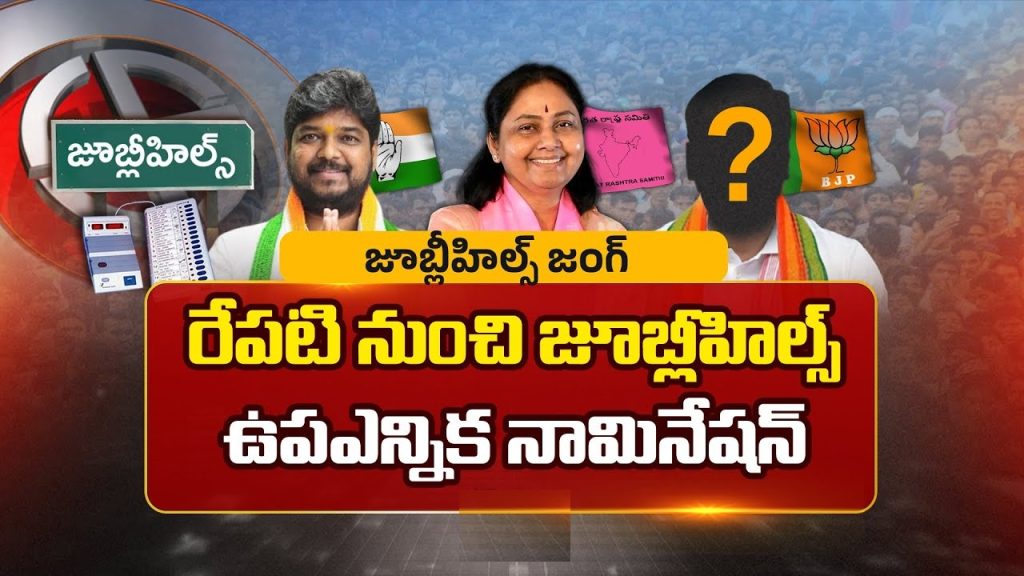
After covering Telangana politics for over a decade, I can confidently say that the upcoming Jubilee Hills by-election 2025 represents more than just another electoral contest. This high-stakes political battle, scheduled for November 11, 2025, has emerged as a critical litmus test for all major parties in the state – the ruling Congress, the former ruling BRS, and the ambitious BJP. What makes this election particularly fascinating is its timing, the candidates involved, and most importantly, what it reveals about the changing dynamics of urban politics in modern India.
In this comprehensive analysis, I’ll walk you through everything you need to know about this crucial by-election, from the key players and their strategies to the broader implications for Telangana’s political future. Having witnessed similar electoral battles across the state, I can promise you insights that go beyond surface-level reporting to reveal the real forces at play in this urban constituency.


Jubilee Hills Constituency Demographics and Electoral Statistics (2025 By-election)
The Genesis: Why This By-Election Matters More Than Most
The Jubilee Hills by-election 2025 was necessitated by the untimely death of three-time BRS MLA Maganti Gopinath on June 8, 2025. Gopinath, who had won the seat consecutively in 2014, 2018, and 2023, was a formidable political figure whose sudden demise left a significant vacuum in one of Hyderabad’s most prestigious constituencies.
What makes this election particularly significant is its timing – just two years into the Congress government’s tenure under Chief Minister A. Revanth Reddy. For the Congress, this represents their first major test in urban Hyderabad since coming to power. The party drew a blank in the Greater Hyderabad region during the 2023 Assembly elections, making this by-election a crucial opportunity to establish their urban credibility.
From my years of covering Telangana politics, I’ve observed that by-elections often serve as barometers of public mood between major electoral cycles. The Jubilee Hills contest is no exception. It’s being watched closely as an indicator of whether the Congress can expand beyond its rural base into Hyderabad’s urban landscape, whether the BRS can bounce back from its electoral defeats, and whether the BJP can capitalize on its growing momentum in urban areas.


Aerial view of a modern upscale residential building in Jubilee Hills, Hyderabad, showcasing luxury living and greenery archdaily
The Constituency: More Than Meets the Eye
Jubilee Hills isn’t just another Assembly constituency – it’s a microcosm of modern urban India’s complexities. Spread across 12 square kilometers, this prestigious constituency encompasses some of Hyderabad’s most affluent areas alongside diverse middle-class and economically weaker sections.
The constituency includes areas like Erragadda, Borabanda, Yousufguda, Vengal Rao Nagar, Rahamat Nagar, and Shaikpet. While the popular image of Jubilee Hills revolves around luxury villas, film star residences, and corporate offices, the electoral reality is far more nuanced. The constituency houses a diverse population of 3.99 lakh voters, including significant communities that don’t always align with its upscale image.
The demographic breakdown reveals the constituency’s true complexity:
- Backward Classes (BC): 1.4 lakh voters (35%)
- Muslims: 1.2 lakh voters (30%)
- General category: 66,000 voters (16.5%)
- Scheduled Castes: 28,000 voters (7%)
- Other minorities: 22,000 voters (5.5%)
- Scheduled Tribes: 12,000 voters (3%)
This demographic diversity explains why electoral outcomes in Jubilee Hills often defy conventional wisdom about “elite” constituencies. The substantial BC and Muslim populations ensure that welfare schemes, employment opportunities, and community-specific concerns play crucial roles in determining electoral outcomes.
The Key Players: A Triangular Contest with High Stakes
Congress: Naveen Yadav – The Controversial Choice
The Congress party’s decision to field V. Naveen Yadav has generated significant buzz and controversy. At 41, Yadav represents the party’s strategic calculation to appeal to the constituency’s substantial BC population, particularly the Yadav community.
Yadav’s political journey reflects the complex loyalties that characterize contemporary Indian politics. He began his political career with AIMIM in 2014, contested unsuccessfully from Jubilee Hills, then ran as an independent in 2018, before finally joining Congress in November 2023. This trajectory has drawn criticism from some quarters, but it also demonstrates his persistent engagement with the constituency.
However, Yadav’s candidature isn’t without controversy. Just days before his official nomination, he was booked by police for allegedly distributing voter ID cards at a public event, a violation of election commission guidelines. This incident has provided ammunition to his opponents, though the Congress leadership has stood firmly behind their choice.
From my interactions with local Congress workers, the party’s calculation is clear: Yadav’s BC credentials, combined with his local connections and understanding of Muslim concerns, make him a strategic fit for the constituency’s demographic profile. The party is banking on his ability to consolidate the BC-Muslim alliance that forms the backbone of their strategy.
BRS: Maganti Sunitha – The Sympathy Factor
The BRS has fielded Maganti Sunitha, widow of the late MLA Maganti Gopinath, in a bid to capitalize on sympathy votes and continuity. This decision follows the party’s established practice of fielding family members in such situations.
Sunitha’s candidature represents both the strengths and challenges facing the BRS. On one hand, she can leverage the goodwill associated with her husband’s three-decade political career and his developmental work in the constituency. Gopinath was widely respected across community lines for his accessibility and problem-solving approach.
However, as I’ve observed in previous elections across Telangana, the sympathy factor has proven unreliable. The party’s own data shows that in four out of five by-elections following the death of sitting MLAs since Telangana’s formation, family members fielded on sympathy grounds were defeated. This historical trend suggests that Sunitha will need to build her campaign on more than just sympathy.
The BRS strategy appears focused on highlighting the Congress government’s alleged failures while positioning Sunitha as a continuation of Gopinath’s legacy. Party working president KT Rama Rao is leading the campaign, leveraging his image as the architect of Hyderabad’s modern infrastructure development.
BJP: The Delayed Entry
The BJP’s delay in announcing its candidate reflects internal deliberations about the party’s strategy in urban Hyderabad. Having shortlisted candidates including Lankala Deepak Reddy (who contested in 2023), J. Keerthi Reddy, and Padma, the party appears to be weighing various factors including local acceptability and organizational strength.
Deepak Reddy, who finished third in 2023 with 25,866 votes, seems to be the frontrunner. His previous performance gives him name recognition, though the party will need to significantly improve its vote share to be competitive in a triangular contest.
The BJP’s strategy appears centered on projecting itself as a clean alternative to both the Congress and BRS, while highlighting issues like corruption and governance failures. However, the party faces the challenge of expanding beyond its traditional urban middle-class base to appeal to the constituency’s diverse demographic profile.
Campaign Strategies: Different Approaches, Common Goals
Congress: The Welfare and Development Card
The Congress campaign strategy reflects the party’s confidence in its governance record and welfare schemes. Chief Minister Revanth Reddy has devised a comprehensive “30-day strategy” involving all cabinet ministers, MLAs, MPs, and MLCs in intensive campaigning.
The party’s approach focuses on several key elements:
Welfare Scheme Promotion: The Congress is heavily promoting its flagship programs including Mahalakshmi (free bus travel for women), 200 units of free electricity, fine rice distribution, and new ration cards. These schemes are estimated to save households around ₹45,000 annually.
Community-Specific Outreach: The party has appointed three ministers – Ponnam Prabhakar, Tummala Nageswara Rao, and Gaddam Vivek – to oversee micro-targeted campaigns aimed at different communities. This includes separate strategies for BC communities, Muslims, and other demographic segments.
Infrastructure Development: The party is highlighting improvements in drainage, roads, and water supply, while promising continued development under their governance.
From my observations, the Congress strategy appears well-organized and resource-intensive, reflecting the high stakes they’ve placed on this election.
BRS: Anti-Incumbency and Nostalgia
The BRS campaign strategy combines criticism of the Congress government with nostalgia for the “golden era” of Telangana’s development under KCR’s leadership. The party has intensified its door-to-door campaign, led by senior leaders like Vaddiraju Ravichandra and Srinivas Goud.
Key elements of their approach include:
“Congress Dues Cards”: The party is distributing cards highlighting unfulfilled promises of the Congress government, asking voters to question Congress workers about delivery timelines.
Developmental Legacy: Emphasizing the transformation of Hyderabad and Telangana under BRS rule, positioning KCR as a father figure and the BRS as the people’s true guide.
Community Outreach: Sunitha has been actively reaching out to Muslim communities, visiting mosques and interacting with community leaders to secure minority support.
The BRS appears to be banking on anti-incumbency against the Congress government while trying to revive memories of their developmental achievements.
BJP: The Clean Alternative Narrative
Despite being late to announce their candidate, the BJP has outlined an ambitious campaign strategy. The party plans a “high-octane three-day blitz” involving 60 elected representatives and 122 street-corner meetings.
Their strategy focuses on:
Anti-Corruption Stance: Positioning themselves as a clean alternative to both Congress and BRS, highlighting various corruption allegations.
Hindutva and Community Issues: BJP president N. Ramchander Rao has raised issues like land allocation for Muslim graveyards and alleged temple demolitions, appealing to Hindu sentiment.
Double-Engine Government: Promoting the benefits of having BJP governments both at the center and state level.
The Muslim Vote: The Crucial X-Factor
One of the most significant aspects of the Jubilee Hills by-election 2025 is the role of Muslim voters, who constitute approximately 30% of the electorate. This community’s voting pattern could well determine the election outcome.
The AIMIM’s decision to stay out of the contest has added another layer of complexity. While party chief Asaduddin Owaisi has not made any formal alliance announcement, there are strong indications that the party will support the Congress candidate to prevent BJP victory.
In my conversations with community leaders, the calculation appears straightforward: AIMIM’s participation would split the Muslim vote between Congress, BRS, and AIMIM, potentially benefiting the BJP. The party’s strategy seems aimed at ensuring a united vote in favor of one candidate.
This dynamic significantly favors the Congress, whose candidate Naveen Yadav enjoys considerable support among Muslims due to his previous association with AIMIM and his understanding of community concerns. The BRS is also actively courting Muslim votes, with Sunitha making multiple visits to mosques and community gatherings.
Urban Politics and the Changing Electoral Landscape
The Jubilee Hills contest reflects broader changes in Indian urban politics that I’ve observed across multiple election cycles. Traditional patterns of urban voting – based on development, infrastructure, and middle-class concerns – are being supplemented by more complex factors including welfare schemes, community identity, and governance performance.
The urban-rural divide in Telangana politics has been stark: In the 2023 Assembly elections, the Congress dominated rural areas but struggled in urban Hyderabad, where the BRS won 16 out of 24 Greater Hyderabad seats. This election represents the Congress’s attempt to break into urban territory using a different playbook.
The constituency’s demographic diversity means that purely “urban” issues like infrastructure and traffic management must compete for attention with “rural-style” concerns like employment, welfare schemes, and community representation. This hybrid nature makes Jubilee Hills a fascinating laboratory for understanding contemporary Indian electoral behavior.
Historical voting patterns reveal interesting trends:
- In Assembly elections, voters have favored BRS candidates consistently since 2014
- In Lok Sabha elections, however, voting patterns have been different, with Congress and BJP performing better than BRS
This split voting behavior suggests that voters in Jubilee Hills distinguish between local/state issues and national concerns, a sophistication that campaign strategists must account for.
The Stakes: What Victory Means for Each Party
For Congress: Urban Credibility and Momentum
A victory in Jubilee Hills would represent a breakthrough moment for the Congress in urban Telangana. Having struggled in Hyderabad’s political landscape for over a decade, success here would:
- Establish urban credibility for Chief Minister Revanth Reddy’s government
- Validate their welfare-focused governance model in an urban setting
- Build momentum ahead of future municipal and parliamentary elections
- Demonstrate their ability to forge successful coalition politics with tacit AIMIM support
For BRS: Survival and Relevance
For the BRS, this election is about much more than retaining one seat. It’s about demonstrating continued political relevance after consecutive electoral setbacks:
- Proving they remain a force in Hyderabad politics despite state-level defeats
- Validating KTR’s leadership and his appeal to urban voters
- Building momentum for political revival
- Maintaining their urban base as a foundation for future comebacks
For BJP: Breaking New Ground
While the BJP faces an uphill battle, even a strong showing would advance their long-term objectives:
- Establishing credibility in Hyderabad’s electoral politics
- Building organizational strength in urban Telangana
- Creating a foundation for future electoral gains
- Demonstrating growth under new state leadership
Personal Insights: Reading Between the Lines
Having covered numerous elections in Telangana over the past decade, several aspects of this contest stand out to me as particularly significant:
The generational shift: This election features candidates from different political generations – Naveen Yadav represents the new, mobility-focused politician who has changed parties based on opportunity; Sunitha represents traditional political succession; while the BJP candidate (likely Deepak Reddy) represents ideological politics. This generational mix reflects broader changes in Indian politics.
The community calculation: The sophistication of community-based electoral calculations in this election is remarkable. Each party has conducted detailed demographic analysis and crafted specific appeals to different communities. This micro-targeting represents the evolution of Indian electoral politics from broad-based appeals to precision campaigning.
The urban welfare model: Perhaps most significantly, this election is testing whether welfare schemes that have proven successful in rural areas can work in urban settings. The Congress bet is that urban voters, despite higher incomes, will respond positively to schemes that reduce household expenses. If successful, this could reshape urban electoral politics nationwide.
Technology and Modern Campaigning
The Jubilee Hills by-election 2025 is also notable for the extensive use of modern campaign technologies. All parties are employing:
- Digital voter databases for micro-targeting
- Social media campaigns tailored to different demographic segments
- WhatsApp groups for community-specific messaging
- Data analytics for campaign optimization
The Election Commission has also introduced new measures including color photographs of candidates on EVMs and enhanced VVPAT systems. These technological enhancements reflect the modernization of India’s electoral process.
Challenges and Opportunities
Each party faces distinct challenges and opportunities in this contest:
Congress Challenges:
- Overcoming their historically weak performance in urban Hyderabad
- Managing internal dissent over candidate selection
- Converting welfare scheme popularity into actual votes
Congress Opportunities:
- Leveraging incumbent advantage and resource availability
- Building on successful municipal governance in other cities
- Capitalizing on AIMIM’s tacit support
BRS Challenges:
- Overcoming anti-incumbency from their previous tenure
- Managing internal conflicts and organizational issues
- Proving relevance after electoral defeats
BRS Opportunities:
- Leveraging Gopinath’s legacy and goodwill
- Capitalizing on KTR’s urban appeal
- Mobilizing their organizational base
BJP Challenges:
- Limited organizational presence in the constituency
- Competing against better-resourced rivals
- Appealing to diverse demographic groups beyond their traditional base
BJP Opportunities:
- Positioning as a clean alternative
- Leveraging central government’s developmental programs
- Building long-term organizational strength
The Broader Implications
The outcome of the Jubilee Hills by-election 2025 will have implications far beyond this single constituency. It will be closely watched as an indicator of:
Urban political trends: Can welfare politics work in urban areas, or do infrastructure and development remain primary concerns?
Coalition dynamics: How effectively can parties manage tacit alliances with organizations like AIMIM?
Leadership validation: Will this election validate or question the leadership styles of Revanth Reddy, KTR, and the BJP’s new state leadership?
Future strategy: The winner’s approach may become a template for urban campaigning across similar constituencies in other states.

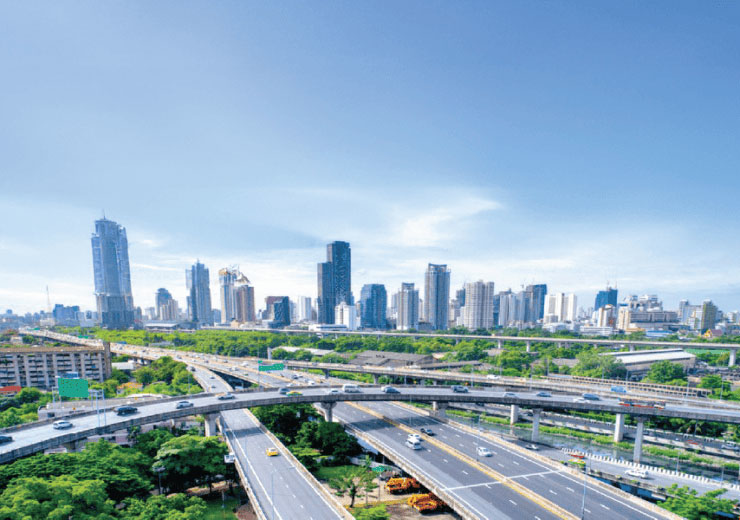
Modern urban infrastructure and skyline of Hyderabad featuring expansive highways and high-rise buildings nestcon
Conclusion: Democracy in Action
As we approach the November 11 polling date, the Jubilee Hills by-election 2025 stands as a fascinating example of Indian democracy in action. This contest encapsulates many of the themes defining contemporary Indian politics: the urban-rural divide, community-based electoral calculations, the role of welfare schemes in urban areas, and the evolution of coalition politics.
From my decade of experience covering Telangana politics, I can say that elections like this one remind us why political journalism remains so compelling. Behind the statistics, strategies, and speeches lies a fundamental democratic exercise where 3.99 lakh citizens will choose their representative based on their assessment of candidates, parties, and promises.
Whether you’re a political enthusiast, a Hyderabad resident, or simply someone interested in understanding how democracy functions in modern India, keep watching this space. The results, to be announced on November 14, will provide insights not just into Jubilee Hills’ political preferences, but into broader trends shaping urban India’s political future.
Your engagement matters: If you found this analysis helpful, share it with others interested in Telangana politics. Follow my upcoming coverage of the campaign trail, candidate interactions, and post-election analysis. In a democracy, informed citizenry is the foundation of good governance – and every vote in Jubilee Hills will contribute to that democratic foundation.
Frequently Asked Questions
1. When is the Jubilee Hills by-election 2025 being held and what are the key dates?
The Jubilee Hills by-election is scheduled for November 11, 2025, with counting on November 14, 2025. The key dates are: Notification – October 13, 2025; Last date for nominations – October 21, 2025; Scrutiny of nominations – October 22, 2025; Withdrawal deadline – October 24, 2025; and the election process will be completed by November 16, 2025.
2. Who are the main candidates in the Jubilee Hills by-election 2025?
The main candidates are V. Naveen Yadav from Congress, Maganti Sunitha (widow of late MLA Maganti Gopinath) from BRS, and the BJP is expected to announce their candidate soon, likely Lankala Deepak Reddy who contested in 2023. The election was necessitated by the death of three-time BRS MLA Maganti Gopinath in June 2025.
3. What makes the Jubilee Hills constituency significant in Telangana politics?
Jubilee Hills is significant because it represents one of Hyderabad’s most prestigious urban constituencies with a diverse demographic mix including substantial BC (35%), Muslim (30%), and other community populations totaling 3.99 lakh voters. The constituency has been a BRS stronghold since 2014, and this by-election serves as a crucial test for the Congress to establish urban credibility, for BRS to prove continued relevance after electoral defeats, and for BJP to expand their urban presence in Telangana.