


Introduction to Hyderabad Metro Phase 2: A Vision for the Future
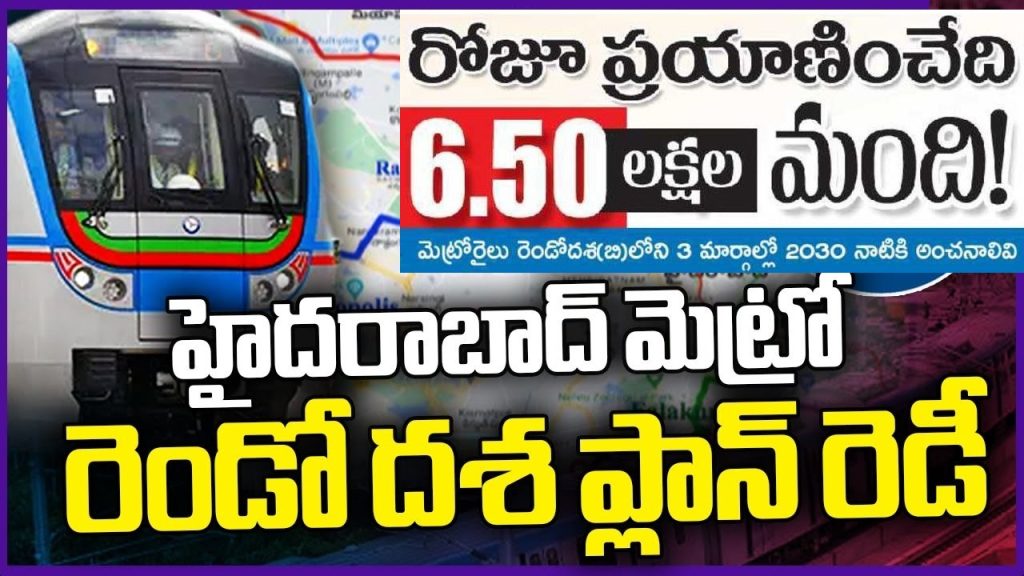
Hyderabad’s metro rail system, already a lifeline for millions, is poised for a significant leap forward with Phase 2 of its expansion. The Telangana government, through Hyderabad Airport Metro Rail Limited (HAML), has taken a bold step by approving DPRs for three new corridors under Phase 2(B). These corridors, spanning 86.1 kilometers, are designed to connect key areas of the city, including the Rajiv Gandhi International Airport (RGIA) and emerging urban hubs like Future City. With a projected daily ridership of 6.50 lakh passengers by 2030, this expansion underscores Hyderabad’s commitment to modern, efficient, and sustainable urban transportation.
The state cabinet’s approval marks a critical milestone, paving the way for HAML to seek central government clearance. This strategic move not only enhances connectivity but also positions Hyderabad as a model for smart urban planning in India. Let’s explore the details of each corridor, their costs, station plans, and their anticipated impact on the city’s mobility landscape.
Corridor 10: JBS to Medchal – Connecting North Hyderabad
Route and Station Details
Corridor 10 stretches 24.5 kilometers from Jubilee Bus Station (JBS) to Medchal, a rapidly developing northern suburb. This corridor will feature 18 strategically placed stations, catering to both residential and commercial hubs. Key stations include:
- JBS New
- Diamond Point
- Bapuji Nagar
- Old Bowenpally
- Bowenpally Checkpost
- Dairy Farm
- Suchitra Junction
- Pipeline Road
- Angadipet
- Dulapally X Road
- Kompally
- Gundlapochampally
- EMRI
- Kandlakoya
- ORR Medchal
- Medchal Checkpost
- Medchal
This elevated corridor will run along major arterial roads, ensuring seamless access to bustling areas like Kompally and Medchal, which are emerging as IT and residential hubs.
Cost and Impact
The estimated cost for Corridor 10 is ₹6,946 crore. By 2030, it is projected to serve 2.54 lakh daily passengers, with ridership expected to soar to 5.70 lakh by 2055. This corridor will alleviate traffic congestion on Hyderabad’s northern routes, reduce commute times, and provide an eco-friendly alternative to private vehicles. The integration with existing metro lines at JBS will enhance connectivity across the city, making it a vital artery for north Hyderabad’s growth.
Why Corridor 10 Matters
The JBS-Medchal corridor addresses the growing demand for efficient public transport in Hyderabad’s northern suburbs. With IT corridors, educational institutions, and residential complexes flourishing in this region, the metro will catalyze economic growth and improve quality of life. Commuters can expect reduced travel times, lower carbon footprints, and enhanced access to job opportunities in central Hyderabad.
Corridor 11: JBS to Shamirpet – Linking Emerging Tech Hubs
Route and Station Details
Spanning 22 kilometers, Corridor 11 connects Jubilee Bus Station to Shamirpet, a hub for educational institutions and IT parks. This corridor will feature 14 stations, including:
- JBS New
- Vikrampuri
- Karkhana
- Tirumalagiri X Road
- Lalbazar
- Lothukunta
- Alwal
- Rashtrapati Nilayam Junction
- Bollaram
- Hakimpet
- Devaryamjal
- Thumkunta
- ORR Shamirpet
- Shamirpet
This elevated corridor will serve areas with significant growth potential, such as Alwal and Shamirpet, home to institutions like BITS Pilani and other tech-driven developments.
Cost and Impact
With an estimated cost of ₹5,465 crore, Corridor 11 is expected to serve 1.92 lakh daily passengers by 2030, with projections reaching 3.74 lakh by 2055. The corridor will provide a critical link for students, professionals, and residents, reducing dependence on congested roads and fostering sustainable urban growth. Its integration with the existing metro network at JBS ensures seamless connectivity to other parts of Hyderabad.
Strategic Importance of Corridor 11
Shamirpet is fast emerging as a tech and education hub, with institutions and industries driving population growth. Corridor 11 will enhance accessibility, reduce travel costs, and support the region’s development as a key economic zone. By connecting Shamirpet to central Hyderabad, the metro will bridge the gap between urban and suburban areas, fostering inclusive growth.
Corridor 9: RGIA to Future City – Airport Connectivity Redefined
Route and Station Details
The most ambitious of the three, Corridor 9 spans 39.6 kilometers from Rajiv Gandhi International Airport (RGIA) to Future City (Skills University). This corridor will feature nine stations, designed to serve both airport commuters and residents of emerging urban centers. The proposed stations are:
- RGIA
- Peddagolkonda
- Bahadoorguda
- Tukkuguda
- Raviryal
- Kongarakalan
- Rachloor
- Gummadavelli
- Skills University
The corridor includes a 17.1-kilometer underground section from Raviryal to Future City, integrated with a proposed Greenfield highway. The remaining stretch will be elevated, running along the ORR service road from RGIA to Raviryal Exit.
Cost and Impact
Corridor 9 carries an estimated cost of ₹7,168 crore. By 2029, it is expected to serve 1.98 lakh daily passengers, with ridership projected to reach 6.03 lakh by 2055. This corridor will revolutionize airport connectivity, offering a fast, reliable alternative to road travel. The underground section ensures minimal disruption to the city’s landscape while providing a modern commuting experience.
Transforming Airport Access and Urban Growth
Corridor 9 is a game-changer for Hyderabad’s transportation infrastructure. By connecting RGIA to Future City, it will cater to international travelers, local commuters, and residents of developing areas like Tukkuguda and Raviryal. The integration with a Greenfield highway enhances accessibility, making this corridor a cornerstone of Hyderabad’s vision for a futuristic urban ecosystem.
Hyderabad Metro Phase 2: A Broader Perspective
Phase 2(A) and Existing Network
Hyderabad’s metro network already spans 69.2 kilometers across Corridors 1, 2, and 3, operational since the completion of Phase 1. Phase 2(A) includes five additional corridors (4, 5, 6, 7, and 8), covering 76.4 kilometers, with DPRs submitted for central approval in November 2024. The addition of Corridors 9, 10, and 11 under Phase 2(B) brings the total proposed expansion to 162.5 kilometers, significantly enhancing the city’s metro coverage.
State and Central Collaboration
The Telangana government’s proactive approach, coupled with HAML’s detailed planning, has set the stage for rapid progress. The state cabinet has directed officials to expedite the submission of DPRs to the central government, ensuring timely approvals and funding. The Phase 2(B) corridors are proposed as a 50:50 joint venture between the state and central governments, reflecting a collaborative approach to urban development.
Projected Ridership and Economic Benefits
The combined ridership of the three new corridors is expected to reach 6.50 lakh daily passengers by 2030, with projections soaring to 15.47 lakh by 2055. This surge in ridership will reduce road congestion, lower greenhouse gas emissions, and stimulate economic activity in connected areas. The metro’s expansion will also create jobs, boost real estate development, and enhance Hyderabad’s appeal as a global investment destination.
Why Hyderabad Metro Expansion Matters
Addressing Urban Congestion
Hyderabad’s rapid urbanization has led to increased traffic congestion, particularly on routes to the airport and northern suburbs. The Phase 2 expansion addresses this challenge by offering a reliable, high-capacity public transport system. By reducing dependence on private vehicles, the metro will ease pressure on roads and improve air quality.
Boosting Economic Growth
The new corridors will connect emerging economic hubs like Medchal, Shamirpet, and Future City to central Hyderabad. This enhanced connectivity will attract businesses, foster innovation, and create employment opportunities. The metro’s role in supporting IT, education, and industrial sectors cannot be overstated.
Sustainable Urban Development
With a focus on eco-friendly transportation, the Hyderabad Metro aligns with global sustainability goals. The use of elevated and underground corridors minimizes land disruption, while the projected reduction in CO2 emissions supports India’s climate commitments. The integration with a Greenfield highway in Corridor 9 further enhances sustainable urban planning.
Challenges and Opportunities
Funding and Implementation
The combined cost of the three corridors—₹19,579 crore—requires significant investment. While the state and central governments are committed to funding, securing loans from institutions like the Asian Development Bank could accelerate implementation. Efficient project management and timely execution will be critical to meeting the 2030 deadline.
Community Engagement
Engaging local communities and addressing concerns about land acquisition and construction disruptions will be essential. Transparent communication and inclusive planning can ensure public support and smooth project execution.
Technological Innovation
The Hyderabad Metro can leverage advanced technologies like automated trains, real-time passenger information systems, and smart ticketing to enhance user experience. These innovations will position Hyderabad as a leader in modern urban transportation.
Conclusion: Hyderabad’s Metro Vision for 2030 and Beyond
The approval of the Phase 2(B) corridors marks a pivotal moment for Hyderabad’s urban transportation. With Corridors 9, 10, and 11, the city is poised to become a global leader in metro connectivity, serving millions of commuters and driving sustainable growth. By connecting the airport, northern suburbs, and emerging urban centers, the Hyderabad Metro will redefine urban mobility, reduce congestion, and foster economic prosperity. As the city awaits central government approval, the vision of a connected, vibrant Hyderabad is closer than ever.