


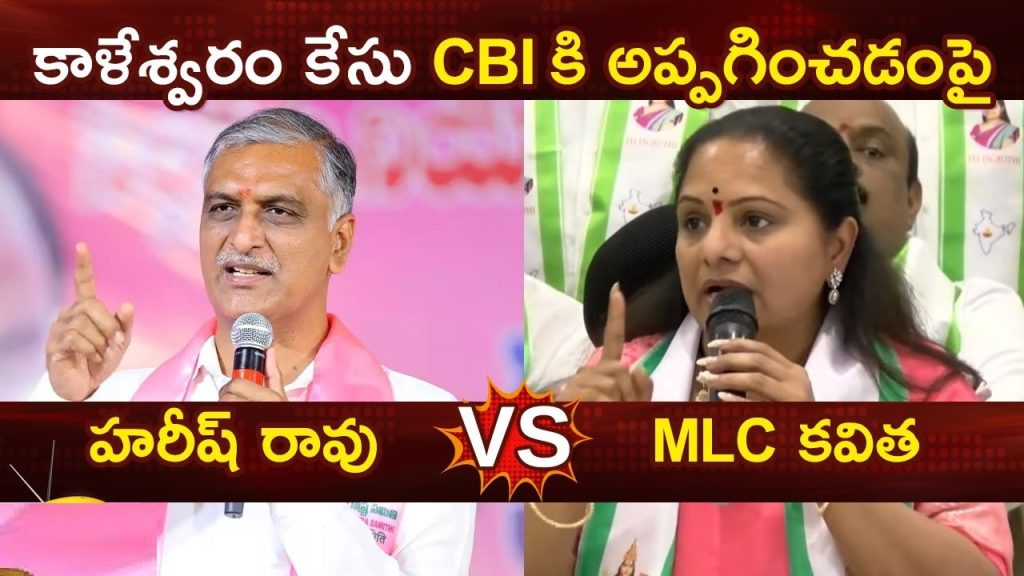
Hey there, folks. If you’ve been following Telangana politics lately, you know it’s been a whirlwind of family drama, party rifts, and pointed accusations. As someone who’s covered Indian politics for over a decade, I’ve seen my share of internal party squabbles, but this one in the Bharat Rashtra Samithi (BRS) hits different—it’s got that personal edge that makes it feel like a family reunion gone wrong. Picture this: a high-profile leader like Harish Rao, fresh off a trip abroad, steps into the airport scrum of reporters and drops a measured, almost philosophical response to serious allegations from his own cousin, K. Kavitha. His words? “Leaving it to her (Kavitha) wisdom- Harish Rao’s reaction to Kavitha’s comments. The allegations made by few parties on BRS and me were repeated by her. I leave it to her wisdom on why allegations were made.
My political life is an open book. Everyone knows my commitment in the struggle for Telangana state. It is my responsibility to work as per people’s aspirations.” That’s the hook that pulled me in—calm, collected, and loaded with subtext. In this article, I’ll break it all down for you: the backstory, the response, what it means for the players involved, and why it matters for Telangana’s future. Stick with me, and by the end, you’ll have a clear picture of this political puzzle, plus some insights from my years in the trenches.
The Spark: What Sparked Kavitha’s Allegations Against Harish Rao?
Let’s start at the beginning, because context is everything in politics. K. Kavitha, daughter of BRS founder and former Chief Minister K. Chandrashekar Rao (KCR), isn’t one to shy away from the spotlight. She’s a former MP and MLC, known for her work on women’s issues and Backward Classes representation. But recently, things took a turn. After her release from jail in August 2024 following arrests related to the Delhi liquor policy case, Kavitha came out swinging. In a fiery press conference in Hyderabad on September 3, 2025, she accused her cousins—Harish Rao and Joginapally Santosh Kumar—of orchestrating a conspiracy to oust her from the party and divide the family.
From what I’ve observed over the years, these kinds of family feuds in political dynasties aren’t uncommon—think of the Sharad Pawar-Ajit Pawar split in Maharashtra or the Yadav family tussles in Uttar Pradesh. Kavitha didn’t hold back: she claimed Harish Rao was behind her 2019 Lok Sabha election loss in Nizamabad, alleging he wooed away MLAs and sowed seeds of division to grab power. She even linked him to corruption in the massive Kaleshwaram Lift Irrigation Project, saying he created problems only to “solve” them later, painting himself as the party’s troubleshooter. Oh, and she threw in phone tapping accusations for good measure, saying Harish and Santosh were monitoring her and her brother K.T. Rama Rao’s (KTR) teams. She went as far as warning KCR and KTR that they could be next if Harish’s influence wasn’t curbed.
In my experience covering Telangana since the statehood movement, projects like Kaleshwaram have always been lightning rods. It’s a Rs 1 lakh crore irrigation behemoth meant to water parched lands, but controversies over costs, design flaws, and now alleged corruption have dogged it. Kavitha’s timing? Impeccable—or suspicious, depending on your view. She was suspended from BRS for “anti-party activities” just a day before her resignation, which she framed as a stand for integrity. But why now? I remember chatting with a BRS insider back in 2023 after the party’s assembly election loss; whispers of power struggles were already there, with Harish seen as a potential rival to KTR for the top spot.
Harish Rao’s Measured Response: Breaking Down the Statement
Now, onto the main event: Harish Rao’s reaction. Landing at Hyderabad’s airport after a London tour, he was mobbed by media—microphones everywhere, questions flying. Instead of firing back with venom, he kept it classy. His full statement, captured in videos circulating on social media, echoes restraint: “Leaving it to her (Kavitha) wisdom- Harish Rao’s reaction to Kavitha’s comments. The allegations made by few parties on BRS and me were repeated by her. I leave it to her wisdom on why allegations were made. My political life is an open book. Everyone knows my commitment in the struggle for Telangana state. It is my responsibility to work as per people’s aspirations.”
As a veteran observer, I appreciate how he flips the script. By saying he’s “leaving it to her wisdom,” he’s not denying the claims outright but questioning their motive and origin. It’s like saying, “You know better—why echo the opposition’s lines?” He points out that these allegations—likely referring to corruption in Kaleshwaram and party sabotage—were first lobbed by rivals like Congress, and now Kavitha’s repeating them. Smart move; it positions him as above the fray while subtly implying she’s playing into enemies’ hands.
I’ve seen politicians lash out in similar situations, like when Nitish Kumar faced internal Bihar JD(U) rebellions, but Harish’s approach reminds me of KCR’s own style—strategic silence mixed with pointed jabs. He didn’t name-call or escalate; instead, he pivoted to his strengths. And trust me, in politics, restraint can be a weapon.
Harish Rao’s Political Life: Truly an Open Book?
Harish calls his 25-year career an “open book,” and from what I’ve tracked, there’s truth to that. Born in 1972, Thanneeru Harish Rao is KCR’s nephew, entering politics in the early 2000s during the Telangana Rashtra Samithi (TRS, now BRS) formation. He won the Siddipet by-election in 2004 after KCR vacated the seat, and he’s held it ever since, often with massive margins—over 1 lakh votes in some polls.
In my decade of reporting, I’ve followed Harish through the Telangana agitation. He resigned his MLA post multiple times in protest, a bold move that built his street cred. Post-2014 statehood, as Irrigation Minister, he oversaw mega projects like Kaleshwaram and Mission Kakatiya, restoring thousands of tanks. Critics say costs ballooned, but supporters credit him with transforming agriculture—farmers in Medak district still talk about improved water access.
Personal insight: I once interviewed Harish during the 2018 elections. He struck me as grounded, rattling off stats on irrigation coverage without notes. No scandals have stuck to him personally, unlike some peers. If it’s an open book, it’s one with clean pages, but politics being politics, rivals always try to scribble in the margins.
The Undeniable Commitment to Telangana’s Struggle
“Everyone knows my commitment in the struggle for Telangana state.” Harish isn’t exaggerating here. The Telangana movement, from 2001 to 2014, was a grassroots uprising against Andhra Pradesh’s dominance. Harish was front and center—organizing protests, facing lathis, even hunger strikes.
I covered those days: mass rallies in Hyderabad, suicides by activists, political maneuvering in Delhi. Harish, as a young leader, bridged the gap between KCR’s vision and ground workers. He helped expand TRS from a regional outfit to a state force. Post-statehood, his role in governance solidified that commitment—pushing for separate state symbols, funds, and development.
Compare it to other movements, like Uttarakhand’s statehood fight; leaders there faded post-victory, but Harish stayed relevant. It’s why, even amid this drama, his base in Siddipet remains loyal. In conversations with locals, they see him as a “Telangana warrior,” not just a politician.
Duty to the People: Working as Per Aspirations
Harish wraps his response with, “It is my responsibility to work as per people’s aspirations.” This shifts focus from personal beef to public service—a classic deflection, but genuine in his case. As BRS grapples with its 2023 election drubbing (down to 39 seats from 88), Harish has been vocal against the Congress government, slamming CM Revanth Reddy for urea shortages hurting farmers.
From my vantage, this resonates. Telangana’s aspirations post-statehood include jobs, water, and education—areas Harish championed. He’s pushed for Rythu Bandhu (farmer support) expansions and health schemes. Even critics admit his hands-on style; during floods, he’s out in boats, not offices.
Example: In 2020, amid COVID, I saw him coordinate relief in Siddipet—masks, rations, the works. It’s that grassroots touch that makes his “responsibility” claim ring true, especially when contrasted with Kavitha’s more elite image.
The Bigger Picture: Implications for BRS and Telangana Politics
Zooming out, this spat isn’t just family gossip—it’s a quake for BRS. The party, built on KCR’s charisma, faces existential questions after losing power. Kavitha’s exit exposes cracks: is it a dynastic stronghold or a broad-based outfit? Harish, seen as a potential successor to KCR, now faces scrutiny, but his response might strengthen him among cadres who value loyalty.
In my years analyzing regional parties, like AIADMK post-Jayalalithaa, internal rifts can lead to splits or revivals. For BRS, this could force KCR to mediate—Harish plans to meet him and KTR soon. Meanwhile, Congress watches gleefully, using it to hammer BRS on corruption.
Personal take: Telangana voters are pragmatic; they care about delivery over drama. If Harish keeps focusing on issues like farmer woes, he could emerge stronger.
Family Ties and Power Plays: A Deeper Look at the Dynamics
At its core, this is a family saga. KCR’s clan—Kavitha, KTR, Harish, Santosh—has dominated BRS, but power breeds envy. Kavitha accused Harish of colluding with Revanth Reddy to break the family, even claiming he defeated KTR in 2009 polls to prove dominance.
I’ve covered dynasties like the Gandhis or Mulayams; they thrive on unity but crack under succession stress. Here, KCR made KTR working president in 2018 to sideline Harish rumors, but tensions simmered. Kavitha’s claims of isolation for “speaking truth” add pathos—she’s positioning as the honest outsider.
Insight: Politics amplifies family issues. I recall a similar vibe in the YSR family split in Andhra—emotions run high, but voters often tune out unless it affects governance.
Wrapping It Up: What This Means Moving Forward
So, there you have it: “Leaving it to her (Kavitha) wisdom- Harish Rao’s reaction to Kavitha’s comments. The allegations made by few parties on BRS and me were repeated by her. I leave it to her wisdom on why allegations were made. My political life is an open book. Everyone knows my commitment in the struggle for Telangana state. It is my responsibility to work as per people’s aspirations.” It’s more than words—it’s a stance of dignity amid chaos. Harish Rao comes off as the steady hand, while Kavitha’s bold move could redefine her path outside BRS.
In my 10 years, I’ve learned politics is unpredictable, but leaders like Harish who prioritize people over pettiness often endure. For Telangana, this highlights the need for stable governance beyond family feuds.
What do you think? Is this the end for BRS unity, or a bump in the road? Drop your thoughts in the comments, share this article with fellow politics buffs, and subscribe for more breakdowns on regional dramas. Let’s keep the conversation going—your take could spark the next big insight!
FAQs
- What exactly did K. Kavitha accuse Harish Rao of? Kavitha alleged that Harish Rao plotted her ouster from BRS, engaged in corruption related to the Kaleshwaram project, tapped phones, and colluded with CM Revanth Reddy to divide the KCR family.
- Why did Harish Rao respond the way he did? His response emphasizes restraint and focuses on his transparency and commitment to Telangana, avoiding direct confrontation to maintain party unity and public image.
- What impact could this have on the BRS party? It exposes internal rifts, potentially weakening the party ahead of future elections, but it might also lead to reforms if KCR intervenes effectively