


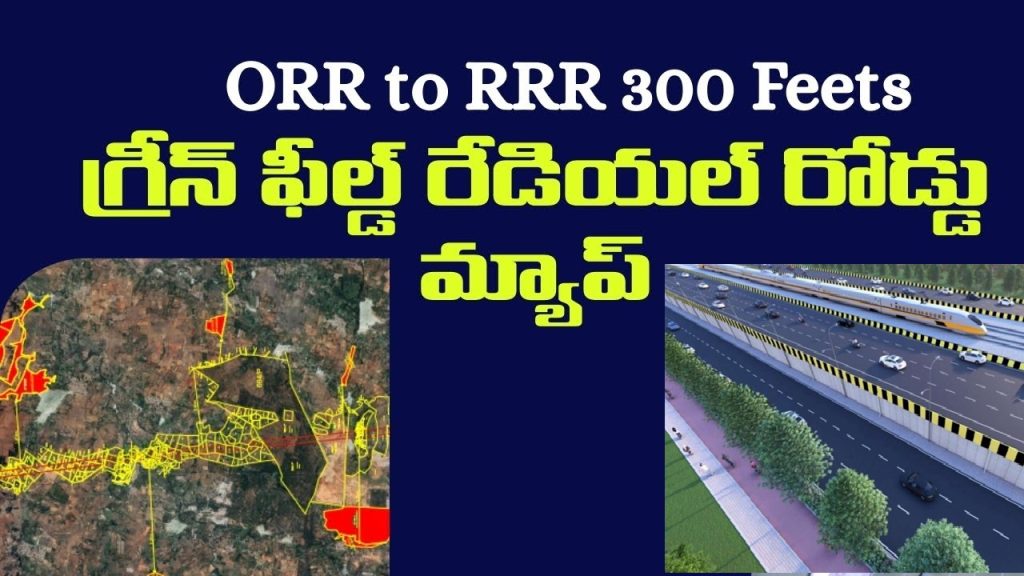
Telangana stands on the brink of a transformative infrastructure leap as Chief Minister A. Revanth Reddy prepares to lay the foundation stone for the Greenfield Radial Road-1 Project on September 28, 2025. This ambitious initiative promises to link the Outer Ring Road (ORR) at Raviryal’s Tata Interchange directly to the Regional Ring Road (RRR) at Amangal, fostering seamless travel, economic vitality, and sustainable development across southern Hyderabad and beyond. As a key artery in Telangana’s expanding network, the project underscores the state’s commitment to modernizing transportation while integrating eco-friendly elements like cycle tracks and greenbelts. In this comprehensive article, we delve into every facet of this game-changing roadway, exploring its design, benefits, and long-term impact on regional growth.
Understanding the Greenfield Radial Road-1 Project: A Vital Link in Telangana’s Infrastructure Map
Telangana’s government actively drives forward the Greenfield Radial Road-1 Project, a prestigious endeavor that connects key ring roads and boosts regional accessibility. Spanning a total length of 41.50 kilometers, the project divides into two phases for efficient execution. Phase I stretches 19.20 kilometers from the Raviryal ORR (Tata Interchange) to Meerkhanpet, while Phase II covers 22.30 kilometers from Meerkhanpet to the RRR at Amangal. This strategic alignment not only shortens travel distances but also integrates with existing infrastructure to create a robust transportation ecosystem.
Engineers design the road with a 100-meter right of way, establishing it as a partially access-controlled expressway. It features 3+3 lanes, expandable to 4+4 lanes, accommodating growing traffic demands from cars, trucks, and commercial vehicles. Beyond vehicular lanes, the project incorporates a dedicated metro or rail corridor, ensuring multimodal transport options. Cyclists and pedestrians benefit from specialized tracks and footpaths, while greenbelts and service roads enhance safety and aesthetics. This holistic approach positions the road as more than just a highway—it’s a blueprint for future urban mobility in Rangareddy District.
The project traverses 14 villages across six mandals in Rangareddy District, highlighting its role in rural-urban integration. With a total estimated cost of ₹4,621 crore—₹1,911 crore for Phase I and ₹2,710 crore for Phase II—the investment reflects Telangana’s dedication to high-quality infrastructure. Tenders for construction invite bids, aiming for completion within 30 months, and clearances process through the PARIVESH portal. The route navigates Telangana Industrial Infrastructure Corporation (TGIIC) land and reserve forest blocks, balancing development with environmental considerations.
The Historical Context: Evolution of ORR and RRR in Hyderabad’s Urban Expansion
Hyderabad’s Outer Ring Road (ORR) has long served as a cornerstone of the city’s connectivity since its inception in the early 2000s. Spanning 158 kilometers, the ORR encircles the metropolitan area, alleviating congestion in core zones and facilitating rapid access to suburbs. The Tata Interchange at Raviryal, named in honor of industrial icon Ratan Tata, symbolizes the blend of corporate legacy and public infrastructure. This junction already handles significant traffic from industrial hubs, making it an ideal starting point for the new radial road.
Meanwhile, the Regional Ring Road (RRR) emerges as the next evolution, a proposed 182-kilometer loop farther out to support Hyderabad’s sprawling growth. By connecting the RRR at Amangal, the Greenfield Radial Road-1 creates a direct radial spoke, much like veins feeding a heart. This design draws inspiration from global models, such as radial roads in cities like Delhi or Mumbai, where similar networks have spurred economic booms. In Telangana, this project aligns with broader visions under initiatives like the Hyderabad Metropolitan Development Authority (HMDA), which prioritizes sustainable urban planning.
Historically, Telangana’s infrastructure investments have yielded impressive results. For instance, the ORR’s completion reduced travel times by up to 50% in some sectors, boosting real estate values and attracting investments. The Ratan Tata Road—officially the Greenfield Radial Road-1—builds on this legacy, named to commemorate Ratan Tata’s contributions to India’s industrial landscape. As Chief Minister Revanth Reddy lays the foundation, it marks a pivotal moment, echoing past milestones like the inauguration of the Nehru ORR phases.
Key Features and Design Innovations: Building a Future-Ready Expressway
Designers equip the Greenfield Radial Road-1 with cutting-edge features that prioritize efficiency, safety, and sustainability. The 3+3 lane configuration, with provisions for expansion to 4+4 lanes, ensures the road adapts to future traffic surges. High-speed vehicles zip along the main carriageway, while service roads handle local access, minimizing disruptions.
A standout innovation includes the integrated metro or rail corridor, which paves the way for seamless public transit integration. Imagine commuters switching effortlessly from road to rail, reducing reliance on personal vehicles. Cycle tracks and footpaths promote active mobility, encouraging healthier lifestyles amid urban sprawl. Greenbelts along the route not only beautify the landscape but also act as natural buffers against pollution, incorporating native flora to support biodiversity.
The project adheres to modern engineering standards, incorporating smart technologies like intelligent traffic management systems (ITMS) for real-time monitoring. Elevated sections and underpasses address terrain challenges, particularly in forested areas. By routing through TGIIC land, the road minimizes land acquisition issues, focusing on industrial synergies. These elements collectively make the road a model for greenfield projects, where “greenfield” refers to undeveloped land, allowing for fresh, innovative designs unhindered by existing structures.
Current Status and Timeline: From Planning to Groundbreaking
Authorities actively advance the Greenfield Radial Road-1 toward realization. Tenders invite contractors, with bids evaluated for expertise in large-scale highway construction. The 30-month completion timeline sets an aggressive yet achievable pace, drawing from successful precedents like the rapid build of ORR segments.
Environmental and regulatory clearances proceed via the PARIVESH portal, a centralized platform ensuring compliance with national guidelines. This includes assessments for forest land usage, where the road passes through reserve blocks. Mitigation measures, such as wildlife corridors and afforestation, address ecological concerns, demonstrating Telangana’s proactive environmental stewardship.
On September 28, 2025, Honorable Chief Minister A. Revanth Reddy will lay the foundation stone, signaling the official commencement. Work crews mobilize shortly after, with initial focus on Phase I. This event not only kickstarts construction but also galvanizes public support, highlighting the government’s vision for a connected Telangana.
Economic Impacts: Driving Growth in IT, Pharma, and Manufacturing Sectors
The Greenfield Radial Road-1 ignites economic engines across southern Telangana. By slashing travel times and easing congestion, it enhances logistics efficiency, crucial for industries like IT, pharmaceuticals, and electronics. IT hubs in Hyderabad’s southern corridors gain faster access, attracting global firms and fostering job creation.
Pharma clusters, already a Telangana stronghold, benefit from streamlined supply chains. Trucks transport raw materials and finished goods swiftly, reducing costs and improving competitiveness. The road’s link to E-City—a burgeoning electronics and semiconductor hub—positions it as a gateway to high-tech innovation. Semiconductors, vital for everything from smartphones to EVs, thrive with reliable infrastructure.
Moreover, integration with Bharat Future City amplifies opportunities. This envisioned smart city focuses on digital technologies and sustainability, and the radial road serves as its lifeline. Investors eye the area for developments in AI, renewable energy, and biotech, projecting thousands of jobs. Economic analysts forecast a multiplier effect, where every rupee invested in infrastructure yields multiple returns through increased GDP, tax revenues, and private investments.
Boosting Education and Skills: The Link to Telangana’s Skill University
Education forms a pillar of Telangana’s development strategy, and the Greenfield Radial Road-1 strengthens this foundation. By connecting to the proposed Skill University, the road facilitates access for students and professionals, bridging education with employment.
The Skill University aims to equip youth with industry-relevant skills in fields like IT, engineering, and healthcare. Improved connectivity means shorter commutes, encouraging enrollment from rural villages. This ecosystem nurtures talent pipelines for nearby industrial zones, reducing urban migration pressures.
Programs in vocational training, apprenticeships, and research collaborations flourish with better logistics. For instance, pharma companies partner with the university for specialized courses, creating a symbiotic relationship. Ultimately, the road empowers communities, transforming Rangareddy District into a hub of knowledge-driven growth.
Environmental Sustainability: Eco-Friendly Elements in Modern Road Design
Sustainability drives the Greenfield Radial Road-1’s ethos. Cycle tracks and footpaths promote low-carbon transport, aligning with global climate goals. Greenbelts mitigate urban heat islands, absorbing CO2 and enhancing air quality.
The project’s eco-friendly features extend to rainwater harvesting systems and solar-powered lighting, reducing operational footprints. By preserving reserve forest integrity through minimal intrusion, it sets a benchmark for green infrastructure. Future public transit options, like the metro corridor, further cut emissions.
Telangana’s approach mirrors international best practices, such as Europe’s green highways or Singapore’s integrated urban planning. These measures ensure the road not only connects places but also safeguards the planet for generations.
Social Benefits: Enhancing Quality of Life in Rangareddy District Villages
The road touches 14 villages in six mandals, bringing urban amenities to rural doorsteps. Residents gain better access to healthcare, education, and markets, uplifting living standards.
Reduced travel times mean more family time and less fatigue, while safer roads decrease accident risks. Community consultations during planning incorporate local feedback, fostering ownership. Women and youth particularly benefit from improved mobility, opening doors to opportunities.
Cultural preservation remains key; the route avoids sensitive sites, respecting heritage. Overall, the project weaves social fabric stronger, promoting inclusive development.
Challenges and Solutions: Navigating Land, Environment, and Funding Hurdles
Every major project faces obstacles, and the Greenfield Radial Road-1 addresses them head-on. Land acquisition through TGIIC minimizes disputes, but forest clearances require careful navigation.
Funding, at ₹4,621 crore, draws from state budgets and potential public-private partnerships. Innovative financing like green bonds could supplement resources. Construction challenges, such as monsoons, mitigate with phased execution and advanced techniques.
Stakeholder engagement resolves issues, ensuring smooth progress. Telangana’s track record in overcoming such hurdles inspires confidence.
Comparative Analysis: How Ratan Tata Road Stacks Up Against Other Indian Highways
Compared to Delhi’s Eastern Peripheral Expressway or Mumbai’s Coastal Road, the Ratan Tata Road emphasizes sustainability. Its expandable lanes mirror the Yamuna Expressway’s design, while multimodal integration echoes Bengaluru’s NICE Road.
In cost-efficiency, Telangana’s project offers value, with per-kilometer expenses competitive nationally. Benefits like industrial boosts surpass many peers, positioning it as a leader in regional connectivity.
The Visionary Leadership: Chief Minister Revanth Reddy’s Role in Telangana’s Progress
Chief Minister A. Revanth Reddy champions infrastructure as a growth catalyst. His foundation-laying on September 28, 2025, underscores commitment to visionary projects.
Under his leadership, Telangana attracts investments, with policies favoring innovation. The radial road aligns with his agenda for equitable development, blending urban expansion with rural upliftment.
Future Prospects: Paving the Way for Telangana’s Next Decade
Looking ahead, the Greenfield Radial Road-1 catalyzes further developments. Expanded phases could link more districts, while smart city integrations enhance livability.
Economic projections estimate billions in added value, with job creation in thousands. As Telangana evolves, this road stands as a testament to forward-thinking planning.
Conclusion: A Road to Prosperity and Connectivity
The Greenfield Radial Road-1, or Ratan Tata Road, heralds a new era for Telangana. From Raviryal ORR to Amangal RRR, it connects dreams to reality, driving progress. As construction begins, the state steps toward a brighter, more connected future.