


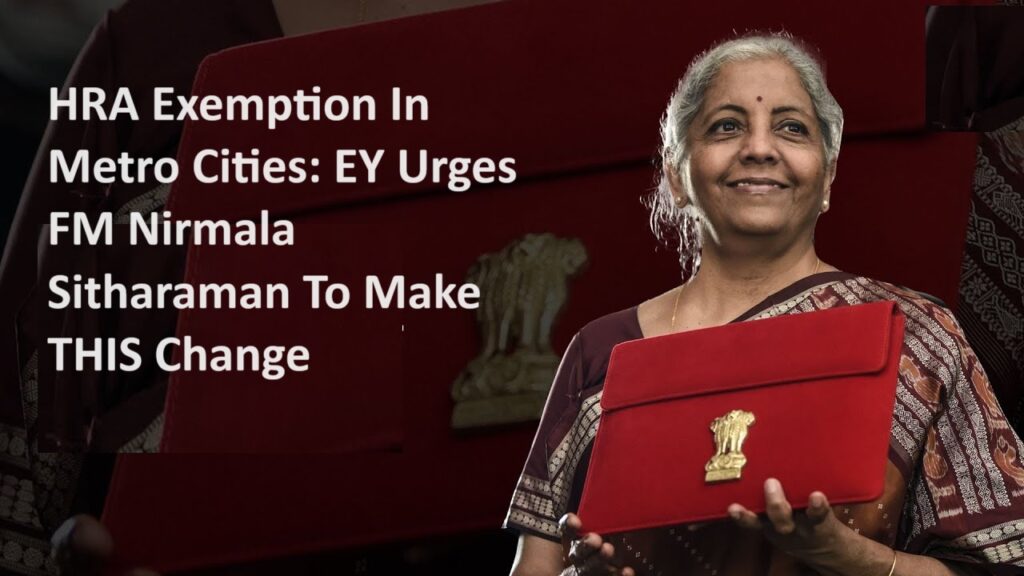
Expanding Metro City Criteria for HRA Exemption to Benefit Taxpayers EY’s Proposal to the government to expand the definition of metro cities for HRA exemption purposes, potentially benefiting a large number of taxpayers.
EY Recommends Including More Cities for HRA Exemption Calculation
EY has urged Finance Minister Nirmala Sitharaman to expand the definition of metro cities for House Rent Allowance (HRA) exemption calculations in Income Tax filings. This recommendation comes ahead of the upcoming Interim Budget 2024.
EY suggests that more cities, such as Bengaluru, Pune, Hyderabad, and Ahmedabad, should be recognized as metros for HRA calculation purposes. This would allow individuals living in these cities to claim a higher HRA exemption, thereby reducing their tax burden.
Current HRA Exemption Rules
Currently, the Income Tax Act defines metro cities as Delhi, Mumbai, Kolkata, and Chennai. Individuals living in these cities can claim an HRA exemption of up to 50% of their basic salary. However, individuals living in other cities can only claim an HRA exemption of up to 40% of their basic salary.
Potential Impact of EY’s Recommendation
If EY’s recommendation is accepted, it would benefit a large number of taxpayers. It would also help to align the HRA exemption rules with the changing realities of India’s urban landscape.
EY’s Rationale for the Recommendation
EY has provided several reasons for its recommendation. Notably, it points out that the cost of living in many non-metro cities has been rising steadily in recent years. This has made it increasingly difficult for individuals to find affordable housing in these cities. Expanding the definition of metro cities would help to address this issue by making it more affordable for individuals to rent housing in these cities.
What is HRA?
House Rent Allowance (HRA) is a component of an employee’s salary that is intended to help cover the cost of rent. In India, HRA is partially tax-exempt, which means that employees can claim a deduction for a portion of their HRA when filing their income tax returns.
Current HRA Exemption Rules
The current HRA exemption rules are as follows:
- The least of the following is exempt from tax:
- Actual HRA received
- 50% of basic salary for residents of metro cities (Delhi, Mumbai, Chennai, and Kolkata)
- 40% of basic salary for non-metro residents
- Excess of annual rent paid over 10% of annual salary
In its pre-Budget 2024 recommendations, EY has urged Finance Minister Nirmala Sitharaman to expand the definition of metro cities for HRA exemption calculations. The firm has suggested including the following cities in the metro category:
- Bengaluru
- Pune
- Hyderabad
- Ahmedabad
Benefits of Expanding Metro City Definition
Expanding the definition of metro cities for HRA exemption calculations would have several benefits, including:
- Increased tax savings for employees: Employees living in these cities would be able to claim a higher HRA exemption, which would reduce their tax liability.
- Boost to the rental housing market: This change could lead to increased demand for rental housing in these cities, as employees would be more likely to rent a house if they can claim a higher HRA exemption.
- Attract and retain talent: Companies in these cities would be better able to attract and retain talent, as employees would be able to save more on taxes.
EY’s Other Recommendations
In addition to expanding the definition of metro cities, EY has also recommended the following changes to the income tax laws:
- Overhaul of the capital gains tax structure
- Increase in the tax-free threshold for gifts
- Measures to expedite the resolution of pending appeals
- Clarity on the taxation of employer contributions to specified funds
Conclusion
The expansion of the definition of metro cities for HRA exemption calculations would be a welcome move for employees and employers alike. It would also be a positive step towards simplifying the income tax laws.
Frequently Asked Questions
Q: What is HRA exemption? A: HRA exemption is a tax benefit that allows individuals to claim a deduction for the rent they pay for their accommodation.
Q: Which cities are currently considered metro cities for HRA exemption purposes? A: Currently, the following cities are considered metro cities for HRA exemption purposes: Delhi, Mumbai, Kolkata, and Chennai.
Q: What are the potential benefits of expanding the definition of metro cities for HRA exemption purposes? A: Expanding the definition of metro cities would allow individuals living in more cities to claim a higher HRA exemption. This would reduce their tax burden and make it more affordable for them to rent housing.