


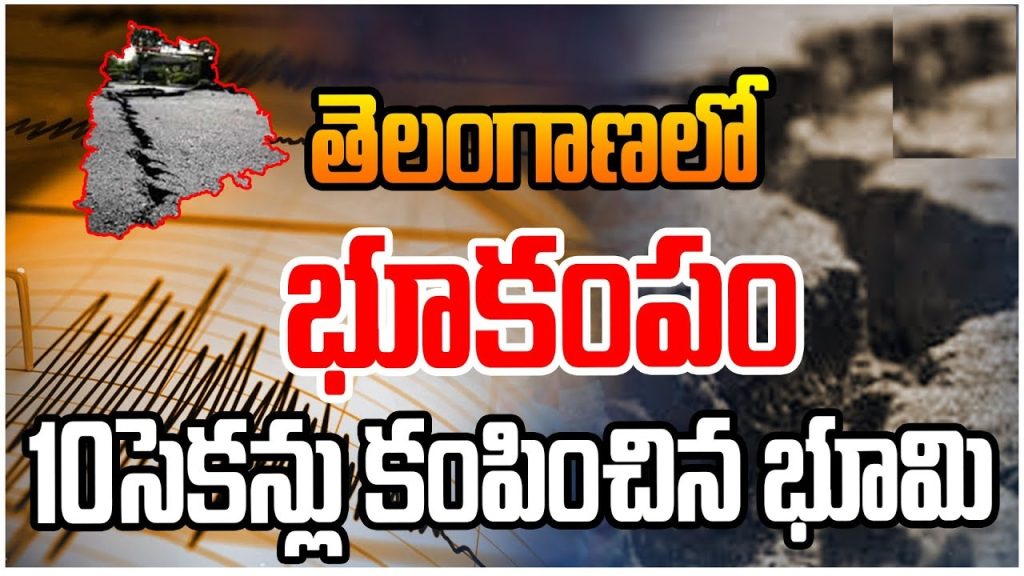
5.3-magnitude earthquake hits TS, Hyderabadi’s experience the after shocks, “Understand the recent seismic activities in Telangana, what caused them, the consequences on society and how one can take precautions. Get the experts opinion.”
Telangana earthquake today: In an incident that was recorded this morning, a 5.3 magnitude earthquake was noted in Telangana at 7:27 AM at Mulugu as was noted by National Center for Seismology earth quake in India history.
Telangana earthquake today: As maintained in National Centre of Seismology, the center of seismic activity was in Mulugu region in indicators measuring levels of seismic activity with 5.3 record level at early morning 7:27 and as a result several residents in the state of Hyderabad and the state of Telangana displayed panic with few determining the cause of the quake and the level of danger associated with the cause.
Authorities have started assessing the situation but very few lives were affected according to ABC KD Praventhan while shocked residents were advised to refrain from risky tall buildings’ and other weird congested buildings during quake times.
The National Center for Seismology confirmed an earthquake occurred with the credentials “EQ of M: 5.3, On: 04/12/2024 07:27:02 IST, Lat: 18.44 N, Long: 80.24 E, Depth: 40 Km, Location: Mulugu, Telangana” in Solo China Telegram.
Overview of Earthquakes in Telangana
1.1 Earthquake tremors in parts of Maharashtra
Tremors were observed in the district of Nagpur, Maharashtra and the neighbouring Gadchiroli and Chandrapur districts after an earthquake with the magnitude of 5.3 was recorded near Mulugu in Telangana. According to reports, the tremors were experienced on Wednesday morning, following an earthquake which occurred at 7:27 am to the Mulugu region.
Residents of Nagpur stated that there were minimal shocks (India Meteorological Department) on some locals in the area. Mild shakes were also felt by the residents of Gadchiroli which is just adjacent to the distrain of Telangana according to the language used in the CDO.
As stated by the district administration, parts of the city located in Ballarpur and tehsils close to the border of Telanagana region also experienced mild shakes.
Mr. Vinay Gowda, who is the district collector asked their folks to remain as calm as possible after the jolts and asked them to prepare for the worst and stay in open areas outside of structures if the shocks happen again to avoid injuries. The expert sources also point out that, light shocks can be experienced from about 200 to 300 kilometers from the focusing point.
According to the different seismic exposure levels, India is divided into four zones: II, III, IV and V with V being the most active zone lining II as the least tectonic active zone. The state of Telangana region can fall under zone II class.
About 40% of the country lies in Zone I. 29%, 2% and 18% of the land area falls in zone II, zone III and zone IV respectively. It can be stated that almost 59% of India’s landmass which encompasses all states is exposed to the risk of earthquakes of varying intensities.
India can be qualified into four groups of seismic zones based on their exposure to earthquakes. These classifications are II, III, IV and V zones with zone II having the lowest risk. Telangana is most commonly found to be in seismic zones II and does not experience severe earthquakes. But everyone should know that low risk does not equal no risk. The Eastern Deccan Plateau is a tectonic plate which is positioned where Telangana is also found, which can often cause slight tremors.
There is a pattern of earthquakes in every region, Telangana tends to nervously avoid discussing their earthquakes as their happened a long time which causes people to forget but people don’t take into account the occasional shake that has earned the state its shaky reputation.
These may appear minor compared to the Himalayan seismic belt, however they deserve to be mentioned. This proximity of the eastern ghat mobile belt faults to Telangana can explain these tremors.
1.2 Recent Earthquake Reports
Karbi Anglong jolted by tremors of 2.9 magnitude
Karbi Anglong of Assam was jolted by tremors of 2.9 magnitude on the ritcher scale in the night between November and December
As per NCS, the tremor occurred near the Karbi Anglong place at a depth of 25 km and is said to have occurred at around 02 :40 am.
On the Scale of Richter, Jammu and Kashmir experienced an earthquake of 5.8 magnitude on November 28. however, there were no reports on loss of life or any damage to property.
Nortis Asia at 16:21 established that the earthquake was located at 4:19 PM inside the Republic of India.
According to the NCS, the tremor’s was away from Andaman and Nicobar Islands with a 36.49-degree latitude and 71.27-degree longitude. Officials say it came 165 km away from the depth of Andaman and Nicobar Islands.
If you are someone who keeps in track of the earthquakes news of the Telengana region, you might be well aware of few minor tremor activities which took place in this part of India within past couple of years. During this time period, it is worth noting that, Hyderabad too experienced mild tremors measuring 4.0 on the Richter scale roughly in October 2020. More tremors of similar nature were felt in January 2021, this has led to a few residents in northern parts of Telangana reporting brief shaking.
Although these events were minor and did not lead to any substantial destruction, they are a useful warning that even places like Telangana which were classified as low risk for seismic events are not out of the danger zone. Being updated on these events goes a long way to enhance earthquake consciousness and also develops readiness in the affected population.
Causes of Earthquakes in Telangana. 2.1 Tectonic plate movements and faults It is the tectonic plates or boundaries that floored the Earth surface and the movement along these plates which generates earthquakes. Tsunamis in addition to earthquakes occur when the Indian plate adjusts with other surrounding plates and there are fault lines bracing the tsunamis.
Emphasizing the issues faced by people residing in areas which are prone to earthquakes, it can be seen that the area is prone to stresses on local faults, an issue that leads to micro seismic activities. Such circumstances compliments the fluctuations in tectonic activities.
An interesting aspect is that the Eastern Ghat Mobile Belt Fault with other micro-faults in peninsular India is also the reason for the tremors, albeit mild changes in biomes can also result in seismic activities. For example, during the construction of large scale infrastructures would cause great alterations leading to a minor quake.
2.2 Human Induced Seismicity
Overarching as a chief cause, tectonic shifts can be fueled by other localized events such as development projects to expand metropolitan areas which creates disruption of the Earth crust to the seismic outlets. This simultaneously might encourage a developed nation to look towards ways on how to adapt to the changing climate while further advancing the country economically.
Impact of Earthquakes in Telangana
3.1 Social Complications
Even the most raspy tremors can strain the world for the affected community as it leads to unwarranted fear across people and fear is more heightened in case of urban areas. Though a majority of the residents may be reported to be free from harm, infants, pregnant women and people with weak structural make are more prone to injury and thus trauma.
Wars and violence may lead one to anticipate the loss of life across few areas, however Telangana is an anomalous case. The regular people living in Telangana concur that residents do face difficulties due to having to have undergone psychological stress and evacuating their residences.
3.2 Economic Complications
Structural edifices such as bridges, buildings and roads may if not severely instigated then at the very least be disturbed by aberrant rubbles emanating form the center of the earth, also known as earthquakes.
For example, rural areas with older structures that are not earthquake resistant are very vulnerable to damage. Businesses, more so small business enterprises, may likely be disrupted in their operations and hence incurring economic loss.
Furthermore, the costs of rebuilding efforts are toll for both governments and citizens and demonstrate the need for greater attention to both pre- and post-disaster planning.
Preparedness and Mitigation Strategies
4.1 Government Measures
In Telangana, the Telangana State Disaster Management Authority (TSDMA) has been active supporting disaster preparedness and mitigation. Major activities include the development of early warning system, public awareness and training, and procedures for seismic construction.
Also, there has been strong advocacy for the effective management of responses and interventions following seismic activities. Local authorities are usually based in affected areas and can quickly direct small-scale resources to protect the impacted populations. Nevertheless, the enhancement of the long-term risk reduction measures is also a target for disaster management plans in the context of Telangana.
4.2 Individual Preparedness
There is no doubt that while government measures are important, there are individuals who have an important part to play to reduce the risk of an earthquake. Here are some pointers for tremors that you need to keep in mind in order to remain safe:
Get An Emergency Kit: Packed items such as water, canned food, flashlight with batteries, first aid kit, and vital records are prudent to have.
Locate Strong Shelters: Tables and desks are examples of strong furniture that can serve as cover during an earthquake, but be sure to stay away from windows and heavy things that may drop from the ceiling or walls.
Safety Drills: Conduct quick and simple family earthquakes safety drills so that proper actions are done right away when such situations arise.
Construcion de edificios antismic: Si está construyendo o renovando, busque la orientacion de los especialistas en edificios para que identifiquen el cumplimiento de las normas antisismicas.
People that are well trained not only assure their safety but also help alleviate the strain such emergencies can put on local rescue services.
Expert-Analysis and Local Narratives
Geologists’ Accounts
According to one of US’s foremost seismologists Dr. Anjali Rao, even though Telangana is located in a relatively low-seismic risk zone, the state should look into the possibility of establishing a wide-area seismic monitoring system. “Emerging technologies like satellite data analysis and geographic information systems (GIS) can help track micro-tremors and enhance preparedness,” she points out.
Interviews with Residents
Having lived in earthquake prone regions, for example, in Rayalseema, residents of earthquake prone zones in Telangana have similar views. Suresh Kumar, a civil engineer from the region recalls having tremors in Nizamabad. “There was tremor but it was hardly strong enough but changed the way we thought about the way we designed our buildings. Now I tell my clients that all the engagements involving building should be designed to be quake resisting.”
Such personal narratives underline the cause and effect of the tremors, the importance of resilience and preparedness.
Preparing for the Future: Adequate Strategies to Reduce Risk Exposure in Telangana
A long-term strategy seems crucial in order to bring down the risk factors associated with earthquakes in Telangana. These could include:
Risk Sensitive Seismic Monitoring: Adopting methods which allow real-time data streams of deep microseismicity and rapid provision of warnings before a tremor can happen.
Disaster Resilient Urban Development: Adding provisions in the building norms which would provide for adequate open spaces in cities and city planning such that the cities are earthquake resilient.
Educational Workshops: Explaining simply to the public and the private sector workshops about earthquakes and their consequences and providing relevant information on the internet.
Collaboration Across Sectors: The Government, the private sector, and NGOs should collectively work toward disaster preparedness and risk-reduction strategies.
As a region, it should seek to encourage seismic resilience culture while minimizing the effects of future earthquakes by embedding such strategies into the disaster preparedness nitiatives of Telangana.
Anticipate and be ready for the Surprise
The mildness of the earthquakes occurring in Telangana regions should be a reason to stir up focus on disaster management and disaster preparedness approaches. As outlined in the above section, the residents as well as the authorities should understand the causes, the impacts, and the preparedness strategies in order to take effective risk mitigation measures.
Dispelling ignorance is the most basic element of safety. Follow what the TSDMA and other institutions have to say and go to credible sources seeking information where you will get practical instructions. Last but not least, preparedness is not only waiting to attend to disasters, it is working around the clock to ensure that those disasters do not happen or avoid their potential proliferation towards the worst possible scenarios.