


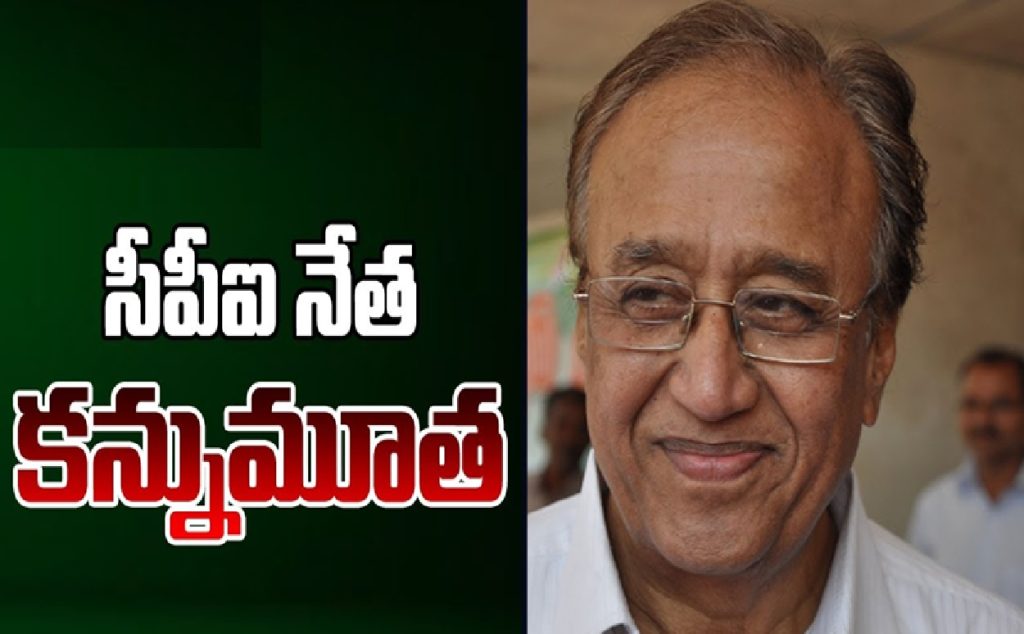
Communist Giant Suravaram Sudhakar Reddy Passes Away at 83: A Three-Term CPI General Secretary’s Journey from Student Activism to National Leadership. The Communist Party of India has lost one of its most towering figures with the passing of Suravaram Sudhakar Reddy, who breathed his last on Friday night at a private hospital in Hyderabad. The 83-year-old veteran leader died due to age-related complications and breathing difficulties, marking the end of an era in Indian leftist politics. Sudhakar Reddy’s death represents a significant loss for the Communist movement in India, as he served as the party’s General Secretary for three consecutive terms from 2012 to 2019, making him one of the most influential Communist leaders in contemporary Indian politics.
The Final Chapter: Death of a Revolutionary Leader
Suravaram Sudhakar Reddy’s final moments came at a care hospital in Gachibowli, Hyderabad, where he had been receiving treatment for respiratory complications that had developed alongside his advancing age. The Communist stalwart, who had dedicated over six decades of his life to the party and public service, passed away surrounded by the love of his family. He leaves behind his wife, Dr. BV Vijayalakshmi, and two sons, Nikhil and Kapil, who resided with him in their Manikonda home in Hyderabad.
The timing of Sudhakar Reddy’s death comes at a crucial juncture for the Communist Party of India, which has been working to maintain its relevance in contemporary Indian politics. His passing marks the end of an era that witnessed the transformation of Indian leftist politics from its revolutionary roots to its modern parliamentary incarnation. The veteran leader’s death was announced by CPI sources on Friday evening, prompting an outpouring of condolences from across the political spectrum.
Party arrangements revealed that Sudhakar Reddy’s mortal remains would be brought to the CPI state office in Hyderabad on Sunday morning at 10 AM, allowing party workers and supporters to pay their final respects before the body would be handed over to Gandhi Medical College. This final gesture underscores the leader’s commitment to serving society even in death, as his body will contribute to medical education and research.
Roots of Revolution: Early Life and Educational Foundation
Born on March 25, 1942, in the village of Kondravupalli in what is now the Koderu mandal of Jogulamba Gadwal district, Suravaram Sudhakar Reddy came from a family deeply embedded in India’s freedom struggle. His father, Suravaram Venkatram Reddy, was a freedom fighter who participated in the independence movement against British colonial rule, while his grandfather, Suravaram Pratap Reddy, also contributed to the nationalist cause. This family background of resistance and social consciousness profoundly shaped young Sudhakar Reddy’s worldview and political orientation.
The future Communist leader’s early years coincided with some of the most tumultuous periods in Indian history. Growing up during World War II and the intensifying freedom struggle, Sudhakar Reddy witnessed firsthand the social inequalities and economic exploitation that would later drive his political activism. His family’s involvement in the freedom movement exposed him to discussions about social justice, economic equality, and the need for systemic change that would characterize his entire political career.
For his education, Sudhakar Reddy moved to Kurnool, where he attended the Municipal High School and later Coles Memorial High School. Even during his school years, the seeds of his activist nature began to manifest. At the remarkably young age of 15, he became involved in a student agitation demanding basic educational infrastructure for his school, including blackboards, chalk, and textbooks. This early involvement in collective action for educational rights would prove to be a defining moment that set the trajectory for his lifelong commitment to student and workers’ rights.
The student movement that began at his school in Kurnool soon spread to other educational institutions across the district, demonstrating young Sudhakar Reddy’s natural leadership abilities and his capacity to mobilize people around common causes. This early success in organizing student protests revealed his innate understanding of grassroots mobilization and his ability to articulate the concerns of ordinary people—skills that would serve him throughout his political career.
After completing his school education, Sudhakar Reddy pursued his Bachelor of Arts degree in History from Osmania College in Kurnool in 1964. His choice of history as his academic focus reflected his deep interest in understanding social movements, political change, and the forces that shape society. The study of history provided him with a broader perspective on social transformation and revolutionary movements, knowledge that would prove invaluable in his later political career.
Following his undergraduate degree, Sudhakar Reddy moved to Hyderabad to pursue legal studies at Osmania University Law College, from where he graduated with an LLB degree in 1967. His legal education equipped him with the analytical skills and understanding of constitutional processes that would later make him an effective parliamentarian and party leader. The combination of historical knowledge and legal training created a solid intellectual foundation for his future roles in both party organization and legislative work.
Student Movement Leadership: Forging a Revolutionary Path
Suravaram Sudhakar Reddy’s political journey began in earnest during his student years, when Communist ideology began to attract his attention and shape his worldview. His initial involvement in student protests at age 15 had already demonstrated his natural leadership abilities, but it was during his college years that he began to develop a systematic understanding of leftist politics and revolutionary theory.
In 1960, while still pursuing his education, Sudhakar Reddy assumed the role of Town Secretary for the All India Students’ Federation (AISF) in Kurnool. The AISF, founded in 1936, represented the student wing of the Communist movement in India and served as a crucial training ground for future party leaders. His appointment to this position at such a young age reflected both his demonstrated organizing abilities and the confidence that senior party members placed in his potential for leadership.

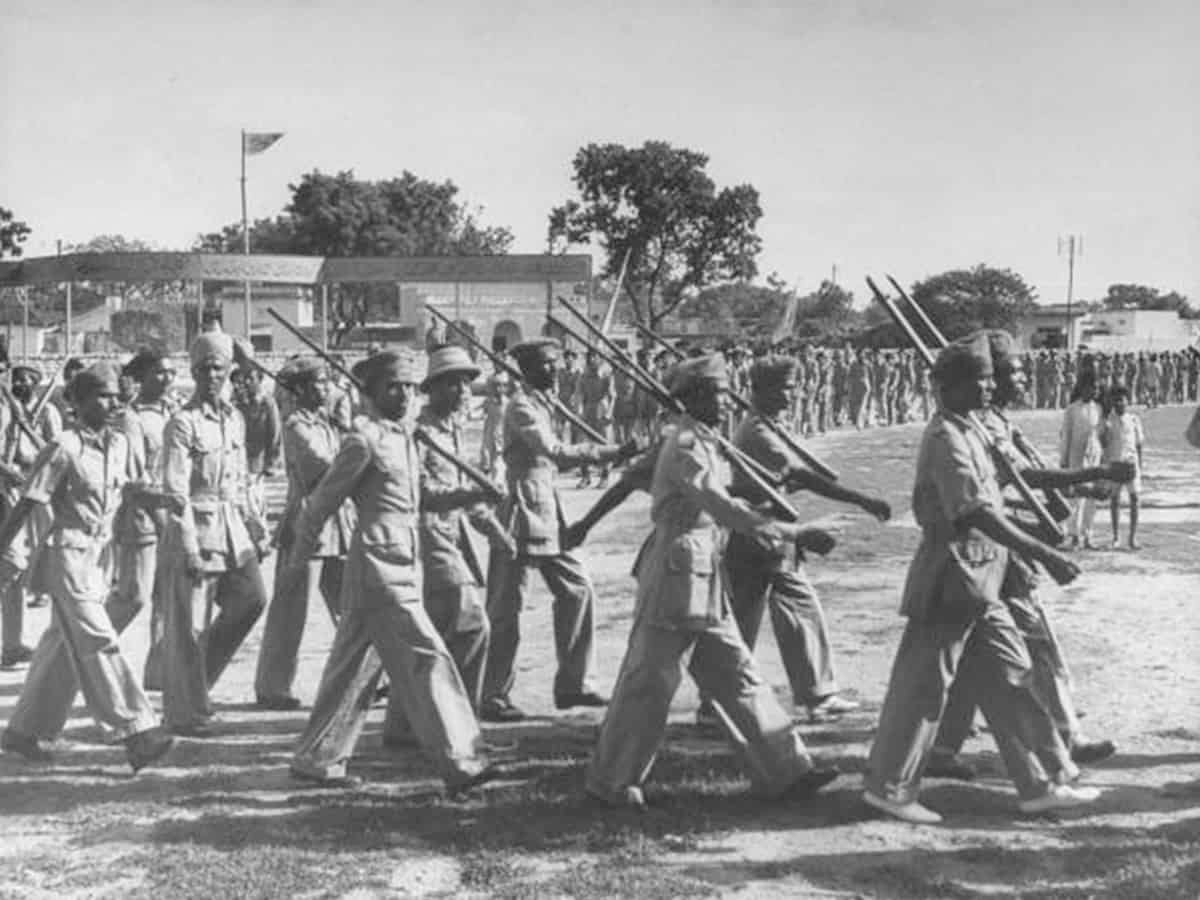
Historical black and white photo showing uniformed soldiers marching with rifles during a militant movement
From his position as Town Secretary, Sudhakar Reddy quickly progressed to become the District Secretary of AISF in Kurnool, expanding his influence and organizational reach. This progression through the ranks of the student organization provided him with invaluable experience in mass mobilization, political strategy, and organizational management. The AISF during this period was actively involved in various social and political causes, from educational reforms to anti-imperialism campaigns, giving Sudhakar Reddy exposure to a wide range of political issues.
One of the most significant campaigns during his student leadership period involved the establishment of Venkateswara University. In 1962, Sudhakar Reddy served as Secretary of the committee formed to advocate for the creation of this university, leading a sustained campaign that culminated in a 62-day strike. This extended protest demonstrated his ability to sustain long-term political campaigns and his commitment to educational access and quality. The success of this campaign enhanced his reputation as an effective organizer and strategic thinker.
In 1964, while completing his BA degree in Kurnool, Sudhakar Reddy achieved another significant milestone by being elected as President of the college student union. This electoral victory demonstrated his popularity among his peers and his ability to articulate student concerns effectively. His presidency provided him with additional experience in democratic leadership and institutional management that would prove valuable in his later political career.
The year 1966 marked a major breakthrough in Sudhakar Reddy’s political career when he was elected as General Secretary of the All India Students’ Federation at the national level. This position placed him at the helm of one of India’s most important student organizations during a period of significant political upheaval. As AISF General Secretary, he was responsible for coordinating student activities across the country and representing student interests in national political discussions.
When Sudhakar Reddy moved to Hyderabad for his law studies at Osmania University, he continued his student political activities with remarkable success. Within a week of joining the law college, he contested and won the election for General Secretary of the student union, demonstrating his immediate impact and natural leadership abilities. Following this victory, he took on state-level responsibilities within the AISF organization in Andhra Pradesh.
In 1970, building on his success with the AISF, Sudhakar Reddy transitioned to the All India Youth Federation (AIYF), the youth wing of the Communist Party of India. His election as President of AIYF in 1972 marked his evolution from student leader to youth political leader, expanding his influence beyond educational institutions to encompass broader youth concerns. This position provided him with experience in addressing youth unemployment, social justice issues, and political participation among young Indians.
The student movement during Sudhakar Reddy’s leadership period was characterized by its strong anti-colonial sentiment, support for social justice, and advocacy for educational reforms. Under his leadership, both AISF and AIYF became more sophisticated in their political analysis and more effective in their organizational activities. His success in these roles demonstrated his potential for higher political leadership and marked him as a rising star within the Communist Party of India.
Parliamentary Career: Representing the People’s Mandate
Suravaram Sudhakar Reddy’s transition from party organization work to electoral politics marked a significant phase in his political career. After decades of organizational work within the CPI at the state level, serving as a member of the Andhra Pradesh State Working Committee from 1974 to 1984, he was ready to test his political appeal in direct electoral competition.
His first major electoral attempt came in 1994, when he contested from the Dhone constituency against the incumbent Chief Minister Vijay Bhaskar Reddy. Although he was unsuccessful in this attempt, the campaign provided him with valuable experience in electoral politics and demonstrated his willingness to take on established political figures. This defeat taught him important lessons about constituency building and the complexities of electoral competition in Indian politics
The breakthrough in Sudhakar Reddy’s parliamentary career came in 1998, when he successfully contested the Nalgonda Lok Sabha constituency and was elected to the 12th Lok Sabha. This victory was particularly significant as it came during a period when the Communist parties were facing challenges in maintaining their electoral relevance in changing political circumstances. His success in Nalgonda demonstrated his ability to connect with voters and articulate the concerns of rural and working-class constituents.

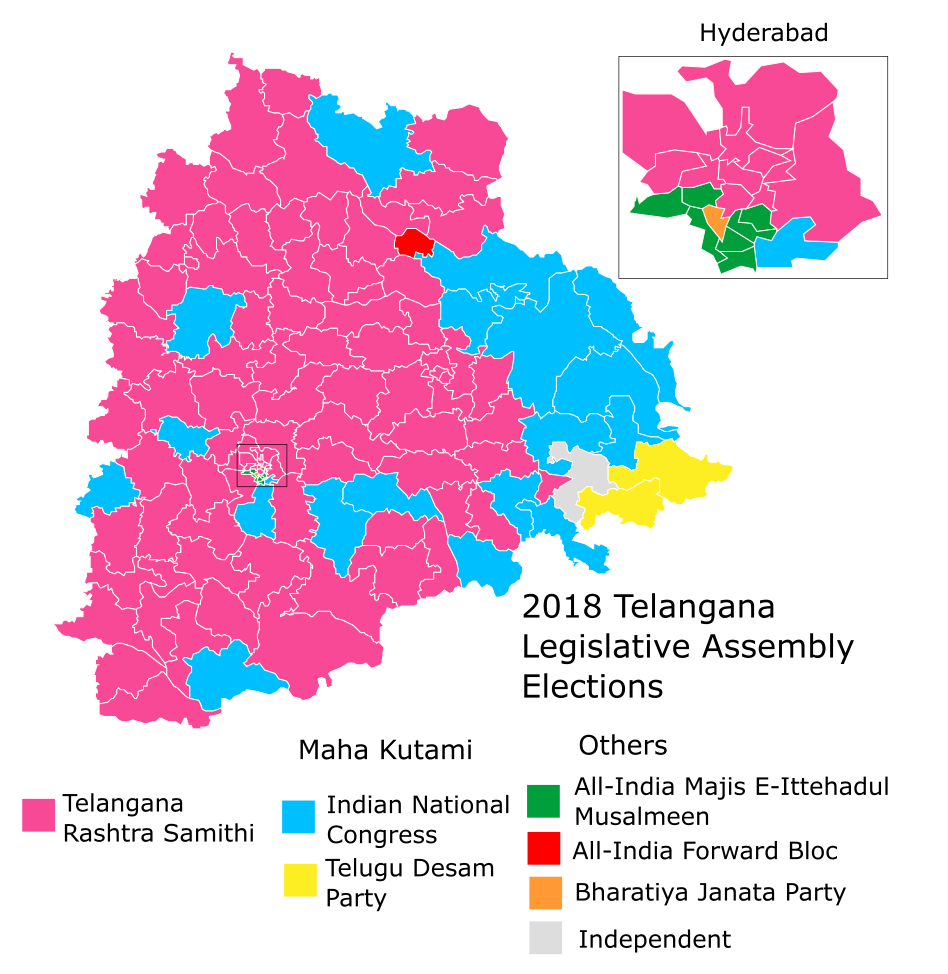
2018 Telangana Legislative Assembly election results map showing party-wise constituency wins across Telangana, including detailed view of Hyderabad
The Nalgonda constituency, located in what is now Telangana, provided Sudhakar Reddy with an ideal platform to address the concerns of farmers, agricultural workers, and rural communities. The constituency had a history of supporting candidates who championed the cause of the common people, making it a natural fit for a Communist leader committed to social justice and economic equality. His electoral success in 1998 established him as a significant political figure in Andhra Pradesh politics.
Sudhakar Reddy’s performance as a member of Parliament between 1998 and 2004 was marked by his consistent advocacy for farmers’ rights, workers’ welfare, and social justice issues. He used his position in the Lok Sabha to raise questions about government policies affecting rural communities and to propose legislation aimed at improving the conditions of working people. His parliamentary interventions were characterized by thorough preparation, detailed knowledge of issues, and passionate advocacy for his constituents.
The 2004 general elections saw Sudhakar Reddy successfully defending his Nalgonda seat, winning re-election to the 14th Lok Sabha. This victory was particularly gratifying as it demonstrated his continued connection with his constituents and validated his approach to parliamentary representation. During his second term, he took on additional responsibilities, including his appointment as Chairman of the Parliamentary Standing Committee on Labour.
As Chairman of the Parliamentary Committee on Labour, Sudhakar Reddy played a crucial role in shaping labor legislation and policy. His committee’s work focused on improving working conditions, expanding social security coverage for unorganized workers, and ensuring that labor laws kept pace with changing economic circumstances. The committee’s recommendations regarding social security benefits for unorganized workers were partially implemented by the government, representing a significant achievement in worker welfare policy.
However, the 2009 general elections proved challenging for Sudhakar Reddy, as he lost his Nalgonda seat to Congress candidate Gutha Sukender Reddy. This defeat came during a wave election that saw the Congress Party performing strongly across the country, and many Communist candidates, including Sudhakar Reddy, became casualties of this political shift. The loss was particularly disappointing given his strong track record as a parliamentarian and his deep connections to the constituency.
Despite this electoral setback, Sudhakar Reddy’s parliamentary career had established him as one of the most effective Communist legislators of his generation. His work on labor issues, his advocacy for farmers and rural workers, and his consistent principled stands on national issues had earned him respect across party lines. This parliamentary experience would prove invaluable when he later assumed leadership of the Communist Party of India at the national level.
CPI General Secretary: Three Terms of National Leadership
The pinnacle of Suravaram Sudhakar Reddy’s political career came with his election as General Secretary of the Communist Party of India, a position he would hold for three consecutive terms from 2012 to 2019. This achievement made him one of the longest-serving leaders of the CPI and placed him among the most influential Communist politicians in modern Indian history.
Sudhakar Reddy’s elevation to the position of General Secretary occurred during the party’s 21st National Congress held in Patna in March 2012. His election was unanimous, reflecting the widespread respect he had earned within the party for his decades of dedicated service, his parliamentary experience, and his deep understanding of both organizational work and electoral politics. The timing of his leadership transition was crucial, as the CPI was facing significant challenges in maintaining its political relevance in a rapidly changing Indian political landscape.
When Sudhakar Reddy assumed the leadership of the CPI, the party was grappling with declining electoral performance, competition from other left-wing parties, and the need to adapt its message and strategy to contemporary political realities. His experience as both an organizer and a parliamentarian positioned him well to address these challenges and to provide strategic direction for the party’s future development.
The 2015 party congress held in Puducherry saw Sudhakar Reddy’s re-election as General Secretary for a second term. This re-election demonstrated the party’s confidence in his leadership and his ability to navigate the complex challenges facing the Communist movement. During his second term, he focused on strengthening the party’s organizational structure, building coalitions with other left-wing parties, and developing strategies to address contemporary social and economic issues.
His third and final election as General Secretary came at the 2018 party congress held in Kollam, Kerala. This third term made him one of the few leaders in CPI history to serve three consecutive terms in the highest party position. However, his third term was cut short when health concerns forced him to resign from the position in July 2019, before the completion of his full term.
Throughout his tenure as General Secretary, Sudhakar Reddy worked to modernize the party’s approach to contemporary political challenges while maintaining its core ideological commitments. He recognized that the CPI needed to adapt its strategies to remain relevant in a political environment dominated by larger national parties, while continuing to advocate for the interests of workers, farmers, and other marginalized communities.
One of Sudhakar Reddy’s significant achievements as General Secretary was his role in maintaining party unity during a period when many Communist parties worldwide were experiencing internal divisions and ideological conflicts. His consensual leadership style and his ability to balance different viewpoints within the party helped maintain organizational coherence and prevented the kind of splits that had weakened other left-wing parties.
Under his leadership, the CPI also worked to strengthen its presence in trade union activities, farmers’ movements, and social justice campaigns. Sudhakar Reddy understood that the party’s future depended on its ability to remain connected to grassroots struggles and to provide leadership on issues that directly affected working people’s daily lives.
His resignation in 2019 due to health concerns marked the end of an era in CPI leadership. The party honored his contributions by acknowledging his role in maintaining organizational stability during challenging times and his efforts to adapt the party to contemporary political realities while preserving its core values and commitments.
Telangana Movement: Championing Regional Aspirations
Suravaram Sudhakar Reddy’s role in the Telangana movement represents one of the most significant aspects of his political legacy, demonstrating his ability to evolve his political positions based on changing circumstances and grassroots realities. His involvement in this movement showcased his commitment to democratic principles and his willingness to advocate for regional aspirations even when it required challenging established party positions.

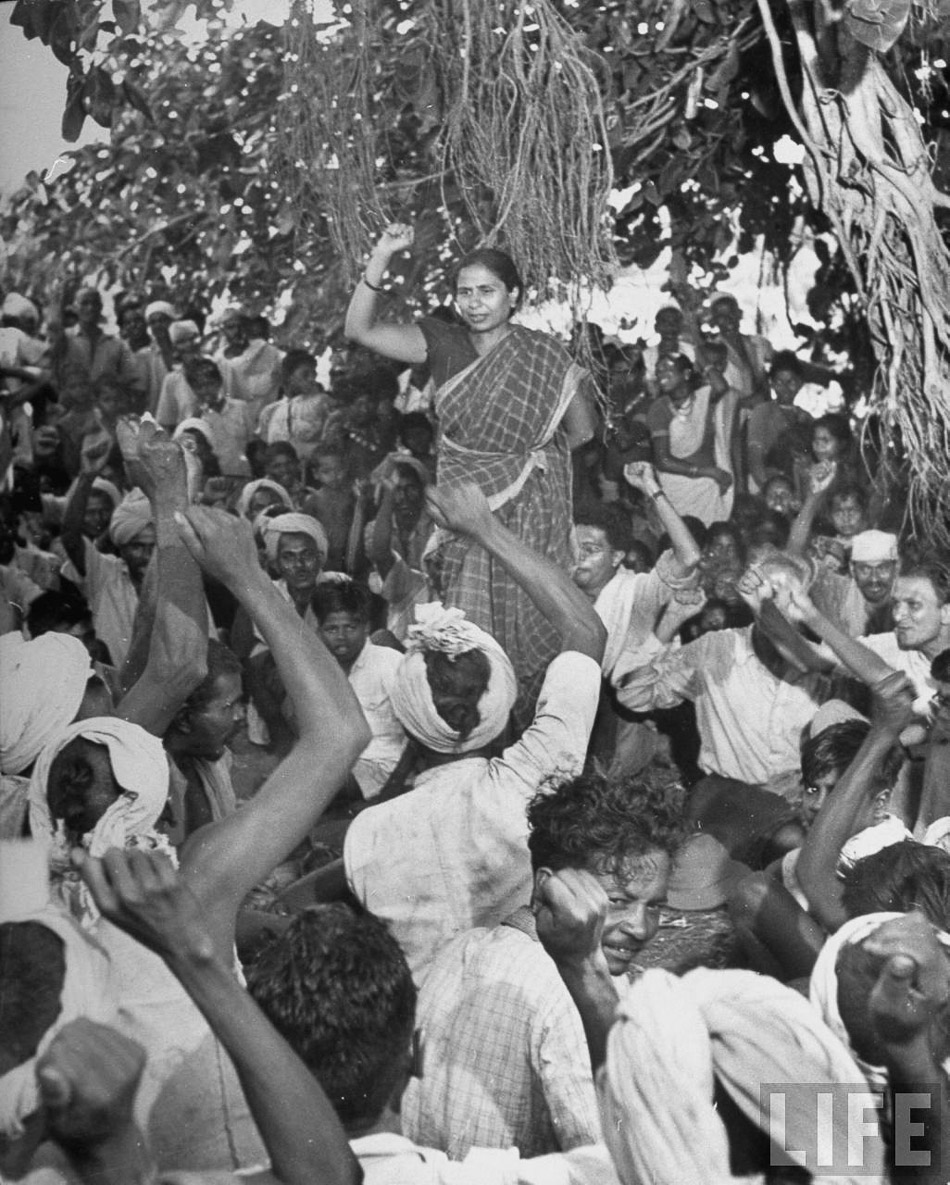
A historic protest scene showing a woman leader addressing and inspiring a crowd of demonstrators with raised fists under a banyan tree
Initially, the Communist Party of India, like many national parties, supported the formation of linguistic states but was not necessarily committed to further subdivision of existing states. The party’s original position on Telangana was that the region’s developmental challenges could be addressed through special economic packages and targeted government programs, rather than through the creation of a separate state. This position reflected the party’s traditional emphasis on class-based rather than region-based political mobilization.
However, as the Telangana movement gained momentum and it became clear that the developmental disparities between Telangana and other regions of Andhra Pradesh were not being adequately addressed through existing mechanisms, Sudhakar Reddy began to advocate for a reconsideration of the party’s position. His deep understanding of the region’s history, his connections to grassroots activists, and his commitment to democratic principles led him to support the demand for a separate Telangana state.
Sudhakar Reddy’s influence was instrumental in the CPI’s eventual shift from supporting special development packages to endorsing the creation of a separate Telangana state. This position change was not taken lightly by the party, as it represented a significant departure from its earlier stance and required careful consideration of the implications for the party’s presence in both Telangana and other regions of Andhra Pradesh.
The historical context of the Telangana movement was deeply connected to the Communist Party’s earlier involvement in the region. The Telangana Rebellion of 1946-1951 had been one of the most significant Communist-led peasant uprisings in Indian history, involving leaders like Ravi Narayana Reddy and other Communist activists who fought against feudal exploitation under the Nizam’s rule. This historical connection gave Sudhakar Reddy and the CPI a special responsibility to support the legitimate aspirations of the Telangana people.
Sudhakar Reddy’s advocacy for Telangana statehood was based on his understanding that genuine development required political autonomy and that the region’s specific needs could only be adequately addressed through separate statehood. His position was informed by his parliamentary experience, where he had witnessed how regional developmental issues were often overlooked in favor of larger state-wide priorities.
The creation of Telangana state in 2014 vindicated Sudhakar Reddy’s position and demonstrated his political foresight. The separate state has indeed been able to focus more effectively on addressing the specific developmental challenges of the region, including water resources management, industrial development, and agricultural modernization. Sudhakar Reddy’s role in this movement enhanced his stature as a leader who was willing to stand up for regional aspirations and democratic principles.
His involvement in the Telangana movement also demonstrated the evolution of Communist politics in India, showing how the party could adapt to regional realities while maintaining its core commitment to social justice and democratic governance. This flexibility and responsiveness to grassroots concerns became a hallmark of Sudhakar Reddy’s political leadership throughout his career.
Legislative Achievements: Champion of Workers’ Rights
One of Suravaram Sudhakar Reddy’s most significant contributions to Indian politics came through his legislative work, particularly his role as Chairman of the Parliamentary Standing Committee on Labour. This position allowed him to influence national policy on workers’ rights, social security, and labor conditions, areas that were central to his ideological commitments and political objectives.
As Chairman of the Labour Committee, Sudhakar Reddy presided over crucial deliberations regarding the modernization of India’s labor laws and the expansion of social security coverage for workers. His committee’s work was particularly focused on addressing the needs of unorganized workers, who represented a majority of India’s workforce but lacked adequate legal protections and social security benefits.
One of the most important pieces of legislation that came through his committee was the Workmen’s Compensation (Amendment) Bill, 2008. Under his chairmanship, the committee conducted extensive consultations with trade unions, employers, and government officials to develop recommendations for improving worker compensation and protection. The committee’s report, signed by Sudhakar Reddy on December 17, 2008, contained detailed recommendations for enhancing worker welfare and safety.
The committee’s work on social security for unorganized workers was particularly groundbreaking. Sudhakar Reddy understood that traditional labor laws were designed for the organized sector and did not adequately address the needs of the millions of workers in the informal economy. His committee’s recommendations for extending social security benefits to unorganized workers were partially implemented by the government, representing a significant step forward in worker welfare policy.
Sudhakar Reddy also used his position to advocate for improved working conditions across various industries. His committee conducted field visits to different parts of the country, including Ranchi, Bangalore, Kochi, and Thiruvananthapuram, to observe working conditions firsthand and interact with workers and their representatives. These visits provided valuable insights that informed the committee’s recommendations and ensured that its proposals were grounded in practical realities.
In addition to his committee work, Sudhakar Reddy was an active parliamentarian who regularly introduced private member bills and raised questions about government policies affecting workers and farmers. His parliamentary interventions were characterized by thorough preparation, detailed knowledge of issues, and passionate advocacy for the rights of working people. He was particularly vocal about corruption scandals and government policies that negatively affected ordinary citizens.
His advocacy for educational rights also extended to his parliamentary work, where he introduced bills focused on providing adequate nutritious food for school children and improving educational infrastructure. This work reflected his long-standing commitment to educational access and quality, dating back to his early involvement in student movements.
Sudhakar Reddy’s legislative achievements demonstrated his ability to translate ideological commitments into practical policy outcomes. His work on labor issues, in particular, showed how Communist parliamentarians could use the democratic system effectively to advance the interests of working people and marginalized communities.
Political Tributes: Recognition Across Party Lines
The death of Suravaram Sudhakar Reddy prompted an outpouring of condolences and tributes from political leaders across party lines, reflecting the respect he had earned throughout his decades of public service. These tributes highlighted not only his contributions to Communist politics but also his broader impact on Indian political life and his reputation as a principled and dedicated public servant.
Telangana Chief Minister A. Revanth Reddy expressed profound grief at Sudhakar Reddy’s passing, describing him as a towering leader who had strengthened people’s struggles and democratic movements. In his condolence message, the Chief Minister noted that Sudhakar Reddy belonged to the erstwhile Mahabubnagar district of Telangana and had played a key role in left politics at the national level while participating in numerous people’s struggles. The Chief Minister’s tribute emphasized Sudhakar Reddy’s commitment to social justice and his lifelong dedication to the welfare of ordinary people.
BRS president K. Chandrasekhar Rao also issued a heartfelt condolence message, describing Sudhakar Reddy as a “son of Telangana soil” who had dedicated his entire life to the upliftment of oppressed communities. KCR’s tribute was particularly significant given their shared history in Telangana politics and Sudhakar Reddy’s crucial role in the Telangana statehood movement. The BRS leader recalled his personal association with Sudhakar Reddy and praised his work during the Telangana movement.
Deputy Chief Minister Mallu Bhatti Vikramarka highlighted Sudhakar Reddy’s remarkable journey from a remote village to the national political stage, emphasizing how his rise represented the possibilities available in Indian democracy for dedicated public servants. This tribute underscored the inspirational aspect of Sudhakar Reddy’s life story and his role as a representative of grassroots political leadership
Minister Komatireddy Venkat Reddy noted that Sudhakar Reddy had left an indelible mark on national politics as a committed leader who consistently stood up for democratic values and social justice. This recognition from a leader representing the Nalgonda region was particularly meaningful, given Sudhakar Reddy’s strong electoral connection to the area through his parliamentary representation.
CPI leader K. Narayana, in announcing Sudhakar Reddy’s death, described him as a veteran parliamentarian and a stalwart of Left politics who had dedicated his life to the cause of the downtrodden. His tribute emphasized Sudhakar Reddy’s work for the working class and his commitment to democratic values, characteristics that would remain an enduring part of his legacy.
The unanimous nature of these tributes from leaders across the political spectrum reflected Sudhakar Reddy’s reputation for principled politics and his ability to maintain cordial relationships with political opponents while never compromising on his core convictions. Even leaders who disagreed with his political positions respected his integrity, dedication, and commitment to democratic processes.
These condolence messages also highlighted the broader impact of Sudhakar Reddy’s political work, extending beyond narrow party interests to encompass broader democratic and social justice concerns. The recognition he received from leaders of different political parties demonstrated his stature as a national political figure whose contributions transcended partisan boundaries.
Enduring Legacy: Impact on Indian Communist Politics
Suravaram Sudhakar Reddy’s death marks the end of an era in Indian Communist politics, but his legacy continues to influence the movement and provide guidance for future generations of leftist leaders. His contributions to the Communist Party of India, his role in democratic institutions, and his advocacy for social justice have left an indelible mark on Indian political life that will be felt for years to come.
One of Sudhakar Reddy’s most significant contributions was his demonstration of how Communist parties could remain relevant in contemporary democratic politics while maintaining their core ideological commitments. Throughout his career, he showed that leftist parties could effectively participate in electoral democracy, contribute to legislative processes, and advocate for working-class interests without compromising their fundamental principles. This approach provided a model for other Communist leaders and parties struggling to adapt to changing political circumstances.
His three-term tenure as CPI General Secretary represented one of the longest periods of stable leadership in the party’s recent history. During this time, he helped maintain party unity, develop coherent political strategies, and preserve organizational strength despite the challenges facing Communist parties worldwide. His leadership style, characterized by consensus-building and inclusive decision-making, provided a template for effective party management in complex political environments.
Sudhakar Reddy’s parliamentary career demonstrated the potential for Communist legislators to make meaningful contributions to national policy development. His work on labor legislation, particularly his efforts to extend social security coverage to unorganized workers, showed how leftist parliamentarians could use democratic institutions to advance working-class interests. These achievements provided concrete examples of how Communist parties could translate their ideological commitments into practical policy outcomes.
His evolution on the Telangana statehood issue illustrated the importance of remaining responsive to grassroots aspirations and changing political realities. By supporting the demand for separate statehood, despite initial party reservations, Sudhakar Reddy demonstrated the kind of political flexibility and democratic responsiveness that allows political movements to remain connected to popular concerns.
The student movement leadership that launched Sudhakar Reddy’s political career continues to inspire young activists and organizers. His progression from student protest organizer to national political leader provides a roadmap for political advancement that emphasizes grassroots organizing, ideological commitment, and consistent advocacy for social justice. This example remains relevant for contemporary student and youth activists seeking to make meaningful political change.
Sudhakar Reddy’s commitment to democratic processes and constitutional governance, even while maintaining his Communist ideology, helped legitimize leftist participation in Indian democracy. His respect for democratic institutions, his willingness to work within the parliamentary system, and his acceptance of electoral outcomes contributed to the normalization of Communist participation in Indian political life.
His advocacy for workers’ rights, farmers’ welfare, and social justice created lasting policy impacts that continue to benefit marginalized communities. The legislative changes he championed and the precedents he established in parliamentary committee work provide foundations for future advocacy and policy development in these crucial areas.
Looking toward the future, Sudhakar Reddy’s legacy offers guidance for Communist and other leftist parties seeking to maintain relevance in contemporary politics. His combination of ideological clarity, practical political skills, and democratic commitment provides a model for effective leftist leadership that remains both principled and pragmatic.
The tributes and recognition he received from across the political spectrum demonstrate that principled political leadership, even when rooted in specific ideological positions, can earn respect and influence that transcends partisan boundaries. This aspect of his legacy suggests possibilities for more collaborative and respectful political discourse in contemporary Indian politics.
As the Communist Party of India and the broader leftist movement in India confront new challenges and opportunities, Suravaram Sudhakar Reddy’s example of dedicated public service, ideological commitment, and democratic participation will continue to provide inspiration and guidance. His life’s work represents the enduring possibility of using democratic institutions to advance social justice and equality, even in challenging political circumstances.
The passing of Suravaram Sudhakar Reddy closes a significant chapter in Indian Communist politics, but the values he embodied, the precedents he established, and the legacy he created will continue to influence Indian political life for generations to come. His remarkable journey from student activist to national leader exemplifies the democratic possibilities available in Indian politics and the enduring relevance of committed advocacy for social justice and equality.