


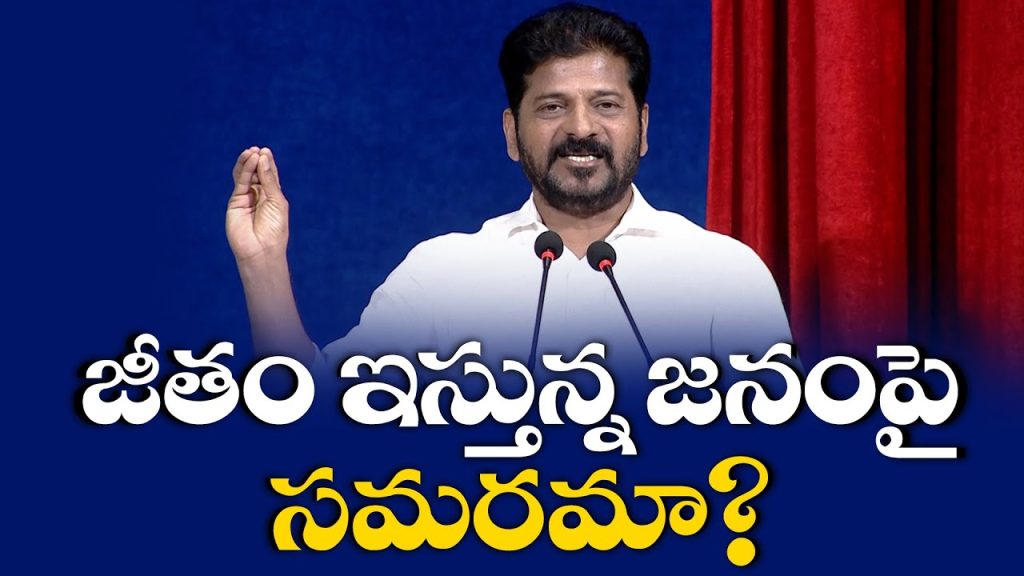
Telangana, a state synonymous with resilience and ambition, stands at a pivotal juncture. Under the leadership of Chief Minister Revanth Reddy, the state is navigating a complex landscape of economic challenges, public welfare commitments, and transformative governance. In a recent address, CM Reddy outlined a comprehensive vision for Telangana’s future, emphasizing fiscal responsibility, robust law enforcement, and inclusive development. This article delves into his strategic initiatives, the state’s economic realities, and the call for collective responsibility to propel Telangana toward unparalleled growth.
Telangana’s Economic Landscape: Confronting Fiscal Challenges
Telangana’s journey as a state has been marked by significant achievements, but it also grapples with inherited financial burdens. CM Reddy has been candid about the state’s fiscal constraints, particularly the staggering debt accumulated over the years.
The Debt Burden: A Legacy of Financial Mismanagement
When Telangana was formed in 2014, it inherited a debt of approximately ₹72,000 crore. Fast forward to 2025, and the state’s debt has ballooned to over ₹8 lakh crore, a figure that underscores the scale of financial mismanagement by previous administrations. CM Reddy revealed that the state is currently repaying ₹7,000 crore monthly toward principal and interest, a significant increase from the ₹500-600 crore monthly repayments in 2014.
“We are not just paying off new loans but clearing the backlog of dues left by the previous government,” Reddy stated, highlighting that ₹1.58 lakh crore in loans were taken in the last 16 months, with ₹1.52 lakh crore used to settle past debts.
This debt servicing consumes a substantial portion of the state’s revenue, limiting funds for development and welfare programs. Despite this, Reddy’s administration has prioritized timely salary payments for government employees and sustained welfare schemes without interruption.
Revenue Shortfalls: Balancing Income and Expenditure
Telangana generates approximately ₹18,000-18,500 crore in monthly revenue, but its essential expenditures, including salaries, pensions, and welfare programs, require ₹22,500 crore. This ₹4,000 crore monthly deficit forces the government to make tough choices.
“Every rupee is accounted for. We are managing with what we have, ensuring no welfare scheme is halted,” Reddy emphasized.
The government has avoided reckless borrowing at exorbitant interest rates, a practice that plagued previous administrations. For instance, loans taken at 11% interest for irrigation projects, which could have been secured at 4-5%, have exacerbated the debt crisis. Reddy’s administration is focused on fiscal prudence, reducing wasteful expenditure, and exploring sustainable revenue generation.
Clearing Pending Dues: A Commitment to Accountability
One of the most pressing challenges is addressing pending dues, including ₹8,500 crore in retirement benefits for government employees and ₹50,000 crore in contractor bills for infrastructure projects. These liabilities, inherited from the previous regime, reflect a pattern of deferred payments and financial indiscipline.
Reddy’s government has made significant strides in clearing these dues. For example, ₹20,617 crore was allocated for farmer loan waivers, benefiting 25,53,364 farmers, and ₹7,625 crore was disbursed to settle pending Rythu Bandhu payments. These efforts demonstrate a commitment to honoring financial obligations while maintaining public trust.
Strengthening Law Enforcement: The Backbone of Telangana’s Progress
A safe and secure environment is the foundation of any thriving state. CM Reddy lauded the Telangana Police for their exemplary role in maintaining peace, which has been instrumental in attracting global investments.
Telangana Police: Guardians of Peace and Prosperity
The Telangana Police, comprising nearly 90,000 personnel from home guards to the Director General of Police, work tirelessly to ensure the safety of the state’s 4 crore citizens. Their vigilance has positioned Telangana as a beacon of stability, drawing investments from global giants like Amazon, which committed ₹60,000 crore to the state.
“The peace and security in Telangana are why global companies trust us. Our police force is the pride of the state,” Reddy declared.
The police operate under immense pressure, where a single lapse can tarnish their reputation. Despite occasional criticism, Reddy emphasized that 98% of the force performs with unwavering dedication, ensuring Telangana remains a safe haven for businesses and residents alike.
Enhancing Police Welfare: A Commitment to Their Families
Recognizing the sacrifices made by police personnel, Reddy’s government has introduced several welfare measures:
- Financial Support for Families: In the event of an officer’s death during duty, IPS officers’ families receive ₹2 crore, Additional SPs and DSPs receive ₹1.5 crore, and other personnel are supported with substantial aid.
- Young India Police School: A flagship initiative, this corporate-level educational institution, built on 50 acres near IT hubs like Infosys and Microsoft, offers world-class education to police personnel’s children. The school aims to produce future leaders, from doctors to IAS officers, ensuring the next generation thrives.
These measures reflect Reddy’s belief that supporting the families of those who protect the state is a moral imperative.
Tackling Emerging Threats: Drugs and Cybercrime
Telangana is taking a proactive stance against modern challenges like drug abuse and cybercrime, which threaten societal well-being.
- Anti-Drug Campaign: The government has established a dedicated anti-narcotics wing, with personnel receiving a 30% salary increment to incentivize their efforts. Reddy vowed to crack down on drug suppliers and users, protecting future generations from this “social epidemic” that has infiltrated schools and colleges.
- Cybercrime Prevention: With cybercrime evolving rapidly, Telangana’s Cybercrime Department is being strengthened to combat digital theft. Reddy highlighted the shift from physical break-ins to phone-based fraud, underscoring the need for advanced training and technology to stay ahead of criminals.
These initiatives position Telangana as a leader in addressing contemporary security challenges, with the police force at the forefront of this transformation.
Public Welfare: Sustaining and Expanding Commitments
Despite financial constraints, Reddy’s government has maintained and expanded welfare programs, ensuring no citizen is left behind.
Farmer Support: Empowering the Backbone of Telangana
Agriculture remains the backbone of Telangana’s economy, and Reddy’s administration has prioritized farmer welfare:
- Loan Waivers: Over ₹20,000 crore in farm loans were waived, providing relief to millions of farmers.
- Rythu Bharosa: Enhanced support schemes, including a ₹500 per quintal bonus for crops, ensure farmers receive fair compensation.
- Free Electricity: Uninterrupted 24-hour free power for farmers continues, despite inherited dues to power utilities.
These measures have bolstered rural economies, reinforcing Telangana’s agrarian foundation.
Women’s Empowerment: Inclusive Growth
Reddy’s government has introduced transformative schemes for women:
- Free RTC Bus Travel: Women can travel free on state-run buses, enhancing mobility and access to opportunities.
- Subsidized Gas Cylinders: Cylinders are provided at ₹500, easing household burdens.
- Kalyan Lakshmi and Shaadi Mubarak: These schemes, supporting marriages, continue without disruption.
These initiatives empower women, fostering economic independence and social inclusion.
Social Welfare: Protecting the Vulnerable
The government has sustained pensions for the elderly, widows, and differently-abled, alongside free electricity for households consuming up to 200 units. These programs ensure that the most vulnerable are not neglected, even amidst fiscal challenges.
A Call for Collective Responsibility: Addressing Employee Protests
In his address, CM Reddy expressed concern over protests by government employee unions, urging them to reconsider their approach. He emphasized that the government and its employees are part of the same ecosystem, serving the 98% of Telangana’s population that relies on their efforts.
The Role of Government Employees
With approximately 9 lakh government employees, including 3.5 lakh active staff, 3 lakh contract and outsourced workers, and 3 lakh retirees, this workforce is critical to Telangana’s functioning. Reddy appealed to their sense of duty, noting that their salaries, pensions, and benefits are funded by taxpayers.
“We are not rulers; we are servants of the people. Strikes against the government are strikes against the 98% who sustain us,” Reddy cautioned.
Addressing Grievances Through Dialogue
Reddy invited union leaders to engage in constructive dialogue, promising transparency in financial matters. He challenged them to propose solutions within the state’s ₹18,500 crore monthly revenue, rather than resorting to strikes that could destabilize governance.
“If you have a better way to manage our finances, sit with our Finance Minister or Chief Secretary. I’ll distribute every extra rupee we earn,” he pledged.
He warned that protests could deter investments, disrupt education, and harm the state’s reputation, ultimately affecting job creation and development.
The Political Context: Avoiding Manipulation
Reddy cautioned employees against being swayed by political parties seeking to destabilize the government. He accused certain leaders of exploiting financial challenges for political gain, urging employees to prioritize the state’s welfare over partisan agendas.
“Don’t become pawns in political games. Our goal is to serve the people, not to fight among ourselves,” he urged.
Building a Model State: Telangana Rising
CM Reddy’s vision is to position Telangana as a model state, not just for India but for the world. His administration’s achievements in just 16 months—securing ₹2.28 lakh crore in foreign investments, topping national rankings in inflation control, and leading in cybercrime recovery—demonstrate this ambition.
Infrastructure and Development: Overcoming Constraints
Despite limited funds, Reddy’s government is committed to completing critical infrastructure projects:
- Irrigation: Allocating ₹1,000 crore monthly could irrigate 20 lakh acres in two years, boosting agriculture.
- Roads and Connectivity: With ₹6,700 crore invested in road repairs, the focus is on improving rural connectivity, though funds for new projects remain scarce.
These efforts aim to lay the groundwork for long-term prosperity, even as the government navigates financial hurdles.
Education and Youth: Investing in the Future
The Young India Police School is just one example of Reddy’s commitment to education. By providing corporate-level schooling to police personnel’s children, the government is investing in the next generation of leaders. Similar initiatives for other communities are in the pipeline, ensuring equitable access to quality education.
A Leader’s Sacrifice: Leading by Example
Reddy’s personal commitment to fiscal discipline sets a powerful example. He travels economy class, avoids extravagant expenses, and works 18-hour days without taking a single day off since assuming office on December 7, 2023.
“I have no personal ambitions. My only goal is to make Telangana a beacon of progress,” he affirmed.
This dedication resonates with his call for employees and citizens to join hands in rebuilding the state.
The Road Ahead: Unity and Resilience
Telangana’s path to progress hinges on unity, resilience, and shared responsibility. CM Reddy’s address was not just a policy outline but a heartfelt plea for collaboration. By addressing fiscal challenges head-on, strengthening law enforcement, and prioritizing public welfare, his administration is laying the foundation for a brighter future.
A Collective Vision
Reddy’s message to employee unions, police personnel, and citizens is clear: Telangana’s success depends on collective effort. Strikes and protests risk derailing progress, while cooperation can unlock the state’s potential.
“Let’s not fight among ourselves. Together, we can make Telangana the number one state in the world,” he urged.
Preserving Telangana’s Legacy
The struggle for Telangana’s statehood was a testament to its people’s determination. Reddy emphasized that this legacy must not be squandered through internal conflicts or financial mismanagement.
“We fought for Telangana. Now, let’s build it into a model of development and harmony,” he concluded.
Conclusion: A Rising Telangana
Under CM Revanth Reddy’s leadership, Telangana is charting a course toward economic stability and inclusive growth. By confronting fiscal challenges, empowering its police force, and sustaining welfare programs, the state is poised to overcome its hurdles. However, this vision requires the support of every citizen, employee, and leader. As Reddy aptly stated, “We are not rulers; we are servants.” With unity and determination, Telangana can rise as a global exemplar of progress and prosperity.
Let’s join hands to make Telangana the pride of India—a state where peace, opportunity, and welfare converge to create a brighter future for all.