Site icon Telangana NavaNirmana Sena

CM Revanth Reddy on Osmania University’s Role in Elevating Hyderabad’s Global Education

Transforming Osmania University: Hyderabad's Gateway to World-Class Education and Telangana's Economic Future Osmania University stands as a beacon of knowledge in Hyderabad, embodying the rich heritage of Telangana while poised for a groundbreaking transformation. Chief Minister A. Revanth Reddy recently announced ambitious plans to elevate this historic institution to global standards, rivaling renowned universities like Stanford and Oxford. This move not only honors the university's storied past but also aligns with Telangana's broader vision for education-driven growth. As Hyderabad continues to emerge as a hub for innovation and learning, these developments promise to reshape the educational landscape, attracting students and researchers from around the world. In this article, we explore the university's legacy, the Chief Minister's visionary announcements, and their implications for Telangana's future. The Enduring Historical Legacy of Osmania University in Hyderabad Osmania University traces its roots back to 1917, when Mir Osman Ali Khan, the seventh Nizam of Hyderabad, issued a royal decree to establish it. As the third oldest university in southern India and the seventh oldest in the country, it marked a renaissance in Indian education by blending Eastern traditions with Western methodologies. Founded amid the princely state of Hyderabad, the university quickly became a symbol of intellectual awakening, offering courses in Urdu as the medium of instruction initially, which was revolutionary for its time. Over the decades, Osmania University has grown into a sprawling campus covering more than 1,600 acres in the heart of Hyderabad. Today, it boasts 12 campuses, 56 departments, and over 720 affiliated colleges, serving hundreds of thousands of students. The university's architecture, featuring Indo-Saracenic styles, reflects Hyderabad's cultural fusion, with iconic structures like the Arts College building standing as testaments to its grandeur. Accredited with an 'A+' grade by NAAC and ranked 43rd in India's NIRF rankings, Osmania continues to excel in fields such as engineering, sciences, humanities, and social sciences. Hyderabad's strategic location has amplified the university's impact. As the capital of Telangana, the city provides a vibrant ecosystem where academia intersects with industry. Osmania's contributions extend beyond classrooms; it has fostered economic development by producing skilled graduates who fuel sectors like IT, pharmaceuticals, and biotechnology. Notable programs include undergraduate and postgraduate courses in civil engineering, where current Vice-Chancellor Prof. Kumar Molugaram has made significant strides, and emerging fields like data science and artificial intelligence. The university's history intertwines with India's independence struggle. In the 1930s, students actively participated in movements against British rule, including the Vande Mataram agitation in 1938, where they defied bans to sing patriotic songs, leading to arrests and expulsions. This spirit of resistance set the stage for Osmania's pivotal role in later socio-political movements, making it a cornerstone of Hyderabad's educational identity. Osmania University's Pivotal Role in the Telangana Statehood Movement No discussion of Osmania University can ignore its central place in the Telangana movement, which culminated in the state's formation in 2014. The campus served as the epicenter of agitation, where students, faculty, and alumni mobilized for separate statehood from Andhra Pradesh. From the late 1960s onward, Osmania students led protests highlighting regional disparities in jobs, water resources, and education. The 1969 Telangana agitation saw students from Osmania spearhead hunger strikes and rallies, demanding fair representation. This movement, though suppressed, planted seeds for future activism. By the 2000s, under leaders like Prof. Kodandaram, who later became a key figure in the Telangana Joint Action Committee, the university buzzed with debates and demonstrations. Osmania's hostels and auditoriums hosted strategy sessions, turning the campus into a fortress of resistance. Students faced police crackdowns, but their perseverance paid off. The university produced leaders who shaped Telangana's politics, including those who influenced the Andhra Pradesh Reorganization Act. Even today, Osmania symbolizes social justice, with recent bans on protests drawing criticism for stifling this legacy. In Hyderabad, where the movement originated, Osmania's role underscores how education fuels societal change, inspiring generations to advocate for equity. This historical significance resonates in Chief Minister Revanth Reddy's recent visit, where he acknowledged Osmania's contributions to Telangana's identity. By investing in its future, the government honors this legacy while addressing modern challenges. Chief Minister Revanth Reddy's Historic Visit to Osmania University Campus On August 25, 2025, Chief Minister A. Revanth Reddy made history by becoming the first CM in over two decades to visit Osmania University's campus in Hyderabad. This landmark event marked a new chapter, as he participated in developmental programs and directly addressed students at the Tagore Auditorium in the Arts College. Revanth Reddy's presence symbolized the government's renewed commitment to education. He interacted with students, faculty, and officials, listening to their concerns and promising solutions. "I came here specifically to address your issues," he declared, cautioning against opposition that hinders progress. Attendees included ministers, advisors like Vem Narender Reddy, and university leaders such as Vice-Chancellor Prof. Kumar Molugaram. The visit highlighted inclusivity, with Revanth Reddy noting the appointment of Prof. Molugaram, the first Dalit Vice-Chancellor in Osmania's 108-year history. He vowed to return in December for a meeting in front of the Arts College, without heavy security, to foster open dialogue. This gesture aims to rebuild trust, especially amid past tensions over campus protests. In Hyderabad's competitive education scene, such high-level engagement boosts Osmania's appeal, positioning it as a dynamic institution ready for global challenges. Key Infrastructure Upgrades and Inaugurations at Osmania University During his visit, Chief Minister Revanth Reddy inaugurated the newly constructed Dundubhi and Bhima hostels, providing modern accommodations for students. He also laid foundation stones for additional hostels and a renovated library reading room, addressing long-standing infrastructure needs. These projects enhance student life on the Hyderabad campus. The new hostels feature improved facilities, including better sanitation, Wi-Fi, and recreational areas, accommodating more residents amid growing enrollment. The library upgrade will modernize study spaces with digital resources and expanded seating, supporting research in an era of online learning. Revanth Reddy directed Education Department Principal Secretary Yogita Rana to form a committee of engineering and education experts for a comprehensive assessment. This panel will blueprint transformations to match global standards, focusing on labs, classrooms, and green initiatives. With 52% green cover already, these upgrades align with sustainable development goals. In Hyderabad, where urban expansion pressures educational institutions, these investments ensure Osmania remains competitive, attracting talent and fostering innovation. Massive Funding Commitments for Osmania University's Global Transformation Chief Minister Revanth Reddy pledged unlimited funding to turn Osmania University into a world-class institution, stating the government could easily allocate ₹1,000 crores. This commitment comes amid Telangana's substantial education investments, with ₹40,000 crores spent this year alone. Broader allocations include ₹20,000 crores for integrated residential schools across 100 constituencies, ₹500 crores for Young India Skills University, and funds for sports and police academies. For 2024-25, Telangana's education budget reached ₹21,292 crores, an 11.5% increase, emphasizing reforms. Revanth Reddy urged stakeholders to request whatever resources needed, affirming, "We will not let Osmania fade into oblivion." This funding will support faculty hires, research grants, and international collaborations, elevating Osmania's rankings and impact in Hyderabad's knowledge economy. Promoting Inclusive Leadership: Prof. Kumar Molugaram's Appointment as Vice-Chancellor In a historic move, the Telangana government appointed Prof. Kumar Molugaram as Osmania University's Vice-Chancellor in October 2024, marking the first time a Dalit held this position. A senior professor in civil engineering with a Ph.D. from IIT Bombay, Prof. Molugaram brings expertise in transportation and infrastructure. Chief Minister Revanth Reddy highlighted this as a step toward inclusivity, noting similar appointments in other universities. Prof. Molugaram's leadership focuses on academic excellence, student welfare, and innovation, aligning with the university's transformation goals. Under his guidance, Osmania has advanced initiatives like the Career Advancement Scheme and NIRF submissions. In Hyderabad's diverse society, this appointment inspires underrepresented groups, promoting equity in higher education. Comprehensive Educational Reforms Across Telangana State Telangana's government actively reforms education to build intellectual capital. The 2025-26 budget allocates ₹23,108 crores to education, 7.9% of total expenditure, funding school upgrades and skill programs. Initiatives include integrated residential schools for marginalized communities and the Young India Skills University, emphasizing vocational training. Revanth Reddy stressed universities should produce thinkers, not just employees, advocating for reduced election age limits to empower youth. He addressed social issues like drug abuse, urging campuses to host debates and research. In Hyderabad, these reforms integrate with tech hubs, preparing students for global jobs. Telangana's Ambitious Economic Vision: Education as the Cornerstone Chief Minister Revanth Reddy envisions Telangana as a $1 trillion economy by 2034 and $3 trillion by 2047, with education driving this growth. This aligns with India's $30 trillion national goal, focusing on innovation in healthcare, IT, and manufacturing. The 'Telangana Rising 2047' policy outlines structural reforms and investments. Hyderabad's role as an innovation hub, with 60 organizations involved, accelerates this. Osmania's upgrades will supply skilled talent, boosting GDP through research and startups. Revanth Reddy emphasized quality education for weaker sections, as land and treasury constraints limit other aids. This vision positions Telangana as a leader in sustainable development. Tackling Social Challenges Through Enhanced Education Systems Revanth Reddy highlighted how absent intellectual discourse leads to harmful habits among students. Universities must foster critical thinking and social awareness to combat issues like drug abuse. Inclusivity remains key, with appointments promoting diversity. For Dalits, tribals, and weaker sections, education offers destiny-changing opportunities. Hyderabad's urban challenges amplify the need for such reforms, making Osmania a model for societal transformation. Job Creation and Skill Development Initiatives in Telangana The government has filled 60,000 jobs in one year, including 11,000 teachers in 55 days, with 40,000 more planned. Private investments generated 1.5 lakh jobs, countering propaganda. Skill universities and research fellowships prepare youth for a young India, where 65% are under 35. In Hyderabad, these efforts bridge academia and industry, ensuring Osmania graduates thrive. A Promising Future for Osmania University and Telangana's Growth Chief Minister Revanth Reddy's initiatives herald a new era for Osmania University, blending its historical legacy with futuristic ambitions. By transforming it into a world-class hub in Hyderabad, Telangana paves the way for economic prosperity and social equity. As the state marches toward a trillion-dollar economy, education stands as the ultimate catalyst, inspiring a generation to build a brighter tomorrow.

CM Revanth Reddy on Osmania University’s Role in Elevating Hyderabad’s Global Education, embodying the rich heritage of Telangana while poised for a groundbreaking transformation. Chief Minister A. Revanth Reddy recently announced ambitious plans to elevate this historic institution to global standards, rivaling renowned universities like Stanford and Oxford. This move not only honors the university’s storied past but also aligns with Telangana’s broader vision for education-driven growth. As Hyderabad continues to emerge as a hub for innovation and learning, these developments promise to reshape the educational landscape, attracting students and researchers from around the world. In this article, we explore the university’s legacy, the Chief Minister’s visionary announcements, and their implications for Telangana’s future.

The Enduring Historical Legacy of Osmania University in Hyderabad

Osmania University traces its roots back to 1917, when Mir Osman Ali Khan, the seventh Nizam of Hyderabad, issued a royal decree to establish it. As the third oldest university in southern India and the seventh oldest in the country, it marked a renaissance in Indian education by blending Eastern traditions with Western methodologies. Founded amid the princely state of Hyderabad, the university quickly became a symbol of intellectual awakening, offering courses in Urdu as the medium of instruction initially, which was revolutionary for its time.

Over the decades, Osmania University has grown into a sprawling campus covering more than 1,600 acres in the heart of Hyderabad. Today, it boasts 12 campuses, 56 departments, and over 720 affiliated colleges, serving hundreds of thousands of students. The university’s architecture, featuring Indo-Saracenic styles, reflects Hyderabad’s cultural fusion, with iconic structures like the Arts College building standing as testaments to its grandeur. Accredited with an ‘A+’ grade by NAAC and ranked 43rd in India’s NIRF rankings, Osmania continues to excel in fields such as engineering, sciences, humanities, and social sciences.

Hyderabad’s strategic location has amplified the university’s impact. As the capital of Telangana, the city provides a vibrant ecosystem where academia intersects with industry. Osmania’s contributions extend beyond classrooms; it has fostered economic development by producing skilled graduates who fuel sectors like IT, pharmaceuticals, and biotechnology. Notable programs include undergraduate and postgraduate courses in civil engineering, where current Vice-Chancellor Prof. Kumar Molugaram has made significant strides, and emerging fields like data science and artificial intelligence.

The university’s history intertwines with India’s independence struggle. In the 1930s, students actively participated in movements against British rule, including the Vande Mataram agitation in 1938, where they defied bans to sing patriotic songs, leading to arrests and expulsions. This spirit of resistance set the stage for Osmania’s pivotal role in later socio-political movements, making it a cornerstone of Hyderabad’s educational identity.

Osmania University’s Pivotal Role in the Telangana Statehood Movement

No discussion of Osmania University can ignore its central place in the Telangana movement, which culminated in the state’s formation in 2014. The campus served as the epicenter of agitation, where students, faculty, and alumni mobilized for separate statehood from Andhra Pradesh. From the late 1960s onward, Osmania students led protests highlighting regional disparities in jobs, water resources, and education.

The 1969 Telangana agitation saw students from Osmania spearhead hunger strikes and rallies, demanding fair representation. This movement, though suppressed, planted seeds for future activism. By the 2000s, under leaders like Prof. Kodandaram, who later became a key figure in the Telangana Joint Action Committee, the university buzzed with debates and demonstrations. Osmania’s hostels and auditoriums hosted strategy sessions, turning the campus into a fortress of resistance.

Students faced police crackdowns, but their perseverance paid off. The university produced leaders who shaped Telangana’s politics, including those who influenced the Andhra Pradesh Reorganization Act. Even today, Osmania symbolizes social justice, with recent bans on protests drawing criticism for stifling this legacy. In Hyderabad, where the movement originated, Osmania’s role underscores how education fuels societal change, inspiring generations to advocate for equity.

This historical significance resonates in Chief Minister Revanth Reddy‘s recent visit, where he acknowledged Osmania’s contributions to Telangana’s identity. By investing in its future, the government honors this legacy while addressing modern challenges.

Chief Minister Revanth Reddy’s Historic Visit to Osmania University Campus

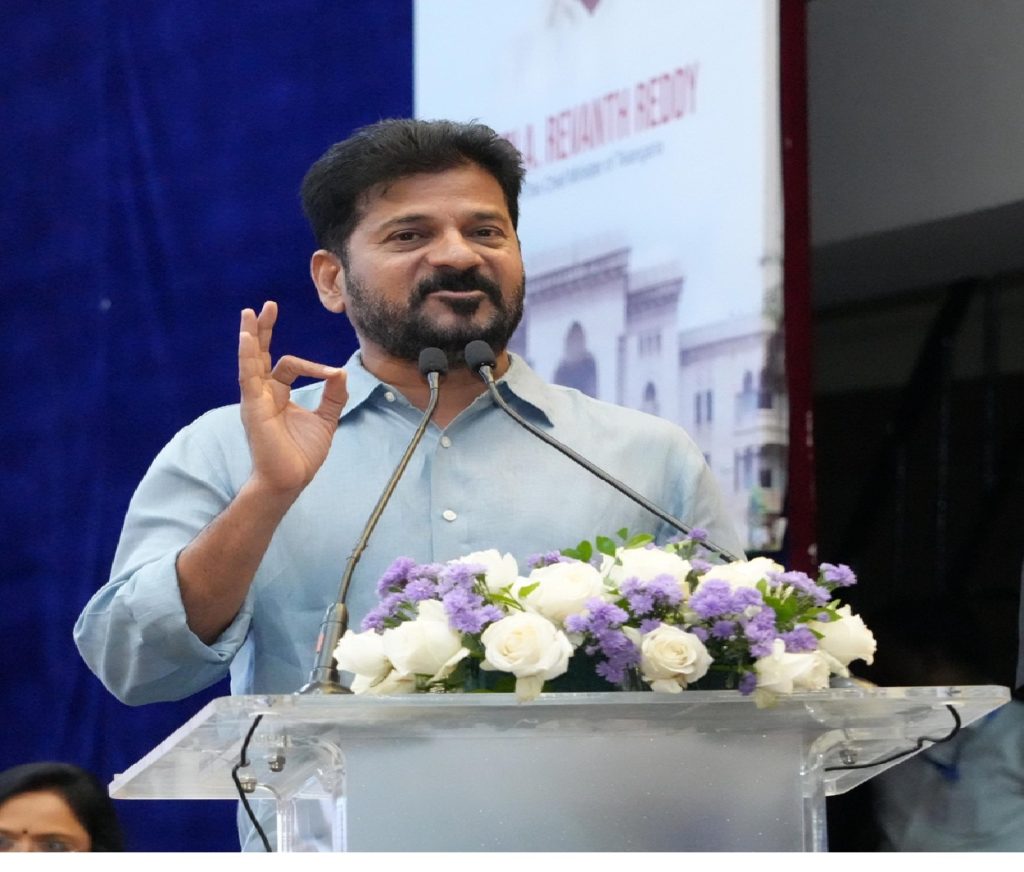
On August 25, 2025, Chief Minister A. Revanth Reddy made history by becoming the first CM in over two decades to visit Osmania University’s campus in Hyderabad. This landmark event marked a new chapter, as he participated in developmental programs and directly addressed students at the Tagore Auditorium in the Arts College.

Revanth Reddy’s presence symbolized the government’s renewed commitment to education. He interacted with students, faculty, and officials, listening to their concerns and promising solutions. “I came here specifically to address your issues,” he declared, cautioning against opposition that hinders progress. Attendees included ministers, advisors like Vem Narender Reddy, and university leaders such as Vice-Chancellor Prof. Kumar Molugaram.

The visit highlighted inclusivity, with Revanth Reddy noting the appointment of Prof. Molugaram, the first Dalit Vice-Chancellor in Osmania’s 108-year history. He vowed to return in December for a meeting in front of the Arts College, without heavy security, to foster open dialogue. This gesture aims to rebuild trust, especially amid past tensions over campus protests.

In Hyderabad’s competitive education scene, such high-level engagement boosts Osmania’s appeal, positioning it as a dynamic institution ready for global challenges.

Key Infrastructure Upgrades and Inaugurations at Osmania University

During his visit, Chief Minister Revanth Reddy inaugurated the newly constructed Dundubhi and Bhima hostels, providing modern accommodations for students. He also laid foundation stones for additional hostels and a renovated library reading room, addressing long-standing infrastructure needs.

These projects enhance student life on the Hyderabad campus. The new hostels feature improved facilities, including better sanitation, Wi-Fi, and recreational areas, accommodating more residents amid growing enrollment. The library upgrade will modernize study spaces with digital resources and expanded seating, supporting research in an era of online learning.

Revanth Reddy directed Education Department Principal Secretary Yogita Rana to form a committee of engineering and education experts for a comprehensive assessment. This panel will blueprint transformations to match global standards, focusing on labs, classrooms, and green initiatives. With 52% green cover already, these upgrades align with sustainable development goals.

In Hyderabad, where urban expansion pressures educational institutions, these investments ensure Osmania remains competitive, attracting talent and fostering innovation.

Massive Funding Commitments for Osmania University’s Global Transformation

Chief Minister Revanth Reddy pledged unlimited funding to turn Osmania University into a world-class institution, stating the government could easily allocate ₹1,000 crores. This commitment comes amid Telangana’s substantial education investments, with ₹40,000 crores spent this year alone.

Broader allocations include ₹20,000 crores for integrated residential schools across 100 constituencies, ₹500 crores for Young India Skills University, and funds for sports and police academies. For 2024-25, Telangana’s education budget reached ₹21,292 crores, an 11.5% increase, emphasizing reforms.

Revanth Reddy urged stakeholders to request whatever resources needed, affirming, “We will not let Osmania fade into oblivion.” This funding will support faculty hires, research grants, and international collaborations, elevating Osmania’s rankings and impact in Hyderabad’s knowledge economy.

Promoting Inclusive Leadership: Prof. Kumar Molugaram’s Appointment as Vice-Chancellor

In a historic move, the Telangana government appointed Prof. Kumar Molugaram as Osmania University’s Vice-Chancellor in October 2024, marking the first time a Dalit held this position. A senior professor in civil engineering with a Ph.D. from IIT Bombay, Prof. Molugaram brings expertise in transportation and infrastructure.

Chief Minister Revanth Reddy highlighted this as a step toward inclusivity, noting similar appointments in other universities. Prof. Molugaram’s leadership focuses on academic excellence, student welfare, and innovation, aligning with the university’s transformation goals.

Under his guidance, Osmania has advanced initiatives like the Career Advancement Scheme and NIRF submissions. In Hyderabad’s diverse society, this appointment inspires underrepresented groups, promoting equity in higher education.

Comprehensive Educational Reforms Across Telangana State

Telangana’s government actively reforms education to build intellectual capital. The 2025-26 budget allocates ₹23,108 crores to education, 7.9% of total expenditure, funding school upgrades and skill programs.

Initiatives include integrated residential schools for marginalized communities and the Young India Skills University, emphasizing vocational training. Revanth Reddy stressed universities should produce thinkers, not just employees, advocating for reduced election age limits to empower youth.

He addressed social issues like drug abuse, urging campuses to host debates and research. In Hyderabad, these reforms integrate with tech hubs, preparing students for global jobs.

Telangana’s Ambitious Economic Vision: Education as the Cornerstone

Chief Minister Revanth Reddy envisions Telangana as a $1 trillion economy by 2034 and $3 trillion by 2047, with education driving this growth. This aligns with India’s $30 trillion national goal, focusing on innovation in healthcare, IT, and manufacturing.

The ‘Telangana Rising 2047’ policy outlines structural reforms and investments. Hyderabad’s role as an innovation hub, with 60 organizations involved, accelerates this. Osmania’s upgrades will supply skilled talent, boosting GDP through research and startups.

Revanth Reddy emphasized quality education for weaker sections, as land and treasury constraints limit other aids. This vision positions Telangana as a leader in sustainable development.

Tackling Social Challenges Through Enhanced Education Systems

Revanth Reddy highlighted how absent intellectual discourse leads to harmful habits among students. Universities must foster critical thinking and social awareness to combat issues like drug abuse.

Inclusivity remains key, with appointments promoting diversity. For Dalits, tribals, and weaker sections, education offers destiny-changing opportunities. Hyderabad’s urban challenges amplify the need for such reforms, making Osmania a model for societal transformation.

Job Creation and Skill Development Initiatives in Telangana

The government has filled 60,000 jobs in one year, including 11,000 teachers in 55 days, with 40,000 more planned. Private investments generated 1.5 lakh jobs, countering propaganda.

Skill universities and research fellowships prepare youth for a young India, where 65% are under 35. In Hyderabad, these efforts bridge academia and industry, ensuring Osmania graduates thrive.

A Promising Future for Osmania University and Telangana’s Growth

Chief Minister Revanth Reddy’s initiatives herald a new era for Osmania University, blending its historical legacy with futuristic ambitions. By transforming it into a world-class hub in Hyderabad, Telangana paves the way for economic prosperity and social equity. As the state marches toward a trillion-dollar economy, education stands as the ultimate catalyst, inspiring a generation to build a brighter tomorrow.

Exit mobile version