


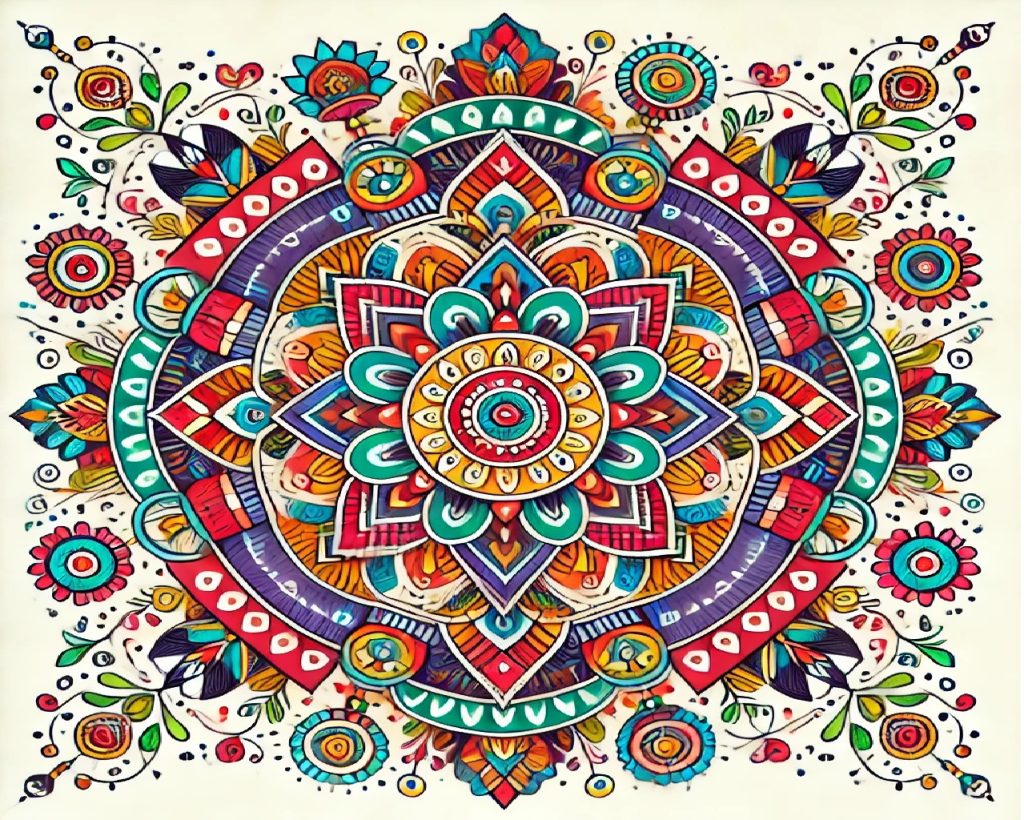
Bhogi Muggulu Types, Techniques, and Festival Significance, an integral part of Indian festivals, is not just a decoration but a cultural expression. During Sankranti, alongside vibrant toranas, Haridasu songs, and bonfires, colorful Bhogi Muggulu symbolize the festive spirit. Creating Bhogi Muggulu is an art form that blends creativity with tradition. Even if you’re not an expert, there are simple and effective techniques to design beautiful Bhogi Muggulu. Let’s explore the various types and methods to craft stunning rangolis.

Simple Bhogi Muggulu for Beginners
Not everyone is adept at drawing intricate Bhogi Muggulu patterns, but starting with small and easy designs can be a great option. Dot-based Bhogi Muggulu are ideal for beginners. Start by placing dots in symmetrical rows and join them creatively to form patterns. Begin with one section at a time, ensuring symmetry on all sides to avoid confusion.
If dots seem challenging, try freehand designs like flowers, pots, or sugarcane stalks. These are relatively simple and allow you to experiment with shapes and styles. Adding vibrant colors to these patterns enhances their charm and brings festive joy to your doorstep.
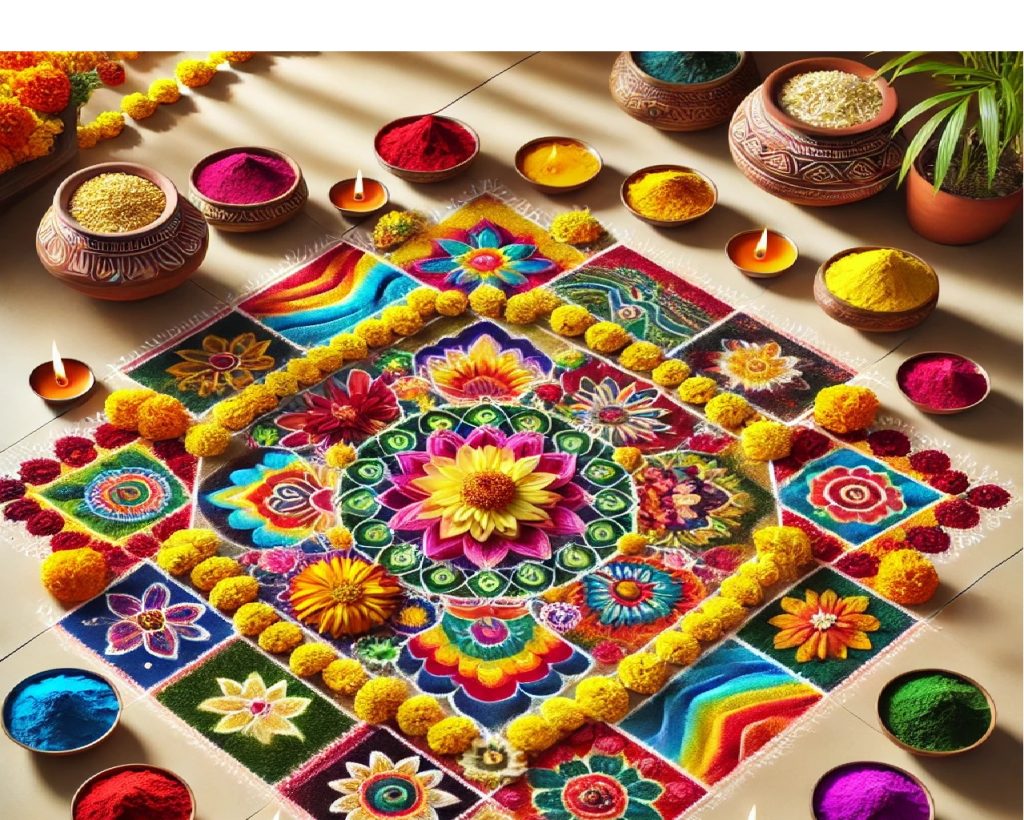
Adding Colors to Your Bhogi Muggulu: A Step-by-Step Guide
Filling your Bhogi Muggulu with colors instantly transforms it into a lively piece of art. You don’t need expensive materials for this—simple and natural options work beautifully. Here’s how you can prepare eco-friendly colors at home:
- Natural Ingredients:
- Use turmeric for yellow, kumkum for red, indigo powder for blue, and spinach juice for green.
- Mix these ingredients with rice flour, semolina, or any powdered base for consistency.
- Dry the mixture to create vibrant, eco-friendly powders.
- Charcoal for Shades:
- Adding small amounts of charcoal powder to these colors can create darker shades for more depth and contrast.
- Food Coloring:
- Edible food colors are another safe option. They not only add vibrancy but are also safe for birds and insects.
Natural colors enhance the beauty of Bhogi Muggulu and are a sustainable choice, keeping nature in mind.

Flower-Based Bhogi Muggulu: A Unique Twist
For a fresh and aromatic alternative, create Bhogi Muggulu designs using flowers and leaves. Follow these steps:
- Gather Materials:
- Collect flowers like marigolds, roses, and chrysanthemums in different colors.
- Trim the petals into small pieces and set them aside.
- Draw a Design:
- Sketch your chosen pattern on the ground. Circular designs work particularly well for flower Bhogi Muggulu.
- Fill with Flowers:
- Place the petals within the drawn outlines, arranging them by color for a gradient or layered effect.
- Urli Decorations:
- Use a decorative bowl or urli filled with water, and float flower petals to create an elegant look for your home entrance.
Ready-Made Bhogi Muggulu Options: Convenience Meets Creativity
If you’re short on time or prefer hassle-free options, consider ready-made Bhogi Muggulu kits available online and offline. These kits often include pre-designed Bhogi Muggulu patterns or stencils, such as kolam stencils. Simply place the stencil on the ground, sprinkle colors, and lift it to reveal a perfect design.
Additionally, ready-made Bhogi Muggulu stickers and pre-crafted designs can add a festive touch with minimal effort. These modern solutions are a blend of tradition and convenience, allowing you to decorate your home quickly and beautifully.

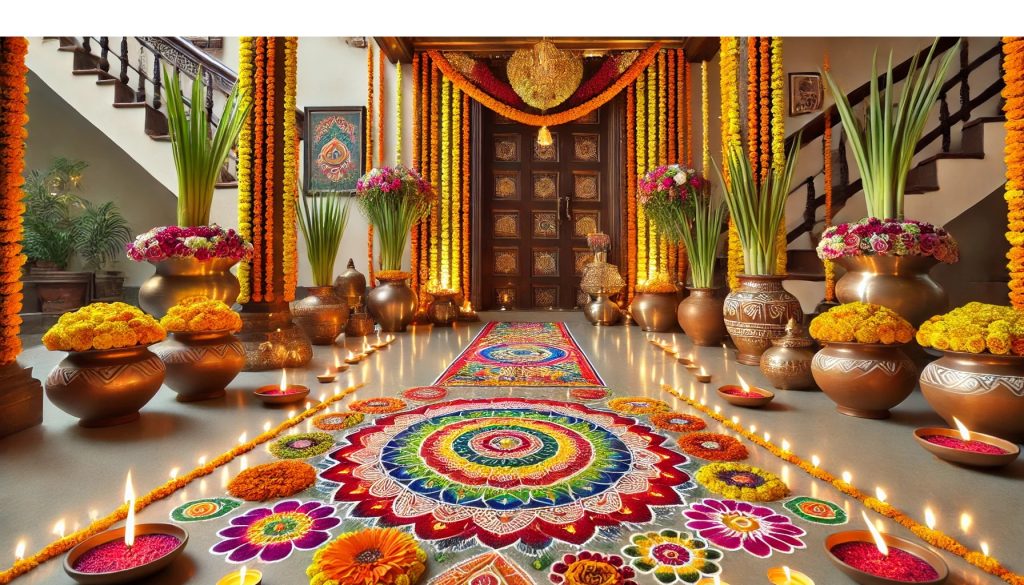
Cultural Significance of Bhogi Muggulu in Festivals
Bhogi Muggulu is more than just a decorative element—it holds profound cultural significance. During Sankranti and other Indian festivals, rangoli designs symbolize prosperity, positivity, and the welcoming of guests and deities. The intricate patterns and vibrant colors are believed to ward off negative energy and attract good fortune.
Traditional materials like rice flour are used to feed ants and birds, showcasing a harmonious relationship between humans and nature. In villages, Bhogi Muggulu often depict everyday life, religious motifs, and nature-inspired themes, connecting the art form to cultural roots.
Tips for Creating Stunning Bhogi Muggulu
- Plan Your Design:
Choose a pattern that suits your skill level. Start with simple designs and progress to complex ones as you gain confidence. - Use a Steady Hand:
Practice patience and use tools like cones or funnels for precise lines. - Experiment with Colors:
Blend natural and synthetic colors for unique shades. Use contrasting colors for a striking effect. - Add Accessories:
Enhance your Bhogi Muggulu with diyas, flowers, or decorative beads for added charm.
The Cultural Significance of Bhogi Muggulu
Bhogi Muggulu go far beyond simple decoration. They hold deep cultural and spiritual importance:
- Symbol of Positivity: Drawing muggulu is believed to invite prosperity, drive away negativity, and purify the surroundings, making homes ready for fresh beginnings.
- Respect for Nature: Traditionally made with rice flour, Bhogi Muggulu serve as food offerings for ants and small creatures, emphasizing coexistence and respect for all forms of life.
- Expression of Devotion: Many designs incorporate religious and spiritual motifs, turning the act of creation into a prayer.
- A Community Bond: The tradition of muggulu fosters connection and collaboration. Families often work together to create designs, while neighborhood competitions add to the festive spirit.
Tips for Beginners
If you’re a first-timer, don’t worry! Here are a few tips to help you get started with Bhogi Muggulu:
- Start Simple: Begin with basic dot patterns and gradually work your way up to more intricate designs.
- Use Stencils: Stencils can help you create clean, symmetrical lines and can be a great tool for beginners.
- Practice Freehand Designs: Grab some chalk and practice designs on paper or pavement before the festival day.
- Gather Materials: Invest in good-quality rangoli powder and choose colors that pop.
- Be Patient: Rangoli art is as much about the process as the result. Enjoy the act of creation without worrying about perfection.
Share Your Masterpieces and Stories
Every Bhogi Muggulu tells a story—of family traditions, personal creativity, and festive joy. We’d love to see what you create! Share your designs on social media using the hashtag #MyBhogiMuggulu or send us your photos and stories for a chance to be featured in our community gallery.
Your art could inspire countless others to keep this beautiful tradition alive!
Celebrate the Richness of Bhogi Muggulu
Bhogi Muggulu are not just designs; they are living pieces of heritage and creativity that carry forward the rich culture of Telugu households. Whether you’re a seasoned rangoli artist or a curious beginner, taking part in this tradition during Bhogi connects you to centuries of artistry and devotion.
This festival season, take a moment to explore your creative side. Gather your colors, involve your loved ones, and create a muggu that brings joy and togetherness into your home. Because at its heart, Bhogi Muggulu is not about perfect patterns—it’s about celebrating the beauty of life and culture.
Conclusion
Bhogi Muggulu s a timeless tradition that blends artistry with cultural heritage. Whether you’re a beginner or a seasoned artist, there’s a rangoli style for everyone. By incorporating natural colors, flower petals, or ready-made options, you can celebrate Sankranti and other festivals with creativity and ease. Let your rangoli designs reflect the joy, vibrancy, and essence of the festive season!