


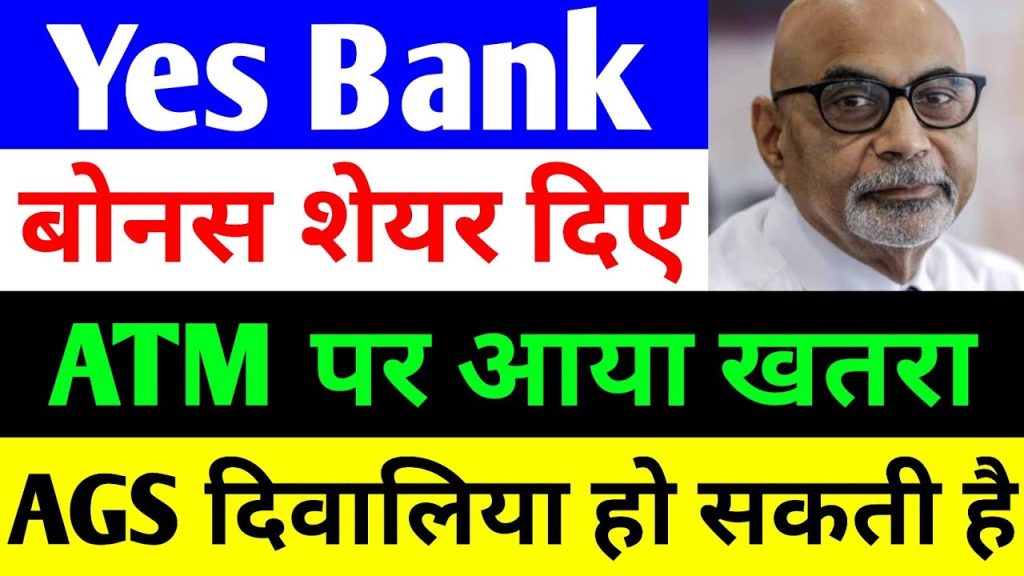
Yes Bank Stock Faces Sharp Decline Amid Market Volatility
The stock market witnessed significant turbulence, with Yes Bank shares experiencing a sharp drop of approximately 2.48% on Friday. The stock, which had surged to ₹32 at one point, plummeted back down to ₹17.7, leading to massive losses for investors. The Sensex itself has fallen by 10,000 points, while the broader market decline suggests a 20,000-point drop in overall valuation.
Historically, stock prices tend to fall rapidly during downturns and take longer to recover. This has caused substantial devaluation in investor portfolios, raising concerns about the near-term future of Yes Bank shares.
Yes Bank Announces Bonus Shares for Employees
Despite market instability, Yes Bank has taken a significant step by issuing bonus shares to eligible employees under the ESOP (Employee Stock Ownership Plan) 2020 scheme. The bank notified the stock exchanges about the decision, confirming that 8,693,328 equity shares have been allocated as part of the scheme. The face value of these shares is ₹2, and the issuance date is February 14, 2025.
This move aligns with a broader trend where companies incentivize employees by offering equity-based compensation, ensuring motivation and retention of top talent. Employees who met their targets and performed exceptionally well were rewarded with Yes Bank bonus shares, a strategy aimed at fostering a high-performance corporate culture.
ATM Crisis: Yes Bank Faces Cash Withdrawal Issues
Amidst the financial turbulence, customers have reported issues with Yes Bank ATMs running out of cash. The problem has arisen due to AGS Transact Technologies, the firm responsible for managing ATM cash deposits, facing severe financial difficulties. AGS Transact has reportedly struggled to pay its employees’ salaries, leading to a disruption in cash deposits across various banks, including ICICI Bank, Axis Bank, and Yes Bank.
Yes Bank officially acknowledged the issue on its website, advising customers to withdraw cash from alternative ATMs. This unexpected outage has inconvenienced thousands of customers, especially in urban areas where ATMs have displayed “Out of Service” notices.
Why is AGS Transact Technologies Facing a Crisis?
AGS Transact, a leading ATM cash management provider in India, has been struggling with liquidity issues for nearly a year. The firm, which holds a 15% market share in India’s cash management sector, is reportedly on the verge of defaulting on its obligations. According to sources, AGS Transact could soon be classified as an NPA (Non-Performing Asset) by financial institutions.
Several employees of AGS Transact have protested against unpaid wages, refusing to deposit cash into ATMs. Reports indicate that approximately ₹1,000 to ₹1,500 crore in cash inventory remains undeployed, exacerbating the liquidity crunch at ATMs nationwide.
Yes Bank’s Financial Health and Stock Performance
Market Capitalization and Valuation Metrics
Despite recent turbulence, Yes Bank’s fundamentals remain strong. The bank’s market capitalization stands at ₹5,568 crore, and its current stock price hovers around ₹17.8. The stock’s price-to-earnings (P/E) ratio is 25.7, with a book value of ₹14.6. The return on equity (ROE) is at 5.8%, indicating a moderate growth trajectory.
Sales and Profit Growth Trends
Over the past decade, Yes Bank’s sales growth has fluctuated. While the 10-year growth rate was 11%, it briefly declined before recovering to 17% on a trailing twelve-month (TTM) basis. Profitability also saw fluctuations, with a 10-year profit growth rate of -2%, improving to 112% on a TTM basis.
These numbers suggest that while Yes Bank has faced past challenges, it is showing strong signs of financial recovery.
Yes Bank Shareholding Pattern: Who is Investing?
FII and DII Activity
Foreign Institutional Investors (FII) have reduced their stake in Yes Bank, with holdings declining from 27% in September to 26.7% in December. This suggests that FIIs are withdrawing capital from multiple sectors amid global market volatility.
On the other hand, Domestic Institutional Investors (DII) have increased their stake, rising from 38.2% in September to 38.84% in December. This indicates that domestic investors see long-term potential in Yes Bank, despite short-term challenges.
Retail Investors and Government Holdings
The general public’s stake in Yes Bank has slightly decreased, moving from 34.7% in September to 34.42% in December. Government holdings remain unchanged at 0.1%, showing no direct intervention from regulatory authorities.
Future Outlook for Yes Bank Shares
While the short-term market scenario remains bearish, long-term indicators suggest Yes Bank could regain stability. The bank’s sales growth, profitability, and increasing institutional investment signal potential upside in the future.
However, investors are advised to conduct thorough research or consult financial advisors before making investment decisions. The banking sector remains highly volatile, and external factors such as macroeconomic trends and regulatory policies can impact stock performance.
Final Thoughts
Yes Bank’s recent stock decline, ATM cash crisis, and bonus share issuance have created a mixed market sentiment. While the stock has faced significant devaluation, fundamental indicators suggest a potential rebound. The bank’s decision to reward employees with equity reflects a long-term growth strategy, but challenges like the AGS Transact crisis could affect near-term operations.
For investors, monitoring market trends, institutional investments, and financial statements will be crucial in making informed decisions regarding Yes Bank shares.