


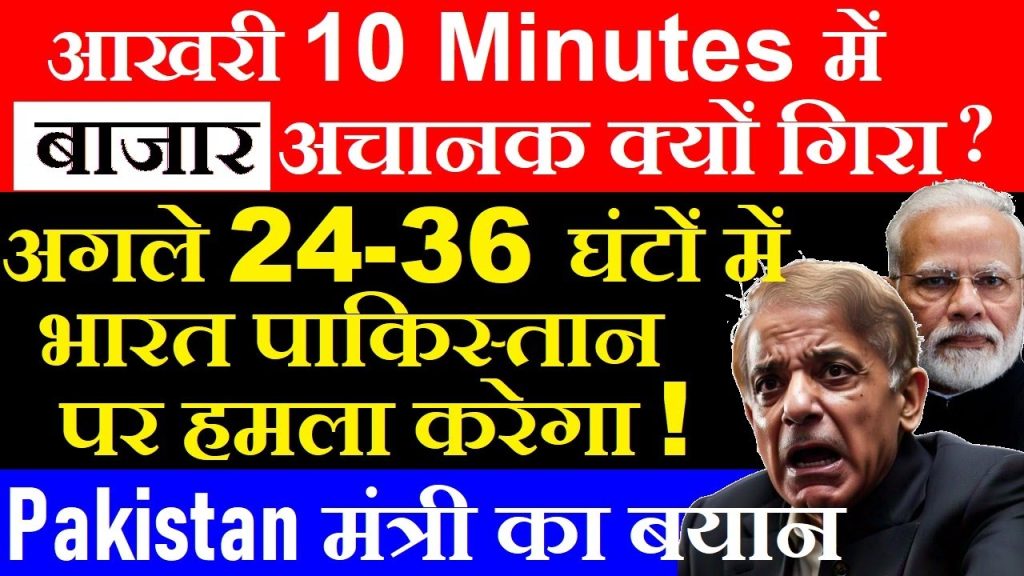
The stock market is a dynamic arena where fortunes can shift in moments, and the final 10 minutes of a trading session can sometimes hold the key to understanding broader market sentiments. Recently, both the Nifty and Sensex experienced an unexpected plunge in the closing minutes, leaving investors and analysts scrambling for answers. This article delves into the reasons behind this sudden market drop, exploring geopolitical tensions, market uncertainties, and technical factors that contributed to the volatility. By unpacking these elements with precision, we aim to provide a comprehensive guide that empowers investors to navigate such turbulent times.
Understanding the Sudden Market Drop
The Indian stock market, tracked by indices like the Nifty and Sensex, is no stranger to volatility. However, the abrupt decline in the last 10 minutes of a recent trading session caught even seasoned investors off guard. The Nifty, which had been trading in positive territory around 3:00 PM, saw a sharp sell-off, closing with a negligible gain of 0.0072%. The Sensex mirrored this trend, ending the day with a flat performance. This section explores the immediate triggers and underlying factors that led to this dramatic shift.
The Role of Geopolitical Tensions
One of the primary catalysts for the market’s sudden downturn was the heightened geopolitical uncertainty stemming from India-Pakistan relations. Tensions between the two nations have historically influenced market sentiment, and recent developments amplified this effect. Official statements from Indian authorities granting the armed forces “complete freedom” to respond to a recent attack in Pulwama introduced significant uncertainty. This lack of clarity—regarding the timing, target, and nature of potential military actions—created a ripple effect in the financial markets.
Geopolitical events often lead to market volatility as investors grapple with unpredictable outcomes. The absence of concrete information about potential military actions or their economic repercussions prompted a cautious approach among traders. This uncertainty was particularly pronounced in the final minutes of trading, as investors opted to offload positions to mitigate risks.
Market Sentiment and Institutional Investors
Institutional investors, including foreign portfolio investors (FPIs) and domestic institutional investors (DIIs), play a pivotal role in shaping market movements. During periods of high uncertainty, these investors often adopt a wait-and-see approach, refraining from large-scale investments. The recent market drop coincided with a noticeable increase in sell-off volumes, particularly in the last 10 minutes, as evidenced by large red candlesticks and elevated trading volumes on technical charts.
While FPIs have been known to withdraw funds during geopolitical tensions, recent data suggests that DIIs have maintained consistent buying activity over the past three days. This divergence—where DIIs buy while FPIs sell—helped stabilize the market to some extent, preventing a more significant decline. However, the overwhelming sell-off in the closing minutes indicates that even DII support could not fully counterbalance the broader market panic.
Technical Analysis of the Market Drop
To fully grasp the sudden market crash, it’s essential to examine the technical aspects of the trading session. Technical analysis provides insights into price movements, trading volumes, and market psychology, all of which were critical in this scenario.
Candlestick Patterns and Volume Spikes
Candlestick charts are a powerful tool for understanding market behavior, and the recent session’s charts revealed telling patterns. The Nifty and Sensex both displayed large red candlesticks in the final minutes, signaling aggressive selling pressure. These candlesticks were accompanied by a spike in trading volumes, indicating that a significant number of shares changed hands in a short period.
This combination of large red candlesticks and high volumes suggests a panic-driven sell-off, where traders rushed to exit positions before the market closed. Such patterns are often associated with stop-loss triggers, where automated trading systems sell off holdings once prices breach predetermined levels.
Flat Performance Throughout the Day
Interestingly, the market exhibited a flat performance for most of the trading session, with neither significant gains nor losses. This lack of direction reflects the broader uncertainty among investors, who were hesitant to take bold positions amid geopolitical and economic unknowns. The sudden drop in the final minutes, therefore, stands out as an anomaly, likely triggered by a late-breaking development or a cascade of stop-loss orders.
Key Factors Driving Market Uncertainty
Beyond geopolitical tensions and technical factors, several other elements contributed to the market’s volatility. Understanding these factors is crucial for investors seeking to anticipate and respond to similar events in the future.
High-Level Government Meetings
The day of the market drop coincided with high-level government meetings involving key figures such as the Home Minister, Defense Minister, Finance Minister, and External Affairs Minister. These meetings were convened to assess the potential economic and strategic implications of escalating tensions with Pakistan. The involvement of the Finance Minister underscores the government’s concern about the economic fallout of any military action, including potential disruptions to trade, investment, and fiscal stability.
Such meetings, while necessary, often amplify market uncertainty. Investors interpret them as signals of impending action, prompting a cautious or bearish outlook. The timing of these meetings, close to the market’s closing, likely contributed to the late sell-off as traders reacted to the possibility of significant announcements.
Pakistan’s Preemptive Strike Concerns
A particularly alarming development came from Pakistan’s own government, where ministers publicly acknowledged the likelihood of an Indian military strike within the next 24 to 36 hours. This admission introduced the concept of a “preemptive strike,” where a country anticipates an attack and responds proactively. The mere mention of such a scenario heightened fears of escalation, potentially leading to a broader conflict.
For investors, the prospect of a preemptive strike or retaliatory actions represents a significant risk. Markets thrive on stability, and the threat of military escalation—especially between nuclear-armed neighbors—creates an environment where risk aversion dominates. The sharp sell-off in the final minutes may have been a direct response to these statements, as traders sought to protect their portfolios from overnight risks.
Sectoral Performance and Market Breadth
The market’s flat performance masked significant undercurrents across various sectors. A closer look at sectoral indices reveals that most sectors ended the day in the red, with only a few exceptions showing marginal gains. For instance, the Nifty Auto index closed slightly down by 0.04%, reflecting the broader bearish sentiment.
This widespread selling pressure indicates a lack of confidence across the board. Even sectors typically resilient to geopolitical tensions, such as consumer goods or pharmaceuticals, failed to attract significant buying interest. The absence of a clear sectoral leader further underscores the market’s indecision, with investors unwilling to commit to any particular segment.
What’s Next for the Stock Market?
The sudden market drop raises critical questions about the short-term outlook for the Nifty and Sensex. While the immediate trigger appears to be geopolitical uncertainty, several factors will shape the market’s trajectory in the coming days.
Monitoring Geopolitical Developments
The next two to three days are pivotal, as they could bring clarity on India-Pakistan tensions. Any official statements, military actions, or diplomatic resolutions will have a direct impact on market sentiment. Investors should closely monitor news updates, particularly those related to military movements or high-level talks, to gauge the potential for escalation or de-escalation.
Tracking FPI and DII Activity
Foreign and domestic institutional investors will continue to influence market dynamics. While DIIs have shown resilience through consistent buying, FPIs remain a wildcard. Daily data on FPI activity, including buying and selling volumes, will provide valuable insights into their confidence in the Indian market. A sustained withdrawal by FPIs could exacerbate volatility, while renewed buying could signal a return to stability.
Technical Levels to Watch
From a technical perspective, investors should keep an eye on key support and resistance levels for the Nifty and Sensex. The Nifty’s recent low, established during the sell-off, serves as a critical support level. A breach below this level could trigger further declines, while a move above the day’s high could indicate a recovery.
Additionally, monitoring trading volumes and candlestick patterns will help identify whether the sell-off was a one-off event or the start of a broader downtrend. High volumes on subsequent down days would suggest sustained selling pressure, while a decrease in volumes could indicate stabilization.
Strategies for Investors in Uncertain Times
Navigating a volatile market requires a combination of vigilance, discipline, and strategic planning. Here are some actionable strategies for investors facing similar market conditions:
Diversify Your Portfolio
Diversification remains a cornerstone of risk management. By spreading investments across multiple sectors and asset classes, investors can mitigate the impact of sudden market drops. Consider allocating a portion of your portfolio to defensive sectors like healthcare or consumer staples, which tend to be less sensitive to geopolitical shocks.
Use Stop-Loss Orders
Stop-loss orders are an effective tool for limiting losses during volatile periods. By setting predefined exit points, investors can protect their capital from sharp declines. However, ensure that stop-loss levels are set thoughtfully to avoid being triggered by normal market fluctuations.
Stay Informed but Avoid Panic
While staying updated on geopolitical and market developments is essential, avoid making impulsive decisions based on sensational headlines. Rely on credible sources and focus on data-driven insights, such as FPI/DII activity or technical indicators, to guide your strategy.
Consider Short-Term Hedging
For advanced investors, hedging strategies like options or futures can provide a buffer against market volatility. For instance, purchasing put options on the Nifty can help offset losses in a declining market. Consult with a financial advisor to determine the best hedging approach for your portfolio.
The Bigger Picture: Long-Term Market Outlook
While the immediate focus is on the recent market drop and its triggers, it’s equally important to consider the broader context. The Indian stock market has demonstrated resilience in the face of past geopolitical crises, often rebounding once clarity emerges. The current uncertainty, while significant, is unlikely to derail the market’s long-term growth trajectory.
Economic Fundamentals Remain Strong
India’s economic fundamentals, including robust GDP growth, a growing consumer base, and ongoing reforms, continue to attract global investors. These factors provide a solid foundation for market recovery once geopolitical tensions subside. Investors with a long-term horizon should view short-term volatility as an opportunity to accumulate quality stocks at attractive valuations.
Global Market Influences
The Indian market does not operate in isolation, and global factors will also shape its trajectory. Keep an eye on international developments, such as U.S. Federal Reserve policies, global trade dynamics, and commodity prices, which can influence FPI flows and market sentiment.
Conclusion: Navigating the Storm
The sudden stock market crash in the last 10 minutes underscores the unpredictable nature of financial markets, particularly during periods of geopolitical uncertainty. By understanding the interplay of geopolitical tensions, technical factors, and investor behavior, you can better position yourself to weather such storms. Stay informed, diversify your portfolio, and adopt disciplined strategies to navigate the volatility.
As the next few days unfold, the resolution of India-Pakistan tensions will be a critical determinant of market direction. Whether through diplomatic efforts or military actions, clarity on this front will likely reduce uncertainty and restore investor confidence. Until then, remain vigilant, monitor key indicators, and approach the market with a balanced perspective.
For the latest updates on stock market trends, geopolitical developments, and investment strategies, subscribe to our channel and follow our blog. Share this article with fellow investors to spark meaningful discussions and stay ahead of the curve.