


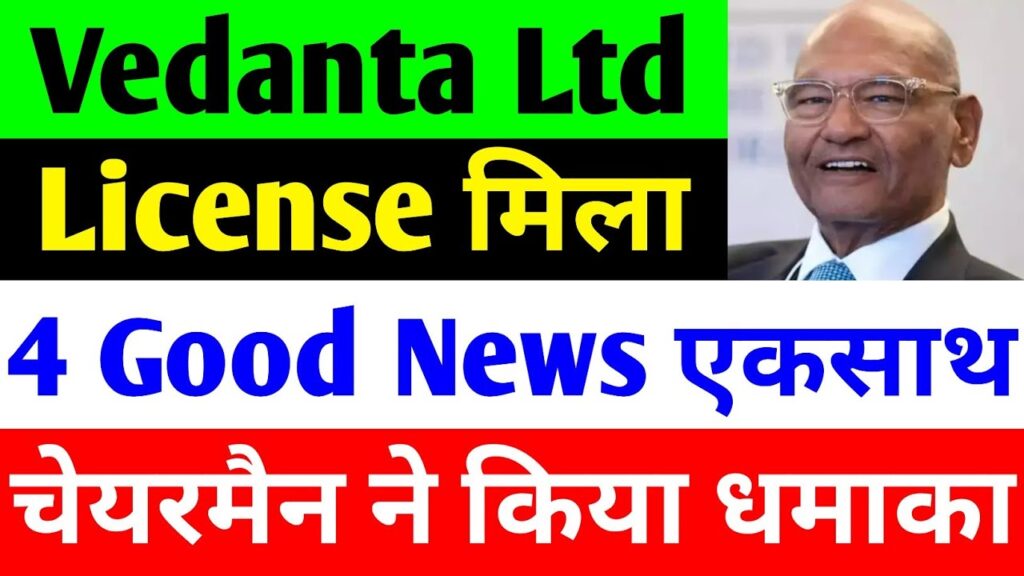
Vedanta Limited stands out as a powerhouse in the metals and mining sector. As investors navigate volatility, the company delivers a cascade of optimistic developments that could redefine its trajectory. Today, despite a modest dip in share prices triggered by broader market pressures, Vedanta shines with four major positive announcements. From Chairman Anil Agarwal’s bold proclamation on India’s copper leadership to breakthroughs in eco-friendly aluminum production, intense acquisition battles, and fresh mining licenses, these updates signal robust growth potential.
This comprehensive analysis dives deep into each revelation, exploring their implications for shareholders, the global metals industry, and India’s economic landscape. Whether you’re a seasoned trader or a curious newcomer, understanding these catalysts could position you ahead of the curve in Vedanta’s evolving story.
Vedanta Stock Performance: Navigating Market Headwinds with Resilience
Vedanta’s shares opened the trading session on a cautious note, reflecting the broader downturn in equity markets and the metals sector. The stock traded at approximately ₹256, marking a subtle decline of 0.55% from the previous close of ₹259. This minor pullback aligns with the Nifty Metal index’s weakness, which mirrored the overall market sentiment influenced by global economic cues like fluctuating commodity prices and geopolitical tensions.
Market observers note that Vedanta’s performance decoupled slightly from these headwinds. The stock briefly climbed to ₹262.4 early in the day, buoyed by pre-market buzz around upcoming corporate announcements. However, as benchmark indices like the Nifty 50 slid due to profit-booking in high-valuation sectors, Vedanta followed suit. This isn’t uncommon for cyclical stocks tied to industrial metals, where external factors—such as U.S. Federal Reserve signals on interest rates or China’s demand slowdown—often dictate short-term movements.
Yet, beneath this surface volatility lies a foundation of strength. Vedanta’s diversified portfolio, spanning aluminum, zinc, copper, iron ore, and oil & gas, provides a natural hedge against sector-specific risks. Over the past quarter, the company reported a 15% year-on-year revenue uptick, driven by higher aluminum premiums and zinc output. Analysts from firms like Motilal Oswal and ICICI Securities maintain a “Buy” rating, projecting a target price of ₹320–₹350 based on earnings multiples and expansion plans. For investors, this dip presents a potential entry point, especially as positive news flows counterbalance the noise.
Looking ahead, Vedanta’s stock resilience hinges on quarterly results due next month. With EBITDA margins expanding to 28% in Q2 FY25, the company outperforms peers like Hindalco and Nalco. As markets stabilize, expect rotational buying in metals, potentially lifting Vedanta toward its 52-week high of ₹480. In essence, today’s dip whispers opportunity amid the roar of broader corrections.
Anil Agarwal’s Bold Vision: India Ushers in a New Copper Age Led by Vedanta
Anil Agarwal, the visionary Chairman of Vedanta, recently captivated the industry with a statement that positions India at the forefront of a global “copper age.” In an exclusive interview, Agarwal asserted that the nation will spearhead this era, leveraging copper’s indispensable role in modern innovation. Copper, a metal with roots tracing back 6,000 years to the Indus Valley Civilization, has woven itself into humanity’s progress—from ancient tools to today’s high-tech marvels.
Agarwal emphasized copper’s surging demand in transformative sectors. Artificial intelligence (AI) infrastructure, for instance, relies heavily on copper for data centers, wiring, and cooling systems. A single AI server can consume up to 20% more copper than traditional setups, according to International Copper Association estimates. Similarly, the clean energy revolution amplifies needs: electric vehicles (EVs) require four times more copper than conventional cars, while wind turbines and solar panels incorporate thousands of kilograms per unit.
“Human civilization’s greatest strides owe much to copper,” Agarwal declared. “From the steam engine to semiconductors, this red metal powers progress. As the world pivots to net-zero goals, India’s policy push—through initiatives like the Production Linked Incentive (PLI) scheme—will make us the epicenter.” He highlighted government efforts to streamline mining approvals and boost domestic refining, aligning with Vedanta’s Sterlite Copper operations in Tamil Nadu and Thoothukudi.
This pronouncement arrives at a pivotal moment. Global copper prices hover near $9,500 per tonne, up 20% year-to-date, fueled by supply constraints from Chile and Peru. Vedanta, with its 1.2 million tonnes annual capacity, stands poised to capitalize. The company’s Tuticorin smelter, despite past environmental hurdles, now operates at 90% efficiency post-upgrades, exporting to over 50 countries.
For shareholders, Agarwal’s words translate to tangible upside. Vedanta’s copper segment contributed 12% to FY24 EBITDA, with projections for 25% growth in FY25 as EV adoption accelerates in India. Partnerships with Tesla suppliers and renewable giants like ReNew Power underscore this momentum. Critics might point to regulatory risks, but Agarwal’s track record—transforming Vedanta from a zinc miner to a $20 billion conglomerate—instills confidence.
In a broader context, this copper narrative bolsters India’s self-reliance under Atmanirbhar Bharat. By 2030, domestic demand could triple to 2 million tonnes, per NITI Aayog forecasts. Vedanta’s investments in exploration and recycling position it as a linchpin, potentially driving share prices 30% higher. As Agarwal envisions, the copper age isn’t just coming—India, through Vedanta, will forge it.
Vedanta Demerger Buzz: Unlocking Value Through Strategic Business Split
Whispers of a Vedanta demerger have evolved into a symphony of anticipation, with stakeholders eagerly awaiting the company’s restructuring blueprint. This move, first teased in 2023, aims to carve out distinct entities for aluminum, zinc, energy, and metals, allowing each to thrive independently. Recent board deliberations signal that the plan solidifies, potentially unlocking ₹1.5 lakh crore in shareholder value.
Demergers streamline operations, sharpen focus, and attract specialized investors. Vedanta’s sprawling empire—valued at $18 billion—often dilutes its appeal due to disparate risk profiles. Post-split, the aluminum arm could command a 12x EV/EBITDA multiple, versus the group’s current 8x, analysts at Kotak Institutional Equities predict. Historical precedents, like Reliance Industries’ Jio demerger, delivered 50%+ returns within a year.
Agarwal champions this as “value maximization,” citing global trends where conglomerates like Rio Tinto modularize assets. Vedanta’s proposal includes listing subsidiaries like Hindustan Zinc and Bharat Aluminium Company (BALCO) separately, with minority stakes infused via stock swaps. Regulatory nods from SEBI and NCLT appear imminent, with a shareholder vote slated for Q1 2026.
Market reaction? Subtle but telling. Shares of peers like NALCO jumped 5% on similar news last month. For Vedanta, the demerger could catalyze a re-rating, pushing the stock from its current 6x forward P/E to 10x. Risks include execution delays or debt allocation disputes, but Vedanta’s ₹40,000 crore liquidity buffer mitigates these.
Imagine the aluminum entity, BALCO, as a standalone green metals leader—its Odisha refinery alone produces 1.2 million tonnes annually. Zinc International, with African assets, targets 1 million tonnes by 2027. Energy ventures in oil blocks off India’s east coast promise 20% IRR. This dissection not only sharpens strategic agility but also aligns with ESG mandates, as each unit hones sustainability goals.
Investors should monitor the scheme’s fine print: dividend policies, cross-holdings, and governance. Early adopters of demerger theses, via options or futures, could reap alpha. As Vedanta pivots from monolith to mosaic, the demerger emerges as the ultimate value architect, propelling the conglomerate into a new growth orbit.
Sustainable Aluminum Revolution: Vedanta Launches Restora for Low-Carbon Production
Vedanta marks a milestone in green manufacturing with the launch of Restora, its low-carbon aluminum brand, at BALCO’s Korba plant in Chhattisgarh. This initiative slashes emissions by harnessing renewable energy, targeting net-zero manufacturing by 2050. Restora aluminum boasts a carbon footprint below 4 tonnes of CO2 per tonne—half the industry average—certified under the Aluminium Stewardship Initiative (ASI).
Why does this matter? Aluminum production guzzles 3% of global electricity, emitting 500 million tonnes of CO2 yearly. As automakers like Tata Motors and global OEMs mandate low-carbon materials for EVs, Restora positions Vedanta as a supplier of choice. The Korba facility, now powered 40% by solar and hydro, integrates advanced electrolysis to minimize energy loss.
Rajiv Kumar, CEO of Vedanta Aluminium, hailed Restora as a “benchmark for sustainable production.” “We pioneer clean aluminum that powers tomorrow’s world without compromising today,” he stated. Initial output: 50,000 tonnes annually, scaling to 200,000 by FY26. Partnerships with recyclers like Novelis ensure circularity, recycling scrap to further cut emissions by 95%.
This aligns with India’s National Aluminium Mission, aiming for 10 million tonnes capacity by 2030 with 50% green energy. Vedanta invests ₹5,000 crore in renewables, including a 1 GW solar park in Rajasthan. Globally, competitors like Alcoa and Rusal race to decarbonize, but Vedanta’s integrated smelting-mining model gives it an edge—lower logistics costs and bauxite security.
For the bottom line, Restora commands a 10–15% premium, boosting margins by 200 basis points. In FY24, aluminum sales hit ₹50,000 crore; green variants could add ₹10,000 crore by 2027. ESG funds, managing $40 trillion, increasingly favor such innovators, drawing inflows.
Challenges persist: intermittent renewables demand battery storage, and policy incentives like carbon credits remain nascent. Yet, Vedanta’s R&D in hydrogen-based smelting hints at bolder leaps. Restora isn’t just a product—it’s Vedanta’s manifesto for a greener metals ecosystem, blending profitability with planetary stewardship.
Bidding War Heats Up: Adani Challenges Vedanta for JP Associates Acquisition
The corporate arena crackles with drama as Adani Enterprises re-enters the fray to snatch Jaiprakash Associates (JPA) from Vedanta’s grasp. Adani’s aggressive bid—promising full payment within two years—eclipses Vedanta’s five-year timeline, injecting fresh intrigue into this insolvency saga. Valued at ₹18,000 crore, JPA’s portfolio spans real estate, cement, power, hotels, and highways, making it a diversification jackpot.
Recall the timeline: In September 2024, Vedanta clinched the top spot with a ₹12,550 crore offer, outbidding Adani and Dalmia Bharat. But the Committee of Creditors (CoC) demanded revised proposals from five contenders, including Jindal Power and PC Infratech. Adani responded with a knockout punch: accelerated payouts totaling ₹15,000 crore, laced with infrastructure synergies.
Adani’s edge? Swift execution aligns with its ₹10 lakh crore capex pipeline, integrating JPA’s 10 GW power assets into its green energy fold. Vedanta, focused on metals, eyes JPA’s cement for vertical integration with aluminum. However, the longer repayment raises creditor eyebrows amid JPA’s ₹30,000 crore debt mountain.
Other players add layers: JPA promoters lobbed an ₹18,000 crore counter, but funding doubts sideline them. Dalmia Bharat pauses, awaiting Supreme Court verdict on land disputes with Yamuna Expressway Authority. Voting looms in 1–2 weeks, with CoC wielding decisive sway.
Implications for Vedanta? Victory expands its non-metals revenue to 20%, hedging commodity cycles. Loss stings but frees capital for core ops. Adani’s win fortifies its conglomerate status, potentially pressuring Vedanta shares short-term. Markets react: Vedanta dipped 1% on bid news, while Adani rose 2%.
This duel underscores India’s M&A renaissance, with insolvency resolutions hitting 40% recovery rates. For Vedanta, it’s a strategic flex—win or lose, its ₹1 lakh crore order book in power and infra signals intent. As bids clash, the winner inherits JPA’s revival blueprint, but Vedanta’s diversified arsenal ensures it emerges unscathed.
Hindustan Zinc’s Mining Triumph: New License Unlocks Tungsten Riches in Andhra Pradesh
Vedanta’s subsidiary, Hindustan Zinc Limited (HZL), scores a major win with a composite license for tungsten mining in Andhra Pradesh’s Sri Sathya Sai district. Spanning 38.3 hectares, this block brims with tungsten and allied minerals, vital for defense, aerospace, and electronics. The state government greenlit operations Monday, mandating land clearances and environmental nods before excavation.
Tungsten, dubbed “the metal that shaped the world,” boasts the highest melting point of any element, essential for tool steels and filaments. India’s 90% import reliance makes this a strategic coup, aligning with the Critical Minerals Mission. HZL, already India’s zinc-silver titan with 80% market share, diversifies into high-margin specialties—tungsten prices average $35,000 per tonne.
HZL’s filing revealed the license’s scope: exploration, mining, and processing under one umbrella, slashing timelines from 5–7 years. The Rampura Agucha mine, HZL’s crown jewel, already yields 6 million tonnes zinc-lead annually. This addition targets 50,000 tonnes tungsten output by 2028, per internal projections.
Sustainability crowns HZL’s halo: Third consecutive year as top global metals sustainability leader in S&P Global assessments. Zero-waste mining, water recycling, and community programs earned it Metal Mining’s #1 rank. CEO Priya Agarwal Odel emphasizes, “We mine responsibly, enriching lives and landscapes.”
Financially, this bolsters HZL’s streak—₹10,000 crore FY24 profit, 40% dividend payout. Vedanta, holding 65% stake, reaps ₹6,000 crore annually. Tungsten could add 10% to EBITDA, cushioning zinc price dips (currently $2,800/tonne).
Geopolitically, as China dominates 80% supply, India’s push via auctions like this fortifies supply chains. HZL’s ₹2,000 crore capex in exploration pipelines more blocks in Rajasthan and Gujarat.
Risks? Monsoon delays or local protests, but HZL’s 30-year legacy mitigates. For investors, this license spotlights Vedanta’s upstream muscle, potentially lifting HZL shares 15%. As picks and shovels fuel India’s mineral self-sufficiency, Hindustan Zinc digs deeper into prosperity.
Vedanta’s Broader Horizon: Integrating Positives into Long-Term Growth Strategy
These four developments don’t exist in silos—they interweave into Vedanta’s grand tapestry of expansion. The copper vision fuels downstream demand for aluminum and zinc, while demerger sharpens focus on high-growth units like HZL’s new tungsten venture. The JPA bid, win or lose, underscores Vedanta’s opportunistic DNA, much like its $2 billion oil block wins in 2023.
Macro tailwinds abound: India’s 7% GDP growth, $500 billion infrastructure spend, and EV market exploding to 10 million units by 2030. Vedanta’s $8 billion capex—spanning Zambia copper mines to Odisha alumina—targets 15% CAGR in volumes. Debt reduction to 1.5x EBITDA from 2.5x enhances credit ratings, unlocking cheaper capital.
ESG integration elevates Vedanta beyond commodities. Restora’s launch coincides with global carbon border taxes, shielding exports. Community investments—₹500 crore in skill programs—foster social license to operate.
Peer comparison reveals Vedanta’s edge: Versus Hindalco’s 10% ROE, Vedanta clocks 18%, thanks to cost discipline (alumina at $250/tonne). Analyst consensus: 25% upside, with JPMorgan eyeing ₹400 targets.
Investor playbook: Accumulate on dips, diversify via subsidiaries post-demerger. Monitor Q3 earnings for volume beats. Risks—commodity crashes or rupee volatility—loom, but Vedanta’s 50-year legacy weathers storms.
Investment Outlook: Why Vedanta Remains a Compelling Bet in Volatile Times
As Vedanta navigates this confluence of opportunities, the investment thesis crystallizes: a undervalued giant poised for re-rating. Current market cap of ₹1 lakh crore pales against $30 billion asset base. Dividend yield at 8% lures income seekers, while growth chasers eye 20% EPS CAGR.
Global metals outlook: Copper deficits through 2027, aluminum premiums at $500/tonne. India’s mining reforms—eased FDI, auction transparency—unleash $100 billion investments. Vedanta, with 10% domestic capacity, captures disproportionate share.
Skeptics cite promoter pledging (40% shares) and past delays, but recent deleveraging and Agarwal’s 70% ownership signal alignment. Retail frenzy on platforms like Groww shows 2 million holders, up 30% YoY.
In conclusion, these four positives—copper leadership, demerger momentum, green aluminum innovation, and mining unlocks—herald Vedanta’s renaissance. Amid market jitters, the company doesn’t just survive; it thrives, scripting a narrative of resilience and reinvention. For those bold enough to bet on metals’ renaissance, Vedanta beckons as the ultimate pick-and-shovel play.
Disclaimer: This article serves educational purposes. Consult a financial advisor before investing. Market data as of November 11, 2025.