Site icon Telangana NavaNirmana Sena

Vedanta Share Price Surge: 1 Lakh Crore Odisha Investment and Demerger News

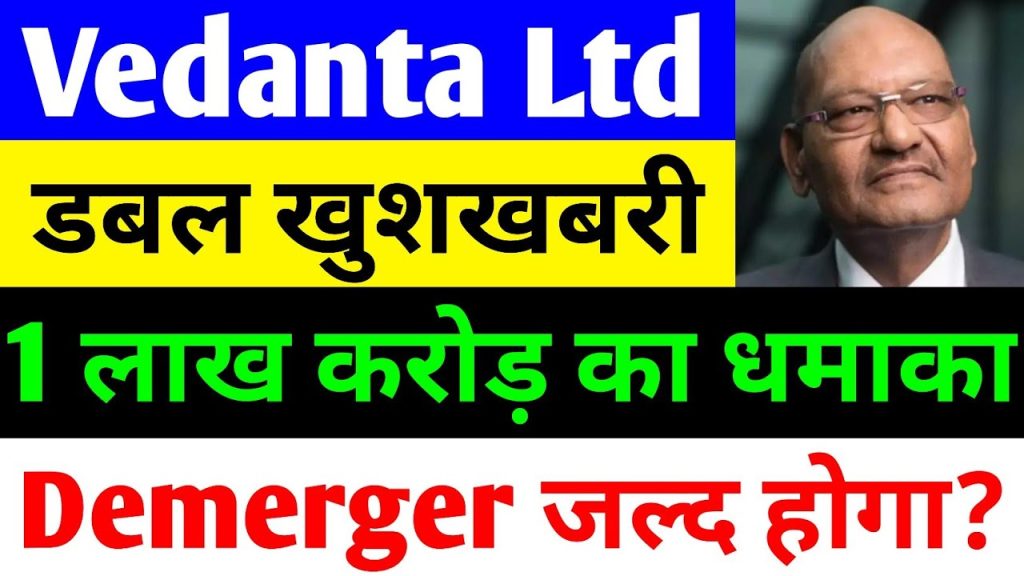
Vedanta Share Price Surge: 1 Lakh Crore Odisha Investment and Demerger Propel Stock to New Heights in 2025 Vedanta Limited, a powerhouse in India's metals and mining sector, continues to dominate headlines with its bold strategic moves. On October 24, 2025, the company's shares skyrocketed by over 2.3%, closing at ₹495 amid a broader market dip. This impressive rally stems from the group's announcement of a staggering ₹1 lakh crore investment in Odisha, promising over 100,000 jobs and positioning the state as a global metals hub. Coupled with the ongoing demerger process—now extended to March 2026—and soaring global aluminium prices hitting seven-year highs near $2,865 per tonne, Vedanta's stock performance signals robust investor confidence. In this comprehensive analysis, we dive deep into Vedanta's latest developments, financial health, and future outlook, exploring why this diversified giant remains a top pick for savvy investors eyeing metals sector growth in 2025. Vedanta's Explosive Stock Rally Amid Market Volatility Investors witnessed a thrilling session on October 24, 2025, as Vedanta's shares defied a 350-point plunge in the Sensex. While benchmark indices like the Nifty 50 and Sensex closed lower due to global uncertainties, Vedanta bucked the trend with a 2.31% gain, settling at ₹494 from the previous close of ₹483. This marked a rare display of resilience in the metals sector, where peers like Hindalco and Nalco also notched gains but trailed Vedanta's momentum. The stock opened positively and surged to an intraday high of ₹501, breaching the psychologically significant ₹500 mark for the first time in months. Profit booking trimmed some gains, but the session's close underscored strong buying interest. Analysts attribute this surge to two catalysts: the fresh ₹1 lakh crore Odisha investment pledge and elevated aluminium prices, which directly bolster Vedanta's core aluminium business. As of October 25, 2025, Vedanta trades around ₹496, with a market capitalization exceeding ₹1.95 lakh crore, reflecting a year-to-date return of over 33% from its 52-week low of ₹363. For context, Vedanta's shares have navigated a volatile year. They hit a 52-week high of ₹527 in December 2024 before correcting amid broader commodity slowdowns. Yet, recent catalysts have reignited optimism. Technical indicators show the stock forming a bullish flag pattern on daily charts, with support at ₹480 and resistance near ₹510. If global metals sentiment holds, experts predict a push toward ₹525 by year-end, driven by sustained demand from electric vehicles (EVs) and renewable energy sectors. This performance isn't isolated. The Nifty Metal Index, a key barometer for the sector, touched an all-time high of 10,457 on October 24, up 1.5% for the day. Vedanta contributed significantly, with its weightage amplifying the index's gains. As investors flock to undervalued metals plays, Vedanta's ability to outperform in downturns highlights its strategic edge in a market increasingly favoring resilient, growth-oriented firms. The ₹1 Lakh Crore Odisha Investment: A Game-Changer for Vedanta's Expansion Vedanta's announcement of an additional ₹1 lakh crore investment in Odisha on October 23, 2025, sent shockwaves through the investment community. This massive infusion—equivalent to $12 billion—builds on the group's existing ₹1 lakh crore commitment in the state, doubling down on its vision to transform Odisha into India's metals epicenter. Chairman Anil Agarwal pitched the proposal directly to Chief Minister Mohan Charan Majhi during a high-stakes meeting in Bhubaneswar, securing swift governmental backing for land and infrastructure. At the heart of this initiative lies a 3 million tonne per annum (MTPA) aluminium smelter in Dhenkanal, slated to commence construction in three to four months pending clearances. This greenfield project alone demands ₹1 lakh crore and promises 40,000 direct jobs, focusing on low-carbon "green aluminium" powered by renewables. Complementing it are two aluminium parks—one in Jharsuguda and another in Dhenkanal—designed to attract downstream investments in aerospace, EVs, and defense. These parks will foster a vibrant MSME ecosystem, producing high-grade alloys and components that align with India's Atmanirbhar Bharat push. A standout element is the ₹2,000 crore ultra-modern ferro-alloys plant in Keonjhar, enhancing Odisha's global metals value chain. Ferro-alloys, critical for steelmaking, will leverage local resources like chrome ore, creating ancillary jobs in mining and logistics. Odisha Chief Minister Majhi hailed the move as a "game-changer," aligning it with Prime Minister Modi's Viksit Bharat vision. The state government pledged full support, expediting approvals to propel Odisha toward a $500 billion economy by 2036. This investment spree extends Vedanta's aggressive capacity ramp-up. CEO Rajiv Kumar recently outlined plans to double aluminium output from 3 MTPA to 6 MTPA at Jharsuguda, incorporating advanced smelters and alumina refineries. In Rayagada, a proposed 6 MTPA refinery will further integrate the supply chain, reducing import dependencies. These moves not only mitigate raw material risks but also capitalize on Odisha's bauxite-rich terrain, positioning Vedanta as a low-cost producer amid rising global input costs. Economically, the ripple effects are profound. Over 100,000 direct and indirect jobs will empower local youth, boost rural economies, and spur infrastructure like roads and power grids. Vedanta's subsidiary, Ferro Alloys Corporation, laid the foundation for a Bhadrak plant earlier this year, signaling a continuum of expansion. Investors view this as a high-conviction bet: the Odisha pact could add ₹50-70 per share to Vedanta's valuation, per Emkay Global estimates, as it unlocks ₹20,000 crore in annual EBITDA by 2030. In a broader lens, this aligns with India's metals self-reliance goals. With China capping production at 45.5 million tonnes, global supply tightness favors Indian majors like Vedanta. The investment mitigates geopolitical risks, diversifies revenue streams, and enhances ESG credentials through green tech. As Odisha emerges as a metals hotspot—rivaling Chhattisgarh and Jharkhand—Vedanta's stake cements its leadership, driving long-term shareholder value. Global Aluminium Prices Hit 7-Year Peak: Tailwinds for Vedanta's Core Business Aluminium prices have ignited a firestorm in global markets, reaching $2,865 per tonne on October 23, 2025—the highest in seven years. This 8% monthly surge, up 7.79% year-over-year, directly fuels Vedanta's aluminium arm, which accounts for 60% of its revenue. The London Metal Exchange (LME) cash price mirrored this rally, climbing 1.89% intraday amid thinning inventories and robust demand. Several forces converge to sustain this uptrend. China's production cap at 45.5 million tonnes—the world's top producer's 60% market share—has crimped supply, pushing Beijing to limit smelter expansions. This, coupled with Beijing's spell on spelter capacity, has slashed global aluminium stocks to multi-year lows in LME and COMEX warehouses. Demand, meanwhile, surges from EVs (lightweighting for batteries), renewables (solar frames and wind turbines), and construction (green buildings). Goldman Sachs forecasts a 2% Chinese demand growth in 2025, bolstered by stimulus, while J.P. Morgan eyes a Q3 peak at $2,800 per tonne. Geopolitical headwinds amplify the squeeze. U.S. import duties and logistics costs inflate landed prices, deterring cheap Chinese inflows. Europe's sanctions on Russian aluminium reroute supplies, hiking premiums—Japan's MJP hit $228 in Q1 2025, up 30%. In India, high bauxite and power input costs (up 15% YoY) naturally elevate domestic prices, benefiting integrated players like Vedanta. For Vedanta, this translates to windfall gains. Its Jharsuguda smelter, the world's largest single-site facility, operates at 98% capacity, churning out 3 MTPA with margins expanding to 37%. Rising prices could boost FY26 EBITDA by 20%, per analyst models, as aluminium contributes ₹90,000 crore annually. Peers like Hindalco and Nalco surged 3-4% on the news, but Vedanta's vertical integration—from bauxite mining to alloys—gives it an edge, shielding against volatility. Looking ahead, 2025 forecasts remain bullish. ING predicts a 400,000-tonne global deficit, supporting prices above $2,600. Alumina surpluses may ease costs, but supply restarts lag due to high energy prices. Bloomberg Intelligence warns of "structural shortages" persisting into 2026, absent major investments. For Vedanta investors, this means sustained revenue uplift, with aluminium poised to drive 15% CAGR through the decade. Vedanta's Stellar Financial Metrics: A Testament to Operational Excellence Vedanta's balance sheet gleams with strength, underscoring its appeal as a high-yield, low-debt play in the metals arena. As of March 2025, the company reported consolidated revenue of ₹1,52,968 crore, up 6.43% YoY, with net profit soaring to ₹20,535 crore—a 24% jump. Operating profit margins held firm at 37.02%, while net margins reached 20.68%, reflecting disciplined cost controls amid volatile commodities. Key ratios paint a compelling picture. The price-to-earnings (P/E) ratio stands at 10.12, a bargain compared to the sector average of 15, signaling undervaluation. Price-to-book (P/B) at 2.41 offers a safety margin, with return on equity (ROE) at 21.8% and return on capital employed (ROCE) at 17.88%—both outperforming peers. Earnings per share (EPS) hit ₹46.53, up 18% YoY, driven by volume growth and pricing power. Debt management shines brightest. The debt-to-equity ratio of 0.08—near zero—highlights prudent leverage, down from 1.79 in prior years post-debt reductions. Interest coverage stands at 4.64, ample for servicing obligations. This fiscal prudence stems from aggressive deleveraging: Vedanta repaid $1 billion in bonds in 2024, bolstering liquidity to ₹15,000 crore. Dividends remain a hallmark, earning Vedanta the moniker "Dividend King." It yields 9.37%, with an interim payout of ₹16 per share (1,600%) in August 2025, following ₹7 (700%) in June. Over five years, cumulative dividends exceed ₹50 per share, outpacing rivals. This shareholder-friendly policy, backed by 367% five-year returns, attracts income-focused investors. Cash flows fortify the narrative. Operating cash flow reached ₹25,000 crore in FY25, funding capex without dilution. Free cash flow positivity supports buybacks and expansions, while a current ratio of 1.5 ensures short-term stability. Compared to Hindalco (P/E 14.2, ROE 15%) or Nalco (P/E 12.5, debt/equity 0.1), Vedanta's metrics scream efficiency. In Q2 FY26 (ended September 2025), revenue dipped 2% QoQ to ₹38,000 crore due to seasonal factors, but PAT held at ₹4,500 crore. Hindustan Zinc, a key subsidiary, posted ₹8,525 crore revenue and ₹2,632 crore PAT, underscoring diversified strength. As aluminium and zinc prices firm up, FY26 guidance points to 10-12% EBITDA growth, with capex at ₹15,000 crore funneled into Odisha projects. Vedanta's fundamentals aren't just numbers—they're a blueprint for sustainable growth. Low debt enables bold bets like the Odisha smelter, while high ROE rewards capital allocation. In a sector prone to cycles, these ratios position Vedanta as a defensive growth stock, primed for multi-year compounding. Demerger Update 2025: Unlocking Value Through Strategic Split Vedanta's demerger saga inches toward completion, with the latest extension to March 31, 2026, citing pending NCLT and government nods. Initially slated for Q1 2025, delays from regulatory scrutiny— including a brief NCLT setback on Talwandi Sabo Power—pushed timelines. Yet, February 2025's overwhelming approvals (99.99% from shareholders, 99.95% from creditors) signal strong tailwinds. The 1:1 ratio split births five pure-play entities: Vedanta Aluminium (world's top integrated producer), Vedanta Oil & Gas (India's largest private crude firm), Vedanta Power (major thermal/renewable generator), Vedanta Iron & Steel (scalable ferrous assets), and a lean Vedanta Ltd housing zinc/silver via Hindustan Zinc. Shareholders receive one share each in the four new listings per Vedanta share held, preserving ownership stakes. This restructuring unlocks ₹2-3 lakh crore in value, per internal estimates, by allowing sector-specific strategies. Aluminium focuses on green tech; oil & gas on exploration; power on renewables. NCLAT's May 2025 interim stay overturned a NCLT rejection, paving the way. October 8's hearing addressed petroleum ministry concerns on disclosures, with creditors' meetings set within 90 days. Post-demerger, each entity accesses tailored capital—aluminium for smelter expansions, zinc for tech ventures. Anil Agarwal envisions 17 investment vehicles under Vedanta Resources, spanning semiconductors and displays. Risks linger: regulatory hurdles or market volatility could delay listings. But upsides dominate—narrower P/E multiples, broader investor pools, and agility in a fragmented sector. For shareholders, the demerger crystallizes hidden gems. Aluminium's standalone valuation could hit ₹1 lakh crore, powered by Odisha investments. As NCLT verdicts loom, this split heralds Vedanta's evolution from conglomerate to focused powerhouse, mirroring successful peers like Reliance. Long-Term Outlook: Why Vedanta Shines in India's Metals Renaissance Vedanta's trajectory gleams brighter than ever. The Odisha bonanza, aluminium tailwinds, and demerger convergence forecast 15% revenue CAGR through 2030, with EBITDA margins at 30%. India's metals demand—pegged at 10% annual growth—fuels this, led by infrastructure (₹11 lakh crore capex) and EVs (30% aluminium intensity). Sustainability anchors the vision: 50% renewable power by 2027, zero-waste refineries, and community uplift via 100,000 jobs. Risks like China stimulus or U.S. tariffs loom, but Vedanta's integration buffers shocks. Analysts like Emkay target ₹525, implying 6% upside, with dividends yielding 10%. In sum, Vedanta embodies resilience and ambition. As global metals realign, this titan stands poised to deliver stellar returns.

Vedanta Limited, a powerhouse in India’s metals and mining sector, continues to dominate headlines with its bold strategic moves. On October 24, 2025, the company’s shares skyrocketed by over 2.3%, closing at ₹495 amid a broader market dip. This impressive rally stems from the group’s announcement of a staggering ₹1 lakh crore investment in Odisha, promising over 100,000 jobs and positioning the state as a global metals hub. Coupled with the ongoing demerger process—now extended to March 2026—and soaring global aluminium prices hitting seven-year highs near $2,865 per tonne, Vedanta’s stock performance signals robust investor confidence. In this comprehensive analysis, we dive deep into Vedanta’s latest developments, financial health, and future outlook, exploring why this diversified giant remains a top pick for savvy investors eyeing metals sector growth in 2025.

Vedanta’s Explosive Stock Rally Amid Market Volatility

Investors witnessed a thrilling session on October 24, 2025, as Vedanta’s shares defied a 350-point plunge in the Sensex. While benchmark indices like the Nifty 50 and Sensex closed lower due to global uncertainties, Vedanta bucked the trend with a 2.31% gain, settling at ₹494 from the previous close of ₹483. This marked a rare display of resilience in the metals sector, where peers like Hindalco and Nalco also notched gains but trailed Vedanta’s momentum.

The stock opened positively and surged to an intraday high of ₹501, breaching the psychologically significant ₹500 mark for the first time in months. Profit booking trimmed some gains, but the session’s close underscored strong buying interest. Analysts attribute this surge to two catalysts: the fresh ₹1 lakh crore Odisha investment pledge and elevated aluminium prices, which directly bolster Vedanta’s core aluminium business. As of October 25, 2025, Vedanta trades around ₹496, with a market capitalization exceeding ₹1.95 lakh crore, reflecting a year-to-date return of over 33% from its 52-week low of ₹363.

For context, Vedanta’s shares have navigated a volatile year. They hit a 52-week high of ₹527 in December 2024 before correcting amid broader commodity slowdowns. Yet, recent catalysts have reignited optimism. Technical indicators show the stock forming a bullish flag pattern on daily charts, with support at ₹480 and resistance near ₹510. If global metals sentiment holds, experts predict a push toward ₹525 by year-end, driven by sustained demand from electric vehicles (EVs) and renewable energy sectors.

This performance isn’t isolated. The Nifty Metal Index, a key barometer for the sector, touched an all-time high of 10,457 on October 24, up 1.5% for the day. Vedanta contributed significantly, with its weightage amplifying the index’s gains. As investors flock to undervalued metals plays, Vedanta’s ability to outperform in downturns highlights its strategic edge in a market increasingly favoring resilient, growth-oriented firms.

The ₹1 Lakh Crore Odisha Investment: A Game-Changer for Vedanta’s Expansion

Vedanta’s announcement of an additional ₹1 lakh crore investment in Odisha on October 23, 2025, sent shockwaves through the investment community. This massive infusion—equivalent to $12 billion—builds on the group’s existing ₹1 lakh crore commitment in the state, doubling down on its vision to transform Odisha into India’s metals epicenter. Chairman Anil Agarwal pitched the proposal directly to Chief Minister Mohan Charan Majhi during a high-stakes meeting in Bhubaneswar, securing swift governmental backing for land and infrastructure.

At the heart of this initiative lies a 3 million tonne per annum (MTPA) aluminium smelter in Dhenkanal, slated to commence construction in three to four months pending clearances. This greenfield project alone demands ₹1 lakh crore and promises 40,000 direct jobs, focusing on low-carbon “green aluminium” powered by renewables. Complementing it are two aluminium parks—one in Jharsuguda and another in Dhenkanal—designed to attract downstream investments in aerospace, EVs, and defense. These parks will foster a vibrant MSME ecosystem, producing high-grade alloys and components that align with India’s Atmanirbhar Bharat push.

A standout element is the ₹2,000 crore ultra-modern ferro-alloys plant in Keonjhar, enhancing Odisha’s global metals value chain. Ferro-alloys, critical for steelmaking, will leverage local resources like chrome ore, creating ancillary jobs in mining and logistics. Odisha Chief Minister Majhi hailed the move as a “game-changer,” aligning it with Prime Minister Modi’s Viksit Bharat vision. The state government pledged full support, expediting approvals to propel Odisha toward a $500 billion economy by 2036.

This investment spree extends Vedanta’s aggressive capacity ramp-up. CEO Rajiv Kumar recently outlined plans to double aluminium output from 3 MTPA to 6 MTPA at Jharsuguda, incorporating advanced smelters and alumina refineries. In Rayagada, a proposed 6 MTPA refinery will further integrate the supply chain, reducing import dependencies. These moves not only mitigate raw material risks but also capitalize on Odisha’s bauxite-rich terrain, positioning Vedanta as a low-cost producer amid rising global input costs.

Economically, the ripple effects are profound. Over 100,000 direct and indirect jobs will empower local youth, boost rural economies, and spur infrastructure like roads and power grids. Vedanta’s subsidiary, Ferro Alloys Corporation, laid the foundation for a Bhadrak plant earlier this year, signaling a continuum of expansion. Investors view this as a high-conviction bet: the Odisha pact could add ₹50-70 per share to Vedanta’s valuation, per Emkay Global estimates, as it unlocks ₹20,000 crore in annual EBITDA by 2030.

In a broader lens, this aligns with India’s metals self-reliance goals. With China capping production at 45.5 million tonnes, global supply tightness favors Indian majors like Vedanta. The investment mitigates geopolitical risks, diversifies revenue streams, and enhances ESG credentials through green tech. As Odisha emerges as a metals hotspot—rivaling Chhattisgarh and Jharkhand—Vedanta’s stake cements its leadership, driving long-term shareholder value.

Global Aluminium Prices Hit 7-Year Peak: Tailwinds for Vedanta’s Core Business

Aluminium prices have ignited a firestorm in global markets, reaching $2,865 per tonne on October 23, 2025—the highest in seven years. This 8% monthly surge, up 7.79% year-over-year, directly fuels Vedanta’s aluminium arm, which accounts for 60% of its revenue. The London Metal Exchange (LME) cash price mirrored this rally, climbing 1.89% intraday amid thinning inventories and robust demand.

Several forces converge to sustain this uptrend. China’s production cap at 45.5 million tonnes—the world’s top producer’s 60% market share—has crimped supply, pushing Beijing to limit smelter expansions. This, coupled with Beijing’s spell on spelter capacity, has slashed global aluminium stocks to multi-year lows in LME and COMEX warehouses. Demand, meanwhile, surges from EVs (lightweighting for batteries), renewables (solar frames and wind turbines), and construction (green buildings). Goldman Sachs forecasts a 2% Chinese demand growth in 2025, bolstered by stimulus, while J.P. Morgan eyes a Q3 peak at $2,800 per tonne.

Geopolitical headwinds amplify the squeeze. U.S. import duties and logistics costs inflate landed prices, deterring cheap Chinese inflows. Europe’s sanctions on Russian aluminium reroute supplies, hiking premiums—Japan’s MJP hit $228 in Q1 2025, up 30%. In India, high bauxite and power input costs (up 15% YoY) naturally elevate domestic prices, benefiting integrated players like Vedanta.

For Vedanta, this translates to windfall gains. Its Jharsuguda smelter, the world’s largest single-site facility, operates at 98% capacity, churning out 3 MTPA with margins expanding to 37%. Rising prices could boost FY26 EBITDA by 20%, per analyst models, as aluminium contributes ₹90,000 crore annually. Peers like Hindalco and Nalco surged 3-4% on the news, but Vedanta’s vertical integration—from bauxite mining to alloys—gives it an edge, shielding against volatility.

Looking ahead, 2025 forecasts remain bullish. ING predicts a 400,000-tonne global deficit, supporting prices above $2,600. Alumina surpluses may ease costs, but supply restarts lag due to high energy prices. Bloomberg Intelligence warns of “structural shortages” persisting into 2026, absent major investments. For Vedanta investors, this means sustained revenue uplift, with aluminium poised to drive 15% CAGR through the decade.

Vedanta’s Stellar Financial Metrics: A Testament to Operational Excellence

Vedanta’s balance sheet gleams with strength, underscoring its appeal as a high-yield, low-debt play in the metals arena. As of March 2025, the company reported consolidated revenue of ₹1,52,968 crore, up 6.43% YoY, with net profit soaring to ₹20,535 crore—a 24% jump. Operating profit margins held firm at 37.02%, while net margins reached 20.68%, reflecting disciplined cost controls amid volatile commodities.

Key ratios paint a compelling picture. The price-to-earnings (P/E) ratio stands at 10.12, a bargain compared to the sector average of 15, signaling undervaluation. Price-to-book (P/B) at 2.41 offers a safety margin, with return on equity (ROE) at 21.8% and return on capital employed (ROCE) at 17.88%—both outperforming peers. Earnings per share (EPS) hit ₹46.53, up 18% YoY, driven by volume growth and pricing power.

Debt management shines brightest. The debt-to-equity ratio of 0.08—near zero—highlights prudent leverage, down from 1.79 in prior years post-debt reductions. Interest coverage stands at 4.64, ample for servicing obligations. This fiscal prudence stems from aggressive deleveraging: Vedanta repaid $1 billion in bonds in 2024, bolstering liquidity to ₹15,000 crore.

Dividends remain a hallmark, earning Vedanta the moniker “Dividend King.” It yields 9.37%, with an interim payout of ₹16 per share (1,600%) in August 2025, following ₹7 (700%) in June. Over five years, cumulative dividends exceed ₹50 per share, outpacing rivals. This shareholder-friendly policy, backed by 367% five-year returns, attracts income-focused investors.

Cash flows fortify the narrative. Operating cash flow reached ₹25,000 crore in FY25, funding capex without dilution. Free cash flow positivity supports buybacks and expansions, while a current ratio of 1.5 ensures short-term stability. Compared to Hindalco (P/E 14.2, ROE 15%) or Nalco (P/E 12.5, debt/equity 0.1), Vedanta’s metrics scream efficiency.

In Q2 FY26 (ended September 2025), revenue dipped 2% QoQ to ₹38,000 crore due to seasonal factors, but PAT held at ₹4,500 crore. Hindustan Zinc, a key subsidiary, posted ₹8,525 crore revenue and ₹2,632 crore PAT, underscoring diversified strength. As aluminium and zinc prices firm up, FY26 guidance points to 10-12% EBITDA growth, with capex at ₹15,000 crore funneled into Odisha projects.

Vedanta’s fundamentals aren’t just numbers—they’re a blueprint for sustainable growth. Low debt enables bold bets like the Odisha smelter, while high ROE rewards capital allocation. In a sector prone to cycles, these ratios position Vedanta as a defensive growth stock, primed for multi-year compounding.

Demerger Update 2025: Unlocking Value Through Strategic Split

Vedanta’s demerger saga inches toward completion, with the latest extension to March 31, 2026, citing pending NCLT and government nods. Initially slated for Q1 2025, delays from regulatory scrutiny— including a brief NCLT setback on Talwandi Sabo Power—pushed timelines. Yet, February 2025’s overwhelming approvals (99.99% from shareholders, 99.95% from creditors) signal strong tailwinds.

The 1:1 ratio split births five pure-play entities: Vedanta Aluminium (world’s top integrated producer), Vedanta Oil & Gas (India’s largest private crude firm), Vedanta Power (major thermal/renewable generator), Vedanta Iron & Steel (scalable ferrous assets), and a lean Vedanta Ltd housing zinc/silver via Hindustan Zinc. Shareholders receive one share each in the four new listings per Vedanta share held, preserving ownership stakes.

This restructuring unlocks ₹2-3 lakh crore in value, per internal estimates, by allowing sector-specific strategies. Aluminium focuses on green tech; oil & gas on exploration; power on renewables. NCLAT’s May 2025 interim stay overturned a NCLT rejection, paving the way. October 8’s hearing addressed petroleum ministry concerns on disclosures, with creditors’ meetings set within 90 days.

Post-demerger, each entity accesses tailored capital—aluminium for smelter expansions, zinc for tech ventures. Anil Agarwal envisions 17 investment vehicles under Vedanta Resources, spanning semiconductors and displays. Risks linger: regulatory hurdles or market volatility could delay listings. But upsides dominate—narrower P/E multiples, broader investor pools, and agility in a fragmented sector.

For shareholders, the demerger crystallizes hidden gems. Aluminium’s standalone valuation could hit ₹1 lakh crore, powered by Odisha investments. As NCLT verdicts loom, this split heralds Vedanta’s evolution from conglomerate to focused powerhouse, mirroring successful peers like Reliance.

Long-Term Outlook: Why Vedanta Shines in India’s Metals Renaissance

Vedanta’s trajectory gleams brighter than ever. The Odisha bonanza, aluminium tailwinds, and demerger convergence forecast 15% revenue CAGR through 2030, with EBITDA margins at 30%. India’s metals demand—pegged at 10% annual growth—fuels this, led by infrastructure (₹11 lakh crore capex) and EVs (30% aluminium intensity).

Sustainability anchors the vision: 50% renewable power by 2027, zero-waste refineries, and community uplift via 100,000 jobs. Risks like China stimulus or U.S. tariffs loom, but Vedanta’s integration buffers shocks. Analysts like Emkay target ₹525, implying 6% upside, with dividends yielding 10%.

In sum, Vedanta embodies resilience and ambition. As global metals realign, this titan stands poised to deliver stellar returns.

Exit mobile version