


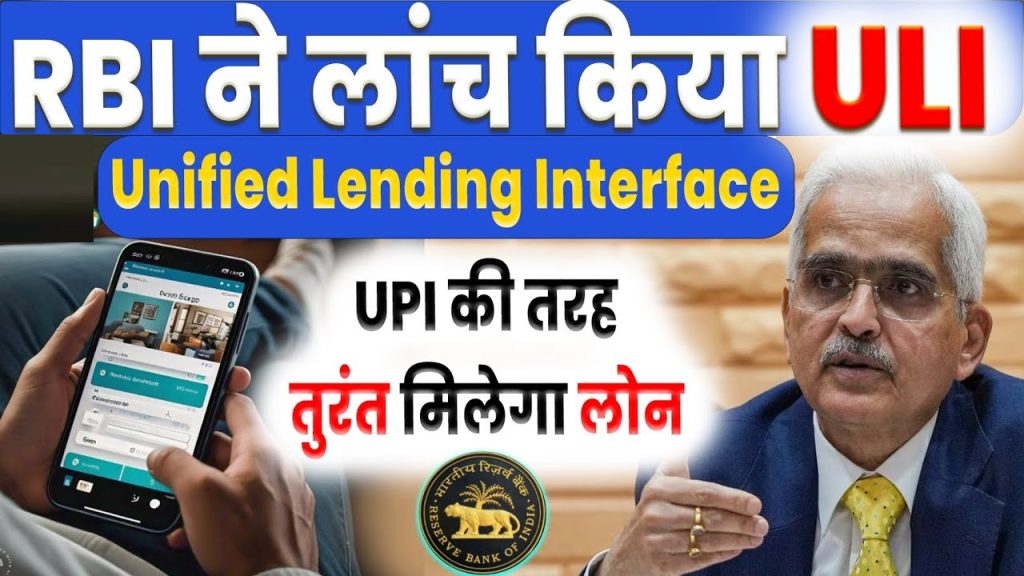
India’s digital transformation journey has reached another milestone with the introduction of the Unified Lending Interface (ULI), a groundbreaking platform that promises to revolutionize how credit is accessed and delivered across the country. Following the remarkable success of the Unified Payments Interface (UPI), which has been recognized by the International Monetary Fund as one of the world’s fastest payment systems, ULI represents the next evolutionary step in India’s digital public infrastructure. The Unified Lending Interface (ULI) is a tech platform created by the Reserve Bank Innovation Hub (RBIH) along with the Reserve Bank of India (RBI). It helps make the loan process easier and faster, so people and businesses can get credit more smoothly.
The Modi government’s digital initiative extends beyond simple payment solutions to address one of India’s most persistent challenges: access to affordable credit for small businesses, entrepreneurs, and individuals without traditional credit histories. This comprehensive platform aims to democratize lending by creating a unified ecosystem where borrowers can access multiple lending options through a single interface.
Understanding the Digital Foundation: From UPI to ULI
The journey toward ULI began over a decade ago when the Modi government prioritized digitalization as a cornerstone of economic development. The government initiated this transformation through the Jan Dhan Yojana, which linked mobile numbers with bank accounts for identity verification, creating a robust digital foundation.
UPI emerged as a game-changing payment system that processes 18 billion transactions monthly, surpassing even established global players like Visa and Mastercard in transaction volume. The International Monetary Fund has recognized UPI as one of the most comprehensive digital payment solutions globally, setting the stage for India’s next digital innovation.
Building on UPI’s success, ULI addresses the critical gap in India’s financial ecosystem where traditional credit assessment methods fail to serve vast segments of the population, particularly small businesses, freelancers, and individuals in the informal economy.
The Credit Challenge in Traditional Indian Banking
India’s conventional lending system presents numerous obstacles for potential borrowers. Traditional banks and financial institutions rely heavily on formal credit histories, which exclude millions of Indians who operate in the informal economy or lack established banking relationships.
The existing credit scoring system primarily considers formal employment records, existing credit card usage, and timely payment histories. However, this approach overlooks significant portions of the population who possess assets, generate income, and demonstrate financial responsibility through alternative means.
Small and medium enterprises, agricultural workers, dairy farmers, and freelancers often face rejection despite having substantial assets like land, livestock, property, or consistent utility payments. The current system’s narrow focus on formal credit metrics creates barriers for these economically active individuals.
Money lenders continue to charge exorbitant interest rates, sometimes reaching 21-24% annually, even for secured loans against gold. This exploitative lending environment prevents economic growth and entrepreneurial expansion, particularly among smaller business operators.
How ULI Transforms Credit Assessment: A Comprehensive Data Approach
ULI revolutionizes credit evaluation by adopting a holistic data collection methodology that captures the complete financial picture of potential borrowers. Instead of relying solely on traditional credit bureau reports, the system aggregates information from multiple government and financial databases.
Multi-Source Data Integration
The platform collects comprehensive data from various sources to create accurate borrower profiles:
Land Records and Property Holdings: The system accesses government land records to verify property ownership, providing insights into borrower assets and stability.
Utility Payment Histories: Regular electricity bill payments, water bills, and other utility payments demonstrate financial discipline and consistent income generation.
Agricultural Cooperative Data: For farmers and agricultural workers, the system examines records from agricultural cooperative societies, dairy farming activities, and seasonal income patterns.
Tax Authority Information: Income tax filings and GST portal data provide official documentation of business activities and revenue generation.
Banking and Investment Records: Fixed deposits, mutual fund holdings, securities investments, and other financial assets contribute to the comprehensive assessment.
Government Scheme Participation: Involvement in various government programs and subsidy schemes adds additional layers to the borrower profile.
Real-Time Assessment Capabilities
This comprehensive data collection enables lenders to understand borrowers’ true financial capacity, including seasonal income variations, asset holdings, and payment behaviors across multiple financial obligations. The system recognizes that creditworthiness extends beyond formal employment and traditional banking relationships.
The ULI Ecosystem: Seamless Integration for All Stakeholders
ULI operates through sophisticated Application Programming Interfaces (APIs) that connect borrowers with multiple lenders simultaneously. This technological infrastructure creates a competitive marketplace where banks, Non-Banking Financial Companies (NBFCs), and fintech companies can offer customized lending solutions.
Borrower Experience and Consent Management
When individuals require credit, they access the ULI platform through participating financial institutions. The system requests consent before accessing personal financial data, ensuring privacy protection and regulatory compliance.
Upon consent approval, the platform rapidly aggregates comprehensive borrower information and presents it to multiple lenders simultaneously. This approach eliminates the traditional requirement for borrowers to approach individual banks or lenders separately.
Lender Competition and Rate Optimization
Multiple financial institutions can evaluate the same borrower profile simultaneously, creating competitive pressure that benefits borrowers through better interest rates and terms. State Bank of India, private sector banks, NBFCs like Tata Capital, and innovative fintech companies all participate in this ecosystem.
Borrowers receive multiple loan offers within hours, allowing them to compare terms, interest rates, and repayment conditions before making informed decisions. This competitive environment naturally drives down lending rates and improves service quality.
Streamlined Processing and Disbursement
The platform eliminates traditional paperwork requirements, lengthy verification processes, and physical documentation submission. Loan approvals can occur within hours, with funds transferred directly to borrowers’ bank accounts through digital channels.
This efficiency transformation reduces the time between loan application and fund receipt from weeks or months to mere hours, enabling borrowers to capitalize on time-sensitive business opportunities.
ULI vs Traditional Lending: A Paradigm Shift
To understand ULI’s transformative potential, let’s compare it to traditional lending systems:
| Aspect | Traditional Lending | Unified Lending Interface (ULI) |
|---|---|---|
| Credit Assessment | Relies on credit scores and repayment history | Uses alternative data (land, utilities, GST, etc.) |
| Accessibility | Limited to those with formal credit history | Inclusive of informal sector and first-time borrowers |
| Processing Time | Days or weeks due to paperwork | Hours with digital processing |
| Interest Rates | High, especially from moneylenders (21–24%) | Competitive rates (11–14%) |
| Transparency | Limited; borrowers have few choices | High; borrowers compare multiple offers |
| Collateral | Often required | Not mandatory, based on data-driven assessment |
Democratizing Credit Access: Breaking Traditional Barriers
ULI’s most significant impact lies in extending credit access to previously underserved populations. The platform recognizes alternative indicators of creditworthiness that traditional systems overlook, creating opportunities for millions of Indians.
Supporting Informal Economy Participants
Agricultural workers with seasonal income patterns can demonstrate creditworthiness through land ownership, livestock holdings, dairy farming activities, and consistent utility payments. The system acknowledges these alternative income sources and asset holdings.
Small business owners operating in the informal economy can establish credit profiles through GST filings, regular business transactions, and asset accumulation, even without traditional employment documentation.
Freelancers and independent contractors can build credit histories through consistent income tax filings, regular utility payments, property ownership, and financial asset accumulation.
Asset-Based Credit Evaluation
Unlike traditional credit scoring that focuses primarily on repayment history, ULI considers comprehensive asset portfolios. Property ownership, investment holdings, business assets, and even lifestyle indicators contribute to creditworthiness assessment.
This holistic approach recognizes that financial stability encompasses multiple factors beyond formal employment and traditional banking relationships.
Economic Impact and Growth Acceleration
Financial experts project that ULI implementation could increase India’s GDP growth rate by approximately 2%. This substantial economic impact stems from improved credit access enabling business expansion, entrepreneurial ventures, and economic participation among previously excluded populations.
Enabling Business Expansion
Small and medium enterprises gain access to working capital for inventory expansion, equipment purchases, and operational scaling. Timely credit availability prevents missed business opportunities and supports consistent growth trajectories.
Agricultural businesses can invest in modern equipment, crop diversification, and value-added processing capabilities, increasing productivity and income generation.
Reducing Dependency on Expensive Credit
ULI’s competitive lending environment naturally reduces interest rates charged to borrowers. When multiple lenders compete for the same customer, rates typically decrease from the exploitative levels charged by traditional money lenders.
Current bank deposit rates hover around 8%, suggesting that reasonable lending rates should range between 11-12% annually. ULI’s competitive environment helps achieve these optimal rate structures.
Building Credit Histories for Future Access
As borrowers successfully repay ULI-facilitated loans, they build formal credit histories that enable access to larger loan amounts at lower interest rates in future transactions. This positive cycle gradually integrates informal economy participants into the formal financial system.
Technology Infrastructure and Security Framework
ULI operates on robust technological infrastructure that ensures data security, privacy protection, and system reliability. The platform employs advanced encryption, consent management systems, and regulatory compliance mechanisms.
Privacy and Data Protection
All data access requires explicit borrower consent, ensuring individuals maintain control over their personal financial information. The system operates under strict regulatory guidelines that protect borrower privacy while enabling comprehensive credit assessment.
Lenders cannot access borrower data without explicit permission, and individuals can revoke consent at any time, maintaining complete control over their financial information sharing.
API Integration and Scalability
The platform’s API-based architecture enables seamless integration with existing banking systems, fintech applications, and government databases. This scalability ensures the system can accommodate growing transaction volumes and expanding lender participation.
Financial institutions can integrate ULI capabilities into their existing digital platforms, providing customers with enhanced lending access without requiring separate application processes.
Comparative Analysis: ULI vs Traditional Lending Systems
Traditional lending systems require extensive documentation, collateral provision, guarantor arrangements, and lengthy approval processes. Borrowers often wait weeks or months for loan approvals, frequently facing rejection despite possessing significant assets.
ULI eliminates most traditional barriers by providing comprehensive borrower profiles that enable rapid, informed lending decisions. The platform’s competitive environment ensures better terms for borrowers while reducing lenders’ risk exposure through enhanced data availability.
Interest Rate Optimization
Traditional money lenders charge rates between 21-24% annually, even for secured loans. ULI’s competitive environment naturally drives rates toward optimal levels that reflect actual risk while providing reasonable returns for lenders.
Borrowers who demonstrate strong repayment behavior through ULI transactions can access progressively lower interest rates, creating incentives for responsible financial behavior.
Processing Speed and Efficiency
While traditional loans require weeks or months for processing, ULI-facilitated loans can be approved and disbursed within hours. This speed enables borrowers to capitalize on time-sensitive opportunities and respond quickly to cash flow requirements.
Benefits of ULI for Small Businesses and Individuals
ULI’s impact extends across various segments of society, from small business owners to farmers and gig workers. Here’s how it benefits key stakeholders:
Empowering Small Businesses
Small and medium enterprises (SMEs) are the backbone of India’s economy, yet they often struggle to secure timely financing. ULI empowers SMEs by:
- Providing Timely Capital: Quick loan approvals enable businesses to seize growth opportunities without delay.
- Lowering Interest Rates: Competitive loan offers reduce borrowing costs, allowing businesses to reinvest savings into growth.
- Simplifying Documentation: ULI’s data-driven approach eliminates the need for extensive paperwork, making it easier for small businesses to apply for loans.
Supporting Freelancers and Gig Workers
India’s gig economy is booming, with millions of freelancers and gig workers contributing to economic growth. However, these individuals often lack access to formal credit due to irregular incomes and limited credit histories. ULI changes this by:
- Recognizing Alternative Income Sources: Data from utility payments, GST filings, and cooperative societies validate the financial stability of gig workers.
- Offering Flexible Loan Terms: Freelancers can access loans tailored to their income patterns, enabling them to invest in tools, training, or business expansion.
- Building Credit Profiles: Timely repayments through ULI enhance creditworthiness, opening doors to better loan terms in the future.
Uplifting Farmers and Rural Entrepreneurs
Agriculture remains a cornerstone of India’s economy, but farmers often face challenges accessing credit due to seasonal incomes and lack of collateral. ULI supports rural entrepreneurs by:
- Leveraging Agricultural Data: Land records, dairy farming income, and cooperative society data provide a comprehensive view of a farmer’s financial capacity.
- Enabling Seasonal Financing: Flexible loan terms align with agricultural cycles, ensuring farmers can access funds when needed most.
- Reducing Exploitation: By offering affordable loans, ULI reduces reliance on predatory moneylenders who charge exorbitant rates.
Enhancing Financial Discipline
ULI encourages responsible financial behavior by rewarding timely repayments with lower interest rates and better loan terms. This creates a virtuous cycle where borrowers improve their credit profiles, gain access to larger loans, and contribute to economic growth.
Global Potential and International Expansion
Following UPI’s international success across 80+ countries, ULI possesses similar global expansion potential. International banks and financial institutions may seek access to India’s large consumer market through ULI integration.
Cross-Border Lending Opportunities
As UPI achieves broader international integration, foreign financial institutions may demand reciprocal access to India’s lending markets through ULI. This could create opportunities for Indian borrowers to access international credit sources at competitive rates.
However, such expansion requires careful regulatory consideration to ensure domestic financial stability while enabling beneficial international cooperation.
Technology Export Potential
India’s successful implementation of ULI could position the country as a technology exporter for digital lending infrastructure. Other developing nations facing similar credit access challenges may adopt ULI-based solutions.
This technology leadership strengthens India’s position in the global fintech ecosystem while creating export opportunities for Indian technology companies.
Challenges and Implementation Considerations
Despite ULI’s significant potential, successful implementation requires addressing various challenges including data privacy concerns, regulatory compliance, and system security.
Data Quality and Accuracy
The platform’s effectiveness depends on accurate, up-to-date information from multiple government and financial databases. Ensuring data quality across diverse sources requires robust validation mechanisms and regular system updates.
Digital Literacy and Access
ULI’s benefits depend on borrowers’ ability to navigate digital platforms and understand lending terms. Comprehensive financial literacy programs must accompany ULI implementation to ensure equitable access across all population segments.
Regulatory Framework Development
The platform requires sophisticated regulatory oversight to balance innovation with consumer protection, data privacy, and financial system stability. Regulators must develop frameworks that enable ULI’s benefits while preventing potential misuse.
Future Enhancements and Advanced Features
ULI’s development roadmap includes advanced features that could further enhance credit assessment accuracy and borrower experience.
Behavioral Analytics Integration
Future versions may incorporate social behavior analysis, health insurance records, and lifestyle indicators to create even more comprehensive borrower profiles. However, such features require careful privacy consideration and regulatory approval.
Predictive Analytics and Risk Assessment
Machine learning algorithms could analyze borrower behavior patterns to predict repayment likelihood, enabling more accurate risk assessment and personalized lending terms.
Integration with Emerging Technologies
Blockchain technology could enhance data security and transaction transparency, while artificial intelligence could automate complex lending decisions and fraud detection.
Impact on Traditional Financial Intermediaries
ULI’s implementation significantly impacts existing financial intermediaries, particularly money lenders and informal credit providers who charge excessive interest rates.
Disruption of Exploitative Lending
Traditional money lenders who exploit borrowers through excessive rates and stringent collateral requirements face substantial competitive pressure from ULI’s transparent, competitive environment.
Bank and NBFC Adaptation
Traditional banks and NBFCs must adapt their lending processes to compete effectively in ULI’s transparent marketplace. This adaptation includes improving customer service, reducing processing times, and offering competitive rates.
Social and Economic Transformation
ULI represents more than a technological advancement; it embodies a fundamental shift toward financial inclusion and economic democratization.
Empowering Marginalized Communities
Previously excluded populations gain access to formal financial services, enabling economic participation and wealth building opportunities that were historically unavailable.
Rural Development Acceleration
Agricultural communities and rural businesses gain access to credit for modernization, expansion, and productivity enhancement, accelerating rural economic development.
Entrepreneurship Enhancement
Aspiring entrepreneurs can access startup capital based on comprehensive assessments rather than traditional employment histories, fostering innovation and business creation.
Conclusion: ULI’s Revolutionary Potential
The Unified Lending Interface represents a transformative leap in India’s financial ecosystem, building upon UPI’s success to address critical credit access challenges. By creating a comprehensive, competitive, and transparent lending environment, ULI has the potential to accelerate economic growth, reduce financial exclusion, and enhance prosperity across all segments of Indian society.
This revolutionary platform demonstrates India’s leadership in financial technology innovation while providing a model for other developing nations seeking to improve financial inclusion. As ULI implementation progresses, its success will likely inspire similar innovations globally, reinforcing India’s position as a fintech pioneer.
The platform’s emphasis on data-driven decision making, competitive pricing, and rapid processing creates a lending environment that benefits borrowers while maintaining reasonable returns for lenders. This balanced approach ensures sustainable growth in India’s credit markets while supporting broader economic development objectives.
ULI’s success depends on continued government support, regulatory framework development, and technology infrastructure investment. However, if properly implemented, this platform could fundamentally transform how Indians access credit, ultimately contributing to sustained economic growth and enhanced financial inclusion across the nation.