


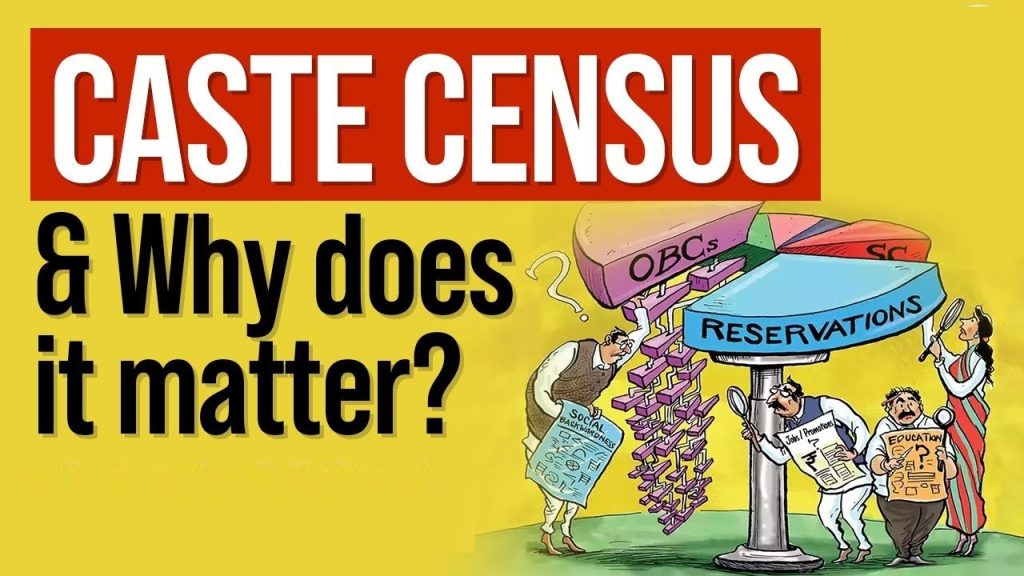
India’s social landscape is deeply intertwined with its caste system, a centuries-old framework that continues to shape access to opportunities, resources, and social mobility. As the nation gears up for its 2025 national census, the inclusion of a caste census marks a pivotal moment in addressing systemic inequalities. This comprehensive survey aims to map the caste composition of India’s 1.46 billion-strong population, providing critical data to drive equitable policies and inclusive growth. In this article, we explore what a caste census entails, why it matters, and how it could redefine India’s approach to social justice and development.
What Is a Caste Census and How Does It Function?
A caste census is a systematic effort to collect data on the caste identities of individuals across India. Unlike a general population count, this survey focuses on categorizing people based on their caste affiliations, offering a granular view of the nation’s social structure. By documenting the demographic and socio-economic realities of various caste groups, the census equips policymakers with evidence-based insights to address disparities.
The process involves enumerators collecting caste-related information through digital platforms, such as mobile apps and online portals, as part of India’s first fully digital census in 2025. This modern approach ensures faster data processing and greater accuracy, enabling the government to analyze the needs of diverse communities efficiently.
Key Objectives of the Caste Census
- Demographic Mapping: Identify the population size and distribution of caste groups.
- Socio-Economic Insights: Assess living conditions, education levels, and employment status across castes.
- Policy Support: Provide data to design targeted welfare programs and evaluate existing policies.
A Historical Perspective: When Was the Last Caste Census?
India’s last comprehensive caste census occurred in 1931 under British colonial rule. Post-independence, national censuses primarily focused on collecting data for Scheduled Castes (SCs) and Scheduled Tribes (STs), leaving out detailed information on Other Backward Classes (OBCs) and other caste groups. The 2011 Socio-Economic and Caste Census (SECC) attempted to bridge this gap, but its findings were not fully released due to concerns over data reliability.
The absence of updated caste data has hindered the government’s ability to address disparities effectively. The upcoming 2025 census, approved by the Cabinet Committee on Political Affairs on April 30, 2025, aims to rectify this by reintroducing caste enumeration after nearly a century.
Why the 2025 Census Is a Game-Changer
- Digital Innovation: Leverages technology for accurate and transparent data collection.
- Comprehensive Scope: Covers all caste groups, including OBCs, for the first time since 1931.
- Policy Relevance: Aligns with India’s constitutional mandate to uplift backward classes.
Why Does India Need a Caste Census?
The caste census is more than a statistical exercise; it is a tool for social transformation. Here’s why it holds immense significance for India’s development:
1. Addressing Persistent Social Inequalities
Caste-based discrimination remains a reality in many parts of India, limiting access to education, employment, and healthcare for marginalized groups. A caste census provides a clear picture of which communities face the greatest challenges, enabling the government to design interventions that promote social equity. For instance, data on underprivileged castes can guide the expansion of scholarship programs or job reservations.
2. Ensuring Equitable Resource Allocation
Fair distribution of public resources hinges on accurate population data. Without knowing the size and needs of different caste groups, governments risk misallocating funds or overlooking vulnerable communities. The caste census will reveal disparities in access to essentials like healthcare, housing, and education, allowing for more effective budgeting and resource distribution.
3. Strengthening Affirmative Action Programs
India’s reservation system, which allocates quotas for SCs, STs, and OBCs in education and government jobs, relies on accurate data to function effectively. A caste census will provide updated figures to evaluate the impact of these policies and adjust them to reflect current realities. This ensures that affirmative action remains relevant and impactful in reducing inequality.
4. Deepening Understanding of India’s Social Fabric
Caste influences every facet of Indian society, from marriage and politics to economic opportunities. By mapping the caste composition of the population, the census offers valuable insights for researchers, sociologists, and policymakers. This data can illuminate patterns of inequality, social mobility, and community interactions, fostering a more nuanced approach to governance.
5. Fulfilling Constitutional Mandates
The Indian Constitution emphasizes the identification and upliftment of socially and educationally backward classes. Article 340 empowers the government to investigate the conditions of such groups, and a caste census aligns with this directive. By collecting caste data, the government takes a concrete step toward honoring its constitutional commitment to social justice.
The 2025 Caste Census: A Landmark Policy Shift
On April 30, 2025, Union Minister Ashwini Vaishnaw announced that the upcoming national census would include caste enumeration, a decision driven by the need for transparent and data-driven governance. This move, approved under Prime Minister Narendra Modi’s leadership, reflects India’s commitment to inclusive development without fueling social divisions.
Key Highlights of the Announcement
- Official Inclusion: Caste data collection is now a formal part of the 2025 census, a Union subject under the Indian Constitution.
- Digital Execution: The census will utilize mobile apps and online portals, marking India’s first fully digital population count.
- Transparency Focus: Unlike some state-level caste surveys, which faced criticism for lacking rigor, the national census prioritizes accuracy and impartiality.
- Social Unity: The government aims to collect caste data in a way that strengthens national cohesion rather than deepening divides.
Vaishnaw emphasized that the decision builds on India’s track record of inclusive policies, such as the 10% reservation for economically weaker sections introduced in 2019. By embedding caste enumeration in the national census, the government seeks to balance social justice with unity.
Challenges and Criticisms of the Caste Census
While the caste census holds immense potential, it is not without challenges. Critics argue that caste-based data collection could exacerbate social divisions or be misused for political gain. Others express concerns about the accuracy of self-reported caste identities, especially in regions with complex caste hierarchies.
Addressing Potential Pitfalls
- Safeguarding Data Integrity: The government must ensure robust verification processes to maintain data accuracy.
- Preventing Political Misuse: Clear guidelines are needed to prevent caste data from being exploited for electoral purposes.
- Promoting Social Cohesion: Public awareness campaigns can emphasize the census’s role in fostering equity rather than division.
By addressing these challenges proactively, the government can maximize the census’s benefits while minimizing risks.
How the Caste Census Will Shape India’s Future
The inclusion of caste data in the 2025 census has far-reaching implications for India’s social, economic, and political landscape. Here’s how it could transform the nation:
1. Targeted Welfare Programs
With precise data on caste populations and their socio-economic conditions, the government can roll out tailored welfare schemes. For example, communities with low literacy rates could benefit from expanded education initiatives, while those with high unemployment could receive job training programs.
2. Evidence-Based Policy Reforms
The caste census will provide a robust dataset to evaluate the effectiveness of existing policies, such as reservations and rural development schemes. This evidence-based approach will enable policymakers to refine interventions and address gaps in implementation.
3. Enhanced Social Research
Academics and researchers will gain access to a wealth of data on India’s caste dynamics, enabling deeper studies on inequality, mobility, and social change. This knowledge can inform long-term strategies for inclusive growth.
4. Global Relevance
As a nation representing 17.78% of the world’s population, India’s approach to addressing caste-based disparities could serve as a model for other countries grappling with systemic inequalities. The caste census underscores the power of data in driving social progress.
Lessons from State-Level Caste Surveys
Several Indian states, such as Bihar and Karnataka, have conducted their own caste-based surveys in recent years. While these efforts provided valuable insights, they also highlighted challenges that the national census must address:
- Bihar’s Caste Survey (2023): Revealed that OBCs and Extremely Backward Classes constituted over 63% of the state’s population, prompting calls for increased reservations. However, the survey faced legal challenges over its methodology.
- Karnataka’s Socio-Economic Survey (2015): Provided detailed caste data but was not fully released due to political sensitivities, underscoring the need for transparency.
The national census can learn from these experiences by prioritizing methodological rigor and public trust. By conducting caste enumeration under a unified framework, the government can avoid the inconsistencies seen in state-level efforts.
The Role of Technology in the 2025 Census
India’s first digital census represents a leap forward in data collection and analysis. By leveraging mobile apps, online portals, and cloud-based systems, the government aims to streamline the enumeration process and enhance data accuracy.
Benefits of a Digital Census
- Real-Time Data Processing: Enables faster analysis and reporting of caste demographics.
- Accessibility: Allows enumerators to reach remote areas using mobile technology.
- Transparency: Digital records reduce the risk of data tampering and ensure accountability.
This technological shift positions India as a leader in modern census methodologies, setting a benchmark for other nations.
Public Perception and the Path Forward
The decision to include caste data in the 2025 census has sparked widespread debate. While many view it as a step toward social justice, others worry about its potential to deepen caste consciousness. To ensure the census’s success, the government must engage the public through awareness campaigns that highlight its benefits.
Building Public Trust
- Clear Communication: Explain how caste data will be used to promote equity.
- Community Engagement: Involve local leaders to address concerns and dispel myths.
- Data Privacy: Assure citizens that their information will be protected.
By fostering trust and transparency, the government can rally public support for this transformative initiative.
Conclusion: A Step Toward an Inclusive India
The 2025 caste census is a historic opportunity to confront India’s social inequalities head-on. By providing a detailed snapshot of the nation’s caste composition, this survey will empower policymakers to craft targeted interventions, allocate resources equitably, and strengthen affirmative action. As India navigates the complexities of its diverse society, the caste census stands as a testament to the power of data in driving progress. With transparency, rigor, and a commitment to unity, this initiative could pave the way for a more inclusive and equitable future.