


Introduction to the Indian Stock Market in July 2025
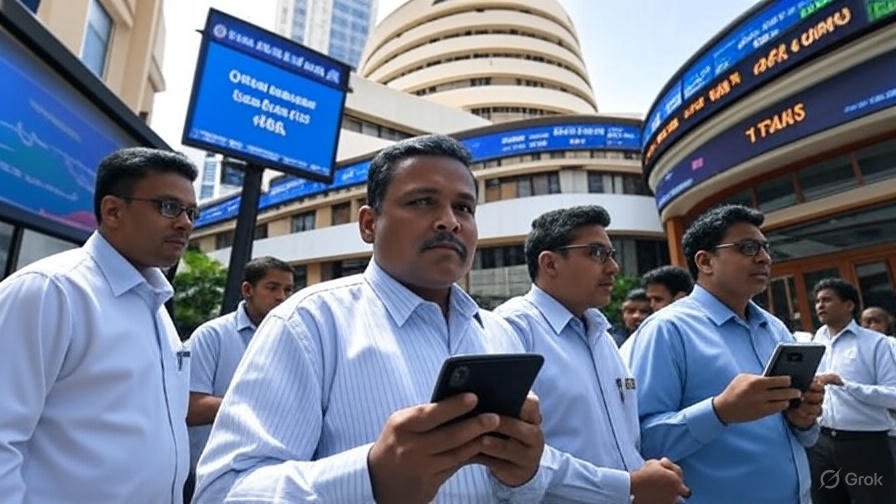
The Indian stock market in July 2025 reflects a blend of resilience and volatility, driven by global trade dynamics, regulatory developments, and sector-specific performances. With the Sensex closing at 82,634 (+64 points) and the Nifty at 25,212 (+16 points), the market shows cautious optimism. Bank Nifty gained 162 points, closing at 57,169, signaling strength in the financial sector. This article explores key market movers, including State Bank of India (SBI), a surging pharma stock, and the implications of short selling, alongside global trade updates impacting Indian markets.
Global Trade Dynamics: U.S.-India Trade Deal and Tariff Implications
Trump’s Trade Statements: A New Era for U.S.-India Relations
Recent statements from U.S. leadership indicate a potential trade deal with India, mirroring an agreement with Indonesia. The U.S. aims to secure market access for American companies to sell products in India’s open market, potentially reducing tariffs. For instance, Indonesia’s tariff was lowered from 32% to 19%, suggesting flexibility in trade negotiations. This development could open opportunities for Indian exporters while increasing competition from U.S. products in sectors like technology, pharmaceuticals, and consumer goods.
Impact on Indian Markets
A U.S.-India trade deal could boost sectors like IT and pharmaceuticals, which rely on global markets. However, increased U.S. market access may challenge domestic companies in consumer goods and manufacturing. Investors should monitor companies with strong export potential, such as Infosys and Dr. Reddy’s Laboratories, while assessing risks for firms exposed to import competition.
Short Selling in India: Regulatory Concerns and Market Impact
The Rise of Short Selling by Global Firms
Short selling by global firms targeting Indian companies has raised concerns. These firms release reports alleging corporate governance issues, short the stocks beforehand, and profit when prices drop post-publication. The Securities and Exchange Board of India (SEBI) faces pressure from advisory firms like InGovern to act swiftly. Without regulatory intervention, such practices could erode investor confidence in Indian markets.
SEBI’s Role in Curbing Manipulative Practices
InGovern, India’s first independent proxy advisory firm, urges SEBI to address unregistered foreign research firms like Hindenburg and Viceroy Research. These entities influence Indian markets by targeting companies without prior regulatory reporting. SEBI’s response could involve stricter disclosure norms or penalties for premature report releases, protecting retail investors from panic-driven sell-offs.
Investor Strategies to Mitigate Short Selling Risks
Investors should focus on fundamentally strong companies with transparent governance to minimize exposure to short-selling volatility. Regular monitoring of SEBI updates and corporate disclosures can help anticipate potential risks. Diversifying portfolios across sectors like banking and IT can also cushion the impact of targeted short selling.
State Bank of India (SBI): A Game-Changing QIP Move
SBI’s ₹25,000 Crore QIP Launch
State Bank of India (SBI) has announced a Qualified Institutional Placement (QIP) to raise ₹25,000 crore, with a floor price of ₹81 per share. The Life Insurance Corporation of India (LIC) is likely to subscribe to a significant portion, with reports suggesting up to ₹7,000 crore from LIC as an anchor investor. This move triggered a 2% surge in SBI’s stock price, reflecting investor confidence.
Implications for Investors
The QIP strengthens SBI’s capital base, enabling expansion in lending and digital banking. For investors, this signals long-term growth potential, especially in a robust banking sector. The stock’s consistent positive returns since 2015, combined with this capital infusion, make SBI a compelling choice for long-term portfolios.
Pharma Sector Surge: A 14% Jump in SS Life Sciences
SS Life Sciences’ USFDA Approval Boost
SS Life Sciences soared 14% after receiving a clean chit from the U.S. Food and Drug Administration (USFDA) for its Telangana API unit. The Voluntary Action Indicated (VAI) status, indicating no significant issues, boosted investor sentiment. This approval enhances SS Life Sciences’ credibility in global markets, particularly the U.S.
Why Pharma Stocks Are Hot in 2025
The pharma sector benefits from strong export demand and regulatory approvals. Companies like SS Life Sciences and Shilpa Medicare, which also received USFDA approval for its Bangalore unit, are poised for growth. Investors should watch for firms with robust R&D pipelines and global certifications to capitalize on this trend.
Cement Sector Buzz: Small-Cap Stocks Shine
Deccan Cements and Others Surge Up to 20%
Small-cap cement stocks like Deccan Cements (+20%), Sagar Cements, NCL Industries, and KCP saw significant gains, driven by strong demand expectations in South India. Deccan Cements, with a 4 million-ton capacity, is valued at ₹70-75 per ton, higher than peers like Sagar Cements (₹50/ton) and NCL Industries (₹45/ton).
Valuation and Acquisition Speculation
High valuations suggest potential acquisition interest from larger players. Investors should analyze capacity expansions and Q1 earnings for clarity on whether these gains are driven by fundamentals or speculative buying. JK Cements, UltraTech, and Dalmia Bharat’s upcoming results will provide further insights.
Market Performance and Technical Analysis
Nifty and Sensex: A Consolidation Phase
Despite a gap-down opening indication from Gift Nifty, the market closed neutral, with Nifty above 25,200. The past three days show higher closing levels, a bullish sign. However, the 25,250-25,270 zone, coinciding with the 20-day moving average, remains a critical resistance. A close above this level could signal stronger bullish momentum.
Dollar Index and Rupee Dynamics
The U.S. Dollar Index is showing signs of breaking its lower-highs structure, potentially reaching 99 or higher. A stronger dollar could pressure the Indian rupee, impacting equity markets. Investors should prepare for temporary volatility but view it as part of cyclical trends, as historical data shows markets recover post-correction.
Sector-Specific Opportunities
Banking Sector: HDFC Bank’s Bonus Issue
HDFC Bank announced its first bonus issue in 25 years, alongside a special interim dividend. This move increases share liquidity, attracting retail investors. With no negative annual returns since 2015, HDFC Bank remains a stable investment, though its results on July 19, 2025, will be pivotal.
IT Sector: Mixed Signals but Growth Potential
LTTS reported 16.4% revenue growth year-on-year, but flat profits and a 3% margin decline. Despite a challenging environment, double-digit growth guidance for the medium term signals resilience. Infosys’ results on July 23, 2025, could lift the sector if growth projections are positive.
Renewable Energy: NLC India and NTPC Green
NLC India received government approval for renewable energy investments, targeting 10 GW by 2030 and 32 GW by 2047. NTPC Green’s ₹20,000 crore capex approval for 60 GW by 2032 positions it as a leader in green energy. These developments make both stocks attractive for long-term investors.
Hospitality Sector: ITC Hotels Shines
ITC Hotels reported a 15% revenue increase and 53% profit growth, driven by higher occupancy and margin expansion. This performance underscores the hospitality sector’s recovery, making ITC Hotels a stock to watch.
Corporate Governance and Public Spending Controversies
Chhattisgarh’s ₹52 Lakh Water Jug Scandal
A tribal development program in Chhattisgarh spent ₹52 lakh on 160 stainless steel water jugs, costing ₹32,000 each. This inflated pricing, despite competitive bidding, raises concerns about tender manipulation. Investors should monitor government actions against such practices, as they impact public sector companies and market trust.
Defense Sector: Mutual Funds Trim Holdings
Mutual funds reduced stakes in defense stocks like Solar Industries (₹952 crore) and Zen Technologies (₹192 crore), citing high valuations. However, buying in Bharat Dynamics and Unimac suggests selective optimism. Investors should wait for corrections to enter at attractive valuations.
Stock-Specific Updates
RBL Bank: Institutional Buying Signals Confidence
RBL Bank saw a 14% increase in Domestic Institutional Investor (DII) holdings, particularly from mutual funds, despite a public sell-off. The stock’s rise from ₹150 to ₹260 reflects institutional confidence in recovery potential.
Nykaa: High PE but Strong Growth
Nykaa’s PE ratio of 936 reflects its premium valuation, but consistent mutual fund buying (from 2.95% to 25% stake) and sales growth from ₹574 crore to ₹7,950 crore highlight its e-commerce potential. Investors should weigh growth against valuation risks.
Network 18: Profit with Caveats
Network 18 reported profits due to a ₹150 crore exceptional gain, but core operations remain in the red. Its digital platforms, like Moneycontrol, with 1 million paid subscribers, show promise. Investors should monitor digital growth initiatives.
MAS Financial: Nippon India’s Investment
MAS Financial jumped 9% after Nippon India Mutual Fund bought 20 lakh shares for ₹61 crore. Consistent buying by Nippon signals strong fundamentals, making MAS a stock to watch.
Regulatory and Policy Updates
Karnataka’s Movie Ticket Price Cap
Karnataka’s proposal to cap movie ticket prices at ₹200 could impact PVR Inox, with 12.3% of its South India presence in the state. While ticket revenue may drop by 8-10%, ancillary sales (popcorn, drinks) could mitigate losses.
Unified Healthcare Rates
The government’s plan to standardize treatment rates across states may pressure hospital stocks’ revenues but benefit consumers by curbing healthcare inflation. Investors should monitor official updates for clarity.
Investment Strategies for July 2025
Diversify Across Sectors
Balance portfolios with banking (SBI, HDFC Bank), pharma (SS Life Sciences, Shilpa Medicare), and renewables (NLC India, NTPC Green) to hedge against volatility.
Monitor Earnings Season
Upcoming results from Reliance Industries (July 18), HDFC Bank (July 19), Infosys (July 23), and cement majors will drive market direction. Strong earnings could push Nifty past resistance levels.
Stay Informed on Global Cues
Track U.S.-India trade talks and Dollar Index movements. A stronger dollar may create short-term pressure, but long-term market resilience is likely.
Mitigate Short Selling Risks
Focus on companies with strong fundamentals and governance to avoid short-selling volatility. Regular SEBI updates can provide early warnings.
Conclusion: Navigating the Market with Confidence
The Indian stock market in July 2025 offers a mix of opportunities and challenges. SBI’s QIP, pharma’s regulatory wins, and cement’s demand surge highlight growth potential, while short selling and global trade dynamics require vigilance. By staying informed, diversifying investments, and focusing on fundamentally strong stocks, investors can navigate this dynamic landscape with confidence. Subscribe to our newsletter for daily market updates and actionable insights to stay ahead in your investment journey.