Site icon Telangana NavaNirmana Sena

Top 10 Ganpati Pandals in India 2025 Devotee’s Guide

Ganesh Pandals in India & 10 Largest Ganesh Temples Worldwide: Your Complete 2025 Devotee's Guide As someone who has spent over a decade exploring the spiritual landscape of India's most celebrated festivals, I can tell you that Ganesh Chaturthi represents the very soul of devotional artistry and community spirit. This year's celebrations, running from August 27 to September 6, 2025, promise to be more spectacular than ever, with Mumbai's Lalbaugcha Raja entering its 92nd year and Hyderabad's Khairtabad Ganesh reaching a record-breaking 69 feet in height. From the gold-adorned splendor of Pune's Dagdusheth Halwai Ganpati to the international grandeur of temples in New York and Singapore, this comprehensive guide covers every must-visit destination for spiritual seekers and cultural enthusiasts alike. Khairtabad Ganesh in Hyderabad features a 69 feet tall eco-friendly idol, the tallest in the region for Ganesh Chaturthi 2025 The Historical Foundation of India's Greatest Ganesh Celebrations The transformation of Ganesh Chaturthi from private household worship to India's most vibrant public festival began with a visionary leader who understood the power of collective devotion. Lokmanya Bal Gangadhar Tilak's revolutionary decision in 1893 to make Ganesh Chaturthi a public celebration fundamentally changed how millions of Indians connect with their faith. What started as a political strategy to unite people against British rule has evolved into the world's most magnificent display of religious artistry and community solidarity. My personal journey through Maharashtra's festival circuit has shown me that each pandal tells a unique story of devotion, artistry, and social consciousness. The 2025 celebrations are particularly significant because they represent a perfect blend of tradition and innovation, with eco-friendly materials becoming the norm rather than the exception. Hyderabad's Khairtabad Ganesh exemplifies this evolution, using 35 tonnes of clay from Rajasthan mixed with rice husk and jute powder to create their towering 69-foot masterpiece. The festival's growth has been phenomenal. According to Mumbai's BMC data, over 62,500 sarvajanik Ganesh idols were installed in 2024 alone, reflecting the deep-rooted affection Indians have for Bappa. This number continues to grow each year, with new pandals emerging in every neighborhood, each trying to outdo the previous year's creativity and devotion. Mumbai's Crown Jewels: The Most Iconic Ganesh Pandals Lalbaugcha Raja: The Undisputed King of Mumbai Standing in the serpentine queues outside Lalbaugcha Raja, you quickly understand why this pandal has earned the title "Navasacha Ganpati" - the wish-fulfilling Ganesha. Established in 1934 by fishermen and mill workers who prayed to Lord Ganesha for a permanent marketplace, this pandal has grown from humble beginnings to attract over 1.5 million devotees daily during the festival. The Kambli family has been sculpting this iconic idol for over 80 years, and their artistry is nothing short of extraordinary. The 18-20 feet tall idol is crafted entirely by hand without any molds, making each year's creation unique. This year's theme draws inspiration from Tirupati Balaji, creating a divine fusion that represents the unity of different devotional traditions. What makes Lalbaugcha Raja truly special is not just its size or fame, but the democratic spirit it embodies. Unlike some exclusive pandals, this celebration remains deeply rooted in its working-class origins. The fish vendors and mill workers who founded it continue to manage the celebrations, ensuring that every devotee, regardless of social status, receives equal darshan opportunities. The Lalbaugcha Raja 2025 Ganesh Idol seated in an intricately decorated golden pandal, symbolizing Mumbai's iconic Ganesh Chaturthi celebration Mumbaicha Raja: Where Tradition Meets Innovation Located in the historic Ganesh Galli, Mumbaicha Raja represents 97 years of unbroken tradition since its establishment in 1928. What sets this pandal apart is the incredible fact that for 45 years, artisans have handcrafted the 22-foot idol without using any molds, relying purely on traditional sculpting techniques. The 2025 theme showcases a breathtaking replica of Tamil Nadu's Rameswaram Temple, complete with towering gopurams and intricate Dravidian architecture. This choice reflects the pandal's commitment to celebrating India's diverse cultural heritage while maintaining its Maharashtrian roots. Walking through the pandal feels like stepping into a South Indian temple complex, complete with detailed stone carvings and traditional temple bells. The pandal's history is deeply connected to Mumbai's industrial heritage. Started by mill workers, it has always carried forward social messages through its themes, making each year's celebration both spiritually uplifting and socially relevant. GSB Seva Mandal: The Golden Standard of Opulence If you want to witness what devotion looks like when expressed through precious metals, GSB Seva Mandal's Ganesh idol adorned with 69 kg of gold and 336 kg of silver is an sight that will leave you speechless. With an insurance cover of ₹474.46 crore, this is officially India's most expensive Ganesh idol. The exclusivity adds to its mystique - unlike other pandals that celebrate for 10-11 days, GSB Seva Mandal's celebrations last only five days, making each moment precious. The pandal at Kings Circle transforms into a golden temple, with every surface gleaming with precious metals donated by devoted followers over seven decades. The level of craftsmanship in the ornaments is museum-quality. Each piece of jewelry has been carefully designed and crafted by master artisans, representing thousands of hours of intricate work. The result is not just an idol, but a moving piece of art that represents the pinnacle of devotional craftsmanship. Pune's Sacred Heritage: Where Modern Devotion Meets Ancient Traditions Dagdusheth Halwai Ganpati: The Golden Heart of Pune Born from a father's grief in 1893, the Dagdusheth Halwai Ganpati temple stands as one of India's most emotionally powerful spiritual destinations. When sweetmaker Dagdusheth Halwai and his wife Laxmibai lost their only son to a plague epidemic, their guru advised them to build a Ganesh temple to heal their pain. What emerged from their sorrow has become one of the world's wealthiest religious institutions. The current idol, crafted in 1968 by Karnataka's famous sculptor Nagesh Appa Shilpi, stands 5.5 feet tall and is adorned with 125 kg of gold ornaments donated by devotees over the decades. During Ganesh Chaturthi, the idol wears a different crown studded with precious stones each day, creating a daily spectacle of divine splendor. What makes this temple unique is its policy of never immersing the main idol. Instead, a smaller secondary idol is used for the visarjan ceremony, ensuring that the original deity blessed by decades of prayers remains permanently in the temple. This practice has created an unbroken chain of devotion spanning over 130 years. Close-up of the richly adorned golden Dagdusheth Halwai Ganpati idol in Pune showcasing intricate jewelry and decorations Kasba Ganpati: The First Among Equals Designated as "Manacha Pahila" (the first honored) by Lokmanya Tilak himself, Kasba Ganpati holds the prestigious position of leading Pune's Ganesh Visarjan procession. This honor reflects the temple's historical importance as Pune's presiding deity and its connection to the Maratha Empire's founding family. The temple's origins trace back to 1630 when Jijabai, mother of Chhatrapati Shivaji Maharaj, commissioned its construction after Vinayak Bhatt Thakar discovered a swayambhu (self-manifested) Ganesh idol. The idol, originally the size of a rice grain, has grown over centuries due to layers of sandalwood paste applied by devotees. The cultural significance extends beyond religious worship. Before any major celebration or important decision in Pune, the first invitation or arpanam is offered at Kasba Ganpati, maintaining a tradition that has continued for over 390 years. This practice demonstrates how deeply integrated this temple is in the social and cultural fabric of Pune. Beyond Maharashtra: Regional Treasures Across India Khairtabad Ganesh: Hyderabad's Towering Testament to Eco-Consciousness Standing at an impressive 69 feet and weighing 50 tonnes, Hyderabad's Khairtabad Ganesh represents the perfect marriage of scale and sustainability. This year's idol, titled "Sri Vishwashanthi Mahashakti Ganapathi," was crafted over three months by more than 220 artisans using eco-friendly clay from Gujarat, paddy husk powder, and natural colors. The engineering behind this massive creation is remarkable. Chief architect Chinnaswamy Rajendran, who has been designing the idol since 1978, uses a sophisticated iron framework system that makes the clay structure as sturdy as concrete while maintaining complete biodegradability. The idol incorporates 30 tons of steel framework covered with 35 tonnes of Rajasthani clay mixed with organic materials. The tradition began in 1954 with a modest 1-foot idol installed by freedom fighter Singari Shankariah. Following the practice of increasing the height by one foot each year, the pandal reached its current record-breaking dimensions. The festival attracts 30-40 lakh devotees annually, making it one of India's largest religious gatherings. GSB Mandals Beyond Mumbai: Community Excellence Nationwide The Goud Saraswat Brahmin community's commitment to excellence in Ganesh celebrations extends far beyond Mumbai's famous Kings Circle pandal. Across India, GSB communities have established themselves as guardians of traditional festival practices while embracing modern organizational efficiency. These pandals are known for their meticulous planning, high-quality decorations, and strong emphasis on cultural programs that preserve and promote traditional arts. The community's approach to festival organization has become a benchmark for other mandals across the country. India's Most Magnificent Ganesh Temples Siddhivinayak Temple: Mumbai's Spiritual Powerhouse Consecrated on November 19, 1801, the Siddhivinayak Temple in Prabhadevi has evolved from a small structure into one of India's most visited religious sites. The temple's black stone idol, with its distinctive right-tilted trunk and four hands, attracts thousands of devotees daily, including celebrities, politicians, and business leaders. The temple's architecture is a perfect blend of traditional and modern elements. The golden dome that lights up with multiple colors in the evening has become an iconic part of Mumbai's skyline. The inner sanctum's gold-plated roof and intricately carved wooden doors featuring the Ashtavinayak images create an atmosphere of divine grandeur. What sets Siddhivinayak apart is its reputation as a "wish-fulfilling" deity. The temple's name itself means "Ganesha who grants your wish," and countless devotees have shared stories of answered prayers and miraculous interventions. The temple's management has adapted to modern times by offering online darshan and digital donation options while maintaining traditional ritual practices. Close-up of the brightly decorated Lord Ganesha idol at Siddhivinayak Temple with live coverage branding Kanipakam Vinayaka Temple: The Living Miracle of Andhra Pradesh The self-manifested idol that continues to grow at Kanipakam represents one of Hinduism's most fascinating mysteries. Located in Chittoor district, this temple houses a swayambhu Ganesh idol that devotees believe increases in size continuously - a phenomenon that has baffled scientists and inspired millions of devotees. The legend speaks of three disabled brothers who discovered the idol while digging a well around 1,000 years ago. When their tool struck the buried idol, blood began flowing from the earth, and miraculously, all three were cured of their disabilities. The well from which the idol emerged never runs dry, and its water is distributed as sacred prasadam. The growing idol phenomenon is supported by tangible evidence. The silver kavacham (armor) made for the idol 50-60 years ago no longer fits, requiring regular resizing. Temple authorities have documented these changes, making Kanipakam a unique pilgrimage destination where faith meets unexplained reality. Ganpatipule Temple: Where Sea Meets Spirituality On Maharashtra's scenic Konkan coast, Ganpatipule Temple offers a unique combination of spiritual worship and natural beauty. The swayambhu Ganesh idol faces west toward the Arabian Sea, creating a mystical connection between the divine and the ocean's infinite expanse. The temple's beachside location makes it one of India's most picturesque pilgrimage destinations. Devotees can combine spiritual seeking with the therapeutic experience of sea waves and coastal tranquility. The temple is particularly famous for its sunset views, when the idol appears to glow in the golden light reflecting off the water. International Ganesh Temples: Global Devotion Transcends Borders Sri Maha Vallabha Ganapati Devasthanam, New York: America's Hindu Pioneer Established in 1970 as America's first Hindu temple, this Flushing, Queens landmark represents the successful transplantation of ancient traditions to modern soil. The temple has played a crucial role in preserving Hindu dharma for generations of American Hindus while welcoming devotees from all backgrounds. The temple's Ganesh Chaturthi celebrations have grown to become one of New York's most spectacular cultural events, attracting thousands of participants and showcasing the vibrant diversity of American Hinduism. The ten-day festival features traditional Vedic rituals, classical music performances, and community meals that demonstrate the unifying power of shared devotion. Sri Varatharajah Selvavinayagar Temple, Netherlands: Europe's Sacred Gateway Founded in 1991 by the Sri Lankan Tamil community, this Den Helder temple serves as the largest Ganesh shrine in Europe. The temple's serene setting near the North Sea creates a unique atmosphere where Eastern spirituality harmonizes with European tranquility. The temple plays a vital role in preserving Tamil Hindu traditions while adapting to European cultural contexts. Its peaceful ceremonies and community programs have made it a model for successful cultural integration, showing how ancient traditions can flourish in new environments. Sri Senpaga Vinayagar Temple, Singapore: The Pacific's Spiritual Jewel Over 150 years old and featuring magnificent Dravidian architecture, Singapore's Sri Senpaga Vinayagar Temple stands as the largest Hindu temple in the Pacific region. The temple's grand chariot processions during Ganesh Chaturthi have become integral to Singapore's multicultural festival calendar. The temple's name derives from "Senpaga" (Champaka flower), reflecting the discovery of the original Vinayagar murti near a Champaka tree. This connection to nature continues today through the temple's beautiful gardens and its role in promoting environmental consciousness within the Hindu community. Top 10 Largest and Most Famous Ganesh Temples and Pandals Worldwide (2025) Unique Features That Define Exceptional Ganesh Celebrations Tallest and Most Spectacular Idols The competition for creating the most impressive Ganesh idols has led to remarkable innovations in both artistry and engineering. Khairtabad's 69-foot eco-friendly masterpiece sets the standard for combining scale with environmental responsibility. Using advanced clay-working techniques and organic materials, it proves that spectacular devotion and ecological consciousness can coexist beautifully. Mumbai's major pandals have taken different approaches to magnificence. While Lalbaugcha Raja focuses on traditional craftsmanship and emotional connection with devotees, Mumbaicha Raja emphasizes architectural themes that educate visitors about India's diverse cultural heritage. Each approach creates its own unique form of spiritual experience. Richest and Most Ornate Decorations The GSB Seva Mandal's ₹474.46 crore insurance coverage represents the pinnacle of devotional opulence. However, true richness in Ganesh celebrations comes not just from precious metals but from the depth of community involvement and the quality of spiritual experience offered to devotees. Dagdusheth Halwai Ganpati's 125 kg of gold ornaments tell a different story - each piece represents a devotee's gratitude and faith, accumulated over more than a century of answered prayers. This organic accumulation of wealth through devotion creates a more powerful spiritual atmosphere than any artificially created display. Eco-Friendly Innovations Leading Change The shift toward environmental consciousness in Ganesh celebrations represents a mature evolution of the festival. Khairtabad's use of Gujarat clay, paddy husk, and natural colors demonstrates that environmental responsibility can enhance rather than compromise spiritual experience. The idol's complete biodegradability within 24 hours of immersion proves that ancient traditions can adapt to modern environmental needs. Many Mumbai pandals have adopted eco-friendly practices while maintaining their traditional appeal. The use of natural dyes, organic decorations, and biodegradable materials has become a mark of sophistication rather than compromise, showing how environmental consciousness enhances rather than diminishes devotional authenticity. Your Complete Travel Guide for Ganesh Chaturthi 2025 Essential Dates and Timing Ganesh Chaturthi 2025 begins on Wednesday, August 27, with the Chaturthi Tithi starting at 1:54 PM on August 26. The most auspicious time for installation and first prayers, called Madhyahna Ganesha Puja Muhurat, runs from 11:05 AM to 1:40 PM on August 27. The festival concludes with Ganesh Visarjan on Saturday, September 6, 2025. Planning your visit around these dates is crucial for the full experience. The first three days typically see the highest crowds, while the middle period offers a more relaxed atmosphere for detailed exploration of pandal decorations and cultural programs. The final days build toward the emotional climax of visarjan ceremonies. Managing Crowds and Maximizing Your Experience Based on my years of pandal-hopping, early morning visits (6-9 AM) provide the most peaceful darshan experience. Lalbaugcha Raja's queue management system requires patience, but the VIP darshan option is available for those with time constraints. For GSB Seva Mandal, advance planning is essential due to its exclusive five-day celebration period. Mumbai's local train system becomes your best friend during Ganesh Chaturthi. Major pandals are well-connected to railway stations, and special late-night services operate during the festival. Download crowd-tracking apps and follow official social media accounts for real-time updates on queue lengths and special programs. Regional Specialties and Cultural Experiences Each region offers unique cultural experiences beyond the main idols. Maharashtra's pandals excel in thematic decorations and social messaging, while Hyderabad's celebrations showcase South Indian classical arts alongside the massive idols. Karnataka's Hampi region features some of India's largest monolithic Ganesh sculptures, offering a different perspective on devotional art. Food plays a crucial role in the festival experience. Mumbai's pandals offer regional specialties from across India, while modaks remain the universal prasadam. Each pandal's community kitchen tells a story of local traditions and innovative preparations that have evolved over decades of celebration. Planning Your International Ganesh Temple Pilgrimage North American Hindu Heritage Trail The Sri Maha Vallabha Ganapati Devasthanam in New York represents the starting point for understanding how Hindu traditions have flourished in America. The temple's museum and cultural center provide excellent context for the broader Indian-American experience, while its festival celebrations showcase the community's evolution over five decades. Toronto's temples offer a different perspective, focusing on Tamil traditions and Canadian multiculturalism. The integration of local customs with traditional practices creates unique celebration styles that reflect the adaptive nature of living traditions. European Spiritual Destinations The Netherlands' Sri Varatharajah Selvavinayagar Temple provides an excellent introduction to European Hindu communities. The temple's seaside location creates a uniquely peaceful atmosphere, while its Sri Lankan Tamil origins offer insights into diaspora community development. Sweden's temples represent the northernmost expression of Ganesh worship, where Scandinavian efficiency meets ancient devotional practices. The adaptation to Nordic seasons and cultural contexts demonstrates remarkable flexibility in maintaining spiritual authenticity. Southeast Asian Ganesh Grandeur Singapore's Sri Senpaga Vinayagar Temple offers the most spectacular international Ganesh celebrations. The temple's Dravidian architecture and elaborate chariot processions create an authentic South Indian temple experience in a modern urban setting. The integration with Singapore's multicultural calendar demonstrates successful cultural preservation within diversity. Malaysia's temples combine various regional Indian traditions, creating unique synthesis celebrations that reflect the country's diverse Indian population. The ornate decorations and community programs offer excellent examples of how traditional practices evolve in new cultural contexts. Conclusion: Embracing the Divine Journey The world of Ganesh celebrations offers infinite pathways to spiritual experience, from the golden opulence of GSB Seva Mandal to the monumental eco-friendly marvel of Khairtabad, from the historic devotion of Kasba Ganpati to the international grandeur of temples in New York and Singapore. Each destination provides its own unique perspective on how communities express their deepest devotion while preserving cultural heritage and adapting to contemporary realities. As you plan your spiritual journey for Ganesh Chaturthi 2025, remember that the true blessing lies not in visiting the most famous or expensive pandals, but in opening your heart to the diverse expressions of faith and community that make this festival so extraordinary. Whether you choose to join the millions at Lalbaugcha Raja, witness the architectural marvel of Khairtabad, or explore the international temples that carry Indian traditions across oceans, you'll discover that Lord Ganesha's blessings transcend all boundaries of geography, language, and culture. Plan your pilgrimage to these magnificent Ganesh pandals and temples for an unforgettable spiritual journey that connects you with millions of devotees worldwide in celebrating the divine remover of obstacles and the lord of new beginnings. Frequently Asked Questions Q: What is the best time to visit famous Ganesh pandals to avoid large crowds? A: The optimal time for comfortable darshan is early morning between 6-9 AM on weekdays during the festival. Avoid the first three days and final two days when crowds are at their peak. Mid-week visits (Tuesday-Thursday) generally offer better crowd management than weekends. Q: Which Ganesh pandal has the richest and most expensive idol decoration? A: GSB Seva Mandal in Mumbai holds the record with 69 kg of gold and 336 kg of silver ornaments, valued at over ₹474 crore insurance coverage. However, Dagdusheth Halwai Ganpati in Pune is also among the richest with 125 kg of gold decorations accumulated over 130+ years of devotee offerings. Q: How can international visitors experience authentic Ganesh Chaturthi celebrations outside India? A: The Sri Maha Vallabha Ganapati Devasthanam in New York (America's oldest Hindu temple), Sri Senpaga Vinayagar Temple in Singapore, and Sri Varatharajah Selvavinayagar Temple in Netherlands offer the most authentic international celebrations with traditional rituals, cultural programs, and chariot processions that mirror Indian festival traditions.

As someone who has spent over a decade exploring the spiritual landscape of India’s most celebrated festivals, I can tell you that Ganesh Chaturthi represents the very soul of devotional artistry and community spirit. This year’s celebrations, running from August 27 to September 6, 2025, promise to be more spectacular than ever, with Mumbai’s Lalbaugcha Raja entering its 92nd year and Hyderabad’s Khairtabad Ganesh reaching a record-breaking 69 feet in height. From the gold-adorned splendor of Pune’s Dagdusheth Halwai Ganpati to the international grandeur of temples in New York and Singapore, this comprehensive guide covers every must-visit destination for spiritual seekers and cultural enthusiasts alike.

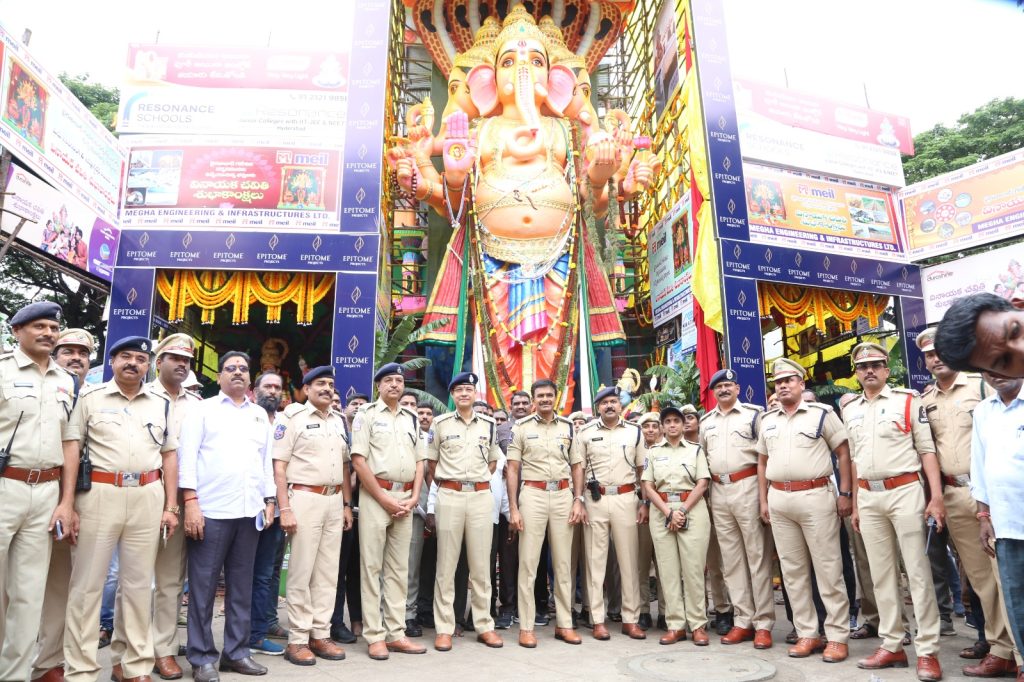
Khairtabad Ganesh in Hyderabad features a 69 feet tall eco-friendly idol, the tallest in the region for Ganesh Chaturthi 2025 

The Historical Foundation of India’s Greatest Ganesh Celebrations

The transformation of Ganesh Chaturthi from private household worship to India’s most vibrant public festival began with a visionary leader who understood the power of collective devotion. Lokmanya Bal Gangadhar Tilak’s revolutionary decision in 1893 to make Ganesh Chaturthi a public celebration fundamentally changed how millions of Indians connect with their faith. What started as a political strategy to unite people against British rule has evolved into the world’s most magnificent display of religious artistry and community solidarity.

My personal journey through Maharashtra’s festival circuit has shown me that each pandal tells a unique story of devotion, artistry, and social consciousness. The 2025 celebrations are particularly significant because they represent a perfect blend of tradition and innovation, with eco-friendly materials becoming the norm rather than the exception. Hyderabad’s Khairtabad Ganesh exemplifies this evolution, using 35 tonnes of clay from Rajasthan mixed with rice husk and jute powder to create their towering 69-foot masterpiece.

The festival’s growth has been phenomenal. According to Mumbai’s BMC data, over 62,500 sarvajanik Ganesh idols were installed in 2024 alone, reflecting the deep-rooted affection Indians have for Bappa. This number continues to grow each year, with new pandals emerging in every neighborhood, each trying to outdo the previous year’s creativity and devotion.

Mumbai’s Crown Jewels: The Most Iconic Ganesh Pandals

Lalbaugcha Raja: The Undisputed King of Mumbai

Standing in the serpentine queues outside Lalbaugcha Raja, you quickly understand why this pandal has earned the title “Navasacha Ganpati” – the wish-fulfilling Ganesha. Established in 1934 by fishermen and mill workers who prayed to Lord Ganesha for a permanent marketplace, this pandal has grown from humble beginnings to attract over 1.5 million devotees daily during the festival

The Kambli family has been sculpting this iconic idol for over 80 years, and their artistry is nothing short of extraordinary. The 18-20 feet tall idol is crafted entirely by hand without any molds, making each year’s creation unique. This year’s theme draws inspiration from Tirupati Balaji, creating a divine fusion that represents the unity of different devotional traditions.

What makes Lalbaugcha Raja truly special is not just its size or fame, but the democratic spirit it embodies. Unlike some exclusive pandals, this celebration remains deeply rooted in its working-class origins. The fish vendors and mill workers who founded it continue to manage the celebrations, ensuring that every devotee, regardless of social status, receives equal darshan opportunities.

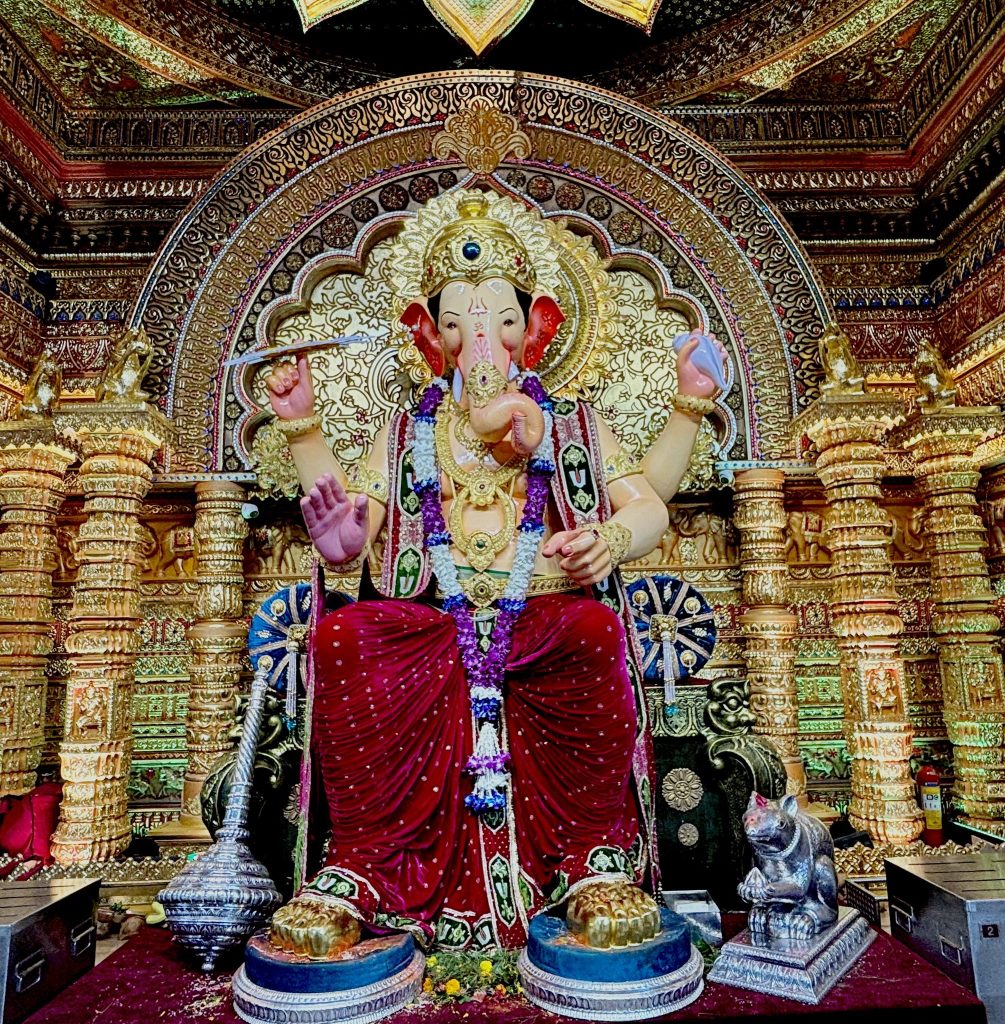
he Lalbaugcha Raja 2025 Ganesh Idol seated in an intricately decorated golden pandal, symbolizing Mumbai’s iconic Ganesh Chaturthi celebration 

Mumbaicha Raja: Where Tradition Meets Innovation

Located in the historic Ganesh Galli, Mumbaicha Raja represents 97 years of unbroken tradition since its establishment in 1928. What sets this pandal apart is the incredible fact that for 45 years, artisans have handcrafted the 22-foot idol without using any molds, relying purely on traditional sculpting techniques.

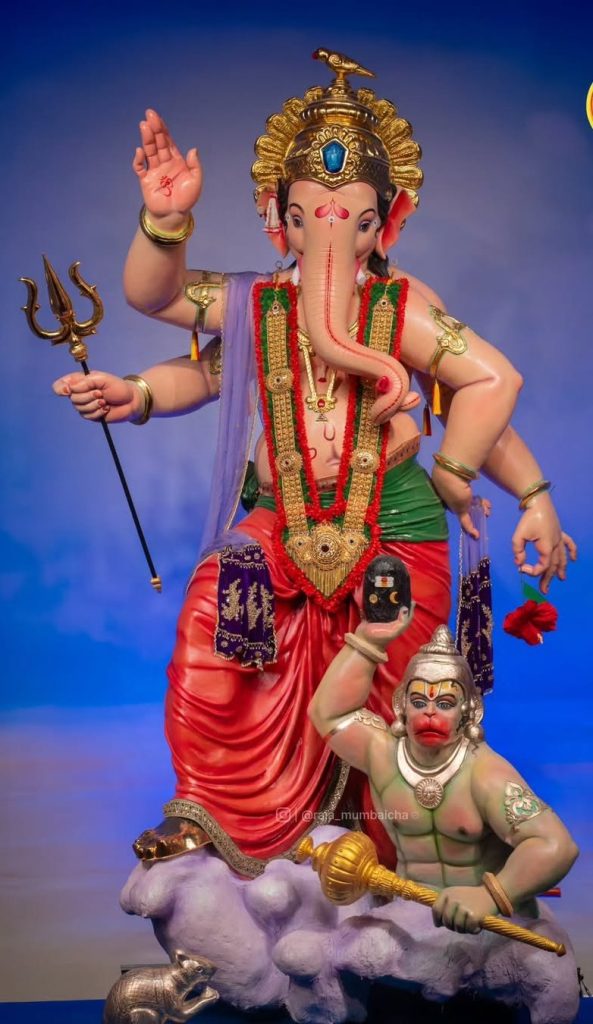
The 2025 theme showcases a breathtaking replica of Tamil Nadu’s Rameswaram Temple, complete with towering gopurams and intricate Dravidian architecture. This choice reflects the pandal’s commitment to celebrating India’s diverse cultural heritage while maintaining its Maharashtrian roots. Walking through the pandal feels like stepping into a South Indian temple complex, complete with detailed stone carvings and traditional temple bells.youtube+1

The pandal’s history is deeply connected to Mumbai’s industrial heritage. Started by mill workers, it has always carried forward social messages through its themes, making each year’s celebration both spiritually uplifting and socially relevant.

GSB Seva Mandal: The Golden Standard of Opulence

If you want to witness what devotion looks like when expressed through precious metals, GSB Seva Mandal’s Ganesh idol adorned with 69 kg of gold and 336 kg of silver is an sight that will leave you speechless. With an insurance cover of ₹474.46 crore, this is officially India’s most expensive Ganesh idol.

The exclusivity adds to its mystique – unlike other pandals that celebrate for 10-11 days, GSB Seva Mandal’s celebrations last only five days, making each moment precious. The pandal at Kings Circle transforms into a golden temple, with every surface gleaming with precious metals donated by devoted followers over seven decades.

The level of craftsmanship in the ornaments is museum-quality. Each piece of jewelry has been carefully designed and crafted by master artisans, representing thousands of hours of intricate work. The result is not just an idol, but a moving piece of art that represents the pinnacle of devotional craftsmanship.

Pune’s Sacred Heritage: Where Modern Devotion Meets Ancient Traditions

Dagdusheth Halwai Ganpati: The Golden Heart of Pune

Born from a father’s grief in 1893, the Dagdusheth Halwai Ganpati temple stands as one of India’s most emotionally powerful spiritual destinations. When sweetmaker Dagdusheth Halwai and his wife Laxmibai lost their only son to a plague epidemic, their guru advised them to build a Ganesh temple to heal their pain. What emerged from their sorrow has become one of the world’s wealthiest religious institutions.

The current idol, crafted in 1968 by Karnataka’s famous sculptor Nagesh Appa Shilpi, stands 5.5 feet tall and is adorned with 125 kg of gold ornaments donated by devotees over the decades. During Ganesh Chaturthi, the idol wears a different crown studded with precious stones each day, creating a daily spectacle of divine splendor.

What makes this temple unique is its policy of never immersing the main idol. Instead, a smaller secondary idol is used for the visarjan ceremony, ensuring that the original deity blessed by decades of prayers remains permanently in the temple. This practice has created an unbroken chain of devotion spanning over 130 years.

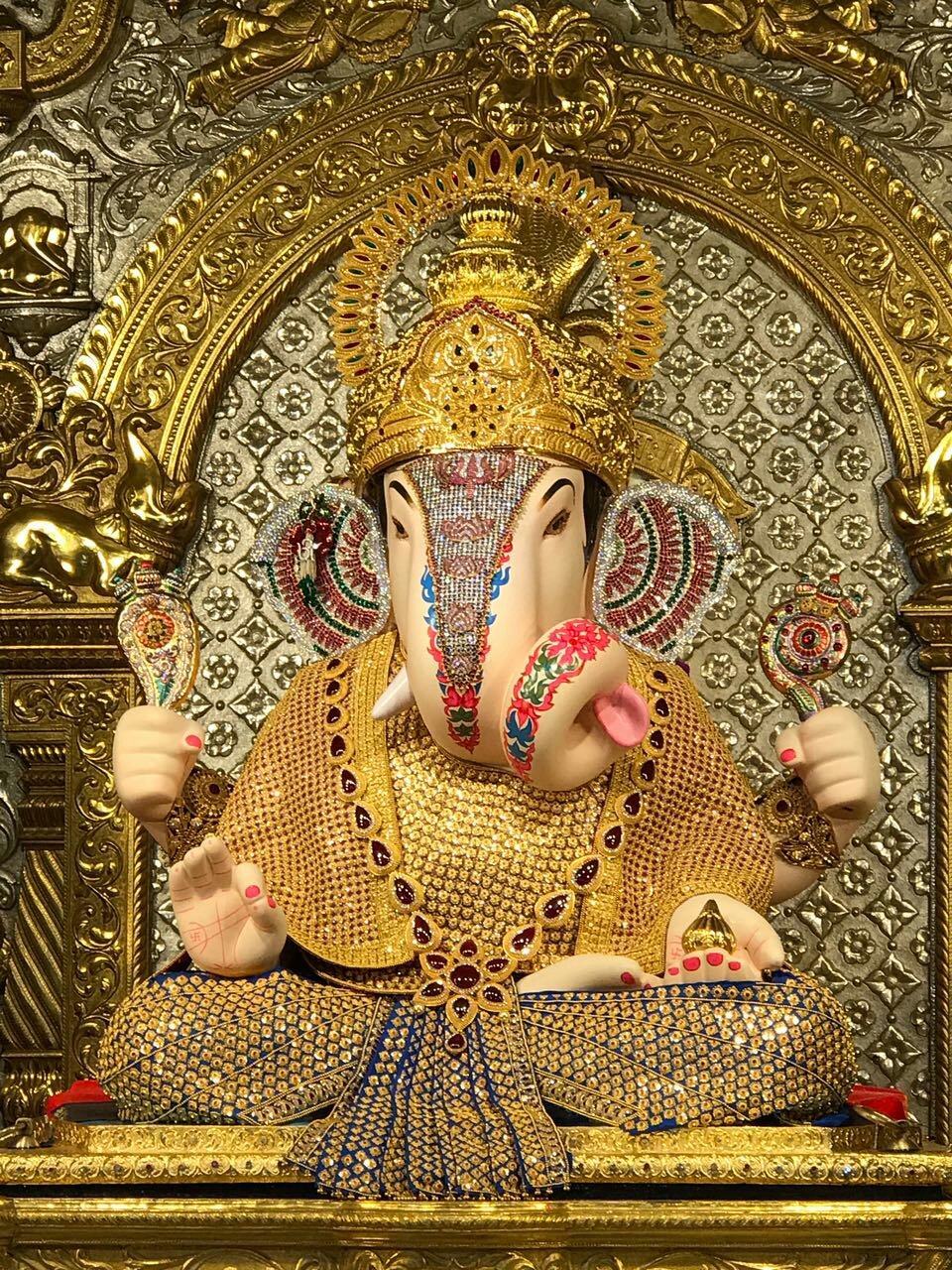
Close-up of the richly adorned golden Dagdusheth Halwai Ganpati idol in Pune showcasing intricate jewelry and decorations 

Kasba Ganpati: The First Among Equals

Designated as “Manacha Pahila” (the first honored) by Lokmanya Tilak himself, Kasba Ganpati holds the prestigious position of leading Pune’s Ganesh Visarjan procession. This honor reflects the temple’s historical importance as Pune’s presiding deity and its connection to the Maratha Empire’s founding family.

The temple’s origins trace back to 1630 when Jijabai, mother of Chhatrapati Shivaji Maharaj, commissioned its construction after Vinayak Bhatt Thakar discovered a swayambhu (self-manifested) Ganesh idol. The idol, originally the size of a rice grain, has grown over centuries due to layers of sandalwood paste applied by devotees.

The cultural significance extends beyond religious worship. Before any major celebration or important decision in Pune, the first invitation or arpanam is offered at Kasba Ganpati, maintaining a tradition that has continued for over 390 years. This practice demonstrates how deeply integrated this temple is in the social and cultural fabric of Pune.

Beyond Maharashtra: Regional Treasures Across India

Khairtabad Ganesh: Hyderabad’s Towering Testament to Eco-Consciousness

Standing at an impressive 69 feet and weighing 50 tonnes, Hyderabad’s Khairtabad Ganesh represents the perfect marriage of scale and sustainability. This year’s idol, titled “Sri Vishwashanthi Mahashakti Ganapathi,” was crafted over three months by more than 220 artisans using eco-friendly clay from Gujarat, paddy husk powder, and natural colors.

The engineering behind this massive creation is remarkable. Chief architect Chinnaswamy Rajendran, who has been designing the idol since 1978, uses a sophisticated iron framework system that makes the clay structure as sturdy as concrete while maintaining complete biodegradability. The idol incorporates 30 tons of steel framework covered with 35 tonnes of Rajasthani clay mixed with organic materials.

https://www.tgnns.com/wp-content/uploads/2025/08/Khairtabad-Ganesh-Hyderabads-Towering-Testament-to-Eco-Consciousness.mp4

The tradition began in 1954 with a modest 1-foot idol installed by freedom fighter Singari Shankariah. Following the practice of increasing the height by one foot each year, the pandal reached its current record-breaking dimensions. The festival attracts 30-40 lakh devotees annually, making it one of India’s largest religious gatherings.

GSB Mandals Beyond Mumbai: Community Excellence Nationwide

The Goud Saraswat Brahmin community’s commitment to excellence in Ganesh celebrations extends far beyond Mumbai’s famous Kings Circle pandal. Across India, GSB communities have established themselves as guardians of traditional festival practices while embracing modern organizational efficiency.

These pandals are known for their meticulous planning, high-quality decorations, and strong emphasis on cultural programs that preserve and promote traditional arts. The community’s approach to festival organization has become a benchmark for other mandals across the country.

India’s Most Magnificent Ganesh Temples

Siddhivinayak Temple: Mumbai’s Spiritual Powerhouse

Consecrated on November 19, 1801, the Siddhivinayak Temple in Prabhadevi has evolved from a small structure into one of India’s most visited religious sites. The temple’s black stone idol, with its distinctive right-tilted trunk and four hands, attracts thousands of devotees daily, including celebrities, politicians, and business leaders.

The temple’s architecture is a perfect blend of traditional and modern elements. The golden dome that lights up with multiple colors in the evening has become an iconic part of Mumbai’s skyline. The inner sanctum’s gold-plated roof and intricately carved wooden doors featuring the Ashtavinayak images create an atmosphere of divine grandeur.

What sets Siddhivinayak apart is its reputation as a “wish-fulfilling” deity. The temple’s name itself means “Ganesha who grants your wish,” and countless devotees have shared stories of answered prayers and miraculous interventions. The temple’s management has adapted to modern times by offering online darshan and digital donation options while maintaining traditional ritual practices.

https://www.tgnns.com/wp-content/uploads/2025/08/Siddhivinayak-Temple-Mumbais-Spiritual-Powerhouse.mp4

Close-up of the brightly decorated Lord Ganesha idol at Siddhivinayak Temple with live coverage branding 

Kanipakam Vinayaka Temple: The Living Miracle of Andhra Pradesh

The self-manifested idol that continues to grow at Kanipakam represents one of Hinduism’s most fascinating mysteries. Located in Chittoor district, this temple houses a swayambhu Ganesh idol that devotees believe increases in size continuously – a phenomenon that has baffled scientists and inspired millions of devotees.

https://www.tgnns.com/wp-content/uploads/2025/08/Kanipakam-Vinayaka-Temple-The-Living-Miracle-of-Andhra-Pradesh.mp4

The legend speaks of three disabled brothers who discovered the idol while digging a well around 1,000 years ago. When their tool struck the buried idol, blood began flowing from the earth, and miraculously, all three were cured of their disabilities. The well from which the idol emerged never runs dry, and its water is distributed as sacred prasadam.

The growing idol phenomenon is supported by tangible evidence. The silver kavacham (armor) made for the idol 50-60 years ago no longer fits, requiring regular resizing. Temple authorities have documented these changes, making Kanipakam a unique pilgrimage destination where faith meets unexplained reality.

Ganpatipule Temple: Where Sea Meets Spirituality

On Maharashtra’s scenic Konkan coast, Ganpatipule Temple offers a unique combination of spiritual worship and natural beauty. The swayambhu Ganesh idol faces west toward the Arabian Sea, creating a mystical connection between the divine and the ocean’s infinite expanse.

The temple’s beachside location makes it one of India’s most picturesque pilgrimage destinations. Devotees can combine spiritual seeking with the therapeutic experience of sea waves and coastal tranquility. The temple is particularly famous for its sunset views, when the idol appears to glow in the golden light reflecting off the water.

International Ganesh Temples: Global Devotion Transcends Borders

Sri Maha Vallabha Ganapati Devasthanam, New York: America’s Hindu Pioneer

Established in 1970 as America’s first Hindu temple, this Flushing, Queens landmark represents the successful transplantation of ancient traditions to modern soil. The temple has played a crucial role in preserving Hindu dharma for generations of American Hindus while welcoming devotees from all backgrounds.

The temple’s Ganesh Chaturthi celebrations have grown to become one of New York’s most spectacular cultural events, attracting thousands of participants and showcasing the vibrant diversity of American Hinduism. The ten-day festival features traditional Vedic rituals, classical music performances, and community meals that demonstrate the unifying power of shared devotion.

Sri Varatharajah Selvavinayagar Temple, Netherlands: Europe’s Sacred Gateway

Founded in 1991 by the Sri Lankan Tamil community, this Den Helder temple serves as the largest Ganesh shrine in Europe. The temple’s serene setting near the North Sea creates a unique atmosphere where Eastern spirituality harmonizes with European tranquility.

The temple plays a vital role in preserving Tamil Hindu traditions while adapting to European cultural contexts. Its peaceful ceremonies and community programs have made it a model for successful cultural integration, showing how ancient traditions can flourish in new environments.

Sri Senpaga Vinayagar Temple, Singapore: The Pacific’s Spiritual Jewel

Over 150 years old and featuring magnificent Dravidian architecture, Singapore’s Sri Senpaga Vinayagar Temple stands as the largest Hindu temple in the Pacific region. The temple’s grand chariot processions during Ganesh Chaturthi have become integral to Singapore’s multicultural festival calendar.

The temple’s name derives from “Senpaga” (Champaka flower), reflecting the discovery of the original Vinayagar murti near a Champaka tree. This connection to nature continues today through the temple’s beautiful gardens and its role in promoting environmental consciousness within the Hindu community.rediff

Top 10 Largest and Most Famous Ganesh Temples and Pandals Worldwide (2025)

Unique Features That Define Exceptional Ganesh Celebrations

Tallest and Most Spectacular Idols

The competition for creating the most impressive Ganesh idols has led to remarkable innovations in both artistry and engineering. Khairtabad’s 69-foot eco-friendly masterpiece sets the standard for combining scale with environmental responsibility. Using advanced clay-working techniques and organic materials, it proves that spectacular devotion and ecological consciousness can coexist beautifully.

Mumbai’s major pandals have taken different approaches to magnificence. While Lalbaugcha Raja focuses on traditional craftsmanship and emotional connection with devotees, Mumbaicha Raja emphasizes architectural themes that educate visitors about India’s diverse cultural heritage. Each approach creates its own unique form of spiritual experience.youtube+1

Richest and Most Ornate Decorations

The GSB Seva Mandal’s ₹474.46 crore insurance coverage represents the pinnacle of devotional opulence. However, true richness in Ganesh celebrations comes not just from precious metals but from the depth of community involvement and the quality of spiritual experience offered to devotees.

Dagdusheth Halwai Ganpati’s 125 kg of gold ornaments tell a different story – each piece represents a devotee’s gratitude and faith, accumulated over more than a century of answered prayers. This organic accumulation of wealth through devotion creates a more powerful spiritual atmosphere than any artificially created display.zeezest

Eco-Friendly Innovations Leading Change

The shift toward environmental consciousness in Ganesh celebrations represents a mature evolution of the festival. Khairtabad’s use of Gujarat clay, paddy husk, and natural colors demonstrates that environmental responsibility can enhance rather than compromise spiritual experience. The idol’s complete biodegradability within 24 hours of immersion proves that ancient traditions can adapt to modern environmental needs.

Many Mumbai pandals have adopted eco-friendly practices while maintaining their traditional appeal. The use of natural dyes, organic decorations, and biodegradable materials has become a mark of sophistication rather than compromise, showing how environmental consciousness enhances rather than diminishes devotional authenticity.

Your Complete Travel Guide for Ganesh Chaturthi 2025

Essential Dates and Timing

Ganesh Chaturthi 2025 begins on Wednesday, August 27, with the Chaturthi Tithi starting at 1:54 PM on August 26. The most auspicious time for installation and first prayers, called Madhyahna Ganesha Puja Muhurat, runs from 11:05 AM to 1:40 PM on August 27. The festival concludes with Ganesh Visarjan on Saturday, September 6, 2025.

Planning your visit around these dates is crucial for the full experience. The first three days typically see the highest crowds, while the middle period offers a more relaxed atmosphere for detailed exploration of pandal decorations and cultural programs. The final days build toward the emotional climax of visarjan ceremonies.

Managing Crowds and Maximizing Your Experience

Based on my years of pandal-hopping, early morning visits (6-9 AM) provide the most peaceful darshan experience. Lalbaugcha Raja’s queue management system requires patience, but the VIP darshan option is available for those with time constraints. For GSB Seva Mandal, advance planning is essential due to its exclusive five-day celebration period.

Mumbai’s local train system becomes your best friend during Ganesh Chaturthi. Major pandals are well-connected to railway stations, and special late-night services operate during the festival. Download crowd-tracking apps and follow official social media accounts for real-time updates on queue lengths and special programs.

Regional Specialties and Cultural Experiences

Each region offers unique cultural experiences beyond the main idols. Maharashtra’s pandals excel in thematic decorations and social messaging, while Hyderabad’s celebrations showcase South Indian classical arts alongside the massive idols. Karnataka’s Hampi region features some of India’s largest monolithic Ganesh sculptures, offering a different perspective on devotional art.

Food plays a crucial role in the festival experience. Mumbai’s pandals offer regional specialties from across India, while modaks remain the universal prasadam. Each pandal’s community kitchen tells a story of local traditions and innovative preparations that have evolved over decades of celebration.

Planning Your International Ganesh Temple Pilgrimage

North American Hindu Heritage Trail

The Sri Maha Vallabha Ganapati Devasthanam in New York represents the starting point for understanding how Hindu traditions have flourished in America. The temple’s museum and cultural center provide excellent context for the broader Indian-American experience, while its festival celebrations showcase the community’s evolution over five decades.

Toronto’s temples offer a different perspective, focusing on Tamil traditions and Canadian multiculturalism. The integration of local customs with traditional practices creates unique celebration styles that reflect the adaptive nature of living traditions.

European Spiritual Destinations

The Netherlands’ Sri Varatharajah Selvavinayagar Temple provides an excellent introduction to European Hindu communities. The temple’s seaside location creates a uniquely peaceful atmosphere, while its Sri Lankan Tamil origins offer insights into diaspora community development.

Sweden’s temples represent the northernmost expression of Ganesh worship, where Scandinavian efficiency meets ancient devotional practices. The adaptation to Nordic seasons and cultural contexts demonstrates remarkable flexibility in maintaining spiritual authenticity.

Southeast Asian Ganesh Grandeur

Singapore’s Sri Senpaga Vinayagar Temple offers the most spectacular international Ganesh celebrations. The temple’s Dravidian architecture and elaborate chariot processions create an authentic South Indian temple experience in a modern urban setting. The integration with Singapore’s multicultural calendar demonstrates successful cultural preservation within diversity.

Malaysia’s temples combine various regional Indian traditions, creating unique synthesis celebrations that reflect the country’s diverse Indian population. The ornate decorations and community programs offer excellent examples of how traditional practices evolve in new cultural contexts.

Conclusion: Embracing the Divine Journey

The world of Ganesh celebrations offers infinite pathways to spiritual experience, from the golden opulence of GSB Seva Mandal to the monumental eco-friendly marvel of Khairtabad, from the historic devotion of Kasba Ganpati to the international grandeur of temples in New York and Singapore. Each destination provides its own unique perspective on how communities express their deepest devotion while preserving cultural heritage and adapting to contemporary realities.

As you plan your spiritual journey for Ganesh Chaturthi 2025, remember that the true blessing lies not in visiting the most famous or expensive pandals, but in opening your heart to the diverse expressions of faith and community that make this festival so extraordinary. Whether you choose to join the millions at Lalbaugcha Raja, witness the architectural marvel of Khairtabad, or explore the international temples that carry Indian traditions across oceans, you’ll discover that Lord Ganesha’s blessings transcend all boundaries of geography, language, and culture.

Plan your pilgrimage to these magnificent Ganesh pandals and temples for an unforgettable spiritual journey that connects you with millions of devotees worldwide in celebrating the divine remover of obstacles and the lord of new beginnings.

Frequently Asked Questions

Q: What is the best time to visit famous Ganesh pandals to avoid large crowds?

A: The optimal time for comfortable darshan is early morning between 6-9 AM on weekdays during the festival. Avoid the first three days and final two days when crowds are at their peak. Mid-week visits (Tuesday-Thursday) generally offer better crowd management than weekends.

Q: Which Ganesh pandal has the richest and most expensive idol decoration?

A: GSB Seva Mandal in Mumbai holds the record with 69 kg of gold and 336 kg of silver ornaments, valued at over ₹474 crore insurance coverage. However, Dagdusheth Halwai Ganpati in Pune is also among the richest with 125 kg of gold decorations accumulated over 130+ years of devotee offerings.

Q: How can international visitors experience authentic Ganesh Chaturthi celebrations outside India?

A: The Sri Maha Vallabha Ganapati Devasthanam in New York (America’s oldest Hindu temple), Sri Senpaga Vinayagar Temple in Singapore, and Sri Varatharajah Selvavinayagar Temple in Netherlands offer the most authentic international celebrations with traditional rituals, cultural programs, and chariot processions that mirror Indian festival traditions.

Exit mobile version