


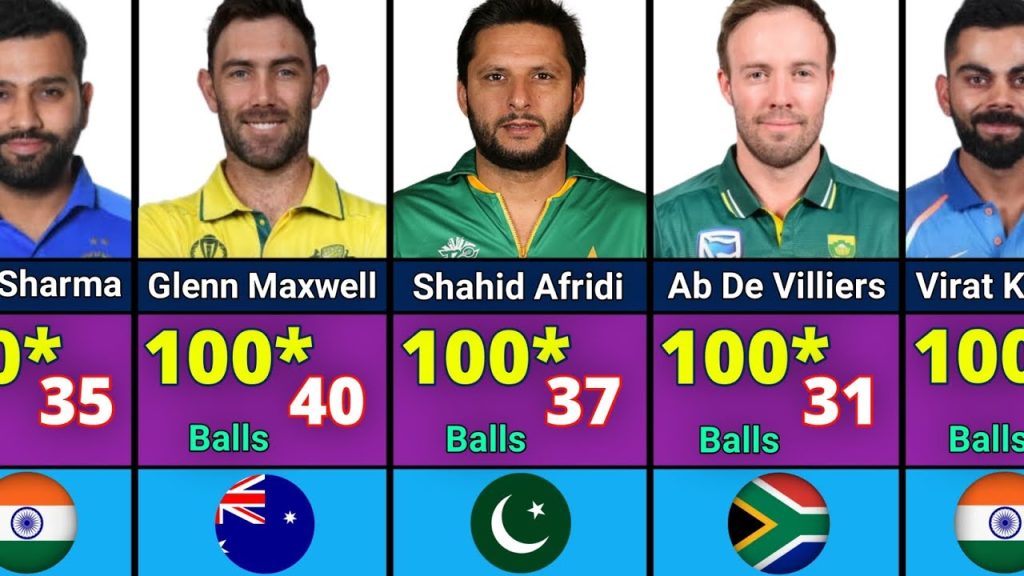
One Day International (ODI) cricket thrives on explosive batting, and nothing captivates fans more than a blistering century. The fastest centuries in ODI cricket history showcase players who have pushed the boundaries of possibility, rewriting record books with their audacious strokeplay. From Glenn Maxwell’s jaw-dropping 40-ball ton to AB de Villiers’ iconic 31-ball masterpiece, these performances have left an indelible mark on the sport. This article dives into the fastest ODI hundreds, exploring the players, matches, and moments that have shaped cricket’s most thrilling format.
What Makes a Fast Century in ODI Cricket So Special
A century in ODI cricket—scoring 100 runs in a single innings—is a hallmark of batting excellence. Achieving this feat in fewer balls elevates it to legendary status. The fastest ODI centuries require a rare blend of skill, aggression, and mental fortitude. These innings often turn matches, demoralize opponents, and electrify crowds. With modern cricket favoring aggressive play, the race to break century records has intensified, making these performances a focal point for fans and analysts alike.
The Evolution of Fast Scoring in ODIs
ODI cricket has evolved dramatically since its inception in the 1970s. Early matches prioritized steady accumulation, but the T20 era ushered in a new breed of power-hitters. Advances in bat technology, smaller boundaries, and batting-friendly pitches have fueled record-breaking performances. The fastest centuries reflect this shift, with players like Glenn Maxwell and AB de Villiers redefining what’s possible in 50-over cricket.
The Top 10 Fastest Centuries in ODI Cricket History
Below, we explore the top 10 fastest ODI centuries, ranked by the number of balls faced. Each entry highlights the player, match details, and the impact of their performance.
1. AB de Villiers: 31 Balls (South Africa vs. West Indies, 2015)
AB de Villiers’ 31-ball century against the West Indies in Sydney on February 27, 2015, remains the fastest in ODI history. Scoring 162 runs, de Villiers unleashed a barrage of boundaries and sixes, single-handedly dismantling the opposition bowling. His innings, part of South Africa’s 408/5, set a benchmark for aggressive batting in World Cup cricket. This record-breaking knock showcased de Villiers’ 360-degree batting style, cementing his legacy as one of cricket’s greatest innovators.
2. Corey Anderson: 36 Balls (New Zealand vs. West Indies, 2014)
Corey Anderson stunned the cricket world with a 36-ball century against the West Indies on January 1, 2014. His 131 not out came in a rain-shortened match, where New Zealand chased a revised target. Anderson’s power-hitting overwhelmed the West Indian bowlers, marking him as a rising star. This knock held the record for the fastest ODI century until de Villiers surpassed it a year later.
3. Shahid Afridi: 37 Balls (Pakistan vs. Sri Lanka, 1996)
Shahid Afridi announced his arrival with a 37-ball century against Sri Lanka on October 4, 1996. At just 16, Afridi smashed 102 runs, including 11 sixes, in Nairobi. His fearless approach set the tone for Pakistan’s batting revolution and established Afridi as a global sensation. This innings remains one of the most iconic in ODI history.
4. Glenn Maxwell: 40 Balls (Australia vs. Netherlands, 2023)
Glenn Maxwell’s 40-ball century against the Netherlands on October 25, 2023, in Delhi is the fastest in World Cup history. Scoring 106 runs, Maxwell’s relentless assault included nine fours and eight sixes. His knock propelled Australia to a massive total, highlighting his ability to dominate associate nations. Maxwell’s performance underscored his reputation as a game-changer in limited-overs cricket.
5. Asif Khan: 41 Balls (UAE vs. Nepal, 2023)
Asif Khan’s 41-ball century for the UAE against Nepal on March 16, 2023, showcased the depth of talent in associate cricket. Scoring 101 runs, Khan’s explosive innings helped UAE post a competitive total. His knock, though lesser-known, deserves recognition for its sheer audacity and impact in a low-scoring contest.
6. Mark Boucher: 44 Balls (South Africa vs. Zimbabwe, 2006)
Mark Boucher’s 44-ball century against Zimbabwe on September 20, 2006, was a display of wicketkeeper-batsman brilliance. Scoring 147 not out, Boucher’s aggressive innings powered South Africa to a commanding victory. His ability to accelerate from the lower order highlighted the evolving role of wicketkeepers in ODI cricket.
7. Brian Lara: 45 Balls (West Indies vs. Bangladesh, 1999)
Brian Lara’s 45-ball century against Bangladesh on October 9, 1999, showcased his genius. Scoring 117 runs, Lara’s elegant yet destructive batting overwhelmed the Bangladeshi attack. This knock remains a testament to Lara’s ability to blend artistry with aggression, even in less high-profile encounters.
8. Shahid Afridi: 45 Balls (Pakistan vs. India, 2005)
Shahid Afridi struck again with a 45-ball century against India on April 15, 2005. Scoring 102 runs, Afridi’s explosive innings in Kanpur set up Pakistan’s victory in a high-stakes rivalry match. His ability to dominate India’s bowling attack solidified his reputation as a clutch performer.
9. Jesse Ryder: 46 Balls (New Zealand vs. West Indies, 2014)
Jesse Ryder’s 46-ball century against the West Indies on January 1, 2014, complemented Anderson’s heroics in the same match. Scoring 104 runs, Ryder’s aggressive batting helped New Zealand chase down a daunting target. His knock showcased the depth of New Zealand’s batting firepower.
10. Jos Buttler: 46 Balls (England vs. Pakistan, 2015)
Jos Buttler’s 46-ball century against Pakistan on November 20, 2015, in Dubai was a masterclass in modern ODI batting. Scoring 116 not out, Buttler’s explosive innings powered England to a series-clinching victory. His ability to accelerate under pressure marked him as a key figure in England’s white-ball revolution.
Fastest Centuries in Cricket World Cups
The Cricket World Cup is the pinnacle of ODI cricket, and fast centuries in this tournament carry extra significance. Below are the fastest World Cup hundreds, with Maxwell’s 40-ball ton leading the way.
Glenn Maxwell: 40 Balls (Australia vs. Netherlands, 2023)
Maxwell’s 40-ball 106 against the Netherlands in Delhi on October 25, 2023, set a World Cup record. His innings included a staggering 106 runs, with Australia posting a mammoth total. Maxwell’s ability to dominate in high-pressure tournaments underscores his value to the Australian side.
Aiden Markram: 49 Balls (South Africa vs. Sri Lanka, 2023)
Aiden Markram’s 49-ball century against Sri Lanka on October 7, 2023, in Delhi was a display of controlled aggression. Scoring 106 runs, Markram’s innings helped South Africa post a record-breaking 428/5. His knock set the tone for South Africa’s dominant World Cup campaign.
Kevin O’Brien: 50 Balls (Ireland vs. England, 2011)
Kevin O’Brien’s 50-ball century against England on March 2, 2011, in Bengaluru is one of the greatest World Cup upsets. Scoring 113 runs, O’Brien’s fearless batting led Ireland to a stunning chase of 328. His innings remains a defining moment for associate nations.
Glenn Maxwell: 51 Balls (Australia vs. Sri Lanka, 2015)
Maxwell struck again with a 51-ball century against Sri Lanka on March 8, 2015, in Sydney. Scoring 102 runs, Maxwell’s aggressive innings powered Australia to a comfortable victory. His ability to dominate spin bowling made this knock particularly memorable.
–
AB de Villiers: 52 Balls (South Africa vs. West Indies, 2015)
De Villiers’ 52-ball 162 against the West Indies in Sydney on February 27, 2015, included the fastest ODI century at the time. His 31-ball ton (part of the larger innings) set multiple records, showcasing his ability to dominate in World Cup knockout stages.
Key Players Who Redefined Fast Scoring
Certain players have consistently delivered rapid centuries, shaping the evolution of ODI batting. Below, we highlight those who’ve made multiple appearances in the fastest-century lists.
Glenn Maxwell: The King of Chaos
Glenn Maxwell’s two entries in the fastest World Cup centuries list highlight his destructive potential. Known for his unorthodox shots and fearless approach, Maxwell thrives in high-pressure situations. His 40-ball and 51-ball tons showcase his ability to dominate any bowling attack.
AB de Villiers: The Innovator
AB de Villiers’ 31-ball and 52-ball centuries redefined ODI batting. His 360-degree shot-making and ability to improvise under pressure set him apart. De Villiers’ records continue to inspire a new generation of batsmen.
Shahid Afridi: The Trailblazer
Shahid Afridi’s 37-ball and 45-ball centuries bookended a career defined by explosive batting. His fearless approach in the 1990s paved the way for modern power-hitters, making him a pioneer of fast scoring.
Jos Buttler: England’s Finisher
Jos Buttler’s multiple entries (46, 47, and 50 balls) reflect his role as England’s premier finisher. His ability to accelerate from any situation has been central to England’s white-ball dominance since 2015.
The Impact of Fast Centuries on ODI Cricket
Fast centuries do more than break records—they reshape team strategies and fan expectations. These innings often shift match momentum, forcing opponents to rethink their bowling plans. For fans, they create unforgettable moments that define World Cups and bilateral series.
Changing Team Dynamics
A rapid century can turn a match in a matter of overs. Captains now prioritize aggressive batsmen in their lineups, with players like Maxwell and Buttler often tasked with late-order acceleration. This shift has made ODIs more dynamic, with totals of 400+ becoming increasingly common.
Inspiring the Next Generation
Young cricketers draw inspiration from these performances, emulating the likes of de Villiers and Afridi. Coaching academies now emphasize power-hitting and innovative shot-making, ensuring the legacy of fast centuries endures.
How Pitch Conditions and Formats Influence Fast Centuries
Pitch conditions, ground dimensions, and match contexts play a significant role in enabling fast centuries. Flat pitches in Delhi, Mumbai, and Bengaluru have hosted many record-breaking knocks, while smaller grounds amplify scoring rates.
The Role of T20 Cricket
The rise of T20 cricket has directly influenced ODI batting. Players honed in the shorter format bring their aggressive mindset to 50-over games, resulting in faster scoring rates. The fastest ODI centuries often resemble T20 innings, with an emphasis on boundary-hitting and risk-taking.
World Cup Pressure vs. Bilateral Series
World Cup centuries carry added weight due to the global stage and high stakes. However, bilateral series offer more freedom, allowing players to experiment with ultra-aggressive approaches. This balance explains why some of the fastest centuries occur outside World Cups.
Fastest Centuries by Associate Nations
Associate nations have also produced remarkable fast centuries, proving that talent transcends cricketing hierarchies. Players like Kevin O’Brien and Asif Khan have shown that associate teams can compete with the best.
Kevin O’Brien’s Iconic 2011 Knock
O’Brien’s 50-ball century against England in 2011 remains a landmark for associate cricket. His fearless batting not only secured a historic win but also elevated Ireland’s global profile.
Asif Khan’s UAE Masterclass
Asif Khan’s 41-ball century against Nepal in 2023 highlighted the growing strength of UAE cricket. Such performances underscore the importance of giving associate nations more opportunities on the world stage.
The Future of Fast Centuries in ODI Cricket
As ODI cricket continues to evolve, the quest for faster centuries will intensify. Emerging talents like Jake Fraser-McGurk and Shubman Gill are poised to challenge existing records, while technological advancements will further aid batsmen.
Will the 30-Ball Barrier Be Broken?
AB de Villiers’ 31-ball century is the gold standard, but a sub-30-ball ton is not unthinkable. With T20 skills infiltrating ODIs and pitches becoming flatter, a new record could be imminent.
The Role of Data Analytics
Teams now use data analytics to optimize batting orders and target specific bowlers. This strategic approach will likely produce more opportunities for rapid centuries, as players exploit favorable matchups.
Conclusion: Celebrating the Art of the Fast Century
The fastest centuries in ODI cricket history are more than just numbers—they’re stories of courage, skill, and innovation. From AB de Villiers’ record-shattering 31-ball ton to Glenn Maxwell’s World Cup heroics, these innings have redefined the sport. As cricket continues to evolve, fans can expect even more breathtaking performances that push the limits of what’s possible. For now, these record-breaking centuries stand as a testament to the brilliance of ODI cricket’s greatest batsmen.