


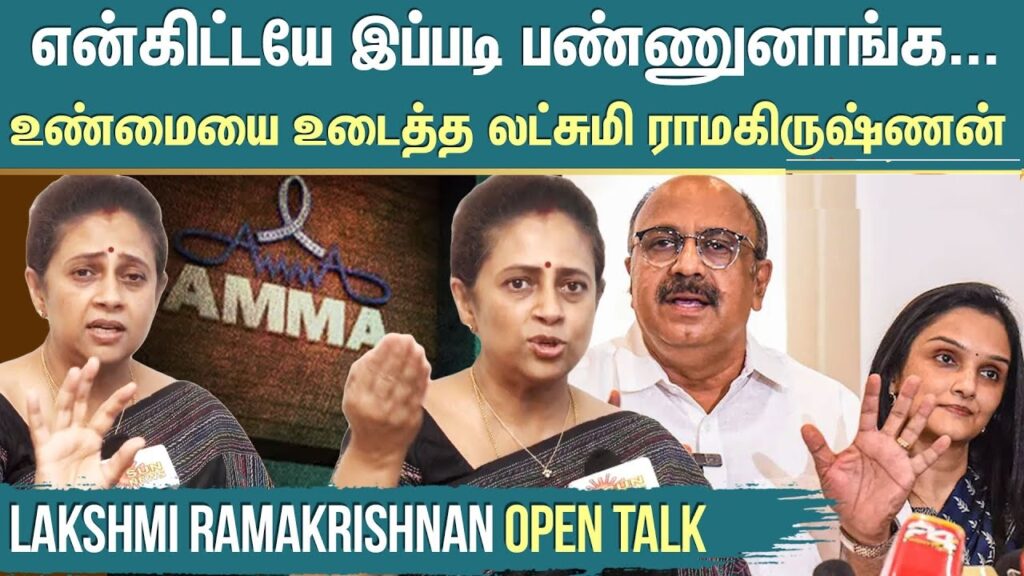
The entertainment industry often shines with glamour and success, but beneath this polished surface, there are stories of struggle, discrimination, and exploitation. Renowned actress Lakshmy Ramakrishnan, a well-known figure in Tamil and Malayalam cinema, recently brought to light some unsettling experiences she faced within the Malayalam film industry. Her revelations have sparked conversations about the treatment of women, especially older actresses, in the industry.
Lakshmy Ramakrishnan’s Shocking Experience in Mollywood
Lakshmy Ramakrishnan, a celebrated actress in both Tamil and Malayalam cinema, has always been candid about her experiences. However, her recent disclosure regarding her treatment in Mollywood has shocked many. During an interaction, the actress revealed that a respected director from the Malayalam film industry approached her for a role in his film. What initially seemed like a promising opportunity quickly turned into a troubling experience.
Lakshmy recounted how she was invited to Cochin, Kerala, under the pretense of discussing the film. The situation escalated when the director insisted she stay overnight, a request she firmly declined. Following her refusal, Lakshmy was abruptly removed from the project. This incident highlights the often-unspoken challenges faced by women in the film industry, especially when they stand their ground against inappropriate demands.
Allegations of Misconduct and Discrimination in the Industry
The incident didn’t end there. A Reddit post that circulated widely brought more attention to Lakshmy’s experiences, detailing further allegations of misconduct in the Malayalam film industry. According to the post, Lakshmy was subjected to unprofessional behavior by another director during the shooting of a Tamil movie. The post described how she was forced to endure 19 retakes for a simple shot, an act that many believe was unnecessary and meant to harass her.
While the post didn’t explicitly name the director, speculation pointed towards Shaji Kailas, a well-known figure in the industry. This speculation arose from Lakshmy’s filmography, where Shaji Kailas had directed her in the Tamil film “Ellam Avan Seyal.” Although these allegations remain unconfirmed, they have sparked widespread debate and concern about the conduct of some directors in the industry.
The Broader Issue of Gender Bias in Malayalam Cinema
Lakshmy Ramakrishnan’s experiences shed light on a more significant issue within the Malayalam film industry—the pervasive gender bias, especially against older actresses. While the industry has seen remarkable performances by women, there remains an underlying current of discrimination and exploitation. Female actors, particularly those past a certain age, often face limited roles, lower pay, and disrespect on sets.
The pressure on actresses to conform to certain expectations—whether related to physical appearance, age, or behavior—is immense. Those who resist or question these norms, like Lakshmy, often find themselves sidelined or subjected to mistreatment. This culture of bias not only affects the careers of individual actresses but also perpetuates a toxic environment that discourages many from speaking out.
The Need for Change in Mollywood
The issues raised by Lakshmy Ramakrishnan are not isolated incidents but reflect a broader problem within the Malayalam film industry. The industry, known for its rich storytelling and strong performances, must also address the darker aspects that tarnish its reputation. This includes creating a safer and more respectful working environment for all artists, regardless of gender or age.
For real change to occur, there must be a collective effort from industry insiders, including directors, producers, actors, and writers, to challenge and change the status quo. This involves not only addressing instances of misconduct but also actively promoting equality and respect on and off the set.
Conclusion: A Call for Accountability and Reform
Lakshmy Ramakrishnan’s brave decision to speak out about her experiences in the Malayalam film industry has opened up important discussions about the treatment of women in cinema. Her story serves as a reminder that the fight for equality and respect in the workplace, including the entertainment industry, is far from over.
As these conversations continue, it is crucial for those in positions of power within the industry to listen, reflect, and take meaningful action. Only through accountability and reform can the Malayalam film industry truly live up to its reputation as a space of creativity and excellence, where all artists can thrive without fear of discrimination or exploitation.