


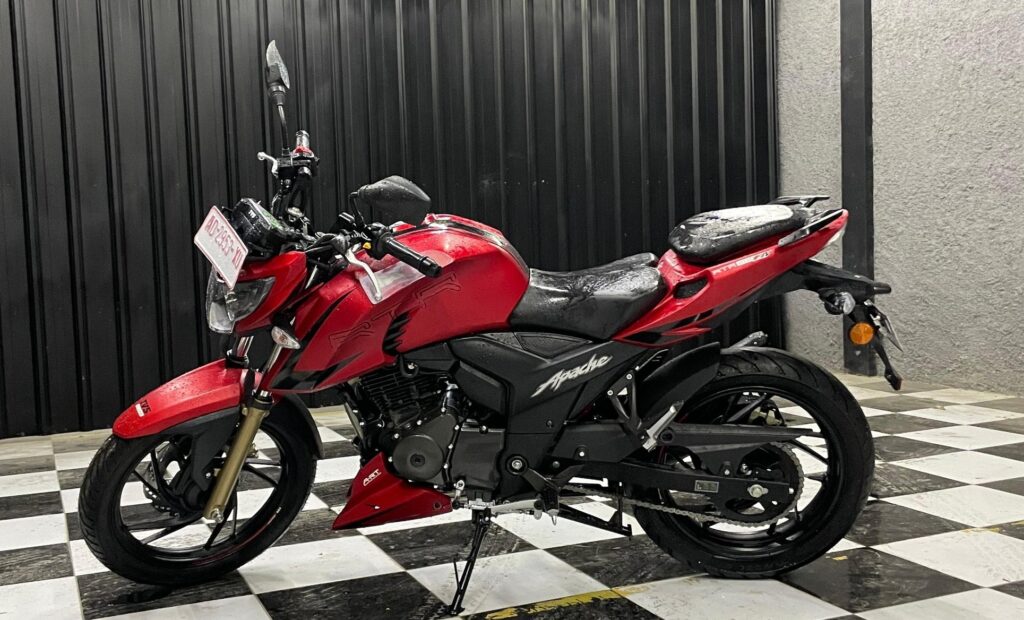
With the launch of the TVS Apache RTR 160 4V and the Bajaj Pulsar N160, the competition in the 160cc motorcycle segment has been raised higher. Each bike features commendable performance, package, and features making it harder for the fans and the customers to choose a specific model as the winner. The two bicycles have been analyzed carrying out specific features so as to find out which one wins.
Design and Build: Tried and Tested vs. Updated Look
TVS Apache RTR 160 4V
The Apache has been in existence for more than six years although it has not undergone major changes apart from a few modifications on the way. Its design still has a bit of a distinctive touch and character. The whole instrumentation has gone digital and it’s loaded with information, and also some adjustable levers, soft hand grips, and good switchgear. The rear brake foot lever brings some class in its overall style.
Bajaj Pulsar N160
On the other side the Pulsar N160 is a more recent release however it’s pretty much similar in appearance to the Pulsar N250. Its instrument console is semi digital and while it’s basic, it’s nowhere as detailed as the Apache. The N160 has a harmonious and well-balanced design but it tends to disappear when there are many motorcycles present which is its biggest negative.
Performance—Refinement against Power
Engine And Riding In The City
The 4-valve motor of the Apache offers a significant performance boost at the top end as performance is noticeably enhanced in higher speed ranges. It’s Glide Through technology coupled with the engine functions also makes it easy to ride around the city. The Pulsar gets a 2-valve motor which is somewhat underpowered, however, its torque is on par with the Apache, although its peak torque is available sooner in the rev range, making the Pulsar much more responsive earlier on in the revs. This results in a pulsar which feels active and agile, especially under city limits.
Highways And Riders’ Dynamics
On a more general note, we note that the Apache eclipses the Pulsar while they are both cruising at a specific height. The ability of cruising with speeds above 100 km/h easily enables long rides. The Pulsar begins to have problems above the 90 km/h mark due to its construction, which is more tailored for urban environments.
Utilizing Fuel: Standing At Odds
What’s even more notable is the fact that despite the performance edge the company held, it was still able to utilize the majority of fuel while driving through the city and on the highway. The proximity in urban mileage is extremely close but the Pulsar does slightly trail during long runs on the highway. Yes, their fuel economy does cater quite well, but so do the horsepower’s in each bike, as they are pungent in their supplying of power.
Comfort and Ergonomics: Rider Preference Matters
The foothold is supplemented with a wide-angle handlebar which is typical for this type of step through motorcycle.The booted pegs are however placed too much forward and may become a problem for taller riders as the duration of the ride increases. The suspension configuration delivers the required performance where the bumps are absorbed within the city monitoring the firm taste at high speeds.
Bajaj Pulsar N160
The riding position is more forwards and footpegs are more rearset than on the Apache which has a more aggresive riding posture. Coupled with a cLu bman type handle bar It maintains a sense of comfort whilst retaining a sporty edge. But because of the firmer suspension it favoured stability at high speeds than tools full of potholes. in contrast to the , Riders who are taller may find the positioning more suited in the Pulsar than what the Apache offers.
Ride and Handling: Agile vs. Stable
The turning on the apache is a pleasure and cornering on tight corners has never been made easier. On the other hand, for the pulsar, it’s a little more planted when it’s time to go fast. Both bike brands come with tires that have a good grip but the fat calipers on the front wheel of the pulsar certainly help turning as well as making it cuter.
Braking and Safety: The Winner is Pulsar
In terms of the surgical gauge, as reported by other reviewers, the Bajaj Pulsar N160 edges ahead Pulsar N160 Aug ability to stop is also the only bike in this category that is understood to be equipped with a dual-channel ABS. Given that turning in these as of riding a motorcycle can be slippery or otherwise challenging, this feature is very important. The braking on the Apache is adequate, but the lack of dual-channel in this segment is one of the major drawbacks.
Features: Stressing Overload vs. Minimism
TVS Apache RTR 160 4V
The TVS offers Bluetooth Plus, a Mobile App and all App Wiring Harness and the Rudder Bar, individually provided, the features of all riding modes, Adjustable levers, and Glide Through Technology. These features although at times gimmicky do compliment the premium feel of the bike.
Bajaj Pulsar N160
The more practical accessories such as the other functions of the head of the light that the Pulsar makes it irreducibly include the USB port, the Parabola Light Fixture. The headlight, especially the laser, is rated brightest in its class and designed for the highest lumen output and most focused beam area possible.
Pricing and Value: Comparison
Differentiating cost is not crucial in deciding which bike to go for since both bikes have the same cost of ₹1.28 lakh (ex-showroom), it simply boils down to personal customer preferences. In contrast, the Pulsar emphasizes practicality (There’s a place for the disc brake too), comfort and safety, which is why it is great for city riding and suits taller riders as well. For the ones who seek a premium experience infused with heavy technology and sporty performance will definitely be appealed by the extensive range of features included in the Apache.
Verdict: The King Remains The King
The fighting spirit displayed by Bajaj pulsar N160 overhauled its aggressiveness with a new design, improved dual-channel ABS and excellent overall performance, but TVS Apache RTR 160 4V remains unbeaten at its throne. The Dual Channel, triple engine modes and superb hot hatch performance goodness make that possible. If you do a lot of freeways riding or enjoy premium features, the Apache is the best option. The good possibility though is that if you value comfort and safety in urban commuting, then the pulsar will meet your needs.