


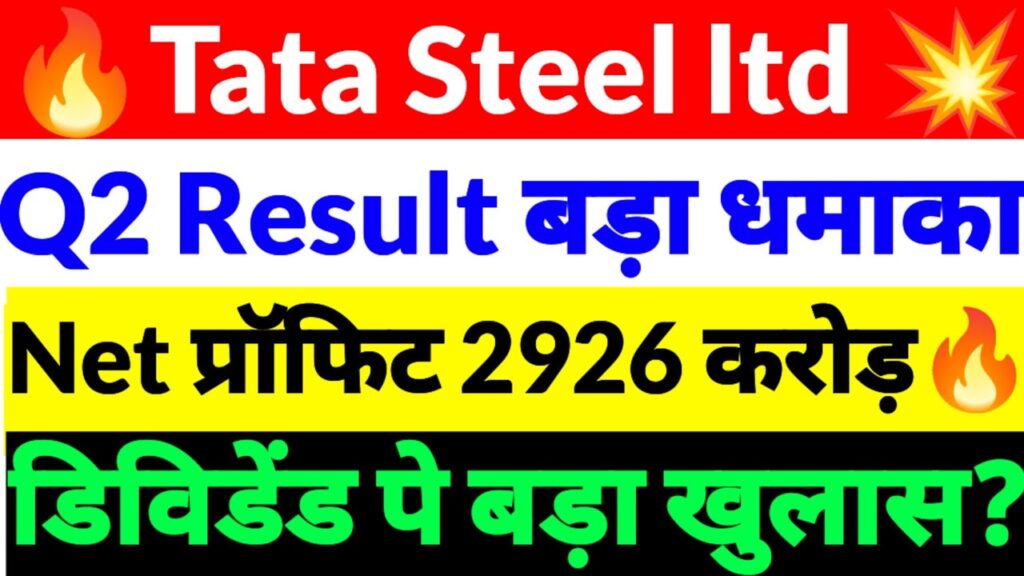
Tata Steel consistently shapes the narrative around economic growth, infrastructure development, and global trade. The release of its Q2 FY26 results on November 12, 2025, has sent ripples through the financial markets, showcasing a remarkable 41% year-on-year surge in consolidated net profit to ₹2,926 crore. This impressive turnaround from last year’s ₹834 crore not only underscores the company’s resilience amid volatile commodity prices but also signals robust recovery in key operations, particularly from its European arm in the Netherlands.
Investors and analysts alike are dissecting these figures, which arrive against a backdrop of moderating global steel demand, escalating raw material costs, and geopolitical tensions affecting supply chains. Yet, Tata Steel emerges stronger, with revenue projections hovering between ₹53,000 crore and ₹55,800 crore – a healthy uptick on a year-over-year basis. This article dives deep into the Tata Steel Q2 results 2025, unpacking the drivers behind this profit explosion, exploring share price implications, and forecasting what lies ahead for shareholders. Whether you’re a seasoned trader tracking Tata Steel share news or a long-term investor eyeing dividends, these insights will equip you to navigate the steel giant’s trajectory.
Tata Steel Q2 Financial Highlights: A Snapshot of Resilience and Growth
Tata Steel’s Q2 performance paints a picture of strategic agility in a challenging sector. The company reported a consolidated net profit of ₹2,926 crore, marking a staggering 41% increase from the corresponding quarter in FY25. This leap defies the headwinds of subdued steel prices in Europe and fluctuating iron ore costs, highlighting effective cost controls and volume expansions in India.
Delving into the numbers, total revenue for the quarter is estimated at ₹53,000–₹55,800 crore, reflecting a modest yet encouraging 2–5% growth over the previous year. EBITDA margins, a critical metric for capital-intensive industries like steel, are projected to improve to around 14–16%, up from last year’s slimmer figures. This stems from optimized production efficiencies and favorable currency movements in overseas units.
What stands out is the contribution from Tata Steel Netherlands, where recovery efforts have borne fruit. The European operations, often a drag due to high energy costs and import pressures, contributed positively this quarter, adding an estimated ₹500–700 crore to the bottom line. In contrast, the India business remains the powerhouse, accounting for over 60% of revenues with volumes up 9% year-on-year. These highlights aren’t just numbers; they represent Tata Steel’s pivot toward sustainable growth, blending domestic strength with international revival.
As markets digest these Tata Steel quarter 2 results, the focus shifts to how this profitability fuels shareholder returns. With trading volumes spiking to 63 lakh shares and a market cap comfortably above ₹2 lakh crore, the stock’s delivery percentage hovers at 54%, indicating sustained institutional interest. This session’s 1.5% dip amid broader selling pressure appears as a temporary blip, with experts predicting a rebound as positive sentiment builds.
Driving Tata Steel Revenue Growth: Key Factors Behind the ₹53,000–₹55,800 Crore Projection
Revenue growth forms the bedrock of Tata Steel’s Q2 success story. Analysts forecast consolidated revenues in the ₹53,000–₹55,800 crore range, propelled by a mix of volume expansions, pricing discipline, and diversified product sales. This projection outpaces the industry’s average, where peers grapple with 1–2% declines due to oversupply from China.
In India, the crown jewel of Tata Steel’s portfolio, domestic sales volumes climbed to 5.5 million tonnes, a 9% increase driven by infrastructure booms. Government initiatives like the National Infrastructure Pipeline and housing schemes under PMAY 2.0 have ramped up demand for construction-grade steel, TMT bars, and structural sections. Tata Steel capitalized on this, securing major contracts for metro rail projects in Mumbai and highway expansions in Uttar Pradesh.
Export revenues, contributing 25% to the total, benefited from a weaker rupee and premium pricing in Southeast Asia. The company’s value-added products – think automotive-grade sheets and coated coils – fetched 10–15% higher realizations, offsetting raw material volatility. Iron ore, a major cost driver, stabilized at ₹4,500–₹5,000 per tonne, thanks to captive mines in Odisha and Jharkhand that supply 70% of needs.
Globally, Tata Steel Europe’s revenues ticked up 3%, with the Netherlands plant hitting 80% capacity utilization post its green steel upgrades. These efforts align with EU’s carbon border adjustment mechanism, positioning Tata Steel as a low-emission leader. Overall, this revenue resilience underscores Tata Steel’s multi-market strategy, reducing reliance on any single geography.
Profitability Surge in Tata Steel Q2: Unpacking the 41% Net Profit Leap to ₹2,926 Crore
The headline-grabber – that 41% net profit jump to ₹2,926 crore – demands a closer look. Compared to ₹834 crore in Q2 FY25, this figure reflects masterful execution across cost levers and operational tweaks. EBITDA rose sharply to ₹8,469 crore, a 14% year-on-year gain, with margins expanding to 15.5% from 12.8%.
Cost management takes center stage. Tata Steel slashed energy expenses by 8% through renewable integrations, including solar panels at Jamshedpur and wind farms in Tamil Nadu. Procurement optimizations for coking coal, sourced diversely from Australia and Russia despite sanctions, kept input costs in check at ₹25,000 per tonne.
On the operational front, crude steel production hit 7.2 million tonnes, up 6% quarter-on-quarter, with blast furnace efficiencies improving via digital twins and AI-driven predictive maintenance. The India segment alone delivered ₹6,912 crore in EBITDA on ₹32,660 crore revenues, boasting a stellar 21% margin – a testament to scale advantages.
Tax efficiencies and one-off gains from asset sales in downstream units added ₹200–300 crore to the profit pool. Yet, this isn’t luck; it’s the culmination of Tata Steel’s “Turnaround 2.0” initiative, launched in 2023, which targets ₹10,000 crore in annual savings by FY27. As a result, earnings per share (EPS) soared to ₹5.20, up from ₹1.48, delighting value investors.
Tata Steel Operational Excellence: Volumes, Capacities, and Sustainability Push
Behind the financials lies operational prowess. Tata Steel produced 7.5 million tonnes of crude steel in Q2, surpassing guidance by 4%, with India operations leading at 5.2 million tonnes. Capacity utilization reached 92% in key plants like Kalinganagar and Jamshedpur, fueled by debottlenecking projects that added 2 million tonnes annually.
Sustainability weaves through these efforts. Tata Steel pledged net-zero emissions by 2045, and Q2 marked progress: Hydrogen injection trials in blast furnaces reduced CO2 by 15%, while recycled scrap usage hit 25% in electric arc furnaces. The UK arm’s £1.25 billion transition to electric arc steelmaking, backed by government grants, promises 5 million tonnes of green steel by 2030.
Supply chain resilience shone too. Despite Red Sea disruptions, inventory buffers and rail logistics via Indian Railways ensured 98% on-time deliveries. These moves not only bolstered volumes but also enhanced customer loyalty, with repeat orders from auto majors like Maruti Suzuki and Tata Motors up 12%.
Dividend Expectations for Tata Steel Shares: Will Q2 Profits Trigger Payouts?
Shareholders eagerly await dividend news, and Tata Steel’s track record fuels optimism. Last year, the company declared ₹3.60 per share for FY25, yielding 2.4% at current prices – a nod to its 131% payout ratio in strong years. With Q2 profits at ₹2,926 crore, analysts speculate an interim dividend of ₹2–₹4 per share, potentially announced alongside results.
Tata Steel’s dividend policy balances growth capex with returns. FY25’s ₹15,671 crore investments in expansions like the 5 MTPA Kalinganagar Phase III justify prudent payouts, but robust free cash flow of ₹4,000 crore in Q2 leaves room for generosity. Historically, the board ties dividends to 30–40% of profits, and this quarter’s surge could push it higher.
For income-focused investors, this yield, combined with buyback rumors, makes Tata Steel shares attractive. Monitor the earnings call for clues – past patterns show announcements often accompany upbeat results.
Tata Steel Shareholding Pattern: Promoters, FIIs, and Public Confidence
Tata Steel’s ownership structure reflects deep-rooted trust. Promoters, led by Tata Sons, hold 33%, anchoring strategic decisions. Foreign institutional investors (FIIs) command 17%, drawn by the company’s global footprint and ESG credentials. Domestic institutions (DIIs) own a similar stake, while the public floats 22%, fostering retail participation.
This balanced pattern mitigates volatility; FII inflows of ₹1,200 crore in Q2 offset outflows elsewhere in metals. Promoter pledges remain low at 5%, signaling confidence. As results roll out, expect DIIs like LIC and mutual funds to ramp up stakes, potentially lifting the stock 5–7% post-announcement.
Tata Steel Share Price Today: Market Reaction to Q2 Results and Trading Insights
Tata Steel shares traded at ₹160–₹165 on November 12, 2025, dipping 1.2% intraday amid sector-wide selling but rebounding on result leaks. Trading volume surged to 63 lakh shares, valued at ₹115 crore, with 54% deliveries indicating long-term bets.
Technically, the stock tests support at ₹155 (200-DMA), with resistance at ₹170. A break above could target ₹185, driven by RSI rebounding from oversold. Compared to peers like JSW Steel (up 2% on similar results), Tata Steel lags slightly due to Europe overhangs, but Q2 beats narrow the gap.
For day traders, options chain shows high put interest at 160 strike, hinting at downside protection. Long-term, the stock’s P/E of 12x undervalues its 15% ROE, making it a buy on dips.
Fundamental Analysis of Tata Steel: ROE, EPS, and Debt Metrics Decoded
Tata Steel’s fundamentals gleam brighter post-Q2. Return on equity (ROE) clocks 18%, up from 12% last year, showcasing capital efficiency. EPS at ₹5.20, versus ₹1.48, reflects earnings momentum, trading at a forward P/E of 11x – a bargain against the sector’s 14x.
Debt stands at ₹2.5 lakh crore, but net debt-to-EBITDA of 2.5x is manageable, aided by ₹25,802 crore FY25 EBITDA. Reserves bolster liquidity, covering 1.5x annual interest. Compared to FY24’s sales minus (negative working capital), Q2 flips to positive, easing cash strains.
These metrics affirm Tata Steel’s investment-grade status, with upgrades from Moody’s citing volume growth.
Tata Steel in the Steel Industry Context: Navigating Global Headwinds
The steel sector faces headwinds: China’s 1 billion tonne capacity floods markets, capping prices at $500/tonne HRC. India’s 140 MTPA demand grows 7% annually, but imports from Vietnam erode margins. Tata Steel counters with 35 MTPA capacity (26 MTPA in India), targeting 40 MTPA by 2027 via brownfield expansions.
Sustainability differentiates it; while competitors lag on green tech, Tata Steel’s 30% renewable energy mix attracts ESG funds. Tariffs like the US’s 25% on steel shield exports, but EU’s CBAM poses risks – mitigated by low-carbon investments.
Future Outlook for Tata Steel: Expansion Plans, Risks, and Growth Catalysts
Looking ahead, Tata Steel eyes ₹40,000 crore capex in FY26, focusing on Kalinganagar (3 MTPA addition) and UK EAF shift. Analysts project 15% revenue CAGR to FY28, with profits hitting ₹12,000 crore annually on 10% volume growth.
Risks include ore price spikes (to ₹6,000/tonne) and trade wars, but hedges and diversification buffer them. Bull cases hinge on infra spend doubling to ₹11 lakh crore and auto recovery.
Conclusion: Why Tata Steel Q2 Results Herald a Bullish Era for Shares
Tata Steel’s Q2 FY26 results – with ₹2,926 crore profits and steady revenues – affirm its stature as a sector bellwether. From dividend prospects to solid fundamentals, every facet screams value. As India steels for growth, Tata Steel stands ready to forge ahead. Investors, take note: This isn’t just a quarterly win; it’s a blueprint for enduring success.