


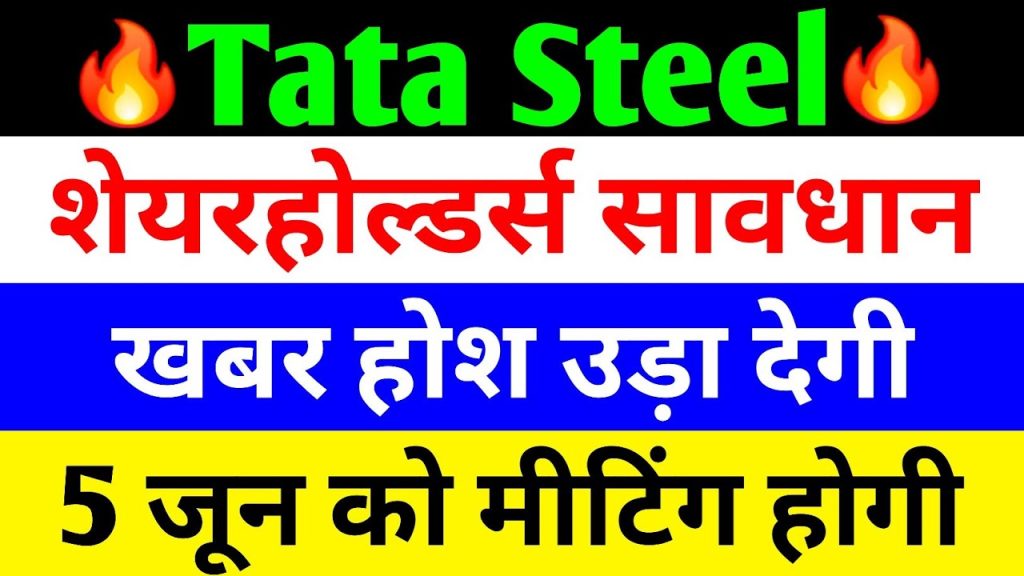
Introduction to Tata Steel’s Recent Developments
Tata Steel, a flagship company of the Tata Group, stands as one of the most robust players in the global steel industry. Known for its extensive operations across multiple continents, Tata Steel has recently been in the spotlight due to significant updates impacting its market performance and shareholder value. From a notable dividend announcement to strategic investor meetings and the challenges posed by international trade policies, this article dives deep into the latest Tata Steel share news, offering insights for investors and industry enthusiasts. With a remarkable 113% surge in net profit and a proposed dividend of ₹3.60 per share, Tata Steel continues to demonstrate resilience despite global market pressures. However, the recent 50% tariff on steel imports by the U.S. under President Donald Trump introduces new challenges for the Indian steel industry, including Tata Steel. Let’s explore these developments in detail to understand their implications for shareholders and the broader market.
Tata Steel’s Financial Performance: A Robust Recovery
Stellar Profit Growth in FY 2025
Tata Steel has showcased an impressive financial turnaround in the fiscal year 2025. The company reported a consolidated net profit of ₹1,301 crore for the March 2025 quarter, marking a staggering 113% increase compared to ₹611 crore in the same period the previous year. This remarkable growth underscores Tata Steel’s ability to navigate a challenging market environment and capitalize on operational efficiencies.
On a quarter-on-quarter basis, the company’s performance is equally noteworthy. Compared to the December 2024 quarter, where Tata Steel recorded a profit of ₹327 crore, the March 2025 quarter reflects a 298% jump. This growth is attributed to improved demand, cost optimization, and strategic market positioning. Additionally, the company’s revenue for the March 2025 quarter reached ₹56,288 crore, a 5% increase from ₹53,648 crore in the December 2024 quarter, highlighting consistent growth across key financial metrics.
Revenue and Sales Dynamics
Despite the profit surge, Tata Steel experienced a 4.2% decline in sales revenue year-over-year, dropping from ₹58,687 crore in March 2024 to ₹56,288 crore in March 2025. This dip is primarily due to market volatility and pricing pressures in the global steel industry. However, the quarter-on-quarter revenue growth indicates that Tata Steel is effectively managing these challenges by focusing on high-value products and operational streamlining.
The company’s ability to double its profits despite a slight sales decline showcases its resilience and strategic foresight. For shareholders, this financial performance signals a strong foundation, making Tata Steel an attractive investment option in a volatile market.
Dividend Announcement: Rewarding Shareholders
₹3.60 Per Share Dividend Proposal
One of the most exciting updates for Tata Steel shareholders is the company’s decision to propose a dividend of ₹3.60 per share for the fiscal year 2025. This decision, finalized during the board meeting on May 12, 2025, awaits shareholder approval at the upcoming 118th Annual General Meeting (AGM) scheduled for July 2, 2025. The dividend payout reflects Tata Steel’s commitment to delivering value to its investors, especially following a year of robust financial performance.
Key Dates for Dividend Eligibility
To be eligible for the dividend, shareholders must hold Tata Steel shares in their demat accounts by the record date of June 6, 2025. The dividend payment offers an excellent opportunity for investors to benefit from the company’s strong financial health. Remote e-voting for the dividend approval will commence on June 28, 2025, at 9:00 AM and conclude on July 1, 2025, at 5:00 PM. Eligible shareholders are encouraged to exercise their voting rights to support this proposal, which underscores Tata Steel’s focus on rewarding its investor base.
Strategic Investor Meetings: Planning for the Future
Analyst and Institutional Investor Meetings on June 5, 2025
Tata Steel is gearing up for two significant investor meetings on June 5, 2025, signaling its proactive approach to engaging with stakeholders and outlining future growth strategies. The first meeting, scheduled at 2:00 PM in Mumbai, will involve a one-on-one discussion with GIC Singapore, a prominent global investment firm. The second meeting, set for 4:00 PM on the same day, will be with ICICI Prudential Life Insurance, also in Mumbai. Both meetings will focus on Tata Steel’s business outlook, operational strategies, and potential investment opportunities.
These meetings are critical for Tata Steel as they provide a platform to discuss the company’s response to global market challenges, including the recent U.S. tariff hikes. By engaging with key institutional investors, Tata Steel aims to strengthen investor confidence and secure support for its long-term growth plans.
118th Annual General Meeting: A Platform for Key Decisions
The 118th AGM, scheduled for July 2, 2025, at 3:00 PM, will be conducted via video conferencing, allowing shareholders worldwide to participate. This meeting will address critical proposals, including the dividend payout and other strategic decisions. Tata Steel has published details of the AGM in prominent newspapers such as Financial Express, Indian Express, LokSatta Marathi, and Navshakti Marathi, ensuring transparency and accessibility for all stakeholders.
The AGM will also serve as a forum to discuss Tata Steel’s response to global trade challenges and its plans to maintain competitiveness in the steel industry. Shareholders can expect detailed insights into the company’s strategies for navigating the evolving market landscape.
U.S. Steel Tariff Hike: Implications for Tata Steel and Indian Steel Industry
Donald Trump’s 50% Tariff on Steel Imports
A significant development impacting Tata Steel and the broader Indian steel industry is the recent decision by U.S. President Donald Trump to increase tariffs on steel and aluminum imports to 50%, up from the previous 25%. Announced during a speech at the U.S. Steel Mon Valley Works Irwin Plant in Pennsylvania, this policy aims to bolster domestic steel production in the U.S. The tariff hike, effective from Wednesday, June 4, 2025, is expected to reshape global trade dynamics and pose challenges for steel-exporting nations like India.
Impact on Indian Steel Exports
India exported $4.56 billion worth of steel and aluminum products to the U.S. in the fiscal year 2025, including $587.5 million in iron and steel, $3.1 billion in steel products, and $860 million in aluminum products. The doubled tariff rate threatens to disrupt this trade flow, making it costlier for Indian companies like Tata Steel to compete in the U.S. market. According to the U.S. Commerce Department, U.S. steel prices in March 2025 stood at $984 per metric ton, significantly higher than Europe’s $690 and China’s $392 per metric ton. The tariff increase is likely to further widen this price gap, reducing the competitiveness of Indian steel in the U.S.
Risk of Steel Dumping in India
The tariff hike could lead to a surge in steel dumping in India, as countries like China, the European Union, and Brazil seek alternative markets for their steel exports. Analysts warn that India, already grappling with global overcapacity, may face increased pressure from cheap steel imports. This could depress domestic steel prices and erode profit margins for Indian steelmakers, including Tata Steel. The Global Trade Research Initiative (GTRI) estimates that the tariff hike could significantly impact India’s $4.56 billion metal export market, creating a dual challenge of reduced U.S. exports and increased domestic competition.
Tata Steel’s Response to Global Trade Challenges
Tata Steel faces a critical juncture as it navigates the fallout from the U.S. tariff hike. The company’s robust financial performance provides a buffer, but the potential influx of low-cost steel into India could pressure its domestic market share. To counter these challenges, Tata Steel is likely to focus on diversifying its export markets, enhancing operational efficiencies, and investing in high-value steel products. The upcoming investor meetings and AGM will be pivotal in outlining the company’s strategies to mitigate these risks and maintain its competitive edge.
Market Performance and Stock Analysis
Recent Stock Price Movement
On the last trading day of the week, Tata Steel’s stock closed at ₹161, reflecting a 1.30% decline, in line with broader market corrections. Despite this dip, the stock’s performance remains resilient, supported by the company’s strong fundamentals and positive investor sentiment surrounding the dividend announcement and profit growth. Investors are closely monitoring Tata Steel’s ability to sustain its financial momentum amidst global trade uncertainties.
Future Outlook for Tata Steel Shares
The combination of Tata Steel’s strong financial performance and the challenges posed by the U.S. tariff hike creates a complex outlook for its shares. On one hand, the company’s doubled profits and dividend proposal signal a positive trajectory for investors. On the other hand, the potential for steel dumping and reduced U.S. exports could weigh on stock performance in the short term. Analysts recommend that investors adopt a long-term perspective, focusing on Tata Steel’s strategic initiatives and diversified operations across global markets.
Investment Considerations for Tata Steel Shareholders
Opportunities for Investors
Tata Steel presents several opportunities for investors in 2025. The proposed ₹3.60 per share dividend offers an attractive return, particularly for those holding shares by the June 6, 2025, record date. The company’s 113% profit growth and 5% revenue increase quarter-on-quarter highlight its financial strength, making it a compelling choice for long-term investors. Additionally, Tata Steel’s proactive engagement with institutional investors and its focus on strategic planning suggest a commitment to sustainable growth.
Risks to Monitor
Investors should remain vigilant about the risks posed by the U.S. tariff hike and the potential for steel dumping in India. These factors could pressure Tata Steel’s profit margins and domestic market share. Additionally, global steel price volatility and macroeconomic uncertainties may impact the company’s performance. Investors are advised to conduct thorough research and consult financial advisors before making investment decisions.
Strategic Recommendations
To maximize returns, investors should consider the following strategies:
- Participate in the AGM: Engage in the July 2, 2025, AGM to stay informed about Tata Steel’s strategic plans and vote on key proposals, including the dividend payout.
- Monitor Global Trade Developments: Keep a close eye on U.S. trade policies and their impact on the Indian steel industry to anticipate market shifts.
- Diversify Investments: Balance Tata Steel holdings with investments in other sectors to mitigate risks associated with steel market volatility.
Conclusion: Navigating Opportunities and Challenges
Tata Steel stands at a pivotal moment in 2025, balancing significant opportunities with emerging challenges. The company’s robust financial performance, marked by a 113% profit surge and a ₹3.60 per share dividend proposal, underscores its resilience and commitment to shareholder value. However, the U.S.’s 50% tariff on steel imports and the risk of steel dumping in India pose significant hurdles for the company and the broader Indian steel industry. Through strategic investor meetings and a focus on operational excellence, Tata Steel is well-positioned to navigate these challenges and maintain its leadership in the global steel market.
For shareholders, the upcoming AGM and dividend payout present exciting opportunities to engage with the company and benefit from its financial success. However, investors must remain cautious of global trade dynamics and their potential impact on Tata Steel’s market performance. By staying informed and adopting a strategic approach, investors can make well-informed decisions to capitalize on Tata Steel’s growth potential.
Disclaimer: The information provided in this article is for educational purposes only and should not be considered financial advice. Investors are encouraged to conduct their own research and consult with a financial advisor before making investment decisions.