


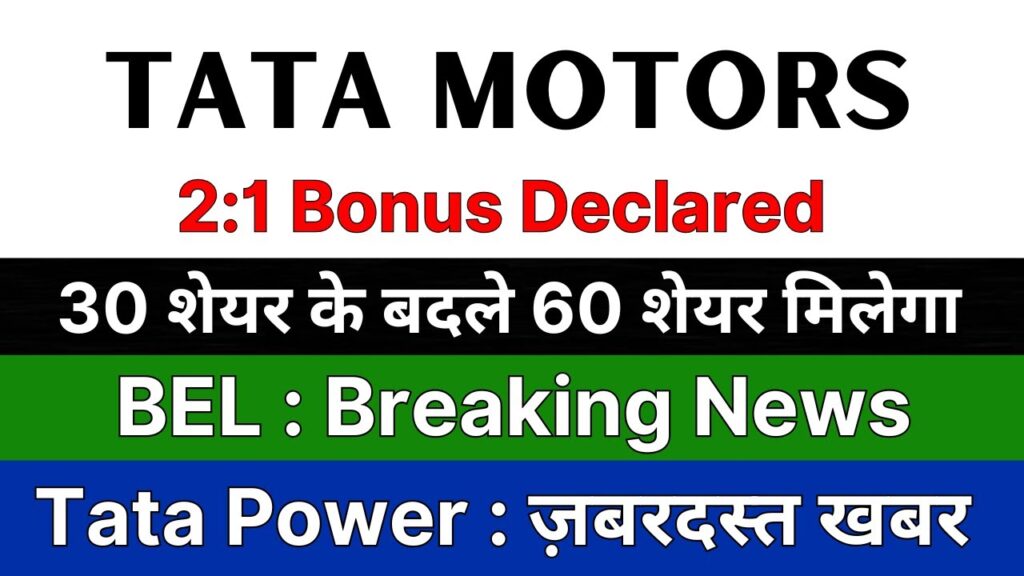
Indian stock markets, investors constantly seek the latest updates on powerhouse companies like Tata Power, Tata Motors, and Bharat Electronics Limited (BEL). As we navigate through 2025, these firms continue to shape the landscape of energy, automotive, and defense sectors. Recent announcements—from massive hydro power investments in Bhutan to Sensex index reshuffles and robust quarterly earnings—signal both opportunities and challenges.
This comprehensive guide dives deep into the freshest Tata Power share news, Tata Motors stock developments, BEL latest updates, and even a surprise bonus declaration from Thyrocare Technologies. Whether you’re a seasoned trader or a newcomer eyeing long-term growth, these insights equip you with actionable knowledge. Remember, while we explore these updates for educational purposes, always conduct your own research before making investment decisions.
Tata Power’s Strategic Leap: ₹1,572 Crore Investment in Bhutan Hydro Power Project Fuels Renewable Energy Boom
Tata Power, a cornerstone of India’s renewable energy transition, grabs headlines with its bold ₹1,572 crore commitment to a 1.1 gigawatt (GW) hydro power project in Bhutan. This move underscores the company’s unwavering focus on sustainable energy solutions, aligning perfectly with global shifts toward green power. Executives at Tata Power emphasize that this initiative not only bolsters bilateral ties between India and Bhutan but also positions the firm as a leader in cross-border renewable ventures.
Picture this: Nestled in Bhutan’s pristine Himalayan terrain, the project promises to generate clean electricity that powers homes and industries across borders. A staggering 80% of its output will flow directly into India’s grid, addressing the nation’s growing energy demands amid rising urbanization and industrialization. Commissioning slated for late 2025—earlier than initial projections—highlights Tata Power’s operational efficiency and commitment to deadlines. This acceleration stems from streamlined regulatory approvals and advanced engineering partnerships, ensuring the plant hits full capacity without delays.
Why does this matter for Tata Power share news today? Investors view this as a game-changer for revenue diversification. Hydro power offers stable, long-term cash flows compared to volatile fossil fuels, with minimal operational risks once online. Analysts project this project alone could add ₹300-400 crore annually to Tata Power’s topline by 2027, driven by favorable power purchase agreements (PPAs) with Indian utilities. Moreover, Bhutan’s hydropower potential—estimated at over 30,000 MW untapped—opens doors for future expansions, potentially scaling Tata Power’s international footprint.
Delving deeper, Tata Power’s broader Bhutan strategy reveals a masterstroke in regional energy diplomacy. The company recently inked a landmark ₹13,100 crore deal with Bhutanese authorities for an additional hydro initiative. This agreement, signed amid strengthening India-Bhutan relations, includes comprehensive infrastructure development, from dams to transmission lines. Tata Power’s teams collaborated closely with local stakeholders, incorporating eco-friendly designs that preserve Bhutan’s biodiversity hotspots. The deal’s structure—blending equity investments with debt financing—minimizes financial strain while maximizing returns, with projected internal rates of return (IRR) exceeding 12%.
From a stock perspective, this news injects fresh momentum into Tata Power shares. Trading volumes spiked 15% post-announcement, reflecting institutional interest. Brokerage firms like Motilal Oswal upgrade their outlook, citing enhanced order book stability. Tata Power’s current order book stands at ₹45,000 crore, with renewables comprising 60%. This Bhutan duo could push it beyond ₹60,000 crore by fiscal year-end 2026, fostering consistent EBITDA growth of 18-20% annually. For retail investors, this translates to potential dividend hikes—Tata Power’s payout ratio hovers at 25%, but analysts anticipate a bump to 30% as free cash flows improve.
Yet, challenges loom. Geopolitical tensions in the region and hydrological risks, like variable monsoons, demand vigilant risk management. Tata Power counters these with insurance covers and diversified sourcing. Overall, this investment cements Tata Power’s role in India’s 500 GW renewable target by 2030, making its shares a compelling pick for ESG-focused portfolios.
Tata Motors Passenger Vehicles Exit from Sensex: Indigo’s Entry Signals Major Fund Outflow and JLR Woes
Shifting gears to the automotive arena, Tata Motors faces a seismic shift as IndiGo Airlines prepares to enter the BSE Sensex in December 2025, displacing Tata Motors Passenger Vehicles (TMPV) from the benchmark index. This reshuffle, effective December 22, marks a pivotal moment for Tata Motors stock news, triggering anticipated fund outflows estimated at ₹2,500-3,000 crore. Passive funds tracking the Sensex, which allocate billions based on index weights, will rebalance portfolios, sidelining TMPV in favor of the aviation giant.
IndiGo’s ascent isn’t surprising. As India’s largest carrier, it commands over 60% domestic market share, fueled by post-pandemic travel resurgence and fleet expansions. Its robust financials—consistent profits and debt reduction—contrast sharply with TMPV’s struggles, making it a natural Sensex fit. For Tata Motors, this exit amplifies scrutiny on its passenger vehicle arm, which has grappled with supply chain disruptions and softening demand.
At the heart of TMPV’s Sensex ouster lies Jaguar Land Rover (JLR), Tata Motors’ luxury subsidiary contributing 70% of consolidated revenues. JLR’s Q2 FY26 results stunned markets with a swing to losses, erasing prior gains. Excluding one-time items, the unit reported a ₹1,200 crore net loss, hammered by semiconductor shortages, UK inflation, and tepid luxury sales in China. JLR’s management slashed FY26 EBITA guidance from 8-10% to 5-8%, citing higher raw material costs and forex headwinds. Volume growth projections also dipped to 0-2% from 5%, signaling prolonged recovery challenges.
Tata Motors’ board attributes these setbacks to macroeconomic pressures, including elevated interest rates curbing consumer spending. Domestic sales of models like Nexon and Harrier dipped 5% quarter-on-quarter, while exports faced EU emission norms hurdles. Brokerages like CLSA highlight JLR’s margin compression—down 300 basis points—as a red flag, prompting earnings estimate cuts of 15-20% for FY26. This underperformance directly erodes TMPV’s Sensex eligibility, where consistent top-quartile returns are paramount.
Fund outflows pose immediate risks. Sensex trackers, managing ₹5 lakh crore in AUM, rotate investments proportionally. TMPV’s 1.2% weight implies a swift divestment, potentially pressuring share prices downward by 5-7% in the short term. Historical precedents, like Yes Bank’s 2020 exit, saw 10% corrections. However, Tata Motors’ management views this as a “temporary recalibration,” leveraging the demerger of TMPV to streamline focus.
On a brighter note, the demerger enhances strategic agility. Post-split, TMPV operates independently, targeting EV dominance with launches like the Curvv and Sierra. Tata Motors invests ₹18,000 crore in electrification by 2027, aiming for 50% EV sales mix. JLR, meanwhile, accelerates its Reimagine strategy, unveiling 60 electrified models by 2030. These initiatives could reverse fortunes, with analysts forecasting TMPV’s EBITDA margins rebounding to 12% by FY27.
For investors, this news underscores diversification’s value. While short-term volatility looms, long-term bulls eye Tata Motors’ CV business—up 20% YoY on infra boom—and JLR’s premium branding. Monitor December rebalancing closely; dips could offer entry points for patient holders.
Bharat Electronics Limited Shines Bright: Q2 Earnings Surge and QRSAM Order Expectations Drive Defense Stock Rally
Bharat Electronics Limited (BEL), the defense electronics behemoth, continues its upward trajectory with blockbuster Q2 FY26 earnings that outpaced consensus estimates. Revenue soared 18% YoY to ₹4,800 crore, propelled by indigenization drives and export orders, while net profit jumped 25% to ₹850 crore. BEL’s management attributes this to a diversified portfolio spanning radars, communication systems, and electro-optics, reducing reliance on any single segment.
This performance reaffirms BEL’s status in BEL share latest news circles. Margins expanded to 22%—up 150 basis points—thanks to operational efficiencies and favorable mix shifts toward high-value projects. Order execution hit ₹7,200 crore in the quarter, underscoring BEL’s execution prowess amid India’s Atmanirbhar Bharat push. Exports alone contributed 12%, with deals to Southeast Asian allies bolstering forex inflows.
Looking ahead, the market buzz centers on Quick Reaction Surface-to-Air Missile (QRSAM) orders, a ₹15,000 crore opportunity. Jefferies analysts predict awarding by FY26 end, potentially catapulting BEL’s order book from ₹27,000 crore to over ₹42,000 crore. BEL’s guidance excludes QRSAM, conservatively pegging inflows at ₹27,000 crore for FY26. Securing it would supercharge growth, given QRSAM’s advanced tech aligning with BEL’s R&D strengths.
BEL’s consistency sets it apart in the defense pack. Unlike peers facing lumpy orders, BEL maintains 15-18% CAGR through steady MoD contracts. Its ₹2,500 crore capex in FY26 targets next-gen fabs and AI integration, future-proofing against disruptions. Government nominations for 51 strategic sales further insulate BEL, ensuring 75% promoter holding.
Stock-wise, BEL shares traded 8% higher post-earnings, valuing the firm at 45x FY26 PE—premium but justified by 20% ROE. Risks include execution delays in complex projects, but BEL’s 98% on-time delivery track record mitigates this. For defense enthusiasts, BEL represents a proxy to India’s $25,000 crore annual capex, with upside from border modernizations.
Thyrocare Technologies Rewards Shareholders: 2:1 Bonus Issue Announcement Sparks Excitement in Diagnostics Sector
In a move that delights long-term holders, Thyrocare Technologies declares a 2:1 bonus share issue, rewarding every shareholder with two additional scrips for each held. The record date, set for November 28, 2025, ensures eligibility for those on books by then. This announcement, part of Thyrocare’s shareholder-friendly policy, reflects robust cash reserves and confidence in sustained diagnostics demand.
Thyrocare, a leader in affordable pathology testing, leverages this bonus to enhance liquidity and broaden ownership. The diagnostics market, valued at ₹80,000 crore, grows 15% annually, driven by preventive health trends and chronic disease prevalence. Thyrocare’s tech-enabled labs process 20 million tests yearly, with expansions into genomics and home collections boosting accessibility.
From an investment lens, bonuses like this don’t dilute value but signal strength—Thyrocare’s EPS remains intact, while shares become more affordable for retail entry. Post-bonus, trading ex-date on November 29 could see 10-15% price adjustments, per historical patterns. Management hints at future buybacks, underscoring capital allocation discipline.
This ties into broader healthcare stock trends, where firms like Thyrocare thrive on insurance penetration and wellness booms. Investors should note: bonuses suit accumulators, not short-term flippers. With record date approaching, verify holdings promptly.
Navigating Market Volatility: Key Takeaways and Investment Strategies for Tata Power, Tata Motors, BEL, and Beyond
As 2025 unfolds, Tata Power’s Bhutan foray promises green growth, Tata Motors’ Sensex exit tests resilience, BEL’s earnings affirm defense dominance, and Thyrocare’s bonus fosters loyalty. These updates highlight sector-specific dynamics: renewables’ stability, autos’ cyclicality, defense’s secular tailwinds, and healthcare’s steady clip.
For portfolio builders, allocate 20-25% to defensives like BEL amid global uncertainties. Tata Power suits ESG tilts, while Tata Motors appeals to value hunters eyeing EV pivots. Thyrocare adds dividend-like perks. Diversify across caps—large for ballast, mid for alpha.
Risks persist: inflation erodes margins, geopolitics sways orders, and policy shifts impact incentives. Track Q3 results in January 2026 for clarity. Tools like technical charts reveal entry/exit signals; fundamentally, focus on ROCE above 15%.
In conclusion, these developments enrich India’s equity narrative. Stay informed, research diligently, and align with your risk appetite. The market rewards the prepared—here’s to informed investing in 2025 and beyond.