


Introduction to Tata Motors’ Latest Developments
Tata Motors, a cornerstone of India’s automotive sector, has recently captured investor attention with its board meeting outcomes and April 2025 sales data. The company, known for its diverse portfolio spanning passenger vehicles, commercial vehicles, and electric vehicles (EVs), is navigating a complex market landscape influenced by global tariffs, domestic demand fluctuations, and strategic restructuring. This article explores the key decisions from Tata Motors’ recent board meeting, analyzes its stock performance, and provides a detailed outlook on its growth potential. By examining sales figures, market sentiment, and expert opinions, we aim to equip readers with actionable insights into Tata Motors’ current standing and future prospects.
Tata Motors Board Meeting Results: Key Decisions Unveiled
Fund-Raising Through Non-Convertible Debentures (NCDs)
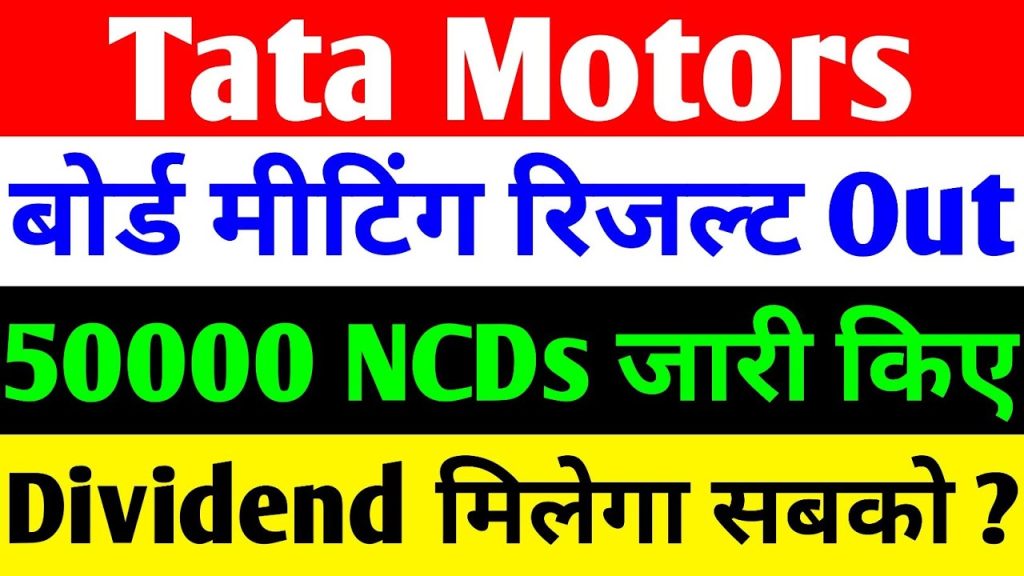
On May 2, 2025, Tata Motors concluded a pivotal board meeting, with the primary agenda of raising ₹500 crore through the issuance of Rated, Listed, Unsecured, Redeemable, Non-Convertible Debentures (NCDs). The meeting, held from 6:15 PM to 6:30 PM IST, finalized the issuance of these NCDs on a private placement basis to eligible investors. This strategic move aims to bolster the company’s financial flexibility and support its growth initiatives.
- Structure of the NCD Issuance: The company plans to issue 50,000 NCDs, each with a face value of ₹1 lakh, divided into two tranches of 25,000 NCDs each. The first tranche carries a fixed coupon rate of 7.08%, while the second tranche aligns with similar terms.
- Allotment and Maturity Dates: The NCDs are slated for allotment on May 13, 2025, with maturity dates set for May 11, 2028, for the first tranche and May 12, 2028, for the second tranche.
- Rating and Market Confidence: Rating agency CRISIL has assigned a AA+ rating with a stable outlook to these NCDs, signaling strong investor confidence in Tata Motors’ financial stability and repayment capacity.
This fund-raising initiative underscores Tata Motors’ proactive approach to securing capital for business expansion, particularly in its electric vehicle and passenger vehicle segments. The AA+ rating further enhances the appeal of these NCDs, positioning them as a secure investment option in the wholesale debt market on the National Stock Exchange (NSE).
Strategic Business Restructuring
In addition to the NCD issuance, Tata Motors is advancing its plan to demerge its business into two separate listed entities. Announced on March 4, 2024, this restructuring will split the company into:
- Tata Motors Commercial Vehicles Limited (TMLCV): Focused exclusively on the commercial vehicles business.
- Tata Motors Limited (TML): Encompassing passenger vehicles, electric vehicles, Jaguar Land Rover (JLR), and related investments.
The demerger, set to be voted on by shareholders on May 6, 2025, aims to enhance operational efficiency and unlock value for investors. The share entitlement ratio is 1:1, meaning shareholders holding one fully paid-up share of ₹2 in Tata Motors will receive one fully paid-up share of ₹2 in TMLCV. This restructuring is expected to streamline operations, allowing each entity to pursue tailored growth strategies.
Dividend Announcement
Tata Motors has also declared a dividend, reinforcing its commitment to rewarding shareholders. This move is particularly appealing to long-term investors, as it signals the company’s confidence in its financial health despite short-term challenges. The dividend, combined with the NCD issuance and demerger plans, reflects a balanced strategy of growth, stability, and shareholder value creation.
Tata Motors April 2025 Sales Performance: A Mixed Picture
Decline in Overall Sales
Tata Motors released its April 2025 sales figures, revealing a 6% year-on-year decline in total sales, dropping to 72,753 units from 77,521 units in April 2024. This downturn spans both passenger and commercial vehicle segments, reflecting broader market challenges.
- Passenger Vehicles (Including EVs): Sales fell 5% to 45,532 units from 47,943 units in April 2024. Within this segment, domestic passenger vehicle and EV sales declined 6% to 45,199 units from 47,783 units.
- Commercial Vehicles: Sales dropped 8% to 27,221 units from 29,538 units in the previous year.
- Domestic Market Performance: Total domestic sales decreased 7% to 70,963 units from 76,399 units in April 2024.
The sales decline can be attributed to several factors, including softened domestic demand, global trade uncertainties, and the impact of U.S. tariffs on Tata Motors’ subsidiary, Jaguar Land Rover (JLR). Despite these challenges, the company remains a dominant player in India’s EV market, holding the largest market share.
Jaguar Land Rover’s Performance
JLR, which accounts for nearly 70% of Tata Motors’ revenue, faced headwinds in April 2025 due to U.S. tariffs imposed on April 2, 2025. These tariffs, set at 25% on automobile imports, prompted JLR to pause shipments to the U.S., its largest market, contributing to a 14% year-on-year volume increase in North America but a 29.4% decline in China. Overall, JLR’s wholesale volumes remained flat compared to the previous year, highlighting the uneven impact of global market dynamics.
Resilience Amid Challenges
Despite the sales dip, Tata Motors’ stock exhibited resilience, closing at ₹652 on May 2, 2025, with a 1.20% gain despite a broader market downturn. The Sensex, which hit 81,200 during the day, closed around 80,500, down 700 points from its peak. Tata Motors’ ability to maintain upward momentum in a falling market underscores strong investor confidence, driven by its robust fundamentals and strategic initiatives.
Tata Motors Stock Analysis: Current Trends and Technical Insights
Stock Price Movements
Tata Motors’ stock has experienced significant volatility over the past year, declining 36% from its all-time high of ₹1,179.05 on July 30, 2024, to its current level of ₹652. The stock hit a 52-week low of ₹542 on April 7, 2025, following the U.S. tariff announcement, but has since recovered 20% to reach ₹652. Key factors influencing this trajectory include:
- U.S. Tariff Impact: The 25% tariff on auto imports, announced by U.S. President Donald Trump, significantly impacted JLR, leading to a sharp correction in Tata Motors’ stock price.
- Market Sentiment: Despite the tariff-related sell-off, recent comments from Trump suggesting a potential softening of tariffs have bolstered investor optimism, contributing to the stock’s recovery.
- Foreign Institutional Investor (FII) Activity: Increased FII buying in Indian markets has supported Tata Motors’ stock, with the Sensex crossing 81,000 for the first time in months, signaling a bullish market outlook.
Technical Indicators
From a technical perspective, Tata Motors’ stock is neither in an oversold nor overbought zone, with a Relative Strength Index (RSI) of 48.6. This neutral positioning suggests potential for upward movement if positive catalysts emerge. Key support levels are identified between ₹550–520, while resistance lies at ₹650, with a bearish gap between ₹570–610 posing a near-term challenge.
Analyst Perspectives
Market experts remain cautiously optimistic about Tata Motors’ prospects:
- Emkay Global: Maintains a “Buy” rating, citing JLR’s valuations at historic lows (FY27 EV/Sales at 0.7x) and Tata Motors’ operational turnaround. However, they trimmed the target price to ₹800, factoring in a potential 5% drop in U.S. and China sales for FY26.
- Kranthi Bathini, WealthMills Securities: Advises a “cautiously optimistic” stance, recommending investors monitor Tata Motors’ response to U.S. tariffs and JLR’s performance in China. He suggests the stock is attractive for bottom fishing at current levels.
- Osho Krishan, Angel One: Notes that technical indicators are in oversold territory, but tariff-related concerns may overshadow short-term gains. He identifies ₹1,000 as a potential target for long-term investors.
Retail investor interest remains strong, with retail shareholding increasing to 17.35% by March 2025 from 16.83% in December 2024, despite mutual funds and foreign portfolio investors trimming their stakes.
Why Tata Motors Remains a Compelling Investment
Leadership in India’s EV Market
Tata Motors holds a commanding position in India’s electric vehicle market, with a market share exceeding 70%. Its portfolio, including models like the Nexon EV and Tiago EV, continues to dominate the segment, supported by a robust charging infrastructure and government incentives for EV adoption. Despite the April sales decline, the company’s long-term growth in the EV space remains intact, driven by increasing consumer demand and favorable policy tailwinds.
Safety and Innovation
Tata Motors’ vehicles consistently earn five-star safety ratings from Global NCAP, enhancing its brand reputation and consumer trust. The company is also gearing up to launch new models, including next-generation EVs and premium passenger vehicles, to strengthen its market position. These innovations position Tata Motors to capitalize on rising vehicle penetration in India, where ownership remains low at 30 vehicles per 1,000 people compared to global standards.
Attractive Valuation
With a price-to-earnings (P/E) ratio of 7.65, Tata Motors trades at a significant discount compared to its 10-year median P/E of 14.3 and the industry average of 18.3. This undervaluation, coupled with a high return on equity (ROE) of 49% and a three-year CAGR PAT growth of 128%, makes the stock an attractive pick for value investors.
Dividend and Shareholder Value
The announced dividend adds to Tata Motors’ appeal, offering immediate returns to shareholders. Combined with the demerger and NCD issuance, these initiatives demonstrate the company’s commitment to balancing growth with shareholder rewards.
Challenges and Risks to Watch
U.S. Tariff Uncertainty
The 25% U.S. tariff on auto imports remains a significant headwind for JLR, which derives 32% of its sales from North America. While Trump’s recent comments suggest a potential easing of tariffs, any reversal could further pressure JLR’s volumes and profitability. Tata Motors is exploring price hikes and cost efficiencies to mitigate this impact, but near-term challenges persist.
Softened Demand in Key Markets
JLR’s sales in China, a critical market, declined 29.4% year-on-year in Q4 FY25, reflecting weakened demand. Similarly, domestic sales in India faced challenges in April 2025, necessitating aggressive strategies to regain market share.
Competitive Pressures
The Indian automotive sector is highly competitive, with players like Maruti Suzuki, Mahindra & Mahindra, and Hyundai vying for market share. Tata Motors must continue to innovate and maintain its EV leadership to stay ahead.
Future Outlook: Opportunities for Growth
Strategic Demerger Benefits
The planned demerger into two listed entities is expected to unlock significant value by allowing each business to focus on its core strengths. The commercial vehicles arm can pursue growth in logistics and infrastructure, while the passenger vehicles and JLR segment can capitalize on the global shift toward EVs and premium vehicles.
Expansion in EV and New Models
Tata Motors’ aggressive EV strategy, backed by new model launches and investments in battery technology, positions it to lead India’s transition to sustainable mobility. The company’s focus on expanding its EV portfolio aligns with government targets to achieve 30% EV penetration by 2030.
Global Recovery Potential
As global trade uncertainties stabilize, JLR’s recovery in key markets like North America and Europe could drive Tata Motors’ revenue growth. The company’s net-debt-free status, achieved in FY25, provides financial flexibility to navigate short-term challenges and invest in long-term growth.
Conclusion: Is Tata Motors a Buy in 2025?
Tata Motors stands at a crossroads, balancing short-term challenges with long-term growth potential. The recent board meeting outcomes, including the ₹500 crore NCD issuance and demerger plans, signal a proactive approach to strengthening its financial and operational framework. Despite a 6% sales decline in April 2025 and tariff-related pressures on JLR, the company’s leadership in India’s EV market, attractive valuation, and robust safety credentials make it a compelling investment.
Analysts like Emkay Global and market experts advocate a “Buy” or “cautiously optimistic” stance, with target prices ranging from ₹800 to ₹1,000 for long-term investors. However, investors should remain vigilant about U.S. tariff developments and JLR’s performance in China. Before investing, consult a financial advisor and conduct thorough research to align with your risk profile and goals.
Tata Motors’ resilience in a volatile market, coupled with its strategic initiatives, positions it as a stock to watch in 2025. As the company navigates global and domestic challenges, its focus on innovation, sustainability, and shareholder value creation could pave the way for a robust recovery.
Disclaimer: This article is for educational purposes only and does not constitute investment advice. Always perform your own research or consult a financial advisor before making investment decisions.