


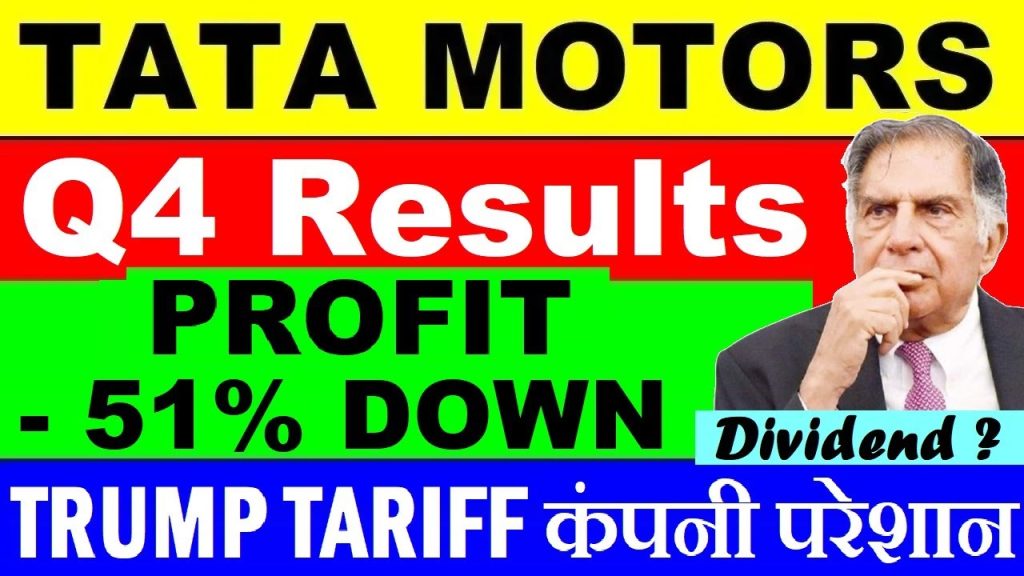
Tata Motors, a titan in the global automotive industry, recently unveiled its Q4 financial results for 2025, sparking widespread discussion among investors and analysts. The numbers reveal a complex story: a significant 51% year-on-year drop in consolidated net profit, a promising dividend announcement, and strategic advancements in its Jaguar Land Rover (JLR) and electric vehicle (EV) segments. This article dives deep into Tata Motors’ Q4 performance, dissecting its financials, market dynamics, and future outlook to provide a comprehensive understanding of where the company stands and where it’s headed.
With a focus on clarity and actionable insights, we’ll explore Tata Motors’ standalone and consolidated results, the impact of global geopolitical challenges, and the company’s ambitious plans for JLR and EVs. Whether you’re an investor, a market enthusiast, or simply curious about Tata Motors’ trajectory, this analysis will equip you with the knowledge to navigate its financial landscape.
Understanding Tata Motors’ Q4 Financial Performance
Tata Motors’ Q4 results for 2025 reflect a mixed bag of achievements and challenges. The company operates across multiple segments, including its domestic passenger and commercial vehicle businesses in India, as well as its global luxury brand, Jaguar Land Rover. To fully grasp the results, we need to break down the numbers into standalone (India-focused) and consolidated (including JLR) performance.
Standalone Performance: A Steady Domestic Story
Tata Motors’ standalone business, which primarily covers its operations in India, provides a snapshot of its domestic market strength. In Q4 2025, the company reported:
- Revenue: ₹20,200 crore, slightly up from ₹17,300 crore in the previous quarter but flat compared to ₹20,230 crore in Q4 2024.
- Expenses: ₹18,300 crore, compared to ₹15,700 crore in Q3 2025 and ₹18,700 crore in Q4 2024.
- Profit Before Adjustments: ₹1,865 crore, an improvement from ₹1,553 crore in Q3 2025 but down from ₹1,633 crore in Q4 2024.
- Final Net Profit: ₹1,382 crore, down marginally from ₹1,400 crore in Q3 2025 and significantly lower than ₹2,100 crore in Q4 2024.
- Earnings Per Share (EPS): ₹3.75, compared to ₹3.81 in Q3 2025 and ₹5.54 in Q4 2024.
The standalone figures indicate a stable but underwhelming performance. Quarterly revenue growth suggests a modest uptick in demand for Tata Motors’ passenger and commercial vehicles in India. However, the year-on-year decline in net profit and EPS highlights rising costs and operational challenges. Factors such as increased raw material prices and supply chain disruptions likely contributed to the profit squeeze.
Consolidated Performance: The JLR Effect
Tata Motors’ consolidated results, which include JLR’s global operations, paint a broader picture of the company’s financial health. JLR is the crown jewel of Tata Motors, contributing the lion’s share of its revenue and operating profit. Here’s a closer look at the consolidated numbers for Q4 2025:
- Revenue: ₹121,000 crore, a significant jump from ₹104,000 crore in Q3 2025 and ₹102,000 crore in Q4 2024.
- Expenses: ₹109,061 crore, up from ₹106,000 crore in Q3 2025.
- Operating Profit: ₹11,956 crore, compared to ₹7,670 crore in Q3 2025 and ₹9,295 crore in Q4 2024.
- Net Profit: ₹8,556 crore, a 51% drop from ₹17,528 crore in Q4 2024 but an improvement from ₹5,485 crore in Q3 2025.
- EPS: ₹23.40, down from ₹45.80 in Q4 2024 but up from ₹14.75 in Q3 2025.
The consolidated revenue growth reflects strong demand for JLR’s luxury vehicles, particularly in markets like the United States (15.4% market share), China (13%), and the United Kingdom (12.5%). JLR alone accounts for 76% of Tata Motors’ operating profit, underscoring its critical role in the company’s financial ecosystem. However, the sharp year-on-year decline in net profit is largely attributed to a deferred tax credit adjustment in Q4 2024, which inflated the previous year’s figures. Excluding this one-time adjustment, the profit drop aligns with analyst expectations of around ₹8,400 crore.
Dividend Announcement: A Shareholder-Friendly Move
Amid the profit decline, Tata Motors announced a final dividend of ₹6 per share, subject to shareholder approval at the Annual General Meeting (AGM). This decision signals the company’s confidence in its long-term cash flow and commitment to rewarding investors.
What Is a Final Dividend?
A final dividend is declared at the end of a financial year and requires shareholder approval, unlike an interim dividend, which can be paid out more quickly without such formalities. For Tata Motors, the ₹6 per share dividend will be distributed after the AGM, likely requiring investors to wait several months. The absence of an interim dividend means no immediate record date was set, but the announcement reinforces Tata Motors’ focus on maintaining investor trust.
Why It Matters
The dividend declaration is a positive signal in a challenging quarter. It demonstrates that Tata Motors is generating sufficient cash flow to support shareholder payouts, even as it navigates profit pressures. For income-focused investors, this move enhances the stock’s appeal, particularly in a volatile market environment.
Jaguar Land Rover: The Growth Engine
Jaguar Land Rover remains Tata Motors’ most significant growth driver, contributing the bulk of its revenue and profitability. In Q4 2025, JLR’s performance was a standout, despite external challenges.
JLR’s Financial Highlights
- Revenue Contribution: JLR’s business generated a substantial portion of the consolidated ₹121,000 crore revenue, with strong sales in premium markets.
- Profitability: JLR accounts for 76% of Tata Motors’ operating profit, dwarfing the contributions from commercial vehicles (21.8%) and passenger vehicles (2.2%).
- Net Cash Positive: JLR achieved its net cash positive target, a milestone the company had promised earlier. This strengthens its balance sheet and supports future investments.
Strategic Moves in EVs
JLR is doubling down on electric vehicles to stay competitive in the global luxury market. The company announced plans to launch an electric version of its iconic Range Rover, a move aimed at capturing the growing demand for sustainable luxury vehicles. With competitors like Tesla and BYD dominating the EV space, JLR’s investment in electrification is both timely and critical.
Global Market Presence
JLR’s global footprint is a key strength, with significant market shares in the U.S., China, the U.K., and India (nearly 30%). However, geopolitical uncertainties, particularly U.S. tariff policies under President Trump, pose risks to JLR’s growth. The company highlighted that these tariffs create a challenging and uncertain operating environment, potentially impacting pricing and profitability.
Challenges and Risks: Geopolitical and Economic Uncertainties
Tata Motors’ Q4 results come against a backdrop of global economic and geopolitical turbulence. The company explicitly flagged several risks that could shape its future performance.
Tariff and Geopolitical Risks
The reintroduction of tariffs by the U.S. administration, coupled with ongoing trade tensions with China and Europe, has created significant uncertainty. Tata Motors noted that these “tariff and related geopolitical actions” are making the operating environment challenging. For JLR, which relies heavily on international markets, any escalation in trade barriers could disrupt supply chains and increase costs.
Economic Uncertainty
Global economic volatility, including fluctuating interest rates and inflationary pressures, adds another layer of complexity. Tata Motors emphasized that while its business operations remain stable, external uncertainties could impact demand, particularly in price-sensitive markets like India.
Exceptional Items and Adjustments
Tata Motors’ financials are notoriously complex due to frequent exceptional items and tax adjustments. In Q4 2025, these adjustments contributed to the 51% profit drop, as the previous year’s deferred tax credit skewed comparisons. Investors must carefully analyze these one-time items to understand the company’s underlying performance.
Looking Ahead: Tata Motors’ Strategic Vision
Despite the challenges, Tata Motors remains optimistic about its future. The company outlined several strategic priorities to drive growth and resilience.
Strengthening JLR’s Profitability
JLR’s consistent profitability is a cornerstone of Tata Motors’ strategy. The company plans to maintain this momentum by optimizing operations, managing costs, and navigating tariff-related challenges. The successful achievement of a net cash positive position positions JLR for further investments in innovation and market expansion.
Expanding the EV Portfolio
Tata Motors is intensifying its focus on electric vehicles, both in its domestic passenger vehicle segment and through JLR’s luxury offerings. The upcoming electric Range Rover is a flagship initiative, signaling JLR’s commitment to competing with global EV leaders. In India, Tata Motors continues to lead the EV market with models like the Nexon EV and Tiago EV, capitalizing on government incentives and rising consumer demand for green vehicles.
Navigating Geopolitical Challenges
Tata Motors is proactively addressing geopolitical risks by diversifying its supply chains and exploring new markets. While tariffs remain a wildcard, the company’s global presence and strong brand equity provide a buffer against localized disruptions.
Why Tata Motors’ Q4 Results Matter for Investors
For investors, Tata Motors’ Q4 results offer critical insights into its financial health and strategic direction. Here’s a quick summary of what to consider:
- Profit Decline: The 51% drop in net profit is concerning but largely expected due to tax adjustments. The underlying operating profit growth suggests resilience.
- Dividend Appeal: The ₹6 per share final dividend enhances the stock’s attractiveness for income-focused investors.
- JLR’s Dominance: JLR’s strong performance underscores its role as Tata Motors’ growth engine, but tariff risks warrant caution.
- EV Growth: The company’s EV initiatives position it well for long-term growth in a rapidly evolving automotive landscape.
- Geopolitical Risks: External uncertainties, particularly U.S. tariffs, could impact short-term performance.
Investors should weigh these factors against Tata Motors’ valuation and market conditions. The stock’s reaction to the results will likely hinge on how the market perceives the profit drop relative to expectations and the company’s ability SING to navigate global challenges.
Competitive Landscape: Tata Motors vs. Peers
To contextualize Tata Motors’ performance, it’s worth comparing it to key competitors in the Indian and global automotive markets.
Indian Market
In India, Tata Motors competes with Maruti Suzuki, Hyundai, and Mahindra & Mahindra. While Maruti Suzuki dominates the passenger vehicle segment, Tata Motors has carved a niche in EVs and SUVs. Its commercial vehicle business, though impacted by cyclical demand, remains a market leader. The Q4 standalone results suggest Tata Motors is holding its own but faces pressure from rising costs and competition.
Global Luxury Market
Through JLR, Tata Motors competes with BMW, Mercedes-Benz, and Tesla in the luxury and EV segments. JLR’s strong profitability and EV investments position it well, but Tesla’s dominance and BYD’s aggressive pricing pose challenges. JLR’s ability to deliver premium EVs like the electric Range Rover will be critical to maintaining its edge.
How Tata Motors Can Outperform in 2025 and Beyond
To regain momentum and outperform competitors, Tata Motors must focus on several key areas:
- Cost Optimization: Streamlining operations and managing raw material costs will help improve margins, particularly in the standalone business.
- EV Leadership: Accelerating EV launches and leveraging government subsidies in India will strengthen Tata Motors’ position as a market leader.
- JLR Innovation: Continued investment in JLR’s electrification and premium offerings will drive global growth.
- Risk Mitigation: Diversifying supply chains and hedging against currency fluctuations will reduce exposure to geopolitical risks.
- Investor Communication: Clear, transparent reporting of exceptional items and adjustments will build trust and reduce market volatility.
Conclusion: A Resilient Giant Navigating Challenges
Tata Motors’ Q4 2025 results reflect a company at a crossroads. The 51% profit drop grabs headlines, but the underlying story is one of resilience and strategic focus. With JLR’s robust performance, a shareholder-friendly dividend, and ambitious EV plans, Tata Motors is well-positioned to weather short-term challenges and capitalize on long-term opportunities. However, geopolitical uncertainties and operational complexities require careful navigation.
For investors, Tata Motors offers a compelling mix of growth potential and income generation, tempered by external risks. By staying attuned to the company’s strategic moves and market dynamics, stakeholders can make informed decisions in a rapidly changing automotive landscape.
As Tata Motors continues to innovate and adapt, its ability to balance domestic strength with global ambitions will determine its success. Keep an eye on JLR’s EV rollout, tariff developments, and the company’s cost management efforts—these will shape Tata Motors’ trajectory in 2025 and beyond.