


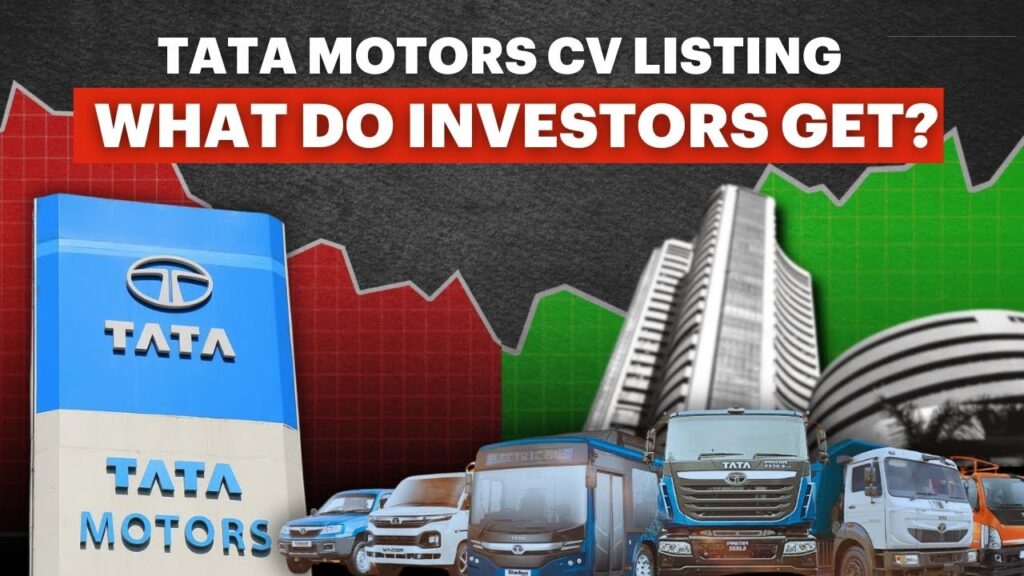
India’s automotive giant, Tata Motors Passenger Vehicles Ltd (TMPV), stands on the brink of a historic shift. Once a founding member of the BSE Sensex since its inception in 1986, the company — now focused exclusively on passenger vehicles, electric vehicles (EVs), and the premium Jaguar Land Rover (JLR) portfolio — risks exclusion from the prestigious index after nearly four decades.
This development stems directly from the successful demerger completed in October 2025, which split the former Tata Motors into two independent listed entities. While the news has sparked concerns among retail investors, experts view it as a strategic move designed to unlock long-term value rather than a sign of underlying weakness.
The BSE Sensex, India’s benchmark stock market index, tracks the performance of the nation’s top 30 companies by free-float market capitalization. Inclusion in this elite group signals robust financial health, high liquidity, and significant investor confidence. For Tata Motors Passenger Vehicles, the potential removal highlights how corporate restructuring can reshape index compositions and influence stock perceptions.
Understanding the Tata Motors Demerger: A Strategic Split for Focused Growth
Tata Motors announced its ambitious demerger plan in March 2024, aiming to separate its commercial vehicles (CV) business from its passenger vehicles (PV) segment. The restructuring became effective on October 1, 2025, with the record date set for October 14, 2025. Under the scheme, shareholders received one share in the new commercial vehicles entity for every share held in the original Tata Motors.
Post-demerger:
- The continuing entity was renamed Tata Motors Passenger Vehicles Ltd (TMPV), retaining the PV business, EVs, and JLR.
- The demerged unit became Tata Motors Ltd (TMCV), focusing solely on commercial vehicles like trucks and buses.
This 1:1 share entitlement ensured that investors’ economic interest remained intact — they now hold equivalent stakes in two specialized companies rather than one conglomerate. The move mirrors successful global precedents, such as Daimler’s spin-off of its truck division, where separation allowed each unit to pursue tailored strategies.
The rationale behind the split was clear: Commercial vehicles generate stable, cash-rich operations with strong domestic demand, while passenger vehicles and JLR offer high-growth potential in the booming EV market and luxury segments. By operating independently, each entity gains agility in capital allocation, partnerships, and innovation without cross-subsidization burdens.
Why Tata Motors Passenger Vehicles Risks Sensex Exclusion: The Market Cap Factor
The primary trigger for the potential Sensex exit is the sharp reduction in TMPV’s standalone market capitalization. Pre-demerger, the combined Tata Motors commanded a market cap exceeding ₹3.5 lakh crore at peak levels. After the split:
- TMPV’s market cap settled around ₹1.37–1.5 lakh crore.
- TMCV debuted with approximately ₹1.19 lakh crore.
BSE Sensex eligibility requires companies to maintain a free-float market cap comfortably above ₹2 lakh crore threshold in most cases, alongside other criteria like liquidity and trading volume. With TMPV falling below this mark, analysts from Periscope Analytics and Smartkarma predict its removal during the December 2025 rebalancing, expected around mid-month.
This wouldn’t be TMPV’s first brush with index exclusion. The stock was previously dropped from the Sensex in December 2019 amid debt concerns and sluggish performance, only to re-enter in December 2022 following a strong recovery driven by JLR turnaround and EV push. History shows that index exits are not permanent — companies like ACC Cement and Ambuja Cement have been removed and readmitted multiple times.
How BSE Sensex Works: Inclusion and Exclusion Criteria Explained
Launched on January 1, 1986, the BSE Sensex serves as a barometer of India’s economic health. It uses free-float market capitalization-weighted methodology, meaning only shares available for public trading (excluding promoter holdings) are considered.
Key eligibility criteria for Sensex inclusion:
- Listing history of at least six months on BSE.
- Ranking within the top 75 companies by average free-float market cap over the past six months.
- Minimum weightage of at least 0.5% in the index.
- Average daily trading value of ₹10–15 crore or more.
- Trading on at least 98% of trading days in the review period.
Rebalancing occurs semi-annually in June and December. Companies failing to meet these thresholds face replacement by faster-growing peers. Of the original 30 Sensex constituents, only Reliance Industries, Hindustan Unilever, and ITC have remained uninterrupted members for nearly 40 years.
Recent examples of changes include Nestlé’s exit in June 2025 and the entry of new-age players reflecting India’s evolving economy.
Potential Replacements: IndiGo and Grasim in the Spotlight
If TMPV exits, InterGlobe Aviation (IndiGo’s parent) emerges as the frontrunner for inclusion, potentially attracting passive inflows of over ₹3,000 crore from index-tracking funds. Grasim Industries from the Aditya Birla Group also contenders, offering exposure to commodities and diversified businesses.
These replacements underscore the Sensex’s dynamic nature — aviation and conglomerates gain prominence as traditional auto players restructure.
Impact on Investors: Short-Term Pain, Long-Term Gain?
Psychological and Liquidity Effects: Exclusion from the Sensex can create temporary negative sentiment. Retail investors often perceive it as a “demotion,” potentially leading to selling pressure. Passive funds mirroring the Sensex (worth trillions in AUM) will sell TMPV shares, triggering outflows estimated at ₹2,200–2,500 crore.
No Fundamental Damage: The demerger enhances fundamentals. TMPV focuses on high-margin JLR luxury SUVs and India’s EV revolution, where Tata commands over 60% market share with models like Nexon EV and Punch EV. TMCV dominates the stable CV cycle, benefiting from infrastructure boom.
Shareholder Benefits: Investors now own two pure-play stocks, allowing them to allocate based on preferences. Combined market cap post-listing has already shown resilience, crossing ₹2.7 lakh crore in initial sessions — proving value creation.
Historical Precedent: Post similar restructurings, separated entities often outperform. Analysts expect both TMPV and TMCV to target Sensex re-entry within 2–3 years through organic growth and potential acquisitions.
Tata Motors’ Legendary Journey: From Locomotives to Electric Mobility
Tata Motors traces its roots to 1945 as Tata Locomotive and Engineering Company. Key milestones:
- 1954: Entered commercial vehicles with Daimler-Benz partnership.
- 1986: Launched Tata 407 model, coinciding with Sensex launch.
- 1998: Introduced India’s first indigenous passenger car, Indica.
- 2008: Acquired Jaguar Land Rover for $2.3 billion — a transformative deal now driving profitability.
- 2020s: Pivoted to EVs, launching platforms like Avinya and securing partnerships for semiconductor and battery tech.
Today, TMPV sells over 10 lakh vehicles annually, employs more than 81,000 people, and operates 2,600+ touchpoints. JLR contributes the bulk of profits, with record wholesale volumes in FY25.
The Demerger’s Broader Implications for Tata Group and Indian Markets
The Tata Group already boasts multiple Sensex heavyweights like TCS, Titan, and Trent. This demerger adds two more focused entities, potentially increasing the group’s index representation over time.
For the broader market, it signals maturity in Indian corporates embracing value-unlocking restructurings. Similar moves by conglomerates like Vedanta and Godrej highlight a trend toward specialization.
Should You Hold, Buy, or Sell TMPV Shares Amid Sensex Uncertainty?
Financial advisors emphasize fundamentals over index status. TMPV trades at attractive valuations post-adjustment, with strong EV tailwinds and JLR margin expansion targets of 10%+ by FY27.
Long-term investors who held through the 2019 exit were rewarded handsomely. Analysts from Nuvama and JM Financial maintain positive outlooks, citing:
- India’s passenger vehicle market growth at 8–10% CAGR.
- JLR’s shift to electrified Range Rover models.
- Government incentives under PLI scheme for EVs.
Short-term volatility from passive outflows is likely, but the demerger positions both entities for accelerated growth.
Conclusion: A New Chapter, Not the End of the Road
The potential Sensex exclusion of Tata Motors Passenger Vehicles in December 2025 marks the end of an era but the beginning of a promising new one. The demerger, far from a distress signal, represents bold leadership to adapt to India’s shifting automotive landscape — from internal combustion engines to sustainable mobility.
Investors should view this as an opportunity to own two high-conviction pure-play stocks. As Natarajan Chandrasekaran, Chairman of Tata Sons, has often stated, the group focuses on creating sustainable value. History suggests that Tata Motors — in its new forms — will reclaim its spot among India’s elite companies sooner than later.
With India’s economy projected to become the world’s third-largest by 2030, driven by infrastructure and green mobility, TMPV and TMCV are well-positioned to ride the wave. The Sensex door remains open for those who deliver performance.