


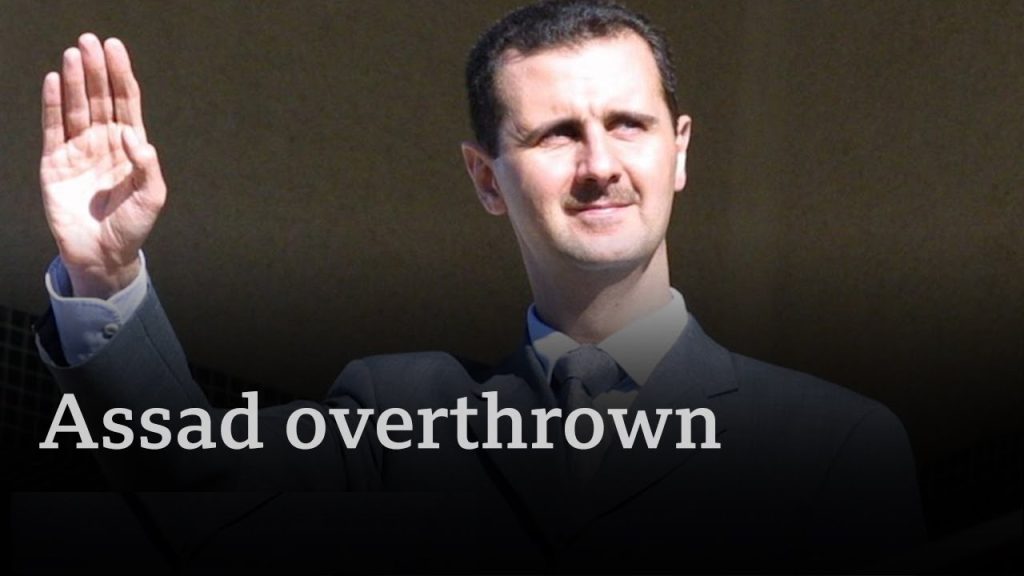
The Rise and Fall of Syria Under Bashar al-Assad: A Civil War That Shook the Middle East
Introduction: Syria’s Descent into Chaos
Syria, once a thriving center of culture and trade in the Middle East, descended into a horrifying war zone under the reign of Bashar al-Assad. What began as peaceful protests evolved into a full-blown civil war, reshaping the dynamics of the region. This article delves into the causes, events, and aftermath of Syria’s civil war, shedding light on the key players and the impact of this devastating conflict.
Historical Context: Syria Before the Civil War
Ottoman Empire and French Mandate
Before World War I, Syria was part of the Ottoman Empire. After the Ottomans’ defeat, European powers carved up the Middle East. Syria fell under French control in 1918, sparking resistance and revolts. Finally, in 1946, Syria gained independence.
Ethnic and Religious Diversity
Syria’s population is a tapestry of ethnicities and religions. The majority are Sunni Muslims (74%), with minorities including Shia Muslims (16%), Alawites (12%), and Christians (10%). Additionally, Kurds and Arabs form the primary ethnic groups. This diversity, while enriching, has often been a source of tension.
Rise of Hafez al-Assad
In 1970, General Hafez al-Assad seized power, establishing a dictatorship. Though an Alawite in a Sunni-majority country, he consolidated power through economic reforms, education initiatives, and military strengthening. However, his regime was marked by brutal crackdowns, including the infamous 1982 Hama Massacre, where 20,000 people were killed to suppress a Sunni rebellion.
The Dawn of Bashar al-Assad’s Rule
Transition of Power
Following Hafez al-Assad’s death in 2000, his son, Bashar, assumed the presidency. A constitutional amendment reduced the minimum age for presidency to accommodate the 34-year-old Bashar. Initially perceived as a modernizer, Bashar soon revealed autocratic tendencies.
Economic Shifts and Public Discontent
Unlike his father, who ran a state-controlled economy, Bashar leaned towards market-oriented reforms. This shift led to rising unemployment and reduced subsidies for basic services, leaving the populace disgruntled. The 2006–2010 drought further exacerbated the situation, displacing farmers and creating food shortages.
Arab Spring: A Catalyst for Change
The Spark in Tunisia
The Arab Spring ignited in Tunisia in 2010, when a street vendor, Mohamed Bouazizi, self-immolated to protest police corruption. This act inspired uprisings across the Arab world, toppling regimes in Tunisia, Egypt, and Libya.
Protests in Syria
In March 2011, the Arab Spring reached Syria. Protests erupted in Daraa after teenage boys were arrested and tortured for anti-government graffiti. The harsh response of the Assad regime, including shootings and arrests, turned peaceful demonstrations into widespread rebellion.
Syria’s Descent into Civil War
Escalation of Violence
As protests grew, Assad’s forces responded with brutal crackdowns. Funerals became sites of protests, prompting the regime to ban them. Tanks rolled into cities like Daraa, and the military began using live ammunition against demonstrators.
Formation of Rebel Groups
By mid-2011, defections from Assad’s army led to the formation of rebel groups, including the Free Syrian Army. These factions sought to overthrow Assad, marking the beginning of Syria’s civil war.
Key Players in the Syrian Civil War
Assad’s Regime
Bashar al-Assad, backed by Iran and Russia, used chemical weapons, airstrikes, and sieges to suppress opposition. His forces controlled major cities but faced resistance in rural areas.
Rebel Groups
The opposition comprised various factions, from moderate groups seeking democracy to extremist organizations like ISIS. Their lack of unity hindered their effectiveness.
International Involvement
The civil war drew in global powers. The U.S. supported moderate rebels, while Russia and Iran bolstered Assad. Neighboring countries like Turkey and Jordan dealt with massive refugee influxes.
Humanitarian Crisis: The Cost of War
Casualties and Displacement
The conflict has claimed over 500,000 lives and displaced millions. Refugees fled to neighboring countries and Europe, creating one of the worst humanitarian crises in modern history.
Economic Devastation
Syria’s economy collapsed, with infrastructure destroyed and industries dismantled. The loss of oil revenue further plunged the country into poverty.
The Fall of Assad’s Rule
Shifting Control
In 2022, opposition forces gained significant ground. Assad’s regime, weakened by years of war and international sanctions, began to crumble. Key cities fell to rebel forces, signaling the end of Assad’s reign.
Dramatic Rescues
Amid the chaos, political prisoners like Bashar Baram were freed by opposition fighters. These moments symbolized hope for a new Syria.
Lessons from Syria’s Civil War
The Dangers of Autocracy
Syria’s civil war highlights the perils of dictatorship and the importance of addressing public grievances before they escalate into conflict.
The Role of Climate Change
The 2006 drought underscored how environmental factors can exacerbate political instability.
What Lies Ahead for Syria?
As the dust settles, Syria faces the monumental task of rebuilding. Challenges include restoring infrastructure, repatriating refugees, and fostering national reconciliation. The international community’s support will be crucial in this endeavor.
The Roots of the Conflict
The Syrian Civil War began as part of the Arab Spring, a wave of uprisings that swept across the Middle East and North Africa in 2011. Initially, protests in Syria were peaceful, with citizens demanding political reforms, an end to corruption, and greater freedoms. However, the government of President Bashar al-Assad responded with brutal crackdowns, sparking widespread unrest.
Sectarian Divide: Sunni Majority vs. Minority Rule
Syria’s sectarian landscape played a crucial role in escalating the conflict. The Sunni Muslim majority resented the disproportionate power held by the Alawite minority, to which Assad belongs. This division soon transformed the uprising into a sectarian struggle, with Sunni-majority nations like Turkey, Qatar, and Saudi Arabia backing the rebels, while Shia-majority countries like Iran and groups such as Hezbollah supported Assad’s regime.
The Entry of Extremist Groups
By 2012, extremist militant groups began to exploit the chaos. One of the first groups to emerge was Jabhat al-Nusra, which aligned itself with al-Qaeda. The extremist agenda gained traction when Assad released hundreds of radical militants from prison in what appeared to be a calculated move. This strategy allowed Assad to portray himself as a secular leader fighting against terrorism.
The Rise of ISIS
In 2013, Abu Bakr al-Baghdadi merged the Islamic State of Iraq with Jabhat al-Nusra, forming the Islamic State of Iraq and Syria (ISIS). This marked the beginning of a new, more violent phase of the conflict. ISIS declared Raqqa as its capital, imposed its own laws, and carried out genocidal campaigns against minorities. At its peak, ISIS controlled vast territories in Syria and Iraq, ruling over 12 million people and introducing its own currency.
Chemical Weapons and International Outcry
The Assad regime’s use of chemical weapons against its own people shocked the world. In August 2013, a sarin gas attack killed over 1,000 civilians in Ghouta. The United Nations confirmed the use of chemical weapons, labeling it a war crime. While U.S. President Barack Obama had warned that the use of such weapons would cross a “red line,” direct military intervention was avoided.
Global Powers in the Fray
The Syrian Civil War became a proxy battleground for international powers. The United States, Britain, France, and Germany supported the rebels, while Russia and China vetoed multiple United Nations proposals against Assad. Russia’s military intervention in 2015 decisively bolstered Assad’s position, turning the tide of the war in his favor.
The Role of Regional Players
Turkey, a key regional power, had its own agenda. Concerned about the growing influence of Kurdish forces, Turkey launched operations against them, complicating the dynamics further. Meanwhile, Iran and Hezbollah provided unwavering support to Assad, seeing Syria as a strategic ally in the region.
Humanitarian Crisis and Refugee Exodus
The conflict’s toll on civilians has been staggering. Over 500,000 people have died, and 1.3 million have been displaced internally. An additional 4.8 million Syrians became refugees, fleeing to neighboring countries and Europe. Entire cities, such as Aleppo and Homs, were reduced to rubble, creating a dire humanitarian crisis.
Torture Camps and War Crimes
Assad’s regime established notorious prisons, such as Sednaya Prison, where thousands were tortured and executed. Amnesty International labeled it a “human slaughterhouse.” Conversely, ISIS’s atrocities, including mass executions and the destruction of cultural heritage, further highlighted the brutality of the conflict.
The Defeat of ISIS
By 2019, a coalition of U.S.-backed Kurdish forces and Assad’s Russian-supported military successfully dismantled ISIS’s territorial hold. Raqqa was recaptured, and ISIS’s dream of a caliphate was shattered. However, the remnants of ISIS remain a sporadic threat.
The Turning Point: Aleppo and Beyond
In late 2016, Assad’s forces, with Russian support, recaptured Aleppo, a major economic hub. This victory marked a turning point, solidifying Assad’s grip over significant parts of Syria. Yet, rebel forces retained control in pockets like Idlib, supported by Turkey.
Geopolitical Shifts and Recent Developments
The Syrian war’s dynamics shifted further with global events such as Russia’s invasion of Ukraine in 2022. This diverted Russian attention and resources, weakening its ability to assist Assad. Simultaneously, internal economic woes, including a collapsing currency, eroded the Syrian government’s stability.
The 2024 Rebel Offensive
In November 2024, rebel forces launched a surprising offensive, rapidly advancing and capturing Aleppo. Without substantial support from Russia or Iran, Assad’s forces crumbled. By December, Damascus fell, and Assad fled the country, marking the end of his regime. Syrians celebrated the fall of dictatorship, tearing down statues and posters of the Assad family.
The Uncertain Future
Despite the end of Assad’s rule, Syria’s future remains uncertain. The rebels who ousted him include extremist factions, raising concerns about the stability of the new regime. Groups like HTS (Hay’at Tahrir al-Sham), which once had ties to al-Qaeda, now control parts of northwest Syria, casting a shadow over the nation’s prospects for peace.
Conclusion
The Syrian Civil War stands as a stark reminder of how internal conflicts can escalate into global crises. While the war’s end has brought relief to millions, rebuilding Syria’s shattered infrastructure, addressing sectarian divides, and ensuring a stable government will require concerted international efforts. Only time will tell if Syria can rise from the ashes of this devastating conflict to embrace a brighter, peaceful future.