


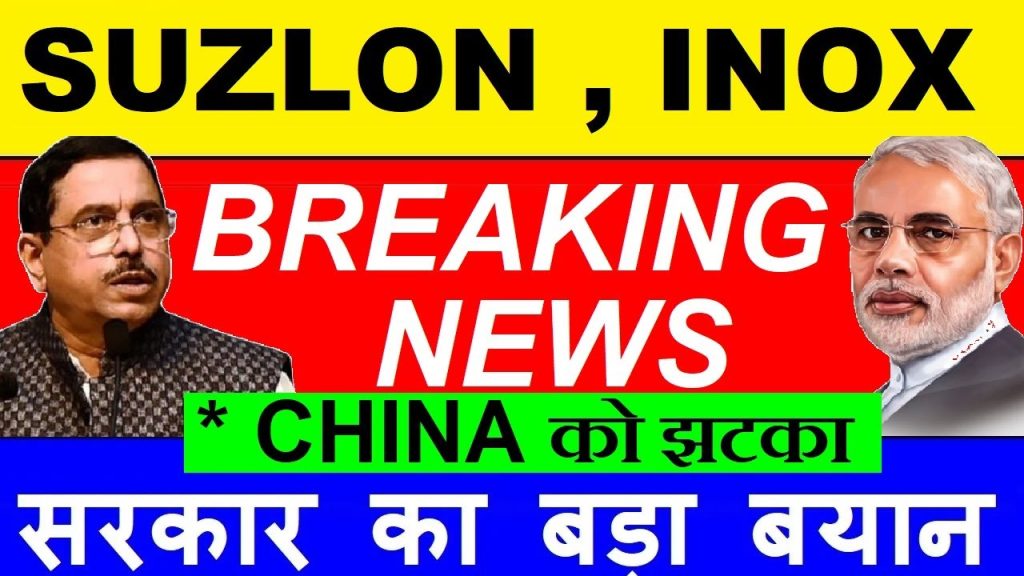
India’s renewable energy landscape is undergoing a transformative shift, with the government taking decisive steps to strengthen domestic manufacturing in the wind energy sector. A recent draft notification from the Ministry of New and Renewable Energy (MNRE) signals a game-changing policy that mandates the use of locally produced wind turbine components. This move not only aims to bolster India’s renewable energy ambitions but also delivers a significant blow to foreign manufacturers, particularly from China, who have been aggressively capturing market share. Companies like Suzlon Energy and Inox Wind are poised to benefit immensely, making this a critical development for investors, industry stakeholders, and sustainability advocates alike.
This article dives deep into the implications of this policy, its impact on the wind energy sector, and why it’s a golden opportunity for domestic players. We’ll explore the nuances of the renewable energy market, the government’s strategic intent, and the potential for companies like Suzlon and Inox Wind to dominate the industry.
Understanding India’s Renewable Energy Revolution
India’s commitment to renewable energy is unwavering, with ambitious targets to achieve 500 GW of non-fossil fuel capacity by 2030. Within this framework, wind energy plays a pivotal role, contributing significantly to the nation’s clean energy goals. Wind turbines, the backbone of this sector, rely on a complex ecosystem of components, including blades, gearboxes, generators, and towers. Historically, a substantial portion of these components has been imported, with Chinese manufacturers dominating due to their cost-competitive offerings.
However, the government’s latest draft notification seeks to rewrite this narrative. By mandating that wind turbine components be sourced from domestic vendors, India is prioritizing self-reliance, job creation, and technological innovation. This policy aligns with the broader “Make in India” initiative, which emphasizes boosting local manufacturing to reduce dependency on imports.
Why Wind Energy Matters
Wind energy is a cornerstone of India’s renewable energy strategy. Unlike solar, which depends on daylight, wind turbines can generate power round-the-clock in suitable locations, making them a reliable source of clean energy. India’s vast coastline and windy regions, such as Gujarat, Tamil Nadu, and Maharashtra, offer immense potential for wind energy generation. As of 2025, India’s installed wind energy capacity stands at approximately 45 GW, with plans to double this figure in the coming years.
The wind energy sector comprises two primary types of players:
- Energy Producers: Companies like Adani Green Energy, which purchase equipment to generate and sell electricity.
- Equipment Manufacturers: Firms like Suzlon Energy and Inox Wind, which design and produce wind turbine components.
The government’s new policy directly benefits the latter, creating a ripple effect that strengthens the entire wind energy ecosystem.
The Game-Changing Draft Notification
The Ministry of New and Renewable Energy (MNRE) has released a draft notification that revises the Approved List of Models and Manufacturers (ALMM) for wind turbine models. This policy mandates that all wind turbine components—blades, gearboxes, generators, towers, and control equipment—must be sourced from domestic manufacturers. While the notification is still in draft form, the government has indicated that it will be finalized and implemented within months, marking a significant shift in the industry.
Key Highlights of the Policy
- Mandatory Domestic Sourcing: Companies must procure wind turbine components exclusively from Indian vendors, eliminating reliance on foreign suppliers.
- Support for Local Players: The policy aims to empower domestic manufacturers by ensuring a steady stream of orders and contracts.
- Research and Development (R&D) Focus: The notification also emphasizes that R&D facilities and data centers related to wind energy must be established in India within six months.
- Revised ALMM: The government is updating the list of approved wind turbine models and manufacturers to prioritize locally produced equipment.
This policy is a strategic move to protect India’s wind energy market from foreign dominance, particularly from Chinese manufacturers, who have been aggressively expanding their footprint in this sector.
Why China Is the Target
China’s dominance in global manufacturing is no secret. From mobile phones to renewable energy equipment, Chinese companies have captured significant market share in India and beyond. In the wind energy sector, Chinese manufacturers have leveraged their economies of scale to offer cost-competitive components, often undercutting domestic players. This has led to concerns about India’s reliance on imports and the potential loss of market share in a rapidly growing industry.
The government’s draft notification explicitly addresses this challenge. By mandating domestic sourcing, India aims to:
- Reduce Dependency on Imports: Minimize reliance on Chinese components, which currently account for a significant portion of India’s wind turbine supply chain.
- Protect Domestic Players: Ensure that companies like Suzlon and Inox Wind can compete effectively without being overshadowed by foreign giants.
- Safeguard National Interests: Prevent China from capturing a critical sector that is vital to India’s energy security and sustainability goals.
The mobile phone industry serves as a cautionary tale. Chinese brands dominate over 70% of India’s smartphone market, leaving domestic players struggling to compete. The government is determined to prevent a similar scenario in the wind energy sector, which is poised for exponential growth.
Impact on Domestic Wind Energy Companies
The draft notification is a boon for Indian wind turbine manufacturers, particularly Suzlon Energy and Inox Wind. These companies are well-positioned to capitalize on the government’s push for local manufacturing, potentially leading to significant growth in their topline and bottomline.
Suzlon Energy: A Market Leader Poised for Growth
Suzlon Energy is one of India’s largest wind turbine manufacturers, with a robust presence in the design, development, and production of wind turbine components. The company specializes in:
- Rotor blades
- Tubular towers
- Generators
- Control equipment
- Gearboxes
Suzlon’s stock has already shown remarkable momentum, with a 9-10% surge following the announcement of the draft notification. This reflects investor confidence in the company’s ability to secure new orders and contracts as the policy takes effect.
Shareholding Pattern:
- Promoters: Hold approximately 13.5% of shares, with no pledged shares as of March 2025.
- Foreign Institutional Investors (FIIs): Own around 23% of shares.
- Domestic Institutional Investors (DIIs): Hold about 2.5% of shares.
- Public: Accounts for 55% of shareholding, with over 6.5 million retail investors.
Suzlon’s low promoter shareholding and high public participation make it a favorite among retail investors. The absence of pledged shares further strengthens investor confidence, signaling financial stability.
Inox Wind: A Rising Star in Wind Energy
Inox Wind is another key player in India’s wind energy sector, offering end-to-end solutions for wind turbine generation. The company manufactures wind turbine generators (WTGs) and provides comprehensive services, from design to installation. Like Suzlon, Inox Wind is expected to benefit significantly from the government’s policy.
Shareholding Pattern:
- Promoters: Hold over 48% of shares, with only 1.73% pledged.
- FIIs: Own approximately 15.5% of shares.
- DIIs: Hold about 9.5% of shares.
- Public: Accounts for 26% of shareholding, with around 380,000 retail investors.
The low percentage of pledged shares (under 2%) indicates minimal financial risk, making Inox Wind an attractive investment option. The company’s focus on innovation and comprehensive solutions positions it well to capture a larger market share.
Why Domestic Sourcing Makes Sense
The government’s decision to mandate domestic sourcing is driven by several strategic and economic factors:
- Boosting Local Economies: By prioritizing Indian manufacturers, the policy will create jobs, stimulate economic growth, and support ancillary industries.
- Enhancing Energy Security: Reducing reliance on foreign suppliers ensures that India’s energy infrastructure remains resilient and self-sufficient.
- Promoting Innovation: The emphasis on local R&D will drive technological advancements, positioning India as a global leader in wind energy solutions.
- Countering Foreign Dominance: By limiting Chinese influence, India can protect its market share in a high-growth sector.
This policy also aligns with global trends, as countries like the United States and European nations are increasingly prioritizing domestic manufacturing to strengthen their renewable energy sectors.
Challenges and Considerations
While the draft notification is a significant step forward, it’s not without challenges. Implementing such a policy requires careful planning to ensure that domestic manufacturers can meet demand without compromising quality or cost-effectiveness.
Potential Hurdles
- Capacity Constraints: Indian manufacturers may need to scale up production to meet the increased demand for wind turbine components.
- Cost Competitiveness: Domestic components must remain affordable to compete with imported alternatives, especially in the short term.
- Quality Assurance: Ensuring that locally produced components meet international standards is critical to maintaining the reliability of wind turbines.
- Transition Period: The shift to mandatory domestic sourcing may cause temporary disruptions in the supply chain.
Mitigating Risks
To address these challenges, the government and industry stakeholders must collaborate to:
- Invest in capacity expansion and skill development.
- Provide incentives, such as subsidies or tax breaks, to support domestic manufacturers.
- Establish robust quality control mechanisms to ensure compliance with global standards.
- Allow a phased transition to give companies time to adapt to the new requirements.
Opportunities for Investors
The government’s policy presents a golden opportunity for investors looking to capitalize on the growth of India’s wind energy sector. Companies like Suzlon Energy and Inox Wind are likely to see increased demand for their products, leading to higher revenues and improved financial performance.
Why Invest in Wind Energy Stocks?
- Government Backing: The policy provides a clear mandate for domestic sourcing, ensuring a steady flow of orders for Indian manufacturers.
- Growing Market: India’s renewable energy sector is expanding rapidly, with wind energy playing a central role.
- Strong Fundamentals: Companies like Suzlon and Inox Wind have established track records and robust business models.
- Investor Sentiment: The recent surge in stock prices reflects strong market confidence in these companies’ growth potential.
However, investors should exercise caution and conduct thorough research before making decisions. Factors such as promoter shareholding, pledged shares, and overall market conditions should be carefully evaluated.
The Bigger Picture: India’s Renewable Energy Future
The draft notification is more than just a policy change; it’s a bold statement of India’s intent to lead the global renewable energy transition. By prioritizing domestic manufacturing, the government is laying the foundation for a self-reliant, sustainable energy ecosystem. This move not only strengthens India’s position in the global wind energy market but also contributes to its broader climate goals, including achieving net-zero emissions by 2070.
Key Takeaways
- The MNRE’s draft notification mandates domestic sourcing of wind turbine components, boosting local manufacturers.
- Companies like Suzlon Energy and Inox Wind are well-positioned to benefit, with potential for significant growth in orders and revenue.
- The policy aims to counter Chinese dominance in the wind energy sector, protecting India’s market share.
- Investors have a unique opportunity to capitalize on the growth of India’s renewable energy market, but due diligence is essential.
Conclusion: A Bright Future for India’s Wind Energy Sector
India’s wind energy sector is at a turning point, with the government’s draft notification paving the way for a new era of growth and self-reliance. By prioritizing domestic manufacturing, India is not only strengthening its renewable energy ecosystem but also sending a clear message to the world: it’s ready to lead the clean energy revolution. For companies like Suzlon Energy and Inox Wind, this policy is a catalyst for unprecedented growth, offering immense potential for investors and industry stakeholders.
As the policy moves toward finalization, all eyes will be on how India’s wind energy sector evolves. One thing is certain: the winds of change are blowing, and they’re carrying India toward a brighter, greener future.
Disclaimer: This article is for educational purposes only and does not constitute financial advice. Always consult a financial advisor before making investment decisions.