


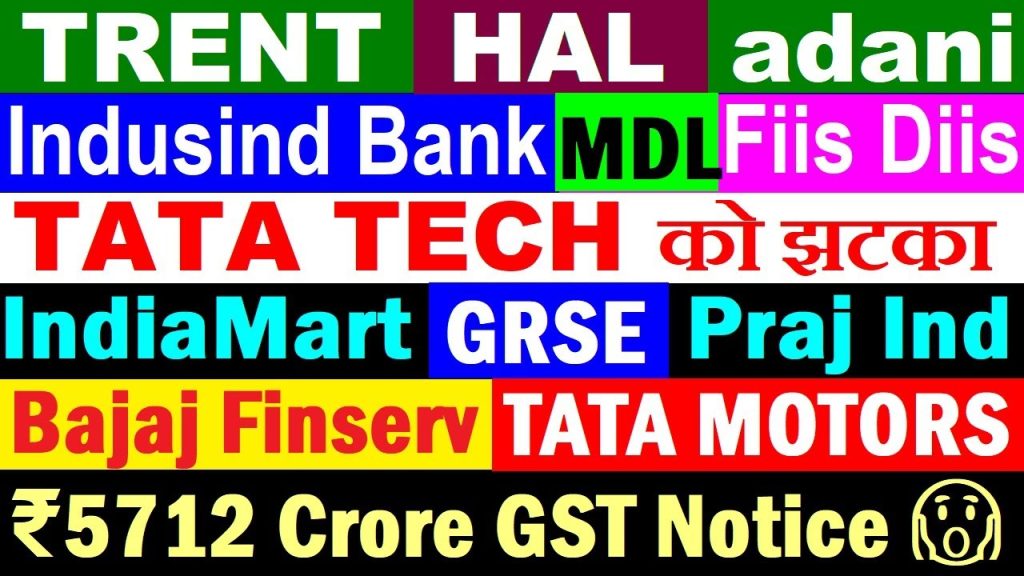
India’s corporate sector is a dynamic ecosystem, pulsating with financial updates, market shifts, and strategic decisions that shape investor sentiment and economic trajectories. From robust revenue growth to unforeseen challenges, companies across industries are navigating a complex landscape. This article delves into the latest developments in prominent Indian firms, including Praj Industries, IndiaMart, Bajaj Finserv, Trent, Adani Group, Tata Technologies, IndusInd Bank, and more. By exploring their financial performances, market reactions, and strategic initiatives, we provide actionable insights for investors and enthusiasts alike. With a focus on clarity and depth, this 3,500-word guide aims to outrank existing content by offering a comprehensive, SEO-optimized narrative.
Praj Industries: Navigating Margin Pressures in Ethanol Excellence
Praj Industries, a leader in ethanol plant installations, has long been a cornerstone of India’s renewable energy sector. However, its recent financial performance reveals challenges that warrant close scrutiny.
Quarterly Performance: A Tale of Declining Margins
In its latest quarterly results, Praj Industries reported a topline revenue of ₹860 crore, a slight uptick from ₹853 crore in the previous quarter but a significant drop from ₹1,000 crore year-over-year. This decline signals weaker demand or operational hurdles. Operating profit plummeted from ₹131 crore to ₹74 crore, aligning closely with the prior quarter’s ₹73 crore, indicating a flat performance. After accounting for expenses, the net profit stood at ₹40 crore, down sharply from ₹92 crore, reflecting a year-over-year decline of nearly 56.7%.
The earnings per share (EPS) mirrored this downturn, slipping to ₹2.17 from ₹5, underscoring both quarterly and annual setbacks. Rising costs and compressed margins are squeezing profitability, a trend investors must monitor.
Dividend Declaration: A Silver Lining
Despite financial headwinds, Praj Industries announced a final dividend of ₹6 per share, signaling confidence in its long-term cash flow generation. This move aims to reassure shareholders amid turbulent times, but the question remains: can Praj rebound from its margin woes?
Strategic Outlook
To regain momentum, Praj must optimize operational efficiencies and capitalize on India’s growing ethanol blending targets. Government policies promoting biofuels offer a tailwind, but execution will be key. Investors should watch for cost-cutting measures and new contract wins to gauge Praj’s recovery trajectory.
IndiaMart: Leveraging B2B Strength with a Boost from Other Income
IndiaMart, a dominant player in India’s B2B e-commerce space, continues to showcase resilience despite a flattish topline. Its unique business model and strategic financial maneuvers make it a compelling case study.
Financial Snapshot: Steady Revenue, Surging Profits
IndiaMart’s revenue grew marginally from ₹354 crore to ₹355 crore year-over-year, reflecting a stable but unremarkable topline. However, the company’s operating profit soared from ₹77 crore to ₹119 crore annually, though it dipped slightly from ₹124 crore quarter-over-quarter due to elevated expenses. The real highlight was the net profit after tax (NPAT), which skyrocketed from ₹100 crore to ₹181 crore, driven by a significant ₹109 crore in other income.
This extraordinary income stream, likely from investments or non-core activities, propelled the EPS from ₹16.61 to ₹30. While this jump is impressive, investors should note its reliance on non-recurring income, which may not sustain long-term growth.
Dividend Boost and Market Confidence
IndiaMart declared a generous ₹50 dividend, reinforcing its shareholder-friendly approach. This payout, combined with robust profit growth, underscores the company’s financial health and strategic foresight.
Future Prospects
IndiaMart’s B2B platform thrives on India’s digital transformation, connecting millions of buyers and sellers. To sustain growth, the company must diversify revenue streams and reduce dependence on other income. Expanding into new verticals or enhancing platform features could solidify its market leadership.
Bajaj Finserv: A Balanced Performer in Financial Services
As the parent company of Bajaj Finance, Bajaj Finserv is a titan in India’s financial services sector. Its recent performance reflects steady growth, underpinned by strategic diversification.
Financial Highlights: Consistent Growth
Bajaj Finserv reported a 14% year-over-year increase in both revenue and profit after tax, with the latter reaching ₹2,417 crore. This balanced performance highlights the company’s ability to scale operations while maintaining profitability. However, the ₹1 dividend declaration was modest compared to peers, possibly reflecting a cautious approach to capital allocation.
Market Positioning
Bajaj Finserv’s diversified portfolio, spanning lending, insurance, and wealth management, shields it from sector-specific risks. Its ability to sustain double-digit growth amid economic uncertainties is a testament to its robust business model.
Growth Catalysts
Looking ahead, Bajaj Finserv is well-positioned to capitalize on India’s rising credit demand and insurance penetration. Investments in digital infrastructure and customer-centric products will be critical to maintaining its competitive edge.
Trent: Retail Powerhouse with Mixed Fortunes
Trent, a Tata Group company, has transformed India’s retail landscape through brands like Westside and Zudio. Its recent financials paint a picture of strong revenue growth tempered by profit challenges.
Financial Performance: Revenue Soars, Profits Plummet
Trent’s revenue surged by 28% year-over-year, driven by Zudio’s meteoric rise and Westside’s steady performance. Earnings before interest, taxes, depreciation, and amortization (EBITDA) margins also exceeded expectations, reflecting operational efficiency. However, net profit plummeted by 55%, falling 56% year-over-year, aligning with market forecasts of a significant decline.
This profit drop stems from higher operating costs and investments in expansion, which have yet to yield proportional returns. Despite the setback, Trent’s stock spiked post-results, buoyed by optimism about its long-term growth.
Strategic Expansion
Zudio’s aggressive store rollout and Westside’s premium positioning are reshaping Trent’s market presence. The company’s ability to capture diverse consumer segments positions it as a retail leader, but cost management will be crucial to restoring profitability.
Investor Takeaway
Trent’s revenue momentum is undeniable, but profit recovery hinges on optimizing expenses and scaling new stores efficiently. Investors should monitor margin trends and same-store sales growth for signs of stabilization.
Adani Group: Clearing Controversies with Independent Reviews
The Adani Group, a conglomerate with interests in energy, infrastructure, and ports, has faced intense scrutiny following U.S. indictments. Recent developments offer clarity but leave questions unanswered.
Independent Review: No Irregularities Found
An independent review of Adani Green Energy found no irregularities, countering allegations of financial misconduct. While this outcome bolstered investor confidence, market reactions remained muted, suggesting lingering skepticism. Larger regulatory outcomes will likely dictate the group’s trajectory.
Market Implications
Adani’s ability to navigate controversies is critical to restoring trust. Transparent communication and robust governance will be essential to mitigating risks and sustaining growth.
Strategic Focus
Adani’s investments in renewable energy and infrastructure align with India’s long-term goals. Strengthening compliance frameworks and diversifying funding sources could shield the group from future volatility.
Tata Technologies: A Block Deal Shakeup
Tata Technologies, a key player in engineering and design services, faced market turbulence due to a significant stake sale.
Block Deal Impact
TPG, a major investor, offloaded a 3.95% stake (1.6 crore shares) worth approximately ₹1,100 crore through block deals. This move triggered a 6% stock price drop, reflecting investor concerns about large-scale exits. Such deals often signal short-term volatility, but Tata Technologies’ fundamentals remain strong.
Growth Trajectory
The company’s expertise in automotive and aerospace engineering positions it for growth, particularly in electric vehicle (EV) and autonomous driving technologies. Strategic partnerships and global expansion will drive long-term value.
Investor Guidance
While the block deal sparked selling pressure, Tata Technologies’ innovation-driven model offers resilience. Investors should focus on contract pipelines and margin trends to assess recovery potential.
IndusInd Bank: Leadership Shakeup Amid Derivative Losses
IndusInd Bank, a prominent private lender, grappled with reputational and financial challenges following a massive derivative loss.
CEO Resignation: A Moral Stand
The bank’s CEO resigned, citing moral responsibility for a ₹2,000 crore derivative loss. This debacle, coupled with a stock crash and lower circuit triggers, dented investor confidence. Questions about management integrity and governance have emerged, complicating recovery efforts.
Market Dynamics
IndusInd’s high CEO compensation and the scale of the loss amplify scrutiny. While financial losses can be recouped, reputational damage poses a longer-term challenge.
Path to Recovery
Restoring trust requires transparent communication, robust risk management, and a credible leadership transition. Investors should monitor regulatory updates and asset quality metrics for signs of stabilization.
FII and DII Activity: A Bullish Signal
Foreign Institutional Investors (FIIs) and Domestic Institutional Investors (DIIs) are fueling market optimism with sustained buying.
Buying Spree
On a recent trading day, DIIs purchased ₹1,369 crore worth of equities, while FIIs acquired ₹2,385.61 crore. This synchronized buying reflects confidence in India’s economic prospects, bolstered by a stabilizing U.S. dollar.
Currency Dynamics
The Indian rupee’s depreciation against the dollar, exacerbated by global economic shifts, has historically pressured FII flows. However, recent dollar stabilization has curbed panic selling, encouraging FII re-entry. Long-term rupee depreciation remains a structural reality, but short-term volatility appears contained.
Investment Implications
Sustained FII and DII buying signals a bullish market undertone. Investors should focus on sectors benefiting from institutional interest, such as financials, IT, and consumer goods.
GST Notices: Paytm’s Regulatory Woes
Paytm First Games, a subsidiary of Paytm, received a staggering ₹5,712 crore GST notice, echoing challenges faced by gaming firms like Delta Corp.
Regulatory Headwinds
The notice, tied to 28% GST on gaming and gambling, includes interest and penalties. Such disputes often escalate to courts, prolonging uncertainty. Paytm’s ability to navigate this regulatory maze will shape its financial health.
Strategic Response
Paytm must strengthen compliance and explore diversified revenue streams to mitigate regulatory risks. Transparent communication with stakeholders will be critical to maintaining trust.
Tata Motors: Fueling Growth with Fund Raising
Tata Motors, a leader in India’s automotive sector, is poised for expansion with a ₹500 crore fund-raising plan.
Capital Infusion
The board-approved plan, likely via securities, aims to bolster Tata Motors’ EV and commercial vehicle segments. This strategic move aligns with India’s electrification push and rising demand for sustainable mobility.
Market Potential
Tata Motors’ dominance in EVs, led by models like the Nexon EV, positions it for growth. Scaling production and enhancing charging infrastructure will be key to capitalizing on this opportunity.
Defense Sector: A Momentum-Driven Rally
India’s defense sector, including HAL, Mazagon Dock, Garden Reach Shipbuilders, and Cochin Shipyard, is witnessing a bullish run.
Key Drivers
Recent contract wins and government support for indigenous defense manufacturing are fueling momentum. Companies like Data Patterns are also benefiting from increased defense spending.
Investor Caution
While the sector offers trading opportunities, distinguishing between short-term momentum and long-term investment potential is critical. Volatility risks remain, and investors should align strategies with their risk tolerance.
Conclusion: Navigating India’s Corporate Maze
India’s corporate landscape in 2025 is a tapestry of opportunities and challenges. Praj Industries grapples with margin pressures, while IndiaMart leverages other income for growth. Bajaj Finserv and Trent showcase resilience, but Adani Group and IndusInd Bank face trust deficits. Tata Technologies and Tata Motors signal strategic ambition, while the defense sector rides a wave of momentum. FII and DII buying, coupled with regulatory developments like GST notices, adds layers of complexity.
For investors, the key lies in discerning signals from noise. Focus on companies with strong fundamentals, transparent governance, and alignment with India’s growth story. By staying informed and strategic, you can navigate this dynamic market with confidence.