Site icon Telangana NavaNirmana Sena

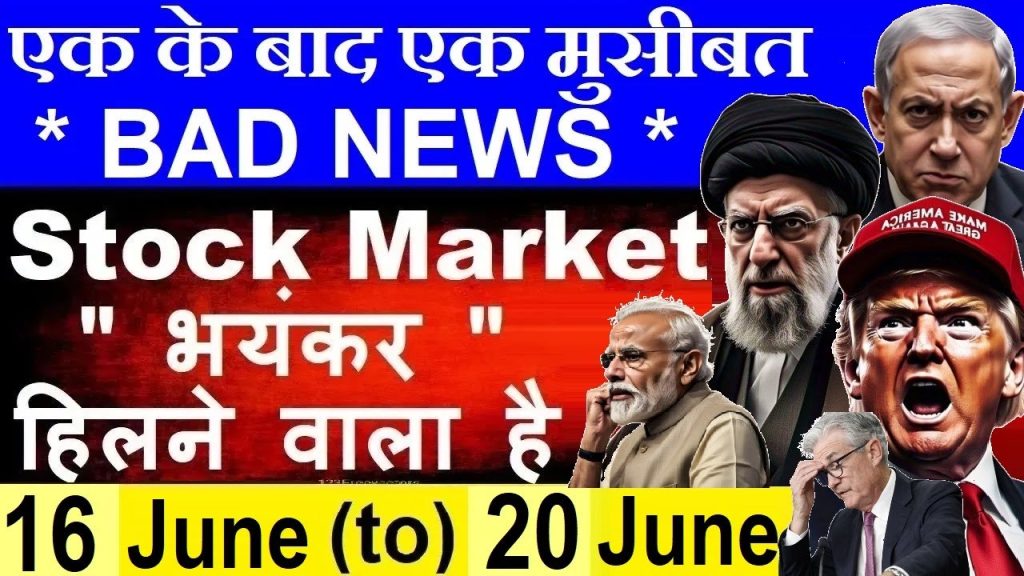
Stock Market Alert Anticipating Volatility on Dalal Street on June 15, 2025

Stock Market Outlook for June 15, 2025: Navigating Volatility on Dalal Street The stock market is a dynamic arena, often swayed by global events, economic policies, and investor sentiment. As we approach the week of June 15, 2025, Dalal Street braces for potential turbulence. From geopolitical tensions to critical economic triggers like the Federal Reserve’s upcoming meeting, multiple factors could shape market movements. This comprehensive guide dives into the key drivers, risks, and opportunities for investors and traders in the Indian stock market, offering actionable insights to navigate the volatility ahead. Understanding the Current Market Sentiment The Indian stock market has been on a rollercoaster ride, with recent sessions reflecting heightened volatility. Last week, the market witnessed a decline of approximately 1.5% over five trading days, driven by a mix of global and domestic pressures. The bears dominated the latter half of the week, capitalizing on negative news to pull indices down. Investors are now grappling with uncertainty, making it critical to understand the broader context. Why the Market Is Shaky The market’s recent performance highlights a tug-of-war between bullish and bearish forces. While the first three days of last week saw indices hovering above the 25,000 mark, the final two days brought sharp declines. Negative news, often amplified in bearish markets, tends to have a more immediate and severe impact than positive developments. This dynamic underscores a key investing principle: bearish momentum can be swift and brutal, while bullish recoveries require sustained effort. For long-term investors, this volatility reinforces the value of a disciplined approach. Short-term traders, however, may find opportunities in short-selling strategies, as markets tend to fall faster than they rise. The current environment, marked by uncertainty, favors those who can adapt quickly to changing conditions. Key Triggers for the Week Ahead Several critical events and factors are poised to influence the Indian stock market starting June 15, 2025. Let’s explore the most significant drivers. Federal Reserve’s FOMC Meeting: A Pivotal Moment The Federal Open Market Committee (FOMC) meeting on June 18, 2025, is the week’s most anticipated event. Investors worldwide are watching closely to see if the U.S. Federal Reserve will adjust interest rates. The Fed has maintained rates at 4.5% since December 2024, with no cuts in 2025 so far. Expectations are tempered, with a potential 25-basis-point cut to 4.25% under discussion, though a 50-basis-point reduction seems unlikely. Recent U.S. inflation data, which dropped to 2.4% against an expected 2.5%, aligns with the Fed’s 2% target. This could support a case for a rate cut, but Fed Chair Jerome Powell faces challenges. Geopolitical tensions, particularly in the Middle East, and potential tariff hikes under U.S. leadership could reignite inflation. Powell’s cautious approach reflects concerns that premature rate cuts could exacerbate price pressures, especially if crude oil prices surge. A rate cut could provide a temporary boost to global markets, including India’s, by improving liquidity and investor confidence. Conversely, if rates remain unchanged, markets may react negatively, particularly if Powell cites geopolitical risks or inflationary pressures as reasons for inaction. Geopolitical Tensions and Crude Oil Prices Geopolitical developments, particularly in the Middle East, are adding uncertainty. Recent escalations between Israel and Iran have heightened fears of a broader conflict, pushing crude oil prices up by 7-8% in a single week. For India, a net oil importer, rising crude prices pose a significant risk. Higher oil costs increase input prices, fuel inflation, and strain the trade balance, all of which can pressure the stock market. The Indian market is particularly sensitive to crude oil fluctuations. A sustained rise in oil prices could lead to increased selling by foreign institutional investors (FIIs), who may redirect capital to safer assets. Domestic institutional investors (DIIs), however, have been a stabilizing force, consistently buying despite FII outflows. Their resilience has prevented deeper market corrections, but the extent of their capacity to absorb selling pressure remains a key question. Trump’s Tariff Threats and Global Trade U.S. leadership’s aggressive trade policies, particularly tariff threats, continue to create ripples across global markets. Recent announcements suggest new tariffs could be imposed on multiple countries, with a 90-day extension set to expire in early July 2025. These tariffs aim to pressure nations into trade negotiations, but they also risk disrupting global supply chains and increasing costs. For India, tariff hikes could impact export-driven sectors like IT, pharmaceuticals, and textiles. Additionally, retaliatory measures from other nations, such as China’s restrictions on rare earth metal exports, could exacerbate supply chain challenges. The uncertainty surrounding these policies is keeping markets in a range-bound state, with neither significant rallies nor deep corrections. GST Council Meeting: Potential Relief for Insurance Stocks The upcoming GST Council meeting could bring positive developments for the insurance sector. Proposals to reduce GST on insurance products, particularly term insurance and policies for senior citizens, are under consideration. If implemented, these changes could boost demand for insurance products, benefiting companies like HDFC Life and ICICI Prudential Life. Investors should monitor updates from the GST Council, as tax reductions could trigger a rally in insurance stocks. However, the council’s final decision will depend on fiscal priorities and economic conditions. IPO Market: Opportunities on the Horizon The primary market is heating up, with several high-profile initial public offerings (IPOs) expected in the coming weeks. Notably, HDB Financial Services is generating buzz, with potential to attract significant investor interest. IPOs often create short-term trading opportunities, but investors should exercise caution, conducting thorough due diligence to assess valuations and growth prospects. Sector-Specific Insights Certain sectors are likely to be in focus during the week of June 15, 2025, driven by macroeconomic and geopolitical developments. Gold and Precious Metals: A Safe Haven Gold prices have surged to ₹102,400 in some Indian cities, reflecting its status as a safe-haven asset amid geopolitical uncertainty. As tensions in the Middle East persist, gold is expected to maintain its upward trajectory. Investors may consider gold-related stocks or exchange-traded funds (ETFs) to capitalize on this trend. Oil and Gas: Under Pressure Rising crude oil prices are a double-edged sword. While oil marketing companies (OMCs) like BPCL and IOCL may face margin pressure due to higher input costs, upstream companies like ONGC could benefit from elevated prices. Investors should weigh these dynamics when evaluating oil and gas stocks. Currency Markets: Rupee Under Strain The Indian rupee has weakened against the U.S. dollar, driven by a strengthening dollar index and rising crude oil prices. A weaker rupee increases import costs, particularly for oil, and could prompt FIIs to sell Indian equities. However, export-oriented sectors like IT and pharmaceuticals may benefit from a depreciating rupee. Cryptocurrency: Bitcoin’s Struggles Bitcoin, trading around $15,000, continues to face bearish pressure. The cryptocurrency market is highly sensitive to global risk sentiment, and current uncertainties are keeping investors cautious. Traders should monitor key support levels, such as $15,000, for potential trading opportunities. Trading and Investment Strategies for the Week Navigating the stock market in a volatile environment requires a strategic approach. Here are tailored strategies for different types of market participants. For Long-Term Investors Long-term investors should focus on quality stocks with strong fundamentals. Sectors like IT, pharmaceuticals, and consumer goods are likely to remain resilient despite short-term volatility. Diversifying across asset classes, including gold and fixed-income securities, can mitigate risks. Additionally, staying invested through market dips and avoiding panic selling is crucial for long-term wealth creation. For Short-Term Traders Traders can capitalize on volatility by employing short-selling strategies during bearish phases. Technical analysis, particularly monitoring support levels like 24,500 on the Nifty 50, can help identify entry and exit points. Options trading, especially around key events like the FOMC meeting, offers opportunities to profit from price swings. Risk Management Regardless of strategy, risk management is paramount. Setting stop-loss orders, diversifying portfolios, and avoiding over-leverage can protect against unexpected market moves. Staying informed about global developments and their potential impact on Indian markets is essential for making informed decisions. Technical Analysis: Key Levels to Watch From a technical perspective, the Nifty 50 is at a critical juncture. The index recently breached the 24,500 level, signaling potential bearish dominance. If this level holds as resistance, further declines toward 24,000 or lower are possible. Conversely, a breakout above 25,000 could indicate a bullish reversal, though current sentiment makes this less likely. The Sensex, similarly, is testing key support levels. Traders should watch moving averages (50-day and 200-day) and relative strength index (RSI) for signs of oversold or overbought conditions. Volume analysis will also provide clues about the strength of any breakout or breakdown. The Bigger Picture: Navigating Uncertainty The week of June 15, 2025, is shaping up to be a challenging one for Dalal Street. Geopolitical risks, U.S. monetary policy, and domestic economic developments will drive market sentiment. While bears currently hold the upper hand, unexpected positive developments—such as a Fed rate cut or de-escalation of global tensions—could shift momentum toward the bulls. Investors and traders must stay agile, leveraging both fundamental and technical analysis to navigate the uncertainty. By focusing on quality investments, managing risks, and staying informed, market participants can position themselves for success in this volatile environment. Conclusion: Preparing for the Week Ahead As we head into the week of June 15, 2025, the Indian stock market faces a confluence of challenges and opportunities. The FOMC meeting, geopolitical developments, and domestic policy decisions will shape market dynamics. While volatility may test investor patience, it also creates opportunities for those who are prepared. Stay updated on key events, monitor critical technical levels, and align your strategy with your risk tolerance and investment horizon. Whether you’re a long-term investor or a short-term trader, a disciplined approach will be your greatest asset in navigating the turbulent waters of Dalal Street. For more insights and updates, subscribe to our channel and follow our free stock market classes to deepen your understanding of market dynamics. Let’s tackle the week ahead with confidence and clarity!

The stock market is a dynamic arena, often swayed by global events, economic policies, and investor sentiment. As we approach the week of June 15, 2025, Dalal Street braces for potential turbulence. From geopolitical tensions to critical economic triggers like the Federal Reserve’s upcoming meeting, multiple factors could shape market movements. This comprehensive guide dives into the key drivers, risks, and opportunities for investors and traders in the Indian stock market, offering actionable insights to navigate the volatility ahead.

Understanding the Current Market Sentiment

The Indian stock market has been on a rollercoaster ride, with recent sessions reflecting heightened volatility. Last week, the market witnessed a decline of approximately 1.5% over five trading days, driven by a mix of global and domestic pressures. The bears dominated the latter half of the week, capitalizing on negative news to pull indices down. Investors are now grappling with uncertainty, making it critical to understand the broader context.

Why the Market Is Shaky

The market’s recent performance highlights a tug-of-war between bullish and bearish forces. While the first three days of last week saw indices hovering above the 25,000 mark, the final two days brought sharp declines. Negative news, often amplified in bearish markets, tends to have a more immediate and severe impact than positive developments. This dynamic underscores a key investing principle: bearish momentum can be swift and brutal, while bullish recoveries require sustained effort.

For long-term investors, this volatility reinforces the value of a disciplined approach. Short-term traders, however, may find opportunities in short-selling strategies, as markets tend to fall faster than they rise. The current environment, marked by uncertainty, favors those who can adapt quickly to changing conditions.

Key Triggers for the Week Ahead

Several critical events and factors are poised to influence the Indian stock market starting June 15, 2025. Let’s explore the most significant drivers.

Federal Reserve’s FOMC Meeting: A Pivotal Moment

The Federal Open Market Committee (FOMC) meeting on June 18, 2025, is the week’s most anticipated event. Investors worldwide are watching closely to see if the U.S. Federal Reserve will adjust interest rates. The Fed has maintained rates at 4.5% since December 2024, with no cuts in 2025 so far. Expectations are tempered, with a potential 25-basis-point cut to 4.25% under discussion, though a 50-basis-point reduction seems unlikely.

Recent U.S. inflation data, which dropped to 2.4% against an expected 2.5%, aligns with the Fed’s 2% target. This could support a case for a rate cut, but Fed Chair Jerome Powell faces challenges. Geopolitical tensions, particularly in the Middle East, and potential tariff hikes under U.S. leadership could reignite inflation. Powell’s cautious approach reflects concerns that premature rate cuts could exacerbate price pressures, especially if crude oil prices surge.

A rate cut could provide a temporary boost to global markets, including India’s, by improving liquidity and investor confidence. Conversely, if rates remain unchanged, markets may react negatively, particularly if Powell cites geopolitical risks or inflationary pressures as reasons for inaction.

Geopolitical Tensions and Crude Oil Prices

Geopolitical developments, particularly in the Middle East, are adding uncertainty. Recent escalations between Israel and Iran have heightened fears of a broader conflict, pushing crude oil prices up by 7-8% in a single week. For India, a net oil importer, rising crude prices pose a significant risk. Higher oil costs increase input prices, fuel inflation, and strain the trade balance, all of which can pressure the stock market.

The Indian market is particularly sensitive to crude oil fluctuations. A sustained rise in oil prices could lead to increased selling by foreign institutional investors (FIIs), who may redirect capital to safer assets. Domestic institutional investors (DIIs), however, have been a stabilizing force, consistently buying despite FII outflows. Their resilience has prevented deeper market corrections, but the extent of their capacity to absorb selling pressure remains a key question.

Trump’s Tariff Threats and Global Trade

U.S. leadership’s aggressive trade policies, particularly tariff threats, continue to create ripples across global markets. Recent announcements suggest new tariffs could be imposed on multiple countries, with a 90-day extension set to expire in early July 2025. These tariffs aim to pressure nations into trade negotiations, but they also risk disrupting global supply chains and increasing costs.

For India, tariff hikes could impact export-driven sectors like IT, pharmaceuticals, and textiles. Additionally, retaliatory measures from other nations, such as China’s restrictions on rare earth metal exports, could exacerbate supply chain challenges. The uncertainty surrounding these policies is keeping markets in a range-bound state, with neither significant rallies nor deep corrections.

GST Council Meeting: Potential Relief for Insurance Stocks

The upcoming GST Council meeting could bring positive developments for the insurance sector. Proposals to reduce GST on insurance products, particularly term insurance and policies for senior citizens, are under consideration. If implemented, these changes could boost demand for insurance products, benefiting companies like HDFC Life and ICICI Prudential Life.

Investors should monitor updates from the GST Council, as tax reductions could trigger a rally in insurance stocks. However, the council’s final decision will depend on fiscal priorities and economic conditions.

IPO Market: Opportunities on the Horizon

The primary market is heating up, with several high-profile initial public offerings (IPOs) expected in the coming weeks. Notably, HDB Financial Services is generating buzz, with potential to attract significant investor interest. IPOs often create short-term trading opportunities, but investors should exercise caution, conducting thorough due diligence to assess valuations and growth prospects.

Sector-Specific Insights

Certain sectors are likely to be in focus during the week of June 15, 2025, driven by macroeconomic and geopolitical developments.

Gold and Precious Metals: A Safe Haven

Gold prices have surged to ₹102,400 in some Indian cities, reflecting its status as a safe-haven asset amid geopolitical uncertainty. As tensions in the Middle East persist, gold is expected to maintain its upward trajectory. Investors may consider gold-related stocks or exchange-traded funds (ETFs) to capitalize on this trend.

Oil and Gas: Under Pressure

Rising crude oil prices are a double-edged sword. While oil marketing companies (OMCs) like BPCL and IOCL may face margin pressure due to higher input costs, upstream companies like ONGC could benefit from elevated prices. Investors should weigh these dynamics when evaluating oil and gas stocks.

Currency Markets: Rupee Under Strain

The Indian rupee has weakened against the U.S. dollar, driven by a strengthening dollar index and rising crude oil prices. A weaker rupee increases import costs, particularly for oil, and could prompt FIIs to sell Indian equities. However, export-oriented sectors like IT and pharmaceuticals may benefit from a depreciating rupee.

Cryptocurrency: Bitcoin’s Struggles

Bitcoin, trading around $15,000, continues to face bearish pressure. The cryptocurrency market is highly sensitive to global risk sentiment, and current uncertainties are keeping investors cautious. Traders should monitor key support levels, such as $15,000, for potential trading opportunities.

Trading and Investment Strategies for the Week

Navigating the stock market in a volatile environment requires a strategic approach. Here are tailored strategies for different types of market participants.

For Long-Term Investors

Long-term investors should focus on quality stocks with strong fundamentals. Sectors like IT, pharmaceuticals, and consumer goods are likely to remain resilient despite short-term volatility. Diversifying across asset classes, including gold and fixed-income securities, can mitigate risks. Additionally, staying invested through market dips and avoiding panic selling is crucial for long-term wealth creation.

For Short-Term Traders

Traders can capitalize on volatility by employing short-selling strategies during bearish phases. Technical analysis, particularly monitoring support levels like 24,500 on the Nifty 50, can help identify entry and exit points. Options trading, especially around key events like the FOMC meeting, offers opportunities to profit from price swings.

Risk Management

Regardless of strategy, risk management is paramount. Setting stop-loss orders, diversifying portfolios, and avoiding over-leverage can protect against unexpected market moves. Staying informed about global developments and their potential impact on Indian markets is essential for making informed decisions.

Technical Analysis: Key Levels to Watch

From a technical perspective, the Nifty 50 is at a critical juncture. The index recently breached the 24,500 level, signaling potential bearish dominance. If this level holds as resistance, further declines toward 24,000 or lower are possible. Conversely, a breakout above 25,000 could indicate a bullish reversal, though current sentiment makes this less likely.

The Sensex, similarly, is testing key support levels. Traders should watch moving averages (50-day and 200-day) and relative strength index (RSI) for signs of oversold or overbought conditions. Volume analysis will also provide clues about the strength of any breakout or breakdown.

The Bigger Picture: Navigating Uncertainty

The week of June 15, 2025, is shaping up to be a challenging one for Dalal Street. Geopolitical risks, U.S. monetary policy, and domestic economic developments will drive market sentiment. While bears currently hold the upper hand, unexpected positive developments—such as a Fed rate cut or de-escalation of global tensions—could shift momentum toward the bulls.

Investors and traders must stay agile, leveraging both fundamental and technical analysis to navigate the uncertainty. By focusing on quality investments, managing risks, and staying informed, market participants can position themselves for success in this volatile environment.

Conclusion: Preparing for the Week Ahead

As we head into the week of June 15, 2025, the Indian stock market faces a confluence of challenges and opportunities. The FOMC meeting, geopolitical developments, and domestic policy decisions will shape market dynamics. While volatility may test investor patience, it also creates opportunities for those who are prepared.

Stay updated on key events, monitor critical technical levels, and align your strategy with your risk tolerance and investment horizon. Whether you’re a long-term investor or a short-term trader, a disciplined approach will be your greatest asset in navigating the turbulent waters of Dalal Street.

For more insights and updates, subscribe to our channel and follow our free stock market classes to deepen your understanding of market dynamics. Let’s tackle the week ahead with confidence and clarity!

Exit mobile version