


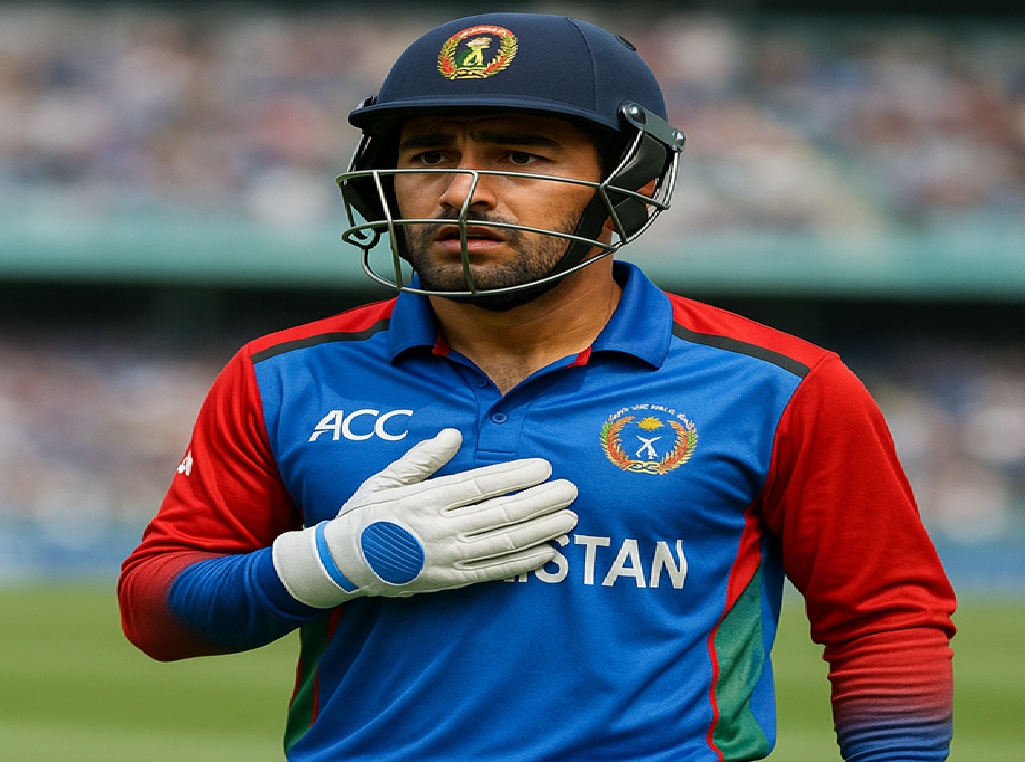
Afghanistan wicketkeeper-batsman Rahmanullah Gurbaz finds himself at the center of intense scrutiny as his prolonged batting slump continues to haunt the team during their crucial Asia Cup 2025 campaign. Despite registering disappointing numbers throughout 2025, the 23-year-old remains indispensable to Afghanistan’s playing eleven, primarily due to the team’s limited bench strength and his proven track record against Sri Lanka. As Afghanistan prepares for their must-win encounter against Sri Lanka at Abu Dhabi’s Sheikh Zayed Stadium, the decision to persist with Gurbaz reflects both tactical necessity and strategic hope for redemption.


Afghanistan’s struggling opener Rahmanullah Gurbaz facing form crisis
Rahmanullah Gurbaz’s 2025 Form Crisis: A Statistical Breakdown
The Afghanistan opener’s batting statistics paint a concerning picture throughout 2025, marking one of the most challenging phases of his international career. Gurbaz’s form decline began early in the year and has persisted across multiple tournaments, raising questions about his technique and mental approach.


Rahmanullah Gurbaz’s 2025 Performance Crisis Across Different Tournaments
Tournament-wise Performance Analysis for 2025:
- ILT20: Managed only 7 runs in 3 innings with a dismal average of 2.33
- Champions Trophy (ODI format): Scored 16 runs across limited appearances
- IPL 2025 with Kolkata Knight Riders: 74 runs in 5 innings at an average of 14.8
- UAE Tri-series: 98 runs in 5 matches with an average of 19.60
- Asia Cup 2025: 43 runs in 2 innings at 21.50 average so far
The most alarming aspect of Gurbaz’s struggles is the consistency of his poor performances across different formats and conditions. Since the 2024 T20 World Cup, he has not scored a fifty in 10 T20I matches, recording five single-digit scores including two ducks during this period. This represents a significant departure from his earlier form, where he had established himself as one of Afghanistan’s most reliable match-winners.
Career Context and Previous Success:
Despite his current struggles, Gurbaz remains one of Afghanistan’s most accomplished T20I batsmen with 1,824 runs in 73 matches at a strike rate of 132.26, including one century and 10 fifties. His ability to provide explosive starts and anchor innings when needed has been crucial to Afghanistan’s recent success, particularly their historic T20 World Cup semi-final run in 2024.
Afghanistan’s Limited Bench Strength: The Tactical Dilemma
Afghanistan’s decision to persist with Gurbaz stems largely from their inadequate batting reserves, which severely limits the team management’s options for making changes to the playing eleven.
Available Batting Alternatives:
Darwish Rasooli: The middle-order batsman has 13 T20I appearances but has struggled to make a meaningful impact since his debut in 2022. Despite being earmarked as a potential solution to Afghanistan’s batting depth issues, Rasooli has failed to capitalize on opportunities and remains a work in progress.
Mohammad Ishaq: The reserve wicketkeeper has played only 6 T20Is with limited success, scoring 76 runs in 5 matches. At just 19 years old, Ishaq represents potential rather than proven capability, making him a risky option for high-pressure situations.
The Strategic Risk of Changes:
Afghanistan’s coaching staff faces a critical decision-making challenge in their must-win clash against Sri Lanka. Dropping Gurbaz for inexperienced alternatives could prove catastrophic for several reasons:
- Loss of Experience: Gurbaz’s 73 T20I matches provide invaluable experience in pressure situations
- Wicketkeeping Disruption: Changing the keeper can affect team balance and fielding coordination
- Psychological Impact: Dropping a senior player might signal panic and affect team morale
- Limited Upside: Neither Rasooli nor Ishaq offers guaranteed improvement in performance
Jonathan Trott’s Coaching Philosophy:
Since taking over as head coach in 2022, Jonathan Trott has emphasized consistency in team selection and backing players through difficult phases. This approach has generally served Afghanistan well, contributing to their improved performances in major tournaments. The decision to stick with Gurbaz aligns with this philosophy of supporting experienced players through form slumps.
Gurbaz’s Historical Success Against Sri Lanka: The Redemption Opportunity
Despite his current struggles, Gurbaz possesses an outstanding record against Sri Lanka that provides legitimate grounds for optimism ahead of their Asia Cup encounter.
Statistical Dominance Against Sri Lanka:
| Criterion | Statistics |
|---|---|
| Innings | 6 |
| Runs | 248 |
| Average | 41.33 |
| Strike Rate | 172.22 |
| Boundaries | 19 fours, 14 sixes |
| Fifties | 2 |
These numbers represent Gurbaz at his devastating best, showcasing his ability to dominate Sri Lankan bowling attacks with aggressive stroke-play and intelligent shot selection. His strike rate of 172.22 against Sri Lanka significantly exceeds his overall T20I strike rate, indicating a particular comfort level against their bowling unit.
Venue-Specific Advantages:
Sheikh Zayed Stadium in Abu Dhabi has historically been a favorable venue for Gurbaz, where he has scored 231 runs in 11 T20I innings with a strike rate of 135.08, including at least one half-century. This venue familiarity, combined with his success against Sri Lankan bowling, creates a convergence of positive factors that could catalyze his return to form.

Sheikh Zayed Stadium’s challenging conditions for batsmen in Asia Cup
Sheikh Zayed Stadium Pitch Conditions: Tactical Implications
The pitch conditions at Abu Dhabi’s Sheikh Zayed Stadium present both challenges and opportunities for Gurbaz’s redemption quest, requiring tactical adjustments to his batting approach.
Pitch Characteristics and Bowling Conditions:
- Slow and Low Surface: The pitch offers minimal bounce and pace, making stroke-play challenging as the match progresses
- Spinner-Friendly Conditions: The surface provides significant assistance to spinners, particularly in the middle and death overs
- Dew Factor: Evening matches often witness dew formation, which can aid batting in the second innings by making the ball skid through
- Boundary Dimensions: Larger boundaries compared to Sharjah require proper timing and placement rather than pure power
Strategic Adjustments Required:
Patience Over Aggression: Gurbaz’s tendency to seek boundaries from the first ball must be curtailed on Abu Dhabi’s slow surface. The pitch demands initial consolidation before acceleration.
Strike Rotation Focus: Rather than attempting big shots consistently, rotating strike against Sri Lankan spinners will prevent bowlers from settling into consistent line and length.
Selective Shot Selection: The absence of true bounce means mistimed shots carry greater risk. Gurbaz must identify scoring opportunities carefully rather than forcing the pace.
Afghanistan’s Spin-Heavy Strategy: Batting Dependencies
Afghanistan’s bowling strength creates additional pressure on their batting unit, making Gurbaz’s contribution even more critical to team balance and match strategy.
Bowling Unit Strengths:
- Rashid Khan: The captain and world’s premier T20 leg-spinner provides match-winning capabilities
- Noor Ahmad: Left-arm wrist-spinner offers different angles and variations
- Mujeeb ur Rahman: Off-spinner with mystery variations and powerplay control
- Allah Ghazanfar: Promising young leg-spinner providing depth and options
Batting Pressure Points:
With such a formidable bowling attack, Afghanistan often needs modest totals to defend successfully. However, their batting depth remains questionable beyond the top four, creating additional responsibility for Gurbaz to provide substantial contributions at the top of the order.
All-Rounder Dependencies:
Afghanistan’s middle-order comprises all-rounders rather than specialist batsmen: Mohammad Nabi, Azmatullah Omarzai, Karim Janat, and Rashid Khan. While this provides balance, it also means genuine batting depth is limited, making top-order contributions from Gurbaz essential for competitive totals.
Technical Analysis: What Gurbaz Must Change
Cricket analysts and former players have identified specific technical and tactical adjustments that could help Gurbaz rediscover his form during the crucial Sri Lanka encounter.
Primary Technical Issues:
Over-Aggressive Approach: Gurbaz’s instinct to attack every delivery has led to frequent dismissals in 2025. His approach of dancing down the track repeatedly proves ineffective on slow UAE pitches.
Shot Selection Problems: Attempting big shots against disciplined bowling on slow surfaces has resulted in mistimed attempts and caught dismissals.
Pressure of Expectations: As Afghanistan’s designated powerplay aggressor, Gurbaz feels compelled to score quickly, leading to rushed shot attempts and technical breakdown.
Recommended Tactical Adjustments:
Build Innings Foundation: Rather than seeking boundaries immediately, Gurbaz should focus on singles and doubles to establish rhythm and confidence
Target Specific Bowlers: Identify weaker Sri Lankan bowlers and capitalize on their deliveries while respecting quality spinners like Wanindu Hasaranga.
Utilize Field Placements: Work gaps in the field systematically rather than attempting to clear defensive positions consistently.
Mental Approach Reset: Value wicket preservation over strike rate, understanding that a settled Gurbaz poses greater threat to opponents
Sri Lanka’s Bowling Strategy: Countering Gurbaz’s Strengths
Sri Lanka’s bowling unit will likely employ specific tactics to exploit Gurbaz’s current vulnerabilities while nullifying his historical success against them.
Expected Sri Lankan Bowling Approach:
Disciplined Line and Length: Avoid providing width or length balls that Gurbaz can capitalize on for boundaries.
Spin-Heavy Attack: Deploy Wanindu Hasaranga and other spinners early to challenge Gurbaz on the slow Abu Dhabi surface.
Fielding Adjustments: Set defensive fields to cut off Gurbaz’s favorite scoring areas and force him into unfamiliar shot selections.
Pressure Through Dot Balls: Create scoreboard pressure by restricting runs and forcing Gurbaz into risky shot attempts.
Afghanistan’s Qualification Scenario: The Stakes
The Sri Lanka encounter represents a do-or-die situation for Afghanistan, with their Asia Cup campaign and reputation hanging in the balance.
Current Group B Standings:
- Sri Lanka: 4 points (2 wins, unbeaten)
- Bangladesh: 4 points (2 wins, 1 loss, completed fixtures)
- Afghanistan: 2 points (1 win, 1 loss)
Qualification Mathematics:
Afghanistan Win: Creates a three-way tie on 4 points, where Afghanistan’s superior net run rate (+2.150) would likely ensure qualification over Bangladesh (-0.270).
Afghanistan Loss: Immediate elimination regardless of margin, ending their Asia Cup campaign.
Sri Lanka Position: Even with a loss, Sri Lanka’s strong net run rate (+1.546) makes qualification likely unless they suffer a massive defeat.
This scenario places enormous pressure on Afghanistan’s batting unit, making Gurbaz’s contribution potentially decisive for their tournament survival.
Alternative Strategies: If Gurbaz Fails Again
Should Gurbaz continue struggling against Sri Lanka, Afghanistan must have contingency plans for future matches and tournaments.
Short-term Adjustments:
Batting Position Change: Consider moving Gurbaz down the order to reduce powerplay pressure while promoting Ibrahim Zadran or Sediqullah Atal.
Role Modification: Transform Gurbaz into a finisher rather than opener, utilizing his power-hitting in death overs.
Wicketkeeping Rotation: Trial Mohammad Ishaq as keeper while maintaining Gurbaz as specialist batsman.
Long-term Development:
Domestic Circuit Focus: Extended participation in franchise leagues to regain confidence and technique.
Technical Coaching: Specialized coaching for slow surface batting and patience development.
Mental Conditioning: Sports psychology support to handle pressure and expectations.
The Broader Context: Afghanistan’s Cricket Evolution
Afghanistan’s approach to the Gurbaz situation reflects their evolution from underdogs to established competitors in international cricket.
Historical Perspective:
Afghanistan’s rise in T20 cricket has been built around individual brilliance rather than systematic depth. Players like Rashid Khan, Mohammad Nabi, and Gurbaz have carried the team through crucial moments, creating dependence on star performers.
Future Development Needs:
Batting Depth: Afghanistan must develop specialist batsmen to reduce over-reliance on all-rounders.
Bench Strength: Improved domestic structure to produce ready alternatives for international cricket.
Technical Support: Enhanced coaching infrastructure to help players adapt to different conditions.
Expert Opinions and Strategic Recommendations
Cricket analysts and former Afghanistan players have offered varied perspectives on the Gurbaz situation, reflecting the complexity of the decision.
Arguments for Persisting with Gurbaz:
- Proven track record against Sri Lanka provides realistic hope
- Lack of viable alternatives makes change potentially counterproductive
- Experience and leadership qualities valuable in pressure situations
- Technical ability remains intact despite poor form
Arguments for Making Changes:
- Extended poor form suggests deeper issues requiring time to resolve
- Fresh approach might surprise opponents and energize team
- Reduced pressure on bench players could yield positive results
- Strategic flexibility important for tournament progression
Conclusion: The Calculated Risk
Afghanistan’s decision to persist with Rahmanullah Gurbaz represents a calculated risk based on strategic necessity rather than blind faith. The combination of limited alternatives, historical success against Sri Lanka, and favorable venue conditions creates a convergence of factors that justify the selection despite recent struggles.
The success of this strategy depends on:
- Gurbaz’s ability to implement tactical adjustments and show patience
- Team management’s support in reducing external pressure
- Sri Lankan bowling approach and their success in neutralizing his strengths
- Pitch conditions and their evolution throughout the match
Should Gurbaz rediscover his form against Sri Lanka, it could catalyze Afghanistan’s Asia Cup campaign and restore confidence in their batting unit. However, continued struggles would necessitate serious evaluation of team selection philosophy and development priorities for future tournaments.
The Sri Lanka encounter thus represents more than just a cricket match—it’s a defining moment for both Gurbaz’s career and Afghanistan’s tactical approach in high-pressure situations. The outcome will likely influence selection strategies, player development focuses, and the broader evolution of Afghanistan cricket’s competitive philosophy.