


Samvardhana Motherson International Limited (formerly Motherson Sumi Systems) delivered a mixed Q1 FY2026 performance that exemplifies the broader challenges facing the global automotive supply industry. While the company achieved revenue growth of 4.7% year-over-year to ₹30,212 crores, net profit declined dramatically by approximately 49% to ₹512 crores, highlighting the margin compression pressures affecting automotive suppliers worldwide. This performance underscores the complex dynamics of an industry undergoing fundamental transformation while grappling with stagnant volumes, geopolitical uncertainties, and the costly transition to electric mobility.


Samvardhana Motherson Financial Performance: Revenue Growth vs Profit Decline in Q1 FY2026
Financial Performance Analysis
Revenue Growth Amid Market Headwinds
Samvardhana Motherson’s Q1 FY2026 revenue of ₹30,212 crores represented a modest 4.7% year-over-year growth, surpassing the previous year’s Q1 figure of ₹28,868 crores. This growth occurred against a backdrop of challenging global automotive market conditions, where production volumes remained largely stagnant across major markets. The revenue increase was primarily driven by higher passenger vehicle production in India and China, along with contributions from the company’s integrated assemblies, vision systems, and emerging business divisions, including recent acquisitions such as Atsumitec.
The company’s diversified business portfolio across five key segments—Wiring Harness, Vision Systems, Modules & Polymer Products, Integrated Assemblies, and Emerging Businesses—provided resilience during this challenging period. The Modules & Polymer Products division, which encompasses the largest business line within Motherson, continued to demonstrate steady performance despite margin pressures in this segment.
Significant Profit Decline and Margin Compression
The most concerning aspect of Motherson’s Q1 results was the substantial decline in profitability. Net profit dropped from ₹994 crores in Q1 FY2025 to ₹512 crores in Q1 FY2026, representing a 48.5% year-over-year decrease. This dramatic profit erosion was accompanied by a compression in EBITDA margins from 9.6% to 8.1%, reflecting the broader industry trend of deteriorating profitability
The company’s profit margin fell from 3.80% in the previous year to 2.88% in Q1 FY2026, indicating significant operational pressure. This margin compression aligns with global industry patterns, where automotive suppliers are experiencing average EBIT margins of just 4.7% in 2024, down from 5.3% in 2023. The decline reflects multiple factors including inflation in raw materials, higher energy costs, increased labor expenses, and the substantial capital investments required for electric vehicle transition.

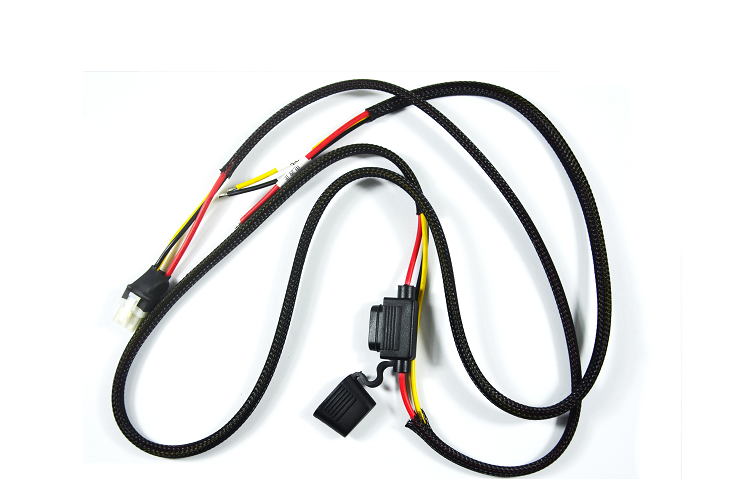
An automotive wiring harness with protective sleeving and connectors displayed against a white background
Industry Context and Global Challenges
The Era of “Stagformation” in Automotive Supply
The automotive supplier industry globally is experiencing what industry experts term “stagformation”—a combination of stagnant volume growth and the urgent need for fundamental business model transformation. This phenomenon has resulted in structural challenges that extend far beyond Motherson’s individual performance. Global automotive suppliers are facing an average profit margin of just 4.7% in 2024, marking a continued decline from pre-COVID levels that were typically 2 percentage points higher.
Regional variations in supplier performance reveal interesting patterns. Chinese suppliers lead with EBIT margins of 5.7%, while European suppliers lag at 3.6% and South Korean suppliers at 3.4%. North American suppliers, while performing better than their European counterparts, still face significant pressure from stagnant production volumes and slower-than-expected electric vehicle adoption.
Supply Chain Disruptions and Geopolitical Tensions
The automotive industry continues to grapple with supply chain vulnerabilities that emerged during the COVID-19 pandemic and have been exacerbated by geopolitical tensions. Trade wars between the United States, China, Mexico, and Canada are disrupting global automotive supply chain ecosystems, creating uncertainty for companies like Motherson that operate across 43 countries with over 400 facilities.
The ongoing conflict in Ukraine, tensions in Eastern Europe and the South China Sea, and escalating trade disputes have created a complex web of challenges for automotive suppliers. These geopolitical factors are forcing companies to reconsider their supply chain strategies, potentially leading to nearshoring and reshoring initiatives that could fundamentally reshape the industry’s global footprint.

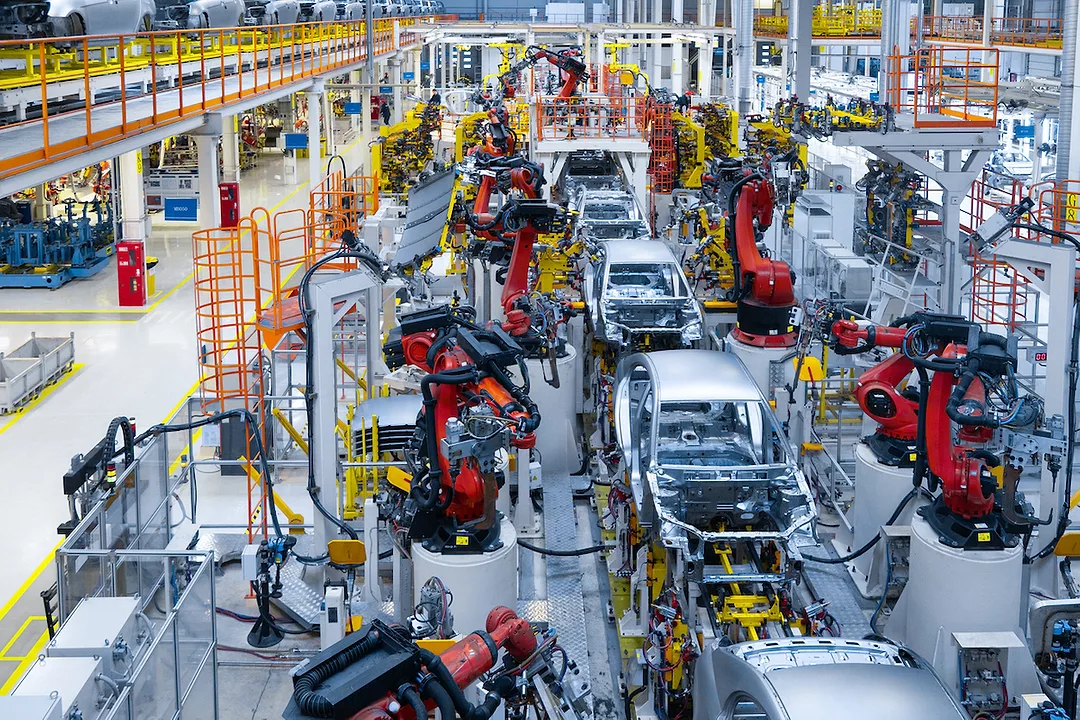
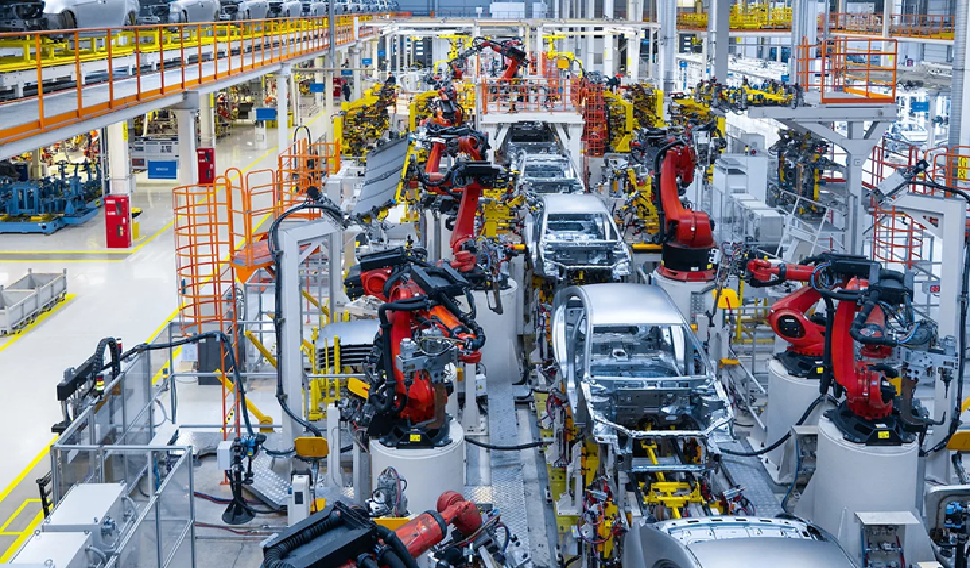
Robotic assembly line in a modern automotive factory illustrating advanced manufacturing automation
Electric Vehicle Transition and Strategic Investments
EV Business Growth and Future Potential
Despite current margin pressures, Motherson’s electric vehicle business segment shows promising growth trajectories. The company’s EV revenue currently contributes about 4% to its total revenue, but this segment experienced 50% year-over-year growth in recent quarters. The content value in EV programs is significantly higher than traditional internal combustion engine models, with EV wiring harnesses typically generating 1.5 times more revenue per vehicle.
Motherson’s three new greenfield projects are expected to contribute approximately 20% growth, with these facilities specifically designed to serve the expanding electric vehicle market. The company’s order book includes a significant proportion of pure electric vehicle programs, which jumped to 25% by the end of FY2021, indicating strong future potential.
Greenfield Investments and Capacity Expansion
The company’s strategic investment in greenfield projects represents a calculated bet on the future of automotive electrification. These new facilities are designed to manufacture high-voltage wire harnesses and advanced EV components, positioning Motherson to capitalize on the growing demand for electric vehicle systems. However, these investments are currently weighing on short-term profitability as the company incurs startup costs and operates below optimal utilization rates during the ramp-up phase.
The ramp-up of greenfield operations is expected to begin more meaningfully in the second half of FY2026, potentially providing significant growth momentum. This strategic patience reflects the company’s long-term orientation and confidence in the electric vehicle transition, despite the current margin pressures.globaldata

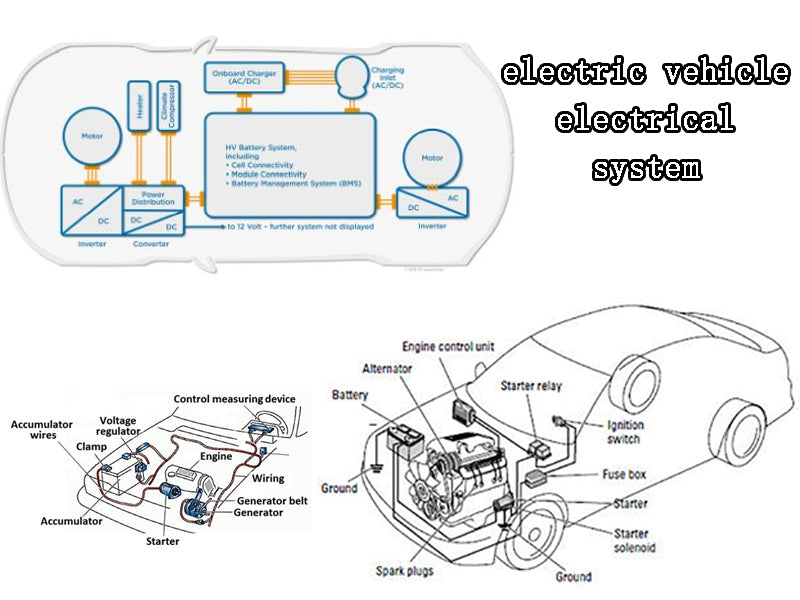
Schematic diagrams comparing electrical systems of an electric vehicle and traditional vehicle components
Global Market Position and Competitive Landscape
Ranking Among Global Automotive Suppliers
Samvardhana Motherson holds the 31st position among global automotive suppliers by revenue, with approximately €8.755 billion in automotive-related sales as of 2021. This positions the company as a significant player in the global automotive supply ecosystem, competing with industry giants such as Bosch (ranked 1st), Denso (2nd), Continental AG (3rd), and ZF Friedrichshafen (4th).
The company’s global footprint spans 43 countries with over 400 facilities and employs more than 190,000 professionals worldwide. This extensive international presence provides both advantages in terms of market access and customer proximity, as well as challenges related to managing diverse regulatory environments and geopolitical risks.
Customer Diversification and Market Exposure
Motherson serves nearly all major automotive original equipment manufacturers (OEMs) globally, with Daimler Group, Audi, and Volkswagen accounting for approximately 35% of revenues. This customer diversification provides some protection against individual OEM-specific challenges, though it also exposes the company to broader industry cyclicality.
The company’s revenue distribution shows significant global exposure, with nearly 90% of revenues generated outside India. Approximately half of revenues come from Germany, France, Spain, and the United States, reflecting the company’s strong presence in developed automotive markets.

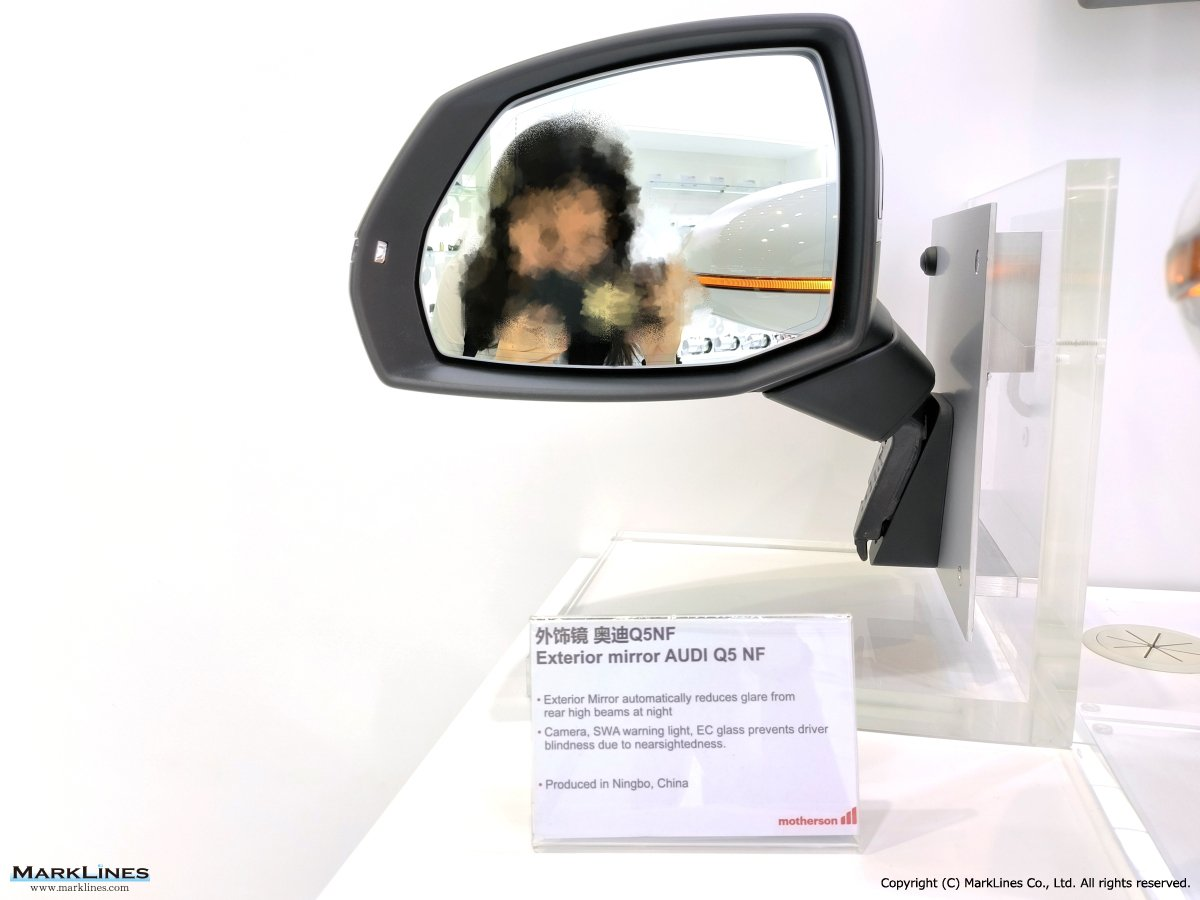
Exterior mirror of Audi Q5 NF with glare reduction and camera features by Motherson, produced in China
Sector-Specific Performance and Business Segments
Wiring Harness Division Leadership
The Wiring Harness division represents one of Motherson’s core strengths and most vertically integrated business units. Through its subsidiary Motherson Sumi Wiring India Limited (MSWIL), the company maintains over 40% market share in the Indian wiring harness industry. This division benefits from increasing content per vehicle trends, as modern vehicles require more sophisticated electrical systems to support advanced features and electronic components
The division’s performance is particularly relevant in the context of electric vehicle adoption, where wiring harnesses become even more critical due to high-voltage systems and increased electrical complexity. The company’s expertise in this area positions it well for the ongoing automotive electrification trend.
Vision Systems and Mirror Technology
Motherson’s Vision Systems division, operating through Samvardhana Motherson Reflectec (SMR), represents one of the leading global suppliers of rearview vision systems. This division manufactures interior mirrors, exterior mirrors, and camera-based detection systems for almost all major automotive OEMs worldwide.
The vision systems business benefits from increasing vehicle safety regulations and the growing adoption of advanced driver assistance systems (ADAS). As vehicles become more sophisticated and autonomous driving technologies advance, the demand for advanced vision systems is expected to grow significantly.
Modules and Polymer Products Diversification
The Modules and Polymer Products division encompasses the largest business line within Motherson, developing and producing a highly diversified product range from simple plastic parts to highly integrated systems and modules. This division operates 129 facilities across 26 countries and generated ₹499,118 million in revenue with an EBITDA margin of 8.6% for fiscal year 2024.
This division’s broad product portfolio includes interior components such as instrument panels, door panels, and center consoles, as well as exterior products including bumpers, front-end modules, and spoilers. The diversification within this segment provides resilience against specific product line challenges while capturing value across the entire vehicle
Industry Outlook and Future Growth Drivers
Indian Automotive Market Expansion
The Indian automotive market presents significant growth opportunities for Motherson, with the sector expected to reach USD 300 billion by 2026. The passenger vehicle segment alone is projected to grow at a compound annual growth rate (CAGR) of over 9% between 2022-2027, reaching USD 54.84 billion by 2027. This domestic growth provides a strong foundation for the company’s operations.
The Indian automotive component sector, which contributes 2.3% to GDP and employs 1.5 million people directly, grew at a CAGR of 8.63% from FY2016-FY2024. Exports reached USD 21.2 billion in FY2024 and are projected to reach USD 30 billion by 2026, indicating strong international demand for Indian automotive components.
Global Automotive Components Market Dynamics
The global automotive components market, valued at approximately USD 1.9 trillion in 2025, is projected to reach USD 2.78 trillion by 2033, growing at a CAGR of 4.89%. This growth is driven by increasing vehicle production, rising demand for electric vehicles, and growing content per vehicle as automotive technology advances
Regional market dynamics show varying growth patterns, with Asia Pacific markets, particularly China and India, driving the most significant volume growth. The Chinese automotive components market is expected to grow from USD 264 billion in 2021 to USD 517 billion by 2033, representing substantial opportunity for suppliers with Chinese operations.
Electric Vehicle Market Acceleration
The global electric vehicle market presents perhaps the most significant long-term growth opportunity for automotive suppliers. The EV market in India is expected to grow at a CAGR of 49% between 2022-2030, while the global EV market is projected to grow fivefold to USD 1.318 trillion by 2028.
Motherson’s strategic positioning in the EV supply chain, particularly through its wiring harness and electrical systems expertise, positions the company to capitalize on this transition. The company’s current EV order book and ongoing greenfield investments in EV-specific manufacturing capabilities demonstrate its commitment to this growth segment.

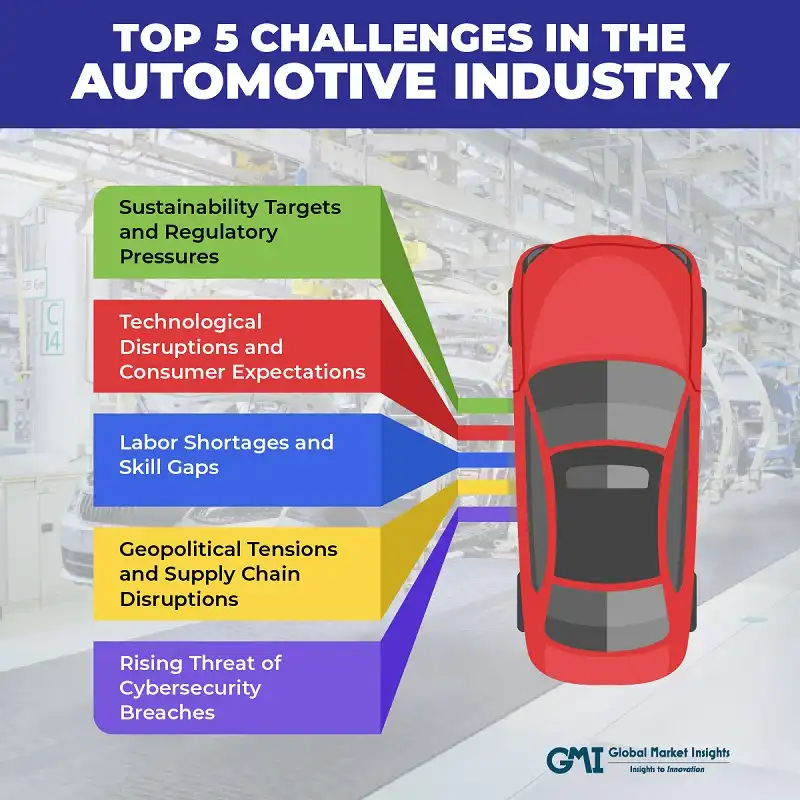
Top five challenges facing the automotive industry, including sustainability, technology shifts, labor shortages, geopolitical supply chain issues, and cybersecurity risks
Challenges and Risk Factors
Margin Pressure and Cost Inflation
The automotive supply industry faces persistent margin pressure due to multiple factors including raw material cost inflation, energy price volatility, and increasing labor costs. Copper price inflation, which particularly affects wiring harness manufacturers like Motherson, represents an ongoing challenge that requires careful management and customer negotiations.
The company’s Q1 results reflect these broader industry pressures, with EBITDA margins declining despite revenue growth. Managing these cost pressures while maintaining competitiveness requires operational efficiency improvements and strategic pricing negotiations with OEM customers.
Geopolitical and Trade Policy Risks
Operating across 43 countries exposes Motherson to significant geopolitical risks and trade policy changes. The ongoing trade tensions between major automotive markets, including potential tariffs and trade restrictions, could impact the company’s global supply chain efficiency and cost structure.
Recent announcements of potential US tariffs on Chinese imports, including automotive parts, could create additional complexity for suppliers operating in multiple markets. Companies like Motherson must develop flexible supply chain strategies that can adapt to changing trade environments.
Electric Vehicle Transition Timing
While the electric vehicle transition presents long-term opportunities, the timing and pace of adoption remain uncertain across different markets. Delays in EV adoption or changes in government policies supporting electrification could impact the returns on Motherson’s EV-focused investments.
The company’s substantial investments in greenfield projects designed for EV manufacturing represent a significant commitment to the electrification timeline. Any significant delays in EV adoption could result in underutilized capacity and extended payback periods for these investments.
Strategic Recommendations and Future Outlook
Portfolio Optimization and Regional Strategy
To navigate the current challenging environment, Motherson should continue focusing on portfolio optimization through strategic partnerships and streamlined product offerings. The company’s diversified business model provides resilience, but selective focus on high-margin, high-growth segments will be crucial for long-term success.
Regional strategy refinement, particularly in light of geopolitical tensions and trade policy changes, should prioritize building resilient supply chains that can adapt to changing market conditions. This may require strategic repositioning of certain operations or increased regional content to mitigate trade risks.
Technology Investment and Innovation
Continued investment in advanced technologies, particularly those related to electric vehicles, autonomous driving, and software-defined vehicles, will be essential for maintaining competitive advantage. The company’s R&D investments should focus on areas where it can differentiate its products and command premium pricing.
The integration of digital technologies and automation in manufacturing processes can help address labor shortage challenges while improving efficiency and reducing costs. These investments, while requiring upfront capital, can provide long-term competitive advantages.
Financial Management and Capital Allocation
Given the current margin pressures and investment requirements for EV transition, careful capital allocation will be critical. The company should prioritize investments with clear returns while maintaining financial flexibility to navigate industry volatility.
Debt management remains important, particularly given the company’s significant capital investment program. Maintaining appropriate leverage levels while funding growth initiatives requires careful balance and strategic planning.
Conclusion
Samvardhana Motherson’s Q1 2026 results reflect the broader challenges facing the global automotive supply industry during a period of fundamental transformation. While revenue growth demonstrates the company’s resilience and market position, the significant profit decline highlights the margin pressures affecting the entire sector. The company’s strategic investments in electric vehicle capabilities and global expansion, while pressuring short-term profitability, position it well for the long-term transformation of the automotive industry.
The global automotive supplier industry’s experience of “stagformation” requires companies like Motherson to balance current operational challenges with future growth investments. Success in this environment requires strategic focus, operational efficiency, and the financial discipline to navigate through this transitional period while positioning for long-term growth in the electrified automotive future.
Despite current challenges, the company’s strong global market position, diversified business portfolio, and strategic focus on electric vehicle growth segments provide a foundation for future success. The key will be managing through the current margin pressure period while maintaining the investment discipline necessary to capitalize on the significant long-term opportunities in the evolving automotive landscape.