


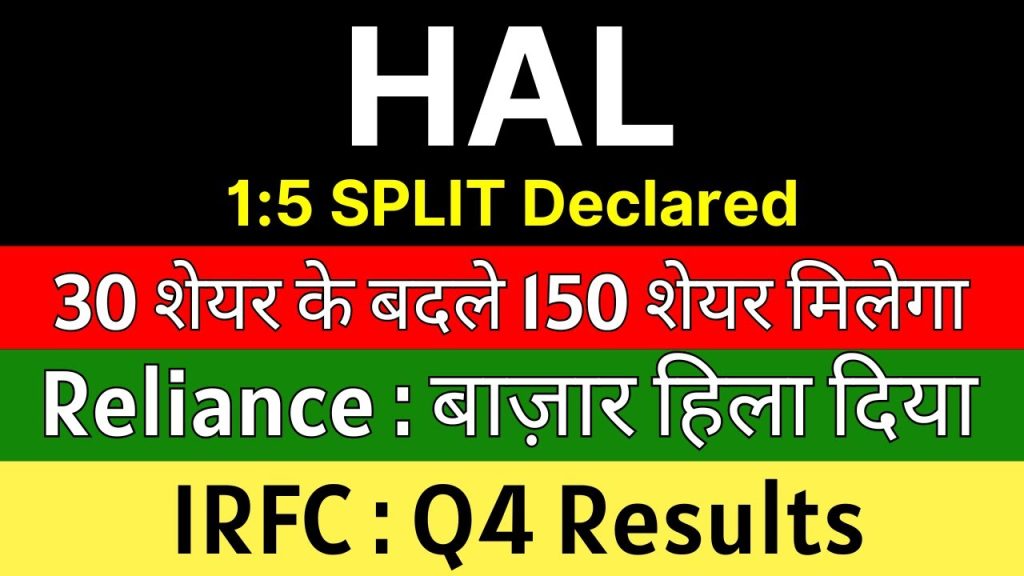
The Indian stock market is buzzing with activity, driven by stellar performances from industry giants like Reliance Industries, Hindustan Aeronautics Limited (HAL), Indian Railway Finance Corporation (IRFC), and Inox India. From Reliance Industries’ impressive earnings to HAL’s defense sector dominance and Inox India’s stock split announcement, these companies are shaping market trends and investor sentiment in 2025. This comprehensive analysis dives into their latest updates, financial performance, and strategic moves, offering actionable insights for investors and market enthusiasts. Read on to discover why these stocks are in the spotlight and how they’re influencing India’s economic landscape.
Reliance Industries: Powering Market Momentum with Robust Earnings
Reliance Industries Limited (RIL) continues to be a cornerstone of India’s stock market, commanding significant influence over indices like the Nifty 50. Recently, RIL’s stock surged by 4-5%, driven by exceptional quarterly earnings that exceeded market expectations. This performance underscores RIL’s resilience and strategic prowess in navigating complex market dynamics.
Stellar Q4 Earnings Fuel Optimism
Reliance Industries reported its Q4 earnings, showcasing remarkable financial strength. The company’s robust performance surpassed analyst forecasts, reflecting operational efficiency across its diverse business verticals, including petrochemicals, refining, and telecommunications. Brokerage houses have issued bullish outlooks, citing RIL’s ability to capitalize on market opportunities and maintain a competitive edge. This optimism translated into a market cap increase of over ₹50,000 crore, reinforcing RIL’s position as a market leader.
Reliance Jio: A Growth Powerhouse
A significant driver of RIL’s success is its subsidiary, Reliance Jio, which continues to dominate the telecommunications sector. According to Motilal Oswal, Jio is projected to achieve an EBITDA growth of 21% CAGR between FY25 and FY27. This growth is attributed to several factors:
- Market Share Gains: Jio is steadily capturing a larger share of the wireless market, solidifying its leadership position.
- Tariff Hikes: Strategic adjustments to tariff plans are boosting revenue streams.
- Diversified Revenue Streams: Jio’s expansion into home and enterprise businesses is driving additional growth.
These developments highlight Jio’s pivotal role in RIL’s long-term growth strategy, making it a key focus for investors.
Impact on Nifty 50 and Market Sentiment
Reliance Industries’ performance has a ripple effect on the broader market, given its substantial weight in the Nifty 50 index. On the day of the earnings announcement, the Nifty 50 rose by 1.29%, with RIL’s gains playing a central role. While mid-cap and small-cap indices also showed positive movement, they underperformed compared to the Nifty, underscoring RIL’s outsized influence. Alongside HDFC Bank, RIL remains one of the few stocks capable of steering market direction, making it a critical component of any diversified portfolio.
Hindustan Aeronautics Limited (HAL): Soaring High in the Defense Sector
Hindustan Aeronautics Limited (HAL) is a standout performer in India’s defense sector, capitalizing on strategic deals and geopolitical developments. The company’s stock has been in focus due to a significant defense contract and favorable market conditions, positioning HAL as a top pick for investors seeking exposure to India’s growing defense industry.
Rafale Deal: A Game-Changer for HAL
The Indian government recently finalized a ₹63,000 crore deal for 26 Rafale M fighter jets, a landmark contract that benefits multiple defense companies, including HAL. This deal, announced by the Defense Ministry, underscores India’s commitment to bolstering its military capabilities. HAL’s expertise in aerospace manufacturing and its established track record make it a key beneficiary of this contract, driving investor confidence and stock performance.
Geopolitical Tensions and Defense Spending
Geopolitical developments, particularly tensions between India and Pakistan, have further spotlighted the defense sector. While the likelihood of escalation remains low due to Pakistan’s economic constraints, the mere perception of heightened tensions has fueled interest in defense stocks. India’s robust economic position and increasing defense budget provide a favorable backdrop for HAL, which is well-positioned to secure additional contracts in the coming years.
Valuation and Earnings Outlook
HAL’s stock has undergone a correction, with its price-to-earnings (P/E) ratio dropping from 50 to approximately 33. This adjustment makes the stock more attractively valued, especially given HAL’s consistent earnings growth. Analysts expect the company to report strong Q4 earnings, with year-on-year net profit and EPS growth. If HAL sustains this trajectory, its current P/E multiple could become even more compelling, potentially attracting value investors.
Indian Railway Finance Corporation (IRFC): Steady Growth in a Critical Sector
The Indian Railway Finance Corporation (IRFC) plays a vital role in financing India’s railway infrastructure, a cornerstone of the country’s economic development. With its Q4 results on the horizon, IRFC is garnering attention from investors seeking stable, long-term returns.
Q4 Results: What to Expect
IRFC’s Q4 earnings are scheduled for release, following a rescheduling of its board meeting to April 28, 2025. Historical data suggests that IRFC’s Q4 performance typically outshines other quarters, with revenue growth of 33% in 2022, 4% in 2023, and 4% in 2024. Analysts anticipate a modest growth rate of 4-5% for the current quarter, with a 10% growth considered a strong outcome. Key metrics to watch include revenue, profit, and EBITDA, both on a quarter-on-quarter and year-on-year basis, to gauge whether IRFC meets or exceeds market expectations.
Long-Term Growth Potential
IRFC’s role in funding railway modernization and expansion aligns with India’s infrastructure ambitions. The government’s focus on high-speed rail, freight corridors, and station redevelopment bodes well for IRFC’s future revenue streams. While the company may not deliver explosive growth, its consistent performance and strategic importance make it a reliable investment option for risk-averse investors.
Inox India: Stock Split Signals Confidence
Inox India, a leader in cryogenic equipment manufacturing, recently announced a 1:5 stock split, setting the record date for May 7, 2025. This move aims to enhance liquidity and make the stock more accessible to retail investors, signaling management’s confidence in the company’s growth prospects.
Implications of the Stock Split
A stock split reduces the face value of shares, increasing the number of outstanding shares without altering the company’s market capitalization. For Inox India, the 1:5 split means that shareholders holding one share will receive five shares, each with a proportionally lower price. This strategy often attracts new investors, boosting trading volumes and market interest. Investors holding shares before the record date will be eligible for the split, making it a significant event for current and prospective shareholders.
Growth Drivers for Inox India
Inox India’s leadership in the cryogenic equipment market positions it to capitalize on growing demand in sectors like energy, healthcare, and aerospace. The company’s innovative product portfolio and expanding global footprint enhance its long-term growth potential. The stock split, combined with strong fundamentals, makes Inox India an attractive option for investors seeking exposure to niche industrial sectors.
Market Trends and Investor Strategies for 2025
The performances of Reliance Industries, HAL, IRFC, and Inox India reflect broader market trends that investors should consider when building their portfolios in 2025. Here are key takeaways and strategies to navigate the current landscape:
Diversification Across Sectors
Each of these companies operates in a distinct sector—telecommunications, defense, infrastructure, and industrial manufacturing—offering opportunities for diversification. By allocating capital across these sectors, investors can mitigate risks associated with sector-specific volatility while capitalizing on India’s multifaceted growth story.
Focus on Earnings and Valuations
Earnings reports remain a critical driver of stock performance, as evidenced by Reliance Industries’ recent surge. Investors should closely monitor upcoming results, particularly for IRFC, and assess whether valuations align with growth prospects. HAL’s attractive P/E ratio and Inox India’s stock split present compelling opportunities for value and growth investors, respectively.
Geopolitical and Macroeconomic Factors
Geopolitical developments, such as defense contracts and regional tensions, can significantly impact stock performance, as seen with HAL. Similarly, macroeconomic factors like infrastructure spending and government policies will influence IRFC’s trajectory. Staying informed about these dynamics is essential for making informed investment decisions.
Long-Term vs. Short-Term Opportunities
While short-term gains are possible, particularly following earnings announcements or stock splits, a long-term perspective is advisable for these companies. Reliance Jio’s projected growth, HAL’s defense contracts, IRFC’s infrastructure focus, and Inox India’s market expansion all point to sustained value creation over the coming years.
Why These Stocks Matter in 2025
Reliance Industries, HAL, IRFC, and Inox India are not just individual success stories—they represent the dynamism of India’s economy. Reliance’s dominance in telecommunications and energy, HAL’s strategic importance in defense, IRFC’s role in infrastructure, and Inox India’s innovation in industrial manufacturing highlight the diverse opportunities available to investors. These companies are shaping India’s growth trajectory, driven by strong fundamentals, strategic initiatives, and favorable market conditions.
Actionable Insights for Investors
- Reliance Industries: Consider adding RIL to your portfolio for exposure to India’s leading conglomerate, particularly given Jio’s growth potential.
- HAL: Monitor defense sector developments and HAL’s Q4 earnings for opportunities to invest in a undervalued stock with strong growth prospects.
- IRFC: Evaluate Q4 results to assess whether IRFC’s steady growth aligns with your risk tolerance and investment horizon.
- Inox India: Take advantage of the stock split to enter a high-growth industrial player at a potentially lower entry point.
Conclusion: Seizing Opportunities in a Dynamic Market
The Indian stock market in 2025 is a landscape of opportunity, with companies like Reliance Industries, HAL, IRFC, and Inox India leading the charge. From Reliance’s earnings-driven rally to HAL’s defense sector dominance, IRFC’s infrastructure focus, and Inox India’s strategic stock split, these companies offer diverse avenues for wealth creation. By staying informed, diversifying portfolios, and aligning investments with long-term trends, investors can capitalize on the growth potential of these market leaders. As India’s economy continues to evolve, these stocks are poised to deliver value, making them essential components of any forward-looking investment strategy.