


Introduction: The Power and Challenges of AI
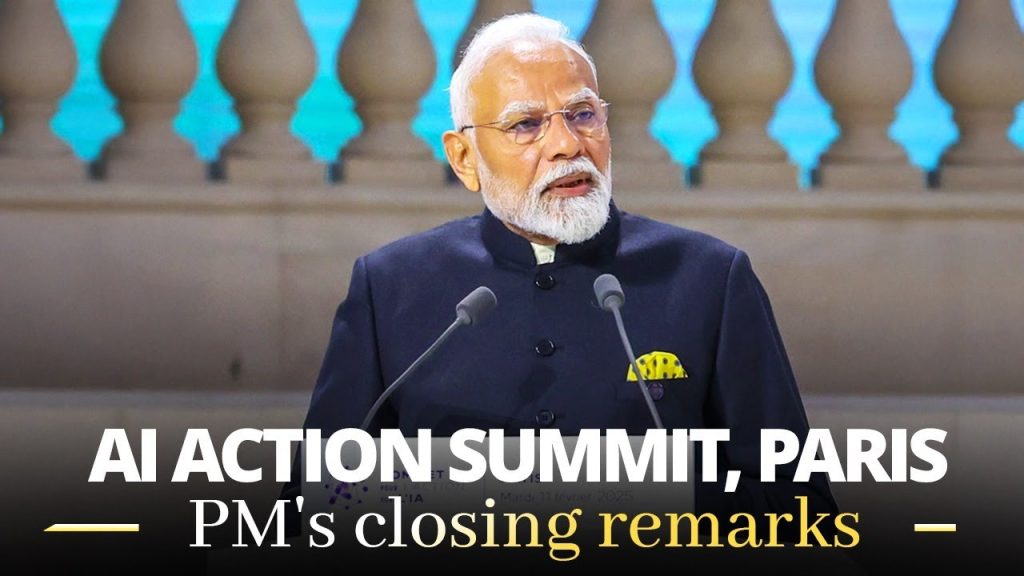
Artificial Intelligence (AI) is revolutionizing our world, reshaping economies, security, and societies. As we stand at the dawn of this transformative era, AI presents both immense opportunities and significant challenges. Indian Prime Minister Narendra Modi, in his keynote address at the Paris AI Summit, emphasized the importance of responsible AI development, global collaboration, and equitable access to AI technology. This article delves into the key takeaways from PM Modi’s speech, highlighting how AI can be harnessed for global good while ensuring ethical governance and sustainability.
The Promise and Risks of AI
AI has the potential to enhance healthcare, education, agriculture, and various industries. For instance, AI-driven medical analysis can interpret complex reports in simple language, making healthcare more accessible. However, AI systems often reflect biases present in training data. A notable example is AI’s tendency to misinterpret left-handed writing due to its data being predominantly right-hand-biased. This underscores the need for careful oversight and inclusive datasets to ensure fairness.
Global Collaboration for AI Governance
PM Modi stressed the necessity of collective global efforts to establish AI governance frameworks. AI is developing at an unprecedented scale and speed, making international cooperation crucial. Key aspects of governance should include:
- Establishing ethical standards to address AI risks and biases.
- Promoting transparency and trust through open-source AI systems.
- Ensuring AI accessibility to all, particularly in the Global South, where resources like computing power, talent, and funding are limited.
AI for Sustainable Development and Public Good
AI can play a crucial role in achieving Sustainable Development Goals (SDGs). By leveraging AI-powered innovations, governments and organizations can:
- Improve healthcare outcomes through predictive analytics and smart diagnostics.
- Enhance agricultural productivity with AI-driven precision farming.
- Streamline education by providing personalized learning experiences.
- Strengthen disaster management using AI-driven early warning systems.
To fully realize AI’s potential, countries must pool resources, share knowledge, and ensure equitable distribution of AI benefits.
Building Trustworthy AI: Open-Source Systems and Bias-Free Data
For AI to be widely accepted, it must be trustworthy and transparent. PM Modi advocated for open-source AI systems that foster public trust. He highlighted key measures to achieve this:
- Developing unbiased, high-quality datasets to prevent discrimination.
- Democratizing AI technology by making it people-centric and widely accessible.
- Addressing cybersecurity concerns to combat misinformation and deepfakes.
- Integrating AI with local ecosystems to ensure cultural and regional relevance.
AI and Job Market Evolution
One of the most pressing concerns surrounding AI is its impact on employment. While fears of job displacement are valid, history suggests that technological advancements lead to job evolution rather than elimination. PM Modi emphasized the importance of:
- Reskilling and upskilling workers to prepare them for an AI-driven future.
- Creating new job opportunities in AI-related fields.
- Encouraging innovation and entrepreneurship in AI-based industries.
Sustainable AI: Balancing Innovation with Environmental Responsibility
AI’s high energy consumption is a growing concern. Training AI models requires vast computational power, leading to significant carbon footprints. PM Modi called for sustainable AI practices, which include:
- Using renewable energy sources to power AI infrastructure.
- Developing energy-efficient AI models that require less computational power.
- Optimizing data storage and processing to minimize environmental impact.
India and France have long collaborated on sustainability initiatives like the International Solar Alliance. Extending this partnership to AI will ensure a smarter, greener future.
India’s Leadership in AI Innovation
India has made remarkable strides in digital infrastructure, benefiting over 1.4 billion people. The country’s open and accessible digital framework has modernized governance, reformed economies, and transformed lives. Key AI-driven initiatives in India include:
- The National AI Mission, which promotes responsible AI adoption.
- AI applications for public good, such as AI-driven legal solutions and data privacy advancements.
- Public-private partnerships to make AI resources affordable for startups and researchers.
India is also developing its own large language models (LLMs) tailored to its diverse linguistic landscape. With one of the world’s largest AI talent pools, India is poised to lead in AI innovation and ethical implementation.
Shaping the Future: A Human-Centric AI Approach
PM Modi concluded his speech with a powerful message: the future of AI is in our hands. While some fear AI surpassing human intelligence, it is ultimately humans who shape AI’s trajectory. A sense of shared responsibility must guide AI’s development to ensure it serves humanity positively.
Conclusion: A Call for Collective Action
The AI age is upon us, and how we navigate it will determine the course of humanity. By fostering global collaboration, ensuring ethical AI governance, and prioritizing sustainability, we can harness AI’s immense potential for the greater good. PM Modi’s vision serves as a roadmap for an inclusive, responsible, and innovative AI-driven future.