


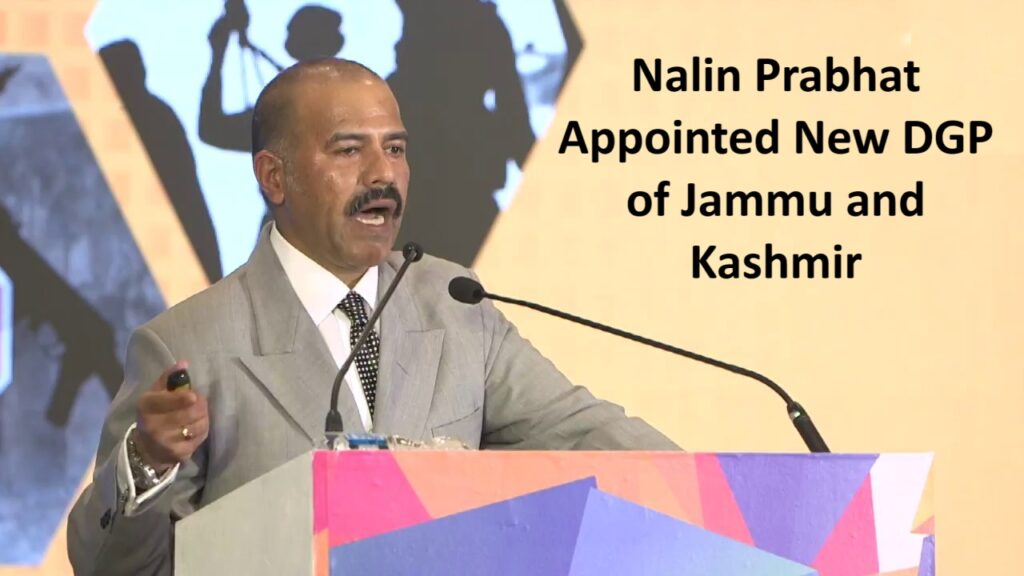
Nalin Prabhat Takes Charge as Jammu and Kashmir’s New DGP on October 1
In a significant move aimed at strengthening security in Jammu and Kashmir, the Appointments Committee of the Cabinet (ACC) has approved the appointment of Nalin Prabhat as the new Director General of Police (DGP) for the region. Prabhat, a highly decorated Indian Police Service (IPS) officer, will officially assume his new role on October 1, following the retirement of the current DGP, R R Swain, on September 30. This strategic decision comes in response to the increasing terror activities in the Jammu region, highlighting the need for experienced leadership.
A Career Marked by Gallantry and Leadership
Nalin Prabhat, a 1992 batch IPS officer from the Andhra Pradesh cadre, is no stranger to high-stakes security operations. With a distinguished career spanning over three decades, Prabhat has earned three police gallantry medals, a testament to his bravery and dedication. His leadership capabilities were prominently displayed during his tenure as the head of the ‘Greyhounds,’ Andhra Pradesh’s specialized anti-Naxal police force. His extensive experience also includes serving as the Additional Director General (ADG) and Special DG of the Central Reserve Police Force (CRPF), where he played a crucial role in overseeing security operations in Jammu and Kashmir.
Strategic Inter-Cadre Deputation for Enhanced Security
The ACC’s decision to appoint Prabhat as the DGP of Jammu and Kashmir involved an inter-cadre deputation from Andhra Pradesh to the Arunachal Pradesh-Goa-Mizoram and Union Territory (AGMUT) cadre. This move, sanctioned for an initial period of three years, underscores the urgency of addressing the evolving security challenges in the region. Notably, this transfer was approved just three months after Prabhat was appointed as the Director General of the National Security Guard (NSG), indicating the government’s confidence in his ability to lead in critical situations.
A Shortened Tenure as NSG Chief
Prabhat’s appointment as the DGP of Jammu and Kashmir necessitated a curtailment of his tenure as the NSG chief, a position he assumed earlier this year. The ACC approved the Ministry of Home Affairs’ proposal to shorten his term, allowing for his immediate transfer to the Jammu and Kashmir Police. This decision reflects the high priority placed on enhancing the region’s security apparatus, particularly in light of the recent surge in terror activities.
Union Home Minister’s Involvement in Strategic Planning
The appointment of Nalin Prabhat as the DGP of Jammu and Kashmir follows a series of high-level meetings chaired by Union Home Minister Amit Shah. These meetings, attended by senior officials including National Security Advisor Ajit Doval, Jammu and Kashmir Lieutenant Governor Manoj Sinha, and top Indian Army and CRPF officers, focused on developing new strategies to counter the escalating terror threats in the Union Territory. Prabhat’s extensive experience in counter-terrorism and his leadership in previous roles were key factors in his selection for this critical position.
Looking Forward: Strengthening Security in Jammu and Kashmir
As Nalin Prabhat prepares to take over as the DGP of Jammu and Kashmir, his appointment signals a renewed focus on enhancing the region’s security. His proven track record in handling sensitive operations and his deep understanding of the complexities of security in Jammu and Kashmir position him as the ideal leader to navigate the challenges ahead. The government’s swift and strategic action in appointing Prabhat underscores its commitment to ensuring the safety and stability of the region, particularly as it continues to face increasing security threats.
In conclusion, Nalin Prabhat’s appointment as the DGP of Jammu and Kashmir marks a critical step in bolstering the region’s security leadership. With his extensive experience, decorated career, and the support of the central government, Prabhat is well-equipped to lead the Jammu and Kashmir Police through these challenging times, ensuring a stronger and more secure future for the Union Territory.