Site icon Telangana NavaNirmana Sena

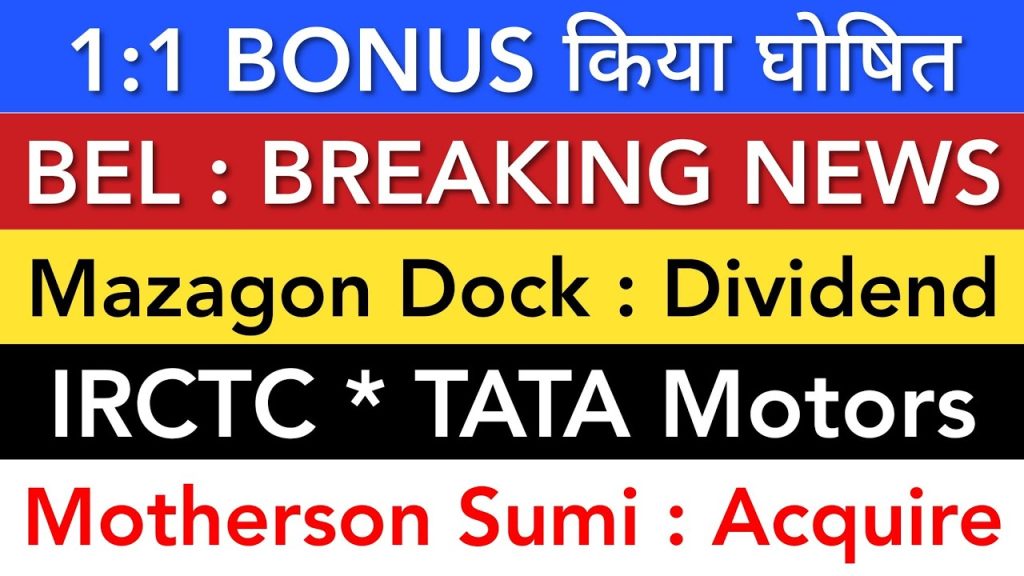
Mazagon Dock Dividend News, BEL Defense Insights and Tata Motors Launches

In the dynamic world of the Indian stock market, staying ahead requires keen insights into company performances, new launches, acquisitions, and dividend announcements. As we step into the latter half of 2025, investors face a mix of opportunities and challenges amid global economic pressures, sector-specific trends, and domestic growth drivers. This comprehensive article dives deep into recent updates from key players like Tata Motors, Globe International Carriers, IRCTC, Samvardhana Motherson, Mazagon Dock Shipbuilders, and Bharat Electronics Limited (BEL). We explore stock price movements, strategic decisions, and market sentiments to help you make informed decisions. Whether you're a seasoned trader in Mumbai or a budding investor in Delhi, these insights aim to equip you with actionable knowledge on high-potential stocks in India's booming economy. Tata Motors Stock Analysis: New Commercial Vehicle Launch Amid Sales Slump Tata Motors, one of India's leading automotive giants, continues to navigate turbulent waters in 2025. The company recently unveiled its latest commercial vehicle, the 9-seater Tata Winger Plus, priced at an ex-showroom rate of ₹20.60 lakh in New Delhi. This launch targets the growing demand for efficient shuttle services in urban hubs like Kolkata, where such vehicles dominate office-hour commutes. Executives and daily commuters alike appreciate the Winger's reliability, spacious design, and fuel efficiency, making it a staple in India's bustling transport sector. However, this positive development comes against a backdrop of weakening performance. Tata Motors has experienced consistent sales declines throughout the year, from January through August. Monthly figures show back-to-back drops, dragging the stock price down by nearly 40% from its highs. As a blue-chip company, Tata Motors once symbolized stability, but current market conditions have turned it into a cautionary tale. Investors watch closely as competitors like Mahindra thrive near their all-time highs, highlighting Tata's struggles in a competitive landscape. What drives this downturn? Analysts point to broader auto industry challenges, including rising raw material costs, supply chain disruptions from global events, and shifting consumer preferences toward electric vehicles (EVs). Tata Motors invests heavily in EVs, with models like the Nexon EV gaining traction, but the transition hasn't offset losses in traditional segments. The company's commercial vehicle division, which includes trucks and buses, faces stiff competition from imports and domestic rivals. Looking ahead, the Winger Plus could spark a revival. Priced competitively, it appeals to fleet operators in cities like Bangalore and Hyderabad, where urban mobility demands surge. If early responses prove positive, this could boost quarterly revenues and restore investor confidence. For stock traders, key levels to monitor include support at ₹600 and resistance near ₹800. Active investors might consider entry points during dips, but long-term holders should weigh the risks of prolonged weakness. In the broader context of India's auto sector, government initiatives like the PLI scheme for automobiles encourage innovation. Tata Motors leverages these to expand its portfolio, but execution remains key. As fuel prices fluctuate and environmental regulations tighten, the company must accelerate its green mobility push. Investors in regions like Gujarat, home to Tata's manufacturing hubs, stand to benefit if the firm regains momentum. Globe International Carriers Bonus and Stock Split: A Small-Cap Gem for Risk-Tolerant Investors Shifting focus to smaller yet promising entities, Globe International Carriers Limited emerges as a noteworthy player in the logistics and transportation arena. This compact company recently announced a 1:1 bonus issue alongside a 1:2 stock split, delighting shareholders with enhanced liquidity and potential value appreciation. For those unfamiliar, a bonus issue rewards existing investors with additional shares free of cost, while a split divides each share into multiple units, making the stock more affordable and attractive to retail buyers. Let's break it down simply: Suppose you hold one share. The 1:1 bonus doubles it to two shares. Then, the 1:2 split turns each of those into two, resulting in four shares total. If you own five shares initially, you'll end up with 20. This mechanism boosts trading volumes and broadens the investor base, often leading to price surges in bullish markets. Globe International Carriers specializes in full-truckload services, catering to industries like manufacturing and e-commerce across India. Based in regions with high industrial activity, such as Punjab and Haryana, the company benefits from robust infrastructure growth under initiatives like Bharatmala Pariyojana. Despite its small size, it demonstrates resilience through efficient operations and strategic partnerships. However, small-cap stocks like this carry inherent risks. Volatility reigns supreme, with price swings amplified by low liquidity and market sentiments. The company's performance ties closely to economic cycles; a slowdown in goods movement could erode profits. Investors must exercise caution, conducting thorough due diligence on financials, management quality, and growth prospects. In 2025, logistics stocks gain traction amid India's push for digital supply chains and export growth. Globe's moves align with this trend, potentially positioning it for multibagger returns. For SEO-savvy investors searching for "best small-cap stocks India 2025" or "bonus shares announcements," this development signals opportunity. Monitor the stock's post-split behavior, with targets around 50% upside if market conditions improve. IRCTC Share Price Trends: New Tourism Packages and Technical Analysis Indian Railway Catering and Tourism Corporation (IRCTC), the monopoly powerhouse in rail ticketing and catering, captivates investors with its resilient business model. Yet, 2025 brings challenges, as the stock plummets from its 2024 peak of over ₹1,100 to hover around ₹670-₹710. This decline reflects broader market pressures, including economic slowdowns and sector-specific hurdles. IRCTC recently launched exciting tourism packages, including the Jyotirlinga Yatra and operations of the Bharat Gaurav Tourist Train from Tirunelveli. These initiatives tap into India's burgeoning spiritual and leisure travel segments, appealing to pilgrims and tourists alike. By diversifying beyond ticketing—into catering, tourism, and even bottled water (Rail Neer)—IRCTC strengthens its revenue streams. Cities like Varanasi and Rameshwaram, key destinations in these packages, could see economic boosts, aligning with government tourism promotion efforts. Technically, the stock finds support near ₹650-₹670, a level that held during February's dip before a 20% recovery to ₹800. However, breaking below ₹710-₹720 now acts as resistance, a classic case where former support turns into a hurdle. Active traders eye this zone for potential reversals, while long-term investors appreciate IRCTC's monopoly status and digital prowess via its app and website. Factors influencing IRCTC include railway modernization under Vande Bharat expansions and post-pandemic travel rebounds. In geo-targeted markets like Kerala or Uttar Pradesh, where tourism thrives, these packages could drive local economies. Despite recent weakness, analysts forecast steady growth, with dividends adding allure. For those querying "IRCTC stock forecast 2025" or "best railway stocks India," this remains a core holding. Samvardhana Motherson Acquisition Strategy: Boosting Global Footprint Amid US Tariff Concerns Samvardhana Motherson International, formerly Motherson Sumi, stands out in the auto components space with its aggressive expansion tactics. The company approved the acquisition of an 81% stake in Japan's Yutaka Giken Company Limited for approximately ₹184 million, alongside an 11% stake in Shachi Kogyo Company Limited. Executed through its subsidiary Motherson Global Investments BV, this move enhances Motherson's expertise in exhaust systems and automotive engineering. This acquisition follows Prime Minister Modi's recent Japan visit, where bilateral agreements fostered Indo-Japanese collaborations. Motherson capitalizes on these ties, integrating advanced Japanese technology into its operations. Headquartered in Gurgaon, the company supplies to global OEMs like Tata, Maruti, and international brands, benefiting from India's auto export surge. Yet, US tariff tensions loom large, impacting auto parts exporters. The stock recently dropped 7-8% from ₹100 highs, reflecting sector-wide pressures. Motherson's performance in 2025 shows resilience, with strong order books in wiring harnesses and mirrors. Investors in industrial belts like Pune or Chennai monitor this closely, as acquisitions could yield synergies and cost efficiencies. Strategically, this bolsters Motherson's position in electric and hybrid vehicle components, aligning with global sustainability trends. For SEO terms like "auto component stocks India" or "Motherson Sumi acquisitions 2025," this news underscores growth potential. Short-term hurdles at ₹100 persist, but long-term prospects shine bright. IPO Grey Market Premiums 2025: Top Listings and Investor Strategies The IPO market in 2025 buzzes with activity, though premiums vary. Notable ones include Austere Systems at 18.18%, Optiv Value Tech Consulting at 17.86%, Amta Health at 19.84%, Sneha Organics at 27.05%, Shaks Lite at 8.13%, L Paper at 9.02%, Vikram Engineering Melon at 6.19%, Satva Engineering Construction at 34.67%, Anlon Healthcare at 2.20%, Karan Infra Projects at 50%, Anandita Medicare at 58.62%, Shit Foods (increased), NSU SME at 1.41%, and Classic Electrodes SME at 13.79%. Grey market premiums (GMP) indicate pre-listing hype, but they don't guarantee post-listing gains. Investors chase high-GMP IPOs for quick flips, yet fundamentals matter most. Sectors like healthcare and engineering dominate, reflecting India's growth in these areas. For geo-specific searches in Bangalore's startup ecosystem or Mumbai's financial hubs, these IPOs offer entry into emerging companies. Strategies include allotting based on oversubscription, analyzing business models, and diversifying. Avoid over-reliance on GMP, as market volatility can erase premiums overnight. Mazagon Dock Dividend Announcement: Record Date and AGM Insights Mazagon Dock Shipbuilders, a key defense PSU, announced its dividend record date as September 19, 2025, ahead of its Annual General Meeting (AGM) on September 26, 2025. Shareholders purchasing by September 18 qualify for the ₹2.71 per share final dividend from Q4 results. Despite strong fundamentals in shipbuilding and submarines, the stock declined 30% from May highs amid market corrections. External factors like global tensions drive this, not internal issues. Investors view this as an opportunity, given India's defense push under Atmanirbhar Bharat. In naval hubs like Mumbai, Mazagon's projects bolster local economies. For "defense dividend stocks India 2025," this payout adds value. BEL Latest News: Defense Sector Growth Amid Global Challenges Bharat Electronics Limited (BEL) garners expert optimism despite pressures. Analysts highlight growth from US-India partnerships, increased budgets, and robust order books, projecting significant revenue rises by FY27. BEL's role in radars, avionics, and electronic warfare positions it in India's high-growth defense sector, transitioning from importer to exporter. Recent trading showed 1.5% gains, with support at ₹370-₹375. Patience defines success here, as geopolitical demands surge. For "BEL stock analysis 2025" or "best defense stocks India," BEL leads the pack. Market Outlook 2025: Navigating Corrections and Opportunities As markets reopen post-weekend, anticipate events like economic data releases and company updates. External influences dominate corrections, offering buying chances for resilient stocks. Focus on sectors like defense, auto, and tourism for geo-targeted growth in India. In conclusion, these updates—from Tata's launches to BEL's prospects—paint a picture of resilience amid volatility. Investors who act strategically can capitalize on India's economic trajectory.

Mazagon Dock Dividend News, BEL Defense Insights and Tata Motors Launches, In the dynamic world of the Indian stock market, staying ahead requires keen insights into company performances, new launches, acquisitions, and dividend announcements. As we step into the latter half of 2025, investors face a mix of opportunities and challenges amid global economic pressures, sector-specific trends, and domestic growth drivers. This comprehensive article dives deep into recent updates from key players like Tata Motors, Globe International Carriers, IRCTC, Samvardhana Motherson, Mazagon Dock Shipbuilders, and Bharat Electronics Limited (BEL). We explore stock price movements, strategic decisions, and market sentiments to help you make informed decisions. Whether you’re a seasoned trader in Mumbai or a budding investor in Delhi, these insights aim to equip you with actionable knowledge on high-potential stocks in India’s booming economy.

Tata Motors Stock Analysis: New Commercial Vehicle Launch Amid Sales Slump

Tata Motors, one of India’s leading automotive giants, continues to navigate turbulent waters in 2025. The company recently unveiled its latest commercial vehicle, the 9-seater Tata Winger Plus, priced at an ex-showroom rate of ₹20.60 lakh in New Delhi. This launch targets the growing demand for efficient shuttle services in urban hubs like Kolkata, where such vehicles dominate office-hour commutes. Executives and daily commuters alike appreciate the Winger’s reliability, spacious design, and fuel efficiency, making it a staple in India’s bustling transport sector.

However, this positive development comes against a backdrop of weakening performance. Tata Motors has experienced consistent sales declines throughout the year, from January through August. Monthly figures show back-to-back drops, dragging the stock price down by nearly 40% from its highs. As a blue-chip company, Tata Motors once symbolized stability, but current market conditions have turned it into a cautionary tale. Investors watch closely as competitors like Mahindra thrive near their all-time highs, highlighting Tata’s struggles in a competitive landscape.

What drives this downturn? Analysts point to broader auto industry challenges, including rising raw material costs, supply chain disruptions from global events, and shifting consumer preferences toward electric vehicles (EVs). Tata Motors invests heavily in EVs, with models like the Nexon EV gaining traction, but the transition hasn’t offset losses in traditional segments. The company’s commercial vehicle division, which includes trucks and buses, faces stiff competition from imports and domestic rivals.

Looking ahead, the Winger Plus could spark a revival. Priced competitively, it appeals to fleet operators in cities like Bangalore and Hyderabad, where urban mobility demands surge. If early responses prove positive, this could boost quarterly revenues and restore investor confidence. For stock traders, key levels to monitor include support at ₹600 and resistance near ₹800. Active investors might consider entry points during dips, but long-term holders should weigh the risks of prolonged weakness.

In the broader context of India’s auto sector, government initiatives like the PLI scheme for automobiles encourage innovation. Tata Motors leverages these to expand its portfolio, but execution remains key. As fuel prices fluctuate and environmental regulations tighten, the company must accelerate its green mobility push. Investors in regions like Gujarat, home to Tata’s manufacturing hubs, stand to benefit if the firm regains momentum.

Globe International Carriers Bonus and Stock Split: A Small-Cap Gem for Risk-Tolerant Investors

Shifting focus to smaller yet promising entities, Globe International Carriers Limited emerges as a noteworthy player in the logistics and transportation arena. This compact company recently announced a 1:1 bonus issue alongside a 1:2 stock split, delighting shareholders with enhanced liquidity and potential value appreciation. For those unfamiliar, a bonus issue rewards existing investors with additional shares free of cost, while a split divides each share into multiple units, making the stock more affordable and attractive to retail buyers.

Let’s break it down simply: Suppose you hold one share. The 1:1 bonus doubles it to two shares. Then, the 1:2 split turns each of those into two, resulting in four shares total. If you own five shares initially, you’ll end up with 20. This mechanism boosts trading volumes and broadens the investor base, often leading to price surges in bullish markets.

Globe International Carriers specializes in full-truckload services, catering to industries like manufacturing and e-commerce across India. Based in regions with high industrial activity, such as Punjab and Haryana, the company benefits from robust infrastructure growth under initiatives like Bharatmala Pariyojana. Despite its small size, it demonstrates resilience through efficient operations and strategic partnerships.

However, small-cap stocks like this carry inherent risks. Volatility reigns supreme, with price swings amplified by low liquidity and market sentiments. The company’s performance ties closely to economic cycles; a slowdown in goods movement could erode profits. Investors must exercise caution, conducting thorough due diligence on financials, management quality, and growth prospects.

In 2025, logistics stocks gain traction amid India’s push for digital supply chains and export growth. Globe’s moves align with this trend, potentially positioning it for multibagger returns. For SEO-savvy investors searching for “best small-cap stocks India 2025” or “bonus shares announcements,” this development signals opportunity. Monitor the stock’s post-split behavior, with targets around 50% upside if market conditions improve.

IRCTC Share Price Trends: New Tourism Packages and Technical Analysis

Indian Railway Catering and Tourism Corporation (IRCTC), the monopoly powerhouse in rail ticketing and catering, captivates investors with its resilient business model. Yet, 2025 brings challenges, as the stock plummets from its 2024 peak of over ₹1,100 to hover around ₹670-₹710. This decline reflects broader market pressures, including economic slowdowns and sector-specific hurdles.

IRCTC recently launched exciting tourism packages, including the Jyotirlinga Yatra and operations of the Bharat Gaurav Tourist Train from Tirunelveli. These initiatives tap into India’s burgeoning spiritual and leisure travel segments, appealing to pilgrims and tourists alike. By diversifying beyond ticketing—into catering, tourism, and even bottled water (Rail Neer)—IRCTC strengthens its revenue streams. Cities like Varanasi and Rameshwaram, key destinations in these packages, could see economic boosts, aligning with government tourism promotion efforts.

Technically, the stock finds support near ₹650-₹670, a level that held during February’s dip before a 20% recovery to ₹800. However, breaking below ₹710-₹720 now acts as resistance, a classic case where former support turns into a hurdle. Active traders eye this zone for potential reversals, while long-term investors appreciate IRCTC’s monopoly status and digital prowess via its app and website.

Factors influencing IRCTC include railway modernization under Vande Bharat expansions and post-pandemic travel rebounds. In geo-targeted markets like Kerala or Uttar Pradesh, where tourism thrives, these packages could drive local economies. Despite recent weakness, analysts forecast steady growth, with dividends adding allure. For those querying “IRCTC stock forecast 2025” or “best railway stocks India,” this remains a core holding.

Samvardhana Motherson Acquisition Strategy: Boosting Global Footprint Amid US Tariff Concerns

Samvardhana Motherson International, formerly Motherson Sumi, stands out in the auto components space with its aggressive expansion tactics. The company approved the acquisition of an 81% stake in Japan’s Yutaka Giken Company Limited for approximately ₹184 million, alongside an 11% stake in Shachi Kogyo Company Limited. Executed through its subsidiary Motherson Global Investments BV, this move enhances Motherson’s expertise in exhaust systems and automotive engineering.

This acquisition follows Prime Minister Modi’s recent Japan visit, where bilateral agreements fostered Indo-Japanese collaborations. Motherson capitalizes on these ties, integrating advanced Japanese technology into its operations. Headquartered in Gurgaon, the company supplies to global OEMs like Tata, Maruti, and international brands, benefiting from India’s auto export surge.

Yet, US tariff tensions loom large, impacting auto parts exporters. The stock recently dropped 7-8% from ₹100 highs, reflecting sector-wide pressures. Motherson’s performance in 2025 shows resilience, with strong order books in wiring harnesses and mirrors. Investors in industrial belts like Pune or Chennai monitor this closely, as acquisitions could yield synergies and cost efficiencies.

Strategically, this bolsters Motherson’s position in electric and hybrid vehicle components, aligning with global sustainability trends. For SEO terms like “auto component stocks India” or “Motherson Sumi acquisitions 2025,” this news underscores growth potential. Short-term hurdles at ₹100 persist, but long-term prospects shine bright.

IPO Grey Market Premiums 2025: Top Listings and Investor Strategies

The IPO market in 2025 buzzes with activity, though premiums vary. Notable ones include Austere Systems at 18.18%, Optiv Value Tech Consulting at 17.86%, Amta Health at 19.84%, Sneha Organics at 27.05%, Shaks Lite at 8.13%, L Paper at 9.02%, Vikram Engineering Melon at 6.19%, Satva Engineering Construction at 34.67%, Anlon Healthcare at 2.20%, Karan Infra Projects at 50%, Anandita Medicare at 58.62%, Shit Foods (increased), NSU SME at 1.41%, and Classic Electrodes SME at 13.79%.

Grey market premiums (GMP) indicate pre-listing hype, but they don’t guarantee post-listing gains. Investors chase high-GMP IPOs for quick flips, yet fundamentals matter most. Sectors like healthcare and engineering dominate, reflecting India’s growth in these areas. For geo-specific searches in Bangalore’s startup ecosystem or Mumbai’s financial hubs, these IPOs offer entry into emerging companies.

Strategies include allotting based on oversubscription, analyzing business models, and diversifying. Avoid over-reliance on GMP, as market volatility can erase premiums overnight.

Mazagon Dock Dividend Announcement: Record Date and AGM Insights

Mazagon Dock Shipbuilders, a key defense PSU, announced its dividend record date as September 19, 2025, ahead of its Annual General Meeting (AGM) on September 26, 2025. Shareholders purchasing by September 18 qualify for the ₹2.71 per share final dividend from Q4 results.

Despite strong fundamentals in shipbuilding and submarines, the stock declined 30% from May highs amid market corrections. External factors like global tensions drive this, not internal issues. Investors view this as an opportunity, given India’s defense push under Atmanirbhar Bharat.

In naval hubs like Mumbai, Mazagon’s projects bolster local economies. For “defense dividend stocks India 2025,” this payout adds value.

BEL Latest News: Defense Sector Growth Amid Global Challenges

Bharat Electronics Limited (BEL) garners expert optimism despite pressures. Analysts highlight growth from US-India partnerships, increased budgets, and robust order books, projecting significant revenue rises by FY27.

BEL’s role in radars, avionics, and electronic warfare positions it in India’s high-growth defense sector, transitioning from importer to exporter. Recent trading showed 1.5% gains, with support at ₹370-₹375.

Patience defines success here, as geopolitical demands surge. For “BEL stock analysis 2025” or “best defense stocks India,” BEL leads the pack.

Market Outlook 2025: Navigating Corrections and Opportunities

As markets reopen post-weekend, anticipate events like economic data releases and company updates. External influences dominate corrections, offering buying chances for resilient stocks. Focus on sectors like defense, auto, and tourism for geo-targeted growth in India.

In conclusion, these updates—from Tata’s launches to BEL’s prospects—paint a picture of resilience amid volatility. Investors who act strategically can capitalize on India’s economic trajectory.

Exit mobile version