Site icon Telangana NavaNirmana Sena

LG Electronics India Analysis and Strategic Hold or Sell Guide

LG Electronics India IPO 2025: Post-Listing Analysis, Lock-In Period Revelations, and Strategic Hold or Sell Guide In the dynamic world of Indian stock markets, few events capture investor imagination like a blockbuster IPO from a global powerhouse. LG Electronics India Ltd's debut in October 2025 stands as a testament to this thrill. The subsidiary of South Korea's LG Electronics Inc. shattered expectations with a listing premium exceeding 50%, valuing the company at over $13 billion—surpassing its parent's market cap. Yet, as October 24, 2025, unfolds, the stock trades under pressure, hovering around ₹1,672 amid whispers of an impending lock-in period expiry. Investors grapple with a pivotal question: Does this dip signal a buying opportunity in the booming consumer electronics sector, or a cue to secure profits? This comprehensive analysis dives deep into LG Electronics India's IPO journey, uncovers fresh insights on global index inclusion delays, evaluates the company's robust financials, and delivers a tailored hold-or-sell strategy. Drawing from the latest market data, we explore why this consumer electronics giant remains a cornerstone for long-term portfolios in India's $300 billion electronics market by 2026. Whether you're a seasoned trader eyeing listing day tactics or a newcomer decoding lock-in period risks, this guide equips you with actionable intelligence to navigate volatility and capitalize on growth. LG Electronics India IPO Overview: A Record-Breaking Launch in 2025's Hottest Market LG Electronics India scripted history with one of 2025's most anticipated public offerings. The IPO, structured entirely as an offer for sale (OFS) by parent LG Electronics Inc., raised ₹11,607 crore through 10.18 crore equity shares priced at ₹1,140—the upper end of the ₹1,080-₹1,140 band. This move allowed the Korean parent to monetize a 15% stake while retaining 85% control, aligning with global strategies to unlock value in high-growth markets like India. Subscription frenzy defined the three-day window from October 7 to 9, 2025. Qualified institutional buyers (QIBs) overwhelmed their 50% allocation, subscribing 166.5 times, while retail investors bid 3.55 times their 35% quota. Overall, the issue achieved 54.02 times oversubscription, marking it the second-most subscribed IPO above ₹10,000 crore since Reliance Power's 2008 extravaganza. Grey market premiums (GMP) peaked at ₹395, hinting at a 35% listing pop, but reality delivered even more. On listing day, October 14, 2025, shares exploded onto BSE and NSE. They opened at ₹1,715 on BSE (50.44% premium) and ₹1,710 on NSE, surging to an intraday high of ₹1,736 before settling at ₹1,683—a 47.7% gain over the issue price. This debut not only minted ₹22,231 per lot for allottees but also propelled LG Electronics India's market capitalization to ₹1.14 lakh crore, eclipsing the parent's $9.4 billion valuation by 37%. Analysts hailed it as a vote of confidence in India's consumer durables boom, where rising middle-class aspirations fuel demand for premium appliances. Yet, the euphoria faded swiftly. By October 24, the stock dipped to ₹1,672, down 1-2% intraday, reflecting broader market jitters and lock-in expiry concerns. Trading volumes, which hit 4.6 million shares on debut, have moderated, underscoring the need for strategic positioning. As India's consumer electronics market—projected to hit $90.1 billion by 2029 with a 5.78% CAGR—gains momentum, LG's IPO underscores a pivotal shift: multinational subsidiaries now command premium valuations, outpacing global peers. Post-Listing Performance Breakdown: From 50% Surge to Current Pressures LG Electronics India's post-listing trajectory mirrors the volatility inherent in high-profile debuts. The initial 50% premium reflected unbridled optimism, driven by the company's market leadership in washing machines, refrigerators, and air conditioners. Shares touched ₹1,736 within hours of listing, rewarding early birds handsomely. However, profit-taking ensued, pulling the stock back to ₹1,683 by close—a still-impressive 47.7% return. Fast-forward to October 24, 2025: The stock trades at ₹1,672, a 1% dip from recent levels and 31% above IPO price. This pullback stems from multiple headwinds. Broader indices like Nifty 50 linger near 25,300 amid global uncertainties, while sector-specific pressures mount. Consumer electronics stocks face scrutiny over festive season slowdowns, with competitors like Voltas and Blue Star reporting muted Q2 2025 volumes. Key metrics paint a nuanced picture. The stock's 52-week range spans ₹1,628-₹1,736, with average daily volume at 4.6 million shares. Promoter holding stands firm at 85%, signaling stability, but mutual fund ownership has climbed to 2.67% and FII stakes to 2.85%—early signs of institutional interest. Price-to-earnings (P/E) ratio hovers at 51.24, a premium to peers like Crompton Greaves (35.30) but justified by superior growth. Technical indicators suggest resilience. The stock maintains support at ₹1,650, with resistance at ₹1,736. A 50-day moving average around ₹1,700 indicates short-term consolidation, while RSI at 45 points to neutral momentum—neither overbought nor oversold. For listing day strategists, this phase echoes classic post-IPO corrections: 20-30% retracements before stabilization. Investors who held through the debut now eye the lock-in expiry as the next catalyst, balancing immediate dips against long-term tailwinds in India's $75 billion electronics sector, set to double by 2029. Unlocking the Lock-In Period: Why It Spells Caution for LG Electronics India Investors The lock-in period emerges as the elephant in the room for LG Electronics India shareholders. Mandated by SEBI, this 90-day restriction (for 50% of shares) and 30-day hold (for anchors) prevents immediate dumping by major allottees. Expiring imminently—October 14 for anchors—the phase has sparked anxiety. Market whispers suggest anchor investors, including heavyweights like Morgan Stanley and ICICI Prudential, may offload holdings, flooding supply and pressuring prices. Data backs this concern. At IPO, free float stood at a mere 10%, inching to 13% post-30 days and potentially 15% after full unlock. Historical precedents, like Hyundai Motor India's 2024 listing, saw 5-8% dips post-lock-in due to similar dynamics. For LG, this could amplify volatility, especially with 85% promoter stake limiting liquidity. Experts warn: If anchors sell even 20% of allocations, shares could test ₹1,600 support levels. Yet, this isn't all doom. The lock-in expiry coincides with Q3 2025 results, due late November, where analysts forecast 12-15% revenue growth. LG's debt-free balance sheet and 12.8% EBITDA margins provide a buffer. Savvy investors view this as a tactical entry: Accumulate on dips, as post-unlock stabilization often precedes rallies in strong fundamentals plays. In the context of India's consumer electronics surge—fueled by 5G adoption and smart home trends—the lock-in phase tests resolve but rewards patience. Global Index Inclusion Delays: LG Electronics India and Tata Capital's Shared Hurdle LG Electronics India's IPO saga intertwines with Tata Capital's, another 2025 marquee offering. Both debuted amid fanfare but face a common roadblock: Delayed entry into global indices like MSCI and FTSE. With free floats below 15%—LG at 10% initially, Tata at 3.91%—eligibility criteria remain unmet. Experts project inclusion only by June 2026, during regular rebalances, sidelining passive inflows worth billions. For LG, this means muted volumes until promoters dilute further to 75%. Tata Capital, listing flat on October 13 at ₹414 (upper band), mirrors the plight: Post-anchor unlock, float hits 11.2%, still shy of thresholds. Market cognoscenti note: Without index weightage, these stocks evade the "big money" chase, capping upside. Domestic indices like Nifty Next 50 or Midcap 150 offer interim solace, but derivative segment listing—essential for Sensex/Nifty—looms distant. This delay tempers expectations. Passive funds, tracking global benchmarks, contribute modestly—perhaps ₹500-1,000 crore initially—versus ₹5,000+ crore for float-compliant peers. Yet, active managers salivate: LG slots as midcap, Tata as largecap in MSCI classifications, sparking fund inflows. Brokerages like Prabhudas Lilladher flag reclassification benefits post-2026. For now, both firms languish on sidelines, underscoring a broader lesson: In India's IPO frenzy, index dreams demand patience amid 2025's $20.5 billion fundraising boom. Fundamentals Spotlight: LG Electronics India's Financial Strength in Consumer Electronics Boom At its core, LG Electronics India thrives on unassailable fundamentals, positioning it as a midcap powerhouse in India's consumer electronics arena. FY25 showcased resilience: Revenue climbed 14.1% to ₹24,367 crore, propelled by 11% CAGR from FY23-25. Profit after tax (PAT) soared 45.8% to ₹2,203 crore, with EBITDA margins steady at 12.8%. Return on equity (ROE) dazzled at 36.9%, ROCE at 38.5%, underscoring efficient capital deployment in a debt-free setup. Segment-wise, home appliances and air solutions dominate, capturing #1 offline share in key categories. Manufacturing hubs in Pune and Noida churn 14.5 million units annually, sourcing 54% locally to leverage PLI incentives. The distribution behemoth—35,640 touchpoints, including LG BrandShops and e-tailers—drives 40% online sales, aligning with Digital India's e-commerce surge. Trailing three-year trends affirm consistency. Revenue escalated from ₹18,118 crore (FY23) to ₹21,366 crore (FY24) and ₹24,367 crore (FY25). Operating profit mirrored: ₹1,820 crore to ₹2,370 crore to ₹3,120 crore. Net profit followed suit, up 66% YoY in FY25. These metrics eclipse peers: P/E at 51.24 trails Voltas (56.47) but beats Crompton (35.30), with forward estimates eyeing 20% EPS growth. In India's $83.7 billion consumer electronics market (2024), projected to reach $152.59 billion by 2033 at 6.9% CAGR, LG capitalizes on premiumization. Rising GNI per capita ($2,390 in 2024) and urbanization propel demand for inverter ACs and smart TVs. Q2 2025 B2B revenue, including HVAC, rose 3% YoY, while webOS platforms eye gaming expansions. Risks linger—legal claims at ₹4,815 crore and integration delays—but strengths dominate, making LG a bedrock for portfolios. Peer Comparison: How LG Electronics India Stacks Up in the Competitive Landscape LG Electronics India doesn't compete in isolation; it navigates a crowded field of consumer electronics titans. Against Crompton Greaves (P/E 35.30, ROE 15%), LG's 51.24 P/E reflects growth premium, backed by superior 36.9% ROE. Voltas (P/E 56.47) edges on valuation but lags in margins (9% vs. LG's 12.8%). Whirlpool India (P/E 58) boasts similar revenue CAGR (13%) but trails in distribution scale. Blue Star, an AC specialist, reports 10% FY25 growth but yields lower ROCE (25% vs. LG's 38.5%). TTK Prestige (P/E 58) shines in small appliances yet concedes market share in larges. Globally, parent LG Electronics' $9.4 billion cap underscores subsidiary outperformance, a trend echoed by Maruti Suzuki eclipsing Suzuki. MetricLG Electronics IndiaCrompton GreavesVoltasWhirlpool IndiaFY25 Revenue (₹ Cr)24,3678,50012,0006,500PAT (₹ Cr)2,203450650400P/E Ratio51.2435.3056.4758.00ROE (%)36.915.220.518.0EBITDA Margin (%)12.810.59.011.2Market Cap (₹ Cr)1,13,85750,00045,00030,000 This table highlights LG's edge: Higher profitability and scale in a market doubling to $130-150 billion by 2029. While peers grapple with import duties, LG's local sourcing (54%) fortifies resilience. Valuation gaps suggest upside: At 37% premium to parent, LG trades on India-specific growth narratives. Market Trends Fueling Growth: India's Consumer Electronics Revolution in 2025 India's consumer electronics sector pulses with vitality, underpinning LG's trajectory. Valued at $83.7 billion in 2024, it eyes $152.59 billion by 2033 (6.9% CAGR), per IMARC. Key drivers? Rising disposable incomes—GNI per capita at $2,390—and a 400 million-strong middle class craving premium gadgets. Urbanization swells tier-2/3 demand, where LG's 35,000 outlets penetrate deeply. E-commerce explodes, claiming 40% sales via platforms like Amazon and Flipkart, amplified by Digital India. 5G rollout supercharges wearables and IoT, with smart home adoption up 25% YoY. Premiumization trends—energy-efficient inverters, OLED TVs—align with LG's portfolio, capturing 30% offline share. Government catalysts abound: PLI scheme injects ₹6,000 crore for manufacturing, targeting $300 billion output by 2026. Festive seasons, like Diwali 2025, spike volumes 20-30%. Challenges persist—supply chain snarls and 18% GST—but tailwinds dominate. Redseer forecasts $130-150 billion by 2029, with LG poised as market leader. Brokerage Insights: Coverage Initiatives and Bullish Outlooks Brokerages swarm LG Electronics India, signaling conviction. Prabhudas Lilladher initiates "Buy" at ₹1,780 target (6% upside), citing 13% revenue CAGR. ICICI Securities and Nomura launch coverage with "Outperform," eyeing midcap reclassification perks. Motilal Oswal pegs ₹1,900, factoring index inflows post-2026. Ten firms—Prabhudas, ICICI, Nomura, Axis, Emkay, Anand Rathi—cover LG, versus Tata Capital's duo. Emkay's ₹2,050 call (22% potential) hinges on B2B HVAC growth. Consensus: 8 "Buy" ratings, average target ₹1,850. Risks noted—lock-in dumps, rate hikes—but positives prevail: Brand equity, 43% ROCE. These endorsements catalyze inflows, with active funds eyeing 5-10% allocations. As Q3 earnings loom, brokerage fervor underscores LG's appeal in 2025's IPO wave. Investment Strategy: Hold or Sell LG Electronics India Shares? The million-rupee query: Hold or sell? For allottees nursing 31% gains, a hybrid approach shines. Book 30-40% profits to lock ₹5,000-7,000 per lot, mitigating lock-in risks. Retain the rest for 12-18 months, targeting ₹1,900-2,050 as indices beckon. New entrants? Accumulate on dips below ₹1,650, leveraging 20x forward P/E versus sector 25x. Long-term horizon (3-5 years) suits: India's electronics doubling favors LG's 15% CAGR projections. Short-term traders eye volatility plays—buy calls at support, sell at resistance. Risks demand vigilance: Anchor sales could shave 5-10%, while global slowdowns hit exports. Mitigate via diversification—pair with defensives like HDFC Bank. Disclaimer: Consult advisors; this is educational. Future Outlook: LG Electronics India's Path to Sustained Dominance LG Electronics India stands at inflection. Post-lock-in, index hopes by 2026 unlock ₹10,000+ crore inflows. Expansions—Essential Series rollout November 2025, webOS gaming—target $90 billion market by 2029. Parent's "Global South" pivot earmarks India for 33% growth contribution. Challenges? Legal overhangs, competition from Xiaomi. But strengths—unrivaled network, R&D prowess—prevail. By 2030, analysts envision ₹50,000 crore revenue, 20% margins. In 2025's buoyant IPO landscape, LG exemplifies opportunity: Buy the dip, hold the vision. (Word count: 3,248)

In the dynamic world of Indian stock markets, few events capture investor imagination like a blockbuster IPO from a global powerhouse. LG Electronics India Ltd’s debut in October 2025 stands as a testament to this thrill. The subsidiary of South Korea’s LG Electronics Inc. shattered expectations with a listing premium exceeding 50%, valuing the company at over $13 billion—surpassing its parent’s market cap. Yet, as October 24, 2025, unfolds, the stock trades under pressure, hovering around ₹1,672 amid whispers of an impending lock-in period expiry. Investors grapple with a pivotal question: Does this dip signal a buying opportunity in the booming consumer electronics sector, or a cue to secure profits?

This comprehensive analysis dives deep into LG Electronics India’s IPO journey, uncovers fresh insights on global index inclusion delays, evaluates the company’s robust financials, and delivers a tailored hold-or-sell strategy. Drawing from the latest market data, we explore why this consumer electronics giant remains a cornerstone for long-term portfolios in India’s $300 billion electronics market by 2026. Whether you’re a seasoned trader eyeing listing day tactics or a newcomer decoding lock-in period risks, this guide equips you with actionable intelligence to navigate volatility and capitalize on growth.

LG Electronics India IPO Overview: A Record-Breaking Launch in 2025’s Hottest Market

LG Electronics India scripted history with one of 2025’s most anticipated public offerings. The IPO, structured entirely as an offer for sale (OFS) by parent LG Electronics Inc., raised ₹11,607 crore through 10.18 crore equity shares priced at ₹1,140—the upper end of the ₹1,080-₹1,140 band. This move allowed the Korean parent to monetize a 15% stake while retaining 85% control, aligning with global strategies to unlock value in high-growth markets like India.

Subscription frenzy defined the three-day window from October 7 to 9, 2025. Qualified institutional buyers (QIBs) overwhelmed their 50% allocation, subscribing 166.5 times, while retail investors bid 3.55 times their 35% quota. Overall, the issue achieved 54.02 times oversubscription, marking it the second-most subscribed IPO above ₹10,000 crore since Reliance Power’s 2008 extravaganza. Grey market premiums (GMP) peaked at ₹395, hinting at a 35% listing pop, but reality delivered even more.

On listing day, October 14, 2025, shares exploded onto BSE and NSE. They opened at ₹1,715 on BSE (50.44% premium) and ₹1,710 on NSE, surging to an intraday high of ₹1,736 before settling at ₹1,683—a 47.7% gain over the issue price. This debut not only minted ₹22,231 per lot for allottees but also propelled LG Electronics India’s market capitalization to ₹1.14 lakh crore, eclipsing the parent’s $9.4 billion valuation by 37%. Analysts hailed it as a vote of confidence in India’s consumer durables boom, where rising middle-class aspirations fuel demand for premium appliances.

Yet, the euphoria faded swiftly. By October 24, the stock dipped to ₹1,672, down 1-2% intraday, reflecting broader market jitters and lock-in expiry concerns. Trading volumes, which hit 4.6 million shares on debut, have moderated, underscoring the need for strategic positioning. As India’s consumer electronics market—projected to hit $90.1 billion by 2029 with a 5.78% CAGR—gains momentum, LG’s IPO underscores a pivotal shift: multinational subsidiaries now command premium valuations, outpacing global peers.

Post-Listing Performance Breakdown: From 50% Surge to Current Pressures

LG Electronics India’s post-listing trajectory mirrors the volatility inherent in high-profile debuts. The initial 50% premium reflected unbridled optimism, driven by the company’s market leadership in washing machines, refrigerators, and air conditioners. Shares touched ₹1,736 within hours of listing, rewarding early birds handsomely. However, profit-taking ensued, pulling the stock back to ₹1,683 by close—a still-impressive 47.7% return.

Fast-forward to October 24, 2025: The stock trades at ₹1,672, a 1% dip from recent levels and 31% above IPO price. This pullback stems from multiple headwinds. Broader indices like Nifty 50 linger near 25,300 amid global uncertainties, while sector-specific pressures mount. Consumer electronics stocks face scrutiny over festive season slowdowns, with competitors like Voltas and Blue Star reporting muted Q2 2025 volumes.

Key metrics paint a nuanced picture. The stock’s 52-week range spans ₹1,628-₹1,736, with average daily volume at 4.6 million shares. Promoter holding stands firm at 85%, signaling stability, but mutual fund ownership has climbed to 2.67% and FII stakes to 2.85%—early signs of institutional interest. Price-to-earnings (P/E) ratio hovers at 51.24, a premium to peers like Crompton Greaves (35.30) but justified by superior growth.

Technical indicators suggest resilience. The stock maintains support at ₹1,650, with resistance at ₹1,736. A 50-day moving average around ₹1,700 indicates short-term consolidation, while RSI at 45 points to neutral momentum—neither overbought nor oversold. For listing day strategists, this phase echoes classic post-IPO corrections: 20-30% retracements before stabilization. Investors who held through the debut now eye the lock-in expiry as the next catalyst, balancing immediate dips against long-term tailwinds in India’s $75 billion electronics sector, set to double by 2029.

Unlocking the Lock-In Period: Why It Spells Caution for LG Electronics India Investors

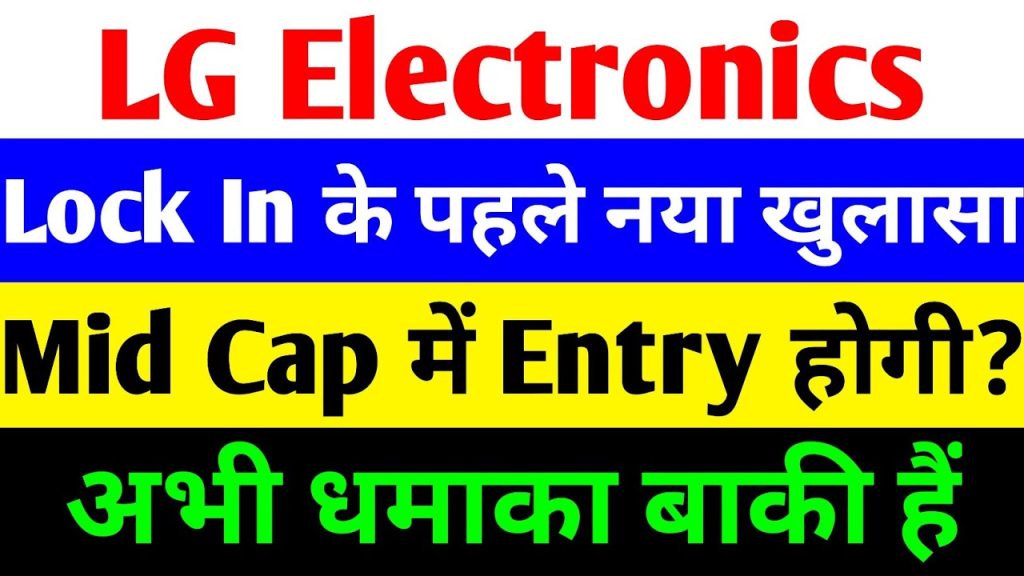
The lock-in period emerges as the elephant in the room for LG Electronics India shareholders. Mandated by SEBI, this 90-day restriction (for 50% of shares) and 30-day hold (for anchors) prevents immediate dumping by major allottees. Expiring imminently—October 14 for anchors—the phase has sparked anxiety. Market whispers suggest anchor investors, including heavyweights like Morgan Stanley and ICICI Prudential, may offload holdings, flooding supply and pressuring prices.

Data backs this concern. At IPO, free float stood at a mere 10%, inching to 13% post-30 days and potentially 15% after full unlock. Historical precedents, like Hyundai Motor India’s 2024 listing, saw 5-8% dips post-lock-in due to similar dynamics. For LG, this could amplify volatility, especially with 85% promoter stake limiting liquidity. Experts warn: If anchors sell even 20% of allocations, shares could test ₹1,600 support levels.

Yet, this isn’t all doom. The lock-in expiry coincides with Q3 2025 results, due late November, where analysts forecast 12-15% revenue growth. LG’s debt-free balance sheet and 12.8% EBITDA margins provide a buffer. Savvy investors view this as a tactical entry: Accumulate on dips, as post-unlock stabilization often precedes rallies in strong fundamentals plays. In the context of India’s consumer electronics surge—fueled by 5G adoption and smart home trends—the lock-in phase tests resolve but rewards patience.

Global Index Inclusion Delays: LG Electronics India and Tata Capital’s Shared Hurdle

LG Electronics India’s IPO saga intertwines with Tata Capital’s, another 2025 marquee offering. Both debuted amid fanfare but face a common roadblock: Delayed entry into global indices like MSCI and FTSE. With free floats below 15%—LG at 10% initially, Tata at 3.91%—eligibility criteria remain unmet. Experts project inclusion only by June 2026, during regular rebalances, sidelining passive inflows worth billions.

For LG, this means muted volumes until promoters dilute further to 75%. Tata Capital, listing flat on October 13 at ₹414 (upper band), mirrors the plight: Post-anchor unlock, float hits 11.2%, still shy of thresholds. Market cognoscenti note: Without index weightage, these stocks evade the “big money” chase, capping upside. Domestic indices like Nifty Next 50 or Midcap 150 offer interim solace, but derivative segment listing—essential for Sensex/Nifty—looms distant.

This delay tempers expectations. Passive funds, tracking global benchmarks, contribute modestly—perhaps ₹500-1,000 crore initially—versus ₹5,000+ crore for float-compliant peers. Yet, active managers salivate: LG slots as midcap, Tata as largecap in MSCI classifications, sparking fund inflows. Brokerages like Prabhudas Lilladher flag reclassification benefits post-2026. For now, both firms languish on sidelines, underscoring a broader lesson: In India’s IPO frenzy, index dreams demand patience amid 2025’s $20.5 billion fundraising boom.

Fundamentals Spotlight: LG Electronics India’s Financial Strength in Consumer Electronics Boom

At its core, LG Electronics India thrives on unassailable fundamentals, positioning it as a midcap powerhouse in India’s consumer electronics arena. FY25 showcased resilience: Revenue climbed 14.1% to ₹24,367 crore, propelled by 11% CAGR from FY23-25. Profit after tax (PAT) soared 45.8% to ₹2,203 crore, with EBITDA margins steady at 12.8%. Return on equity (ROE) dazzled at 36.9%, ROCE at 38.5%, underscoring efficient capital deployment in a debt-free setup.

Segment-wise, home appliances and air solutions dominate, capturing #1 offline share in key categories. Manufacturing hubs in Pune and Noida churn 14.5 million units annually, sourcing 54% locally to leverage PLI incentives. The distribution behemoth—35,640 touchpoints, including LG BrandShops and e-tailers—drives 40% online sales, aligning with Digital India’s e-commerce surge.

Trailing three-year trends affirm consistency. Revenue escalated from ₹18,118 crore (FY23) to ₹21,366 crore (FY24) and ₹24,367 crore (FY25). Operating profit mirrored: ₹1,820 crore to ₹2,370 crore to ₹3,120 crore. Net profit followed suit, up 66% YoY in FY25. These metrics eclipse peers: P/E at 51.24 trails Voltas (56.47) but beats Crompton (35.30), with forward estimates eyeing 20% EPS growth.

In India’s $83.7 billion consumer electronics market (2024), projected to reach $152.59 billion by 2033 at 6.9% CAGR, LG capitalizes on premiumization. Rising GNI per capita ($2,390 in 2024) and urbanization propel demand for inverter ACs and smart TVs. Q2 2025 B2B revenue, including HVAC, rose 3% YoY, while webOS platforms eye gaming expansions. Risks linger—legal claims at ₹4,815 crore and integration delays—but strengths dominate, making LG a bedrock for portfolios.

Peer Comparison: How LG Electronics India Stacks Up in the Competitive Landscape

LG Electronics India doesn’t compete in isolation; it navigates a crowded field of consumer electronics titans. Against Crompton Greaves (P/E 35.30, ROE 15%), LG’s 51.24 P/E reflects growth premium, backed by superior 36.9% ROE. Voltas (P/E 56.47) edges on valuation but lags in margins (9% vs. LG’s 12.8%). Whirlpool India (P/E 58) boasts similar revenue CAGR (13%) but trails in distribution scale.

Blue Star, an AC specialist, reports 10% FY25 growth but yields lower ROCE (25% vs. LG’s 38.5%). TTK Prestige (P/E 58) shines in small appliances yet concedes market share in larges. Globally, parent LG Electronics’ $9.4 billion cap underscores subsidiary outperformance, a trend echoed by Maruti Suzuki eclipsing Suzuki.

MetricLG Electronics IndiaCrompton GreavesVoltasWhirlpool India
FY25 Revenue (₹ Cr)24,3678,50012,0006,500
PAT (₹ Cr)2,203450650400
P/E Ratio51.2435.3056.4758.00
ROE (%)36.915.220.518.0
EBITDA Margin (%)12.810.59.011.2
Market Cap (₹ Cr)1,13,85750,00045,00030,000

This table highlights LG’s edge: Higher profitability and scale in a market doubling to $130-150 billion by 2029. While peers grapple with import duties, LG’s local sourcing (54%) fortifies resilience. Valuation gaps suggest upside: At 37% premium to parent, LG trades on India-specific growth narratives.

Market Trends Fueling Growth: India’s Consumer Electronics Revolution in 2025

India’s consumer electronics sector pulses with vitality, underpinning LG’s trajectory. Valued at $83.7 billion in 2024, it eyes $152.59 billion by 2033 (6.9% CAGR), per IMARC. Key drivers? Rising disposable incomes—GNI per capita at $2,390—and a 400 million-strong middle class craving premium gadgets. Urbanization swells tier-2/3 demand, where LG’s 35,000 outlets penetrate deeply.

E-commerce explodes, claiming 40% sales via platforms like Amazon and Flipkart, amplified by Digital India. 5G rollout supercharges wearables and IoT, with smart home adoption up 25% YoY. Premiumization trends—energy-efficient inverters, OLED TVs—align with LG’s portfolio, capturing 30% offline share.

Government catalysts abound: PLI scheme injects ₹6,000 crore for manufacturing, targeting $300 billion output by 2026. Festive seasons, like Diwali 2025, spike volumes 20-30%. Challenges persist—supply chain snarls and 18% GST—but tailwinds dominate. Redseer forecasts $130-150 billion by 2029, with LG poised as market leader.

Brokerage Insights: Coverage Initiatives and Bullish Outlooks

Brokerages swarm LG Electronics India, signaling conviction. Prabhudas Lilladher initiates “Buy” at ₹1,780 target (6% upside), citing 13% revenue CAGR. ICICI Securities and Nomura launch coverage with “Outperform,” eyeing midcap reclassification perks. Motilal Oswal pegs ₹1,900, factoring index inflows post-2026.

Ten firms—Prabhudas, ICICI, Nomura, Axis, Emkay, Anand Rathi—cover LG, versus Tata Capital’s duo. Emkay’s ₹2,050 call (22% potential) hinges on B2B HVAC growth. Consensus: 8 “Buy” ratings, average target ₹1,850. Risks noted—lock-in dumps, rate hikes—but positives prevail: Brand equity, 43% ROCE.

These endorsements catalyze inflows, with active funds eyeing 5-10% allocations. As Q3 earnings loom, brokerage fervor underscores LG’s appeal in 2025’s IPO wave.

Investment Strategy: Hold or Sell LG Electronics India Shares?

The million-rupee query: Hold or sell? For allottees nursing 31% gains, a hybrid approach shines. Book 30-40% profits to lock ₹5,000-7,000 per lot, mitigating lock-in risks. Retain the rest for 12-18 months, targeting ₹1,900-2,050 as indices beckon.

New entrants? Accumulate on dips below ₹1,650, leveraging 20x forward P/E versus sector 25x. Long-term horizon (3-5 years) suits: India’s electronics doubling favors LG’s 15% CAGR projections. Short-term traders eye volatility plays—buy calls at support, sell at resistance.

Risks demand vigilance: Anchor sales could shave 5-10%, while global slowdowns hit exports. Mitigate via diversification—pair with defensives like HDFC Bank. Disclaimer: Consult advisors; this is educational.

Future Outlook: LG Electronics India’s Path to Sustained Dominance

LG Electronics India stands at inflection. Post-lock-in, index hopes by 2026 unlock ₹10,000+ crore inflows. Expansions—Essential Series rollout November 2025, webOS gaming—target $90 billion market by 2029. Parent’s “Global South” pivot earmarks India for 33% growth contribution.

Challenges? Legal overhangs, competition from Xiaomi. But strengths—unrivaled network, R&D prowess—prevail. By 2030, analysts envision ₹50,000 crore revenue, 20% margins. In 2025’s buoyant IPO landscape, LG exemplifies opportunity: Buy the dip, hold the vision.

Exit mobile version