


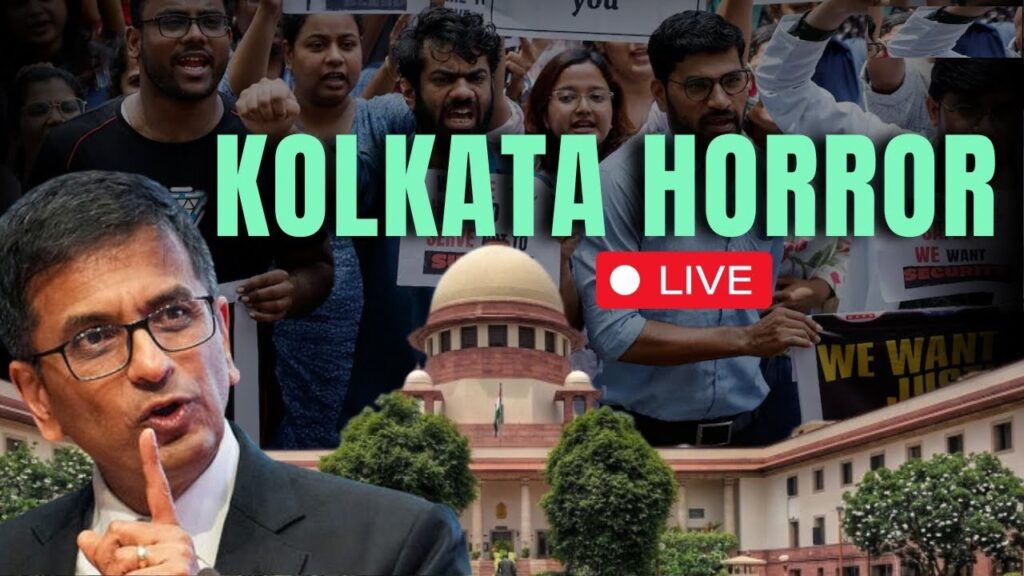
The tragic rape and murder of a postgraduate doctor at RG Kar Medical College and Hospital in Kolkata have shaken the nation. This horrific incident has not only sparked a nationwide doctors’ strike but has also caught the attention of the highest court in the country. The Supreme Court, led by Chief Justice of India (CJI) D.Y. Chandrachud, has taken up the case suo motu, signaling the gravity of the situation.
Supreme Court’s Intervention in the Kolkata Doctor Case
On August 20, 2024, the Supreme Court of India began hearing the case involving the rape and murder of the young doctor. The case, titled “In Re: Alleged Rape and Murder Incident of a Trainee Doctor in RG Kar Medical College and Hospital, Kolkata, and Related Issues,” has been prioritized due to the widespread implications it carries, not just for West Bengal but for the entire country.
The Bench, headed by CJI Chandrachud, took cognizance of the case on its own, reflecting the court’s concern over the handling of the situation by local authorities. The Calcutta High Court had already transferred the investigation to the Central Bureau of Investigation (CBI), acknowledging the complexities and sensitivities involved.

The Role of the Hospital: Allegations of a Cover-Up
A significant aspect of the case is the role played by the hospital administration. CJI Chandrachud raised critical questions about why the hospital’s principal initially attempted to dismiss the incident as a suicide. This has led to suspicions of a cover-up, further compounded by the delay in registering a First Information Report (FIR). The CJI questioned the timing of the FIR, noting that it was filed late at night, long after the incident occurred.
The Solicitor General, Tushar Mehta, representing the Union government, highlighted the severity of the crime, describing the assault as the act of a “pervert” and an “animal.” He emphasized the emotional turmoil faced by the victim’s parents, who had to endure a long wait to receive their daughter’s body.
National Concerns: Safety of Doctors Across India
The CJI expressed broader concerns that extend beyond this particular case. He pointed out the systemic issues related to the safety of doctors, particularly young female doctors who often face long, grueling shifts without adequate safety measures. The court recognized the need for a national protocol to ensure safe working conditions for medical professionals across the country.
In response to the ongoing doctors’ strike, which has paralyzed healthcare services nationwide, the Supreme Court announced the formation of a national task force. This task force, comprising doctors from various sectors, will be responsible for proposing concrete safety measures for medical professionals. The CJI underscored the importance of these protocols, stressing that they must be more than just theoretical; they need to be effectively implemented to prevent future tragedies.
Concerns Over Media Coverage and Victim’s Privacy
The Supreme Court also addressed concerns about the media’s handling of the case. CJI Chandrachud criticized the widespread publication of the victim’s name, photographs, and post-mortem videos. He reminded the media of the limits of free speech, referencing the Nipun Saxena v. Union of India (2018) judgment, which mandates the protection of the identity and dignity of rape victims. The CJI questioned whether this was the appropriate way to treat a young doctor who had suffered such a horrific fate.
CBI Investigation and Legal Proceedings
During the hearing, the CJI directed the CBI to submit a status report on the investigation by Thursday, August 22, 2024. The court expressed dissatisfaction with the police’s role, questioning why the crime scene, located within the hospital precincts, was not properly secured. The CJI also raised concerns about the principal of the hospital being reassigned to another position shortly after resigning, which has fueled suspicions of mismanagement or misconduct.
The Need for Immediate Action
The Supreme Court’s involvement in this case highlights the urgent need for reforms in how such incidents are handled, both by medical institutions and law enforcement agencies. The safety of medical professionals, particularly in public hospitals, has emerged as a critical issue that requires immediate attention. The court’s insistence on swift and transparent investigations, combined with its focus on creating national safety protocols, could lead to significant changes in the healthcare sector.
As the nation watches, the outcome of this case could set a precedent for how similar cases are handled in the future. The Supreme Court’s proactive approach sends a clear message that the safety of doctors and the dignity of victims are of paramount importance and that any attempts to undermine these will be met with serious legal scrutiny.
Conclusion: A Turning Point for Doctor Safety in India
The Kolkata doctor rape-murder case has become a flashpoint for broader discussions on the safety of medical professionals in India. The Supreme Court’s intervention, combined with the nationwide doctors’ strike, has brought these issues to the forefront. As the investigation continues, the focus remains on ensuring justice for the victim and implementing long-overdue reforms to protect those who dedicate their lives to saving others. The coming days will be crucial in determining how India addresses these systemic challenges and whether the measures taken will be enough to prevent such tragedies in the future.