


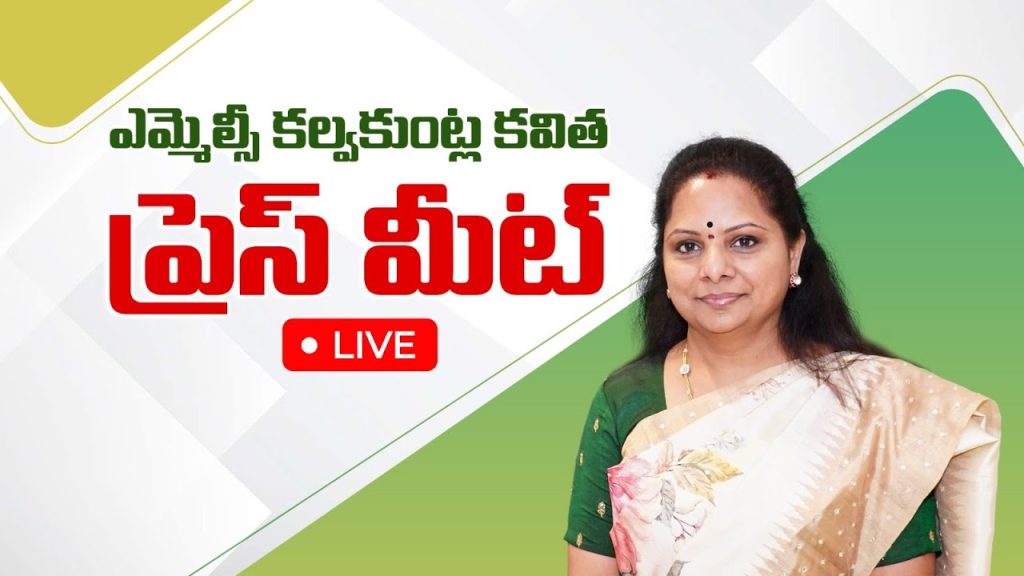
Introduction: A Storm in Telangana Politics
The political landscape in Telangana has been stirred by MLC Kavitha’s fiery remarks targeting Jagadish Reddy, a fellow Bharat Rashtra Samithi (BRS) leader, accusing him of undermining the party’s influence in Nalgonda district. Her comments, delivered with unapologetic candor, have sparked widespread discussion, shedding light on internal party conflicts and broader socio-political issues in Telangana. This article delves into the nuances of Kavitha’s statements, the historical context of the Telangana movement, the ongoing struggle for Backward Classes (BC) rights, and the implications for BRS and Telangana’s political future. By exploring these themes, we aim to provide a comprehensive, engaging, and optimized analysis that resonates with readers and ranks highly in search results.
The Context: MLC Kavitha’s Explosive Allegations
MLC Kavitha’s recent comments have sent shockwaves through Telangana’s political circles. In a scathing critique, she labeled Jagadish Reddy a “Lilliputian leader” responsible for the BRS’s electoral setbacks in Nalgonda. She accused him of contributing to the party’s failure to secure even a single seat in the district, a significant blow to a party historically rooted in the Telangana movement. Kavitha’s remarks were not just a personal attack but a broader commentary on loyalty, leadership, and the internal dynamics of the BRS.
Who Is MLC Kavitha?
Kavitha, a prominent figure in Telangana politics, is known for her fierce advocacy and deep ties to the Telangana movement. As a member of the BRS and a close associate of party leader K. Chandrashekar Rao (KCR), she has been instrumental in shaping the party’s narrative and mobilizing support. Her outspoken nature and commitment to social justice issues, particularly for women and marginalized communities, have made her a polarizing yet influential figure.
Jagadish Reddy: A Controversial Figure in BRS
Jagadish Reddy, a key BRS leader, has been a polarizing figure within the party. While he has held significant positions, his actions have drawn criticism from peers like Kavitha, who argue that his leadership has weakened the party’s stronghold in Nalgonda. The accusation that he is a “Lilliputian leader” suggests a lack of stature and effectiveness, a claim that has ignited debates about accountability within the BRS.
The Telangana Movement: A Legacy Under Scrutiny
Kavitha’s remarks are deeply rooted in the legacy of the Telangana movement, a decades-long struggle for statehood that culminated in the formation of Telangana in 2014. The movement, led by KCR and supported by countless activists, is a point of pride for BRS leaders. However, Kavitha’s critique highlights a growing concern: the dilution of the movement’s ideals by opportunistic leaders who joined the BRS after its rise to power.
KCR’s Role in Shaping Telangana’s Identity
Kavitha emphasized that KCR’s leadership was pivotal in introducing many BRS leaders, including herself, to the public. “Without KCR, where would any of us be?” she questioned, underscoring his role in building the party’s foundation. This statement serves as a reminder of the sacrifices made during the Telangana movement and a call to protect its legacy from internal sabotage.
Opportunism in Politics: A Growing Concern
Kavitha’s allegations point to a broader issue of opportunism within the BRS. She criticized leaders who joined the party post-victory, securing positions of power without contributing to the grassroots struggle. This sentiment resonates with many Telangana activists who feel betrayed by those who capitalized on the movement’s success without sharing its burdens.
The Nalgonda Debacle: A Case Study in Political Failure
Nalgonda, once a stronghold of the BRS, has become a battleground for internal party conflicts. Kavitha’s claim that Jagadish Reddy “destroyed” the party’s prospects in the district highlights the challenges of maintaining unity and effectiveness in a competitive political environment.
Electoral Setbacks in Nalgonda
The BRS’s failure to secure seats in Nalgonda is a significant setback, given the district’s historical allegiance to the party. Kavitha’s remarks suggest that internal mismanagement and lackluster leadership are to blame. She pointed out that the only seat won was an unexpected victory, not a result of strategic planning or grassroots support.
Public Sentiment and Accountability
Kavitha urged the people of Nalgonda to reflect on who supports leaders like Jagadish Reddy. By framing her critique as a call for public accountability, she aims to rally support and expose those she believes are undermining the BRS’s mission. This approach taps into the public’s desire for transparency and integrity in politics.
The BC Issue: A Call for Social Justice
Beyond internal party disputes, Kavitha’s comments also addressed the pressing issue of Backward Classes (BC) rights in Telangana. She announced plans for a 72-hour protest to demand fair representation and opportunities for BC communities, a cause that has gained traction across the state.
The Struggle for BC Rights
The BC community, comprising a significant portion of Telangana’s population, has long demanded equitable representation in education, employment, and politics. Kavitha’s call for a 72-hour “Satyagraha” aims to pressure the government into addressing these demands. She emphasized that the protest is not just a political maneuver but a genuine effort to amplify the voices of marginalized communities.
Government Inaction and Political Games
Kavitha accused both the Congress and Bharatiya Janata Party (BJP) of playing political games with the BC issue. She criticized their tendency to deflect responsibility—Congress blaming BJP and vice versa—while failing to deliver concrete solutions. Her demand for a 72-hour platform to voice BC grievances underscores the urgency of the matter and her commitment to non-violent protest.
The Role of Nai Brahmin Community
Kavitha also addressed derogatory remarks made against the Nai Brahmin community, a subgroup within the BC category. She condemned leaders who insulted this community and rallied their support for the upcoming protest. By highlighting this issue, she aims to unite diverse BC groups under a common cause, strengthening the movement’s impact.
Internal Party Drama: The Leaked Letter Controversy
A significant portion of Kavitha’s remarks focused on a leaked letter, which she claims was used to force her into responding publicly. The letter, allegedly written to KCR, contained personal sentiments comparing him to a father figure. Its public disclosure has fueled speculation about internal sabotage within the BRS.
The Impact of the Leak
The leaked letter has added fuel to the fire, exposing internal rifts within the BRS. Kavitha suggested that certain party leaders orchestrated the leak to provoke her and create drama. She claimed to have “hundreds of pieces of evidence” to support her allegations, promising to reveal them at the right time. This strategic withholding of information keeps the public engaged and builds anticipation for future revelations.
CM Ramesh’s Involvement
Kavitha also referenced CM Ramesh, a political figure whose comments she believes were influenced by the leaked letter. While she admitted to having limited recent interactions with Ramesh, she speculated about a possible connection between the leak and his statements. This ambiguity adds intrigue to the narrative, positioning Kavitha as a leader navigating a complex web of political maneuvering.
The Path Forward: Protests and Legal Action
Kavitha’s response to the controversy is multifaceted, combining public protests, legal action, and strategic communication. She announced plans to continue the 72-hour protest, even if government permission is denied, demonstrating her resolve to amplify the BC cause.
The 72-Hour Satyagraha
The proposed 72-hour Satyagraha at Indira Park in Hyderabad is a strategic move to centralize the BC movement. Kavitha emphasized that the location is accessible and recognizable, making it an ideal venue for a large-scale protest. She appealed to the Director General of Police (DGP) and the government for permission, framing the protest as a democratic expression of dissent.
Legal Measures and Evidence
Kavitha revealed that she and other leaders have already approached the courts to secure permission for the protest. She promised to release a list of supporting leaders by evening, signaling a coordinated effort to challenge government restrictions. Her confidence in continuing the protest, even in the face of potential obstacles, underscores her commitment to the cause.
Broader Implications for Telangana Politics
Kavitha’s remarks have far-reaching implications for Telangana’s political landscape. By addressing internal party conflicts, the BC issue, and the legacy of the Telangana movement, she has positioned herself as a central figure in shaping the state’s future.
Strengthening the BRS’s Position
Despite the internal conflicts, Kavitha’s outspokenness could strengthen the BRS’s position by rallying loyalists and exposing detractors. Her emphasis on KCR’s legacy and the Telangana movement resonates with the party’s core supporters, reinforcing its identity as a champion of regional pride.
Amplifying the BC Movement
The BC issue is a critical concern in Telangana, and Kavitha’s leadership could galvanize support across communities. By framing the protest as a democratic and inclusive movement, she appeals to a broad audience, potentially shifting public opinion in favor of the BRS.
Challenging National Parties
Kavitha’s criticism of Congress and BJP highlights their perceived inaction on BC rights. By positioning the BRS as a regional alternative, she taps into local sentiments and challenges the dominance of national parties in Telangana.
Conclusion: A Call to Action
MLC Kavitha’s bold remarks against Jagadish Reddy and her commitment to the BC cause have ignited a crucial conversation in Telangana. Her accusations of internal sabotage, coupled with her advocacy for marginalized communities, position her as a formidable leader in a turbulent political landscape. As the BRS navigates these challenges, the upcoming 72-hour Satyagraha could be a defining moment for both the party and the BC movement. By demanding accountability, transparency, and justice, Kavitha is not only addressing immediate issues but also shaping the future of Telangana politics.
For those invested in Telangana’s political and social dynamics, Kavitha’s words serve as a call to action. The people of Telangana, she argues, will not remain silent in the face of betrayal or inaction. As the state moves forward, the resolution of these conflicts and the outcome of the BC protest will likely shape the region’s political trajectory for years to come.
FAQs
1. What prompted MLC Kavitha’s comments against Jagadish Reddy?
Kavitha accused Jagadish Reddy of undermining the BRS’s influence in Nalgonda, leading to electoral losses. She labeled him a “Lilliputian leader” and criticized his lack of contribution to the Telangana movement.
2. What is the significance of the 72-hour Satyagraha?
The Satyagraha is a planned protest to demand fair representation and opportunities for Backward Classes (BC) in Telangana. It aims to pressure the government into addressing long-standing grievances.
3. How does the leaked letter impact the BRS?
The leaked letter, allegedly written by Kavitha to KCR, has exposed internal rifts within the BRS. It has fueled speculation about sabotage and prompted Kavitha to promise future revelations.
4. What role does the Telangana movement play in this controversy?
The Telangana movement is central to Kavitha’s critique, as she accuses certain leaders of exploiting its success without contributing to the struggle. It underscores the importance of loyalty and legacy within the BRS.
5. How can the public support the BC movement?
Kavitha encourages public participation in the 72-hour Satyagraha and urges citizens to hold leaders accountable for addressing BC rights and other social justice issues.