


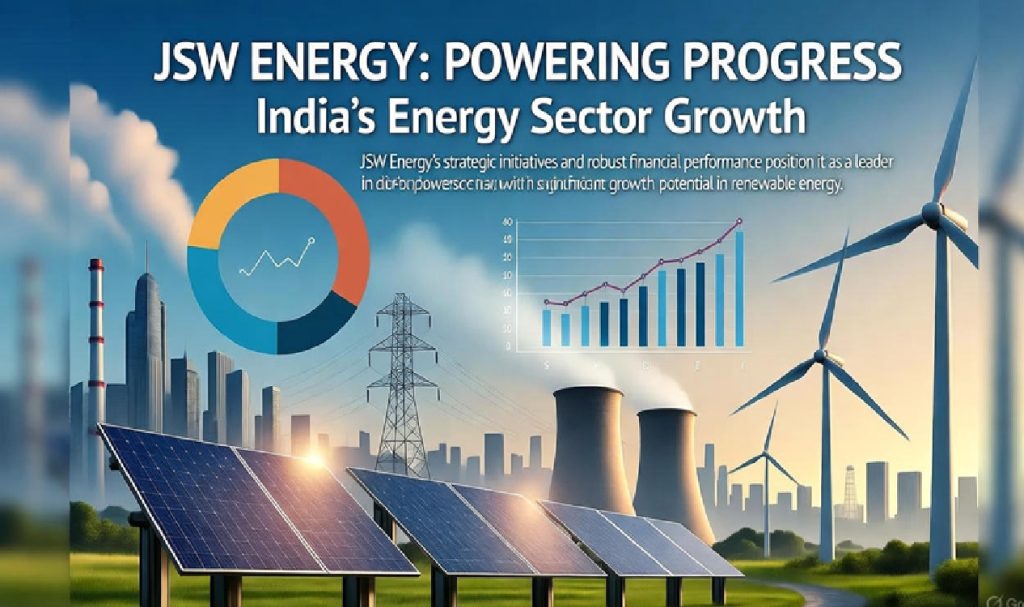
India’s power sector surges forward with unmatched potential, and JSW Energy emerges as a prime contender for multibagger returns. Investors seeking explosive growth in renewable energy stocks, thermal power investments, and energy storage solutions turn to JSW Energy. This pure-play power generation company targets 30 GW capacity by FY30, capitalizing on government tailwinds and soaring electricity demand. Discover why JSW Energy leads power sector multibaggers in 2025.
India’s Power Sector Boom: A Multi-Year Growth Engine
India transforms into a power-hungry economy. Electricity demand escalates as factories expand, offices multiply, and households adopt air conditioners. Data centers and AI technologies amplify global power consumption, yet India’s AC penetration remains low. Government initiatives drive this momentum. Officials aim for 500 GW of non-fossil fuel capacity by 2030, nearly doubling the current 260-270 GW. This target demands 50 GW of renewable additions annually—a 15% CAGR.
Thermal power retains relevance for 24/7 reliability. Plans elevate coal-based capacity from 222 GW in 2024 to 277 GW by FY27. Solar dominates new additions, fueled by India’s abundant sunlight. From 2015-16, when thermal claimed 70% of capacity additions, solar now leads the charge. Wind maintains steady contributions, while nuclear grows cautiously due to risks.
JSW Energy positions itself at this intersection. The company focuses solely on power generation—no distribution or transmission distractions. This clarity attracts long-term investors eyeing sustainable energy growth.
JSW Energy’s Ambitious Capacity Expansion Roadmap
JSW Energy operates 13.2 GW today and plans to reach 30 GW by FY30—over 2.5 times growth in under five years. Private players like JSW outpace government doubling efforts. Secured projects underpin this vision:
- Wind: 2.3 GW under construction with PPAs signed.
- Thermal: 1.6 GW advancing.
- Hybrid (Solar + Wind): 5.2 GW locked in.
- Pure Solar: 3.3 GW committed.
- Pipeline: 4.5 GW ready for announcement.
Total locked-in capacity hits 30.4 GW. Aggressive execution counters oversupply fears. Demand rises relentlessly—industrialization, urbanization, and electrification ensure absorption.
Diversified Power Generation: Balancing Renewables and Thermal
JSW Energy embraces all sources. Coal expansions continue alongside solar and wind dominance. Hydro projects complement the mix. This balanced approach mitigates intermittency issues in renewables. Solar generates daytime peaks, but nights demand storage. JSW addresses this head-on.
The company targets 30-40 GW of energy storage by 2030. Pumped hydro storage plants lead, with 13 GW agreements signed recently. Battery systems follow, despite higher costs. Total locked storage nears 30 GW. Self-reliance in storage enhances hybrid projects and grid stability.
Compare to peers: Tata Power diversifies into transmission, distribution, and rooftop solar. JSW stays generation-focused—higher concentration, higher rewards for aggressive investors.
Post-COVID Growth Surge and Financial Improvements
Post-COVID aggression defines JSW. The JSW Group’s decent pedigree shines. FY22 onward, revenues climb, margins expand, and PAT grows. Capex intensity tempers ROE and ROCE temporarily. Debt-to-equity stands at 2.3—expected for capex-driven firms.
Cash generation strengthens. Cash returns on net worth reach 21% consistently. A 1.3 lakh crore capex roadmap spans expansions and energy transitions over five years. As capex plateaus around FY28-29, return ratios should rebound.
Institutional buyers agree. DII holdings rise steadily. Promoters hold 69% stake despite minor sales—strong skin in the game.
Valuation Analysis: Decent Entry After Corrections
JSW Energy’s stock fell 21% in the last year and 32% from 52-week highs. PE settles around 40-45—near three-year median, down from 60+. Compare to Tata Power’s 31 PE; JSW’s premium reflects pure generation focus and bolder growth.
EV/EBITDA offers decent levels post-correction. Six months ago, valuations deterred entry. Today, discussions turn viable for power sector stock picks.
Key Risks Every Investor Must Evaluate
Valuations aren’t bargain-basement. High debt and low returns demand flawless execution. Regulatory hurdles or project delays pose threats—recall Tata Power’s Mundra woes with imported coal costs.
Domestic coal linkage strategies reduce risks, but capex overruns lurk. Debt reduction hinges on cash flows from new capacities. Perfect demand growth, government support, and execution align for outsized profits. Any slip invites derating.
Why JSW Energy Screams Multibagger Potential in 2025
JSW Energy captures India’s power hunger. Renewable targets, storage innovations, and thermal reliability create tailwinds. Capacity triples, storage scales massively, and financials improve post-capex.
Long-term investors in multibagger power stocks prioritize this profile. Government’s 500 GW renewable push and 277 GW thermal goal provide decades of growth. JSW’s focused generation strategy, diversified sources, and locked pipelines position it ahead.
Monitor execution closely—this stock rewards patience. As India powers its future, JSW Energy generates wealth for discerning portfolios.
Detailed Financial Projections: Path to Multibagger Returns
JSW Energy’s financial trajectory underscores its multibagger appeal. Analysts project explosive growth, fueled by capacity ramp-ups and favorable tariffs. Revenue CAGR hits 42% through FY28, driven by 73% YoY PPA generation growth in Q1 FY26 alone (11.8 BUs). EBITDA margins expand to 54.5% by FY27, reflecting operational efficiencies and RE contributions. PAT surges with EPS CAGR of 23% FY25-28, targeting ₹27,071 crore net profit by FY28
The table below outlines consensus projections, blending brokerage estimates and historical trends. Assumptions: 20-25% revenue growth FY26-FY28 tapering to 15% FY29-30; EBITDA margin 50-55%; tax rate 25%; capex peaks FY26-27 then eases; debt peaks FY27 before deleveraging.
| Fiscal Year | Installed Capacity (GW) | Revenue (₹ Cr) | EBITDA (₹ Cr) | PAT (₹ Cr) | Capex (₹ Cr) | Net Debt (₹ Cr) | ROE (%) | EPS (₹) |
|---|---|---|---|---|---|---|---|---|
| FY25 (Est.) | 13.2 | 11,000 | 5,221 | 1,800 | 12,000 | 44,000 | 10.5 | 10.3 |
| FY26 | 15.0 | 19,400 | 10,500 | 3,500 | 16,500 | 55,000 | 11.5 | 15.2 |
| FY27 | 18.5 | 25,266 | 13,770 | 6,500 | 18,000 | 60,000 | 13.0 | 21.4 |
| FY28 | 22.0 | 30,000 | 16,500 | 9,000 | 15,000 | 58,000 | 14.5 | 26.8 |
| FY29 | 26.0 | 34,500 | 19,000 | 11,500 | 12,000 | 52,000 | 15.0 | 32.1 |
| FY30 | 30.0 | 39,775 | 21,900 | 14,000 | 10,000 | 45,000 | 15.5 | 37.5 |
Sources: Bloomberg consensus, Jefferies, ICICI Securities, company filings. FY25 based on H1 trends (H1 FY26 revenue ₹10,772 Cr, +66% YoY; EBITDA implied ~₹6,237 Cr).
Valuation Analysis: Decent Entry After Corrections
JSW Energy’s stock fell 21% in the last year and 32% from 52-week highs. PE settles around 40-45—near three-year median, down from 60+. Compare to Tata Power’s 31 PE; JSW’s premium reflects pure generation focus and bolder growth. At ₹540/share, it trades at 11x FY27 EV/EBITDA—attractive for 42% CAGR prospects.
Key Risks Every Investor Must Evaluate
Valuations aren’t bargain-basement. High debt and low returns demand flawless execution. Regulatory hurdles or project delays pose threats—recall Tata Power’s Mundra woes with imported coal costs. Domestic coal linkage strategies reduce risks, but capex overruns lurk. Debt reduction hinges on cash flows from new capacities. Perfect demand growth, government support, and execution align for outsized profits. Any slip invites derating.
India’s 6.3% demand CAGR tempers oversupply fears, but global supply chain snags could hike costs 5-10%. Monitor Q3 FY26 results for capex traction.