


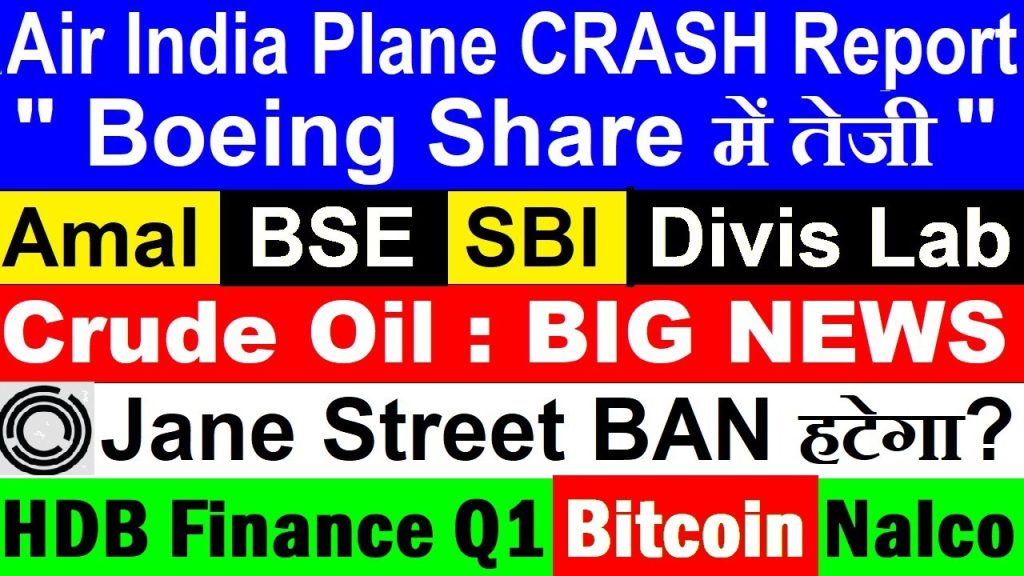
The financial markets in 2025 are buzzing with activity, from regulatory developments to corporate earnings and global economic shifts. This comprehensive analysis dives into the latest market trends, offering insights into key events shaping investor sentiment. From the potential lifting of Jane Street’s ban by SEBI to HDB Financial’s Q1 performance, Bitcoin’s rally, and more, we explore the forces driving markets today. Stay ahead of the curve with this in-depth guide to current market dynamics.
American Market Performance: A Flat Yet Optimistic Outlook
The U.S. stock market has displayed a lackluster yet cautiously optimistic performance recently. Major indices, including the NASDAQ, have hovered around flat levels, with brief periods of gains. While no significant catalysts have propelled the market upward, a slight uptick in green signals suggests potential for recovery. Investors are closely monitoring upcoming economic data, particularly the U.S. Consumer Price Index (CPI) inflation figures, which could influence market direction. This flat performance underscores a cautious approach among traders awaiting clearer signals.
Key Takeaways from U.S. Market Trends
- Flat Performance: Major indices like NASDAQ show minimal movement, with gains under 0.5%.
- CPI Data Anticipation: Investors await U.S. inflation data to gauge future market momentum.
- Cautious Optimism: Brief green signals indicate potential for upward movement.
Jane Street Ban: Will SEBI Lift the Restrictions?
Jane Street, a prominent trading firm, has been under scrutiny since SEBI imposed a ban due to alleged irregularities. The firm reportedly transferred ₹48,43 crore to an escrow account as part of SEBI’s directive to address illegal gains. Recent reports suggest Jane Street has requested SEBI to lift the ban, sparking speculation about its potential impact on market liquidity.
The ban has significantly reduced trading volumes, with market participants noting a lack of excitement in the absence of Jane Street’s high-volume trades. If SEBI lifts the ban, it could boost trading activity, particularly benefiting exchanges like BSE, which saw a 4% surge on rumors of the ban’s potential removal. However, if SEBI upholds the restrictions, BSE could face renewed pressure.
Implications of the Jane Street Ban
- Market Liquidity: The ban has led to reduced trading volumes, impacting market dynamism.
- BSE Surge: Speculation about the ban’s lifting drove a 4% rise in BSE stock.
- Regulatory Scrutiny: SEBI’s decision will hinge on Jane Street’s compliance and acknowledgment of past errors.
HDB Financial Services: Q1 Earnings Under the Spotlight
HDB Financial Services, a recently listed company, is set to release its first-quarter earnings, drawing significant investor attention. As a key player in the financial services sector, its performance will offer insights into the broader non-banking financial company (NBFC) landscape. Analysts expect HDB Financial’s results to reflect its ability to navigate competitive pressures and regulatory changes.
What to Watch in HDB Financial’s Q1 Report
- Revenue Growth: Investors will assess HDB Financial’s ability to sustain revenue in a competitive market.
- Profit Margins: Margin trends will indicate operational efficiency and cost management.
- Market Positioning: The results will highlight HDB Financial’s standing in the NBFC sector.
Bitcoin’s Meteoric Rise: A Crypto Comeback
Bitcoin has staged an impressive rally, surpassing $12,000 and reaching levels above $21,000. This surge, fueled by positive developments in the UAE and growing institutional interest, has reignited excitement in the cryptocurrency market. Investors are increasingly viewing Bitcoin as a hedge against economic uncertainty, driving its upward trajectory.
Factors Driving Bitcoin’s Surge
- UAE Developments: Positive regulatory news from the UAE has boosted investor confidence.
- Institutional Adoption: Growing interest from institutional investors is fueling Bitcoin’s rally.
- Market Sentiment: Bitcoin’s role as a safe-haven asset is gaining traction amid global uncertainties.
Tata Group: Mixed Performance Across Subsidiaries
The Tata Group, a conglomerate with diverse business interests, has seen varied performance across its subsidiaries. While some companies, like Rallis India, reported strong quarterly results, others, such as Tata Technologies and Nelco, faced challenges.
Rallis India: A Bright Spot
Rallis India, a Tata Group company in the agricultural sector, reported robust Q1 results. Operating profit soared from ₹96 crore to ₹150 crore, while final profits doubled from ₹48 crore to ₹95 crore. This turnaround from a loss-making quarter underscores Rallis India’s operational strength and market resilience.
Nelco and Tata Technologies: Facing Headwinds
Nelco, another Tata subsidiary, saw a 4-5% stock decline after reporting a 60% drop in yearly profits and narrowing margins. Similarly, Tata Technologies’ lackluster numbers reflect challenges in its business model, which relies heavily on large orders. These mixed results highlight the diverse performance within the Tata Group.
Key Insights into Tata Group’s Performance
- Rallis India’s Strength: Strong profit growth signals resilience in the agricultural sector.
- Nelco’s Challenges: Declining profits and margins reflect operational difficulties.
- Tata Technologies’ Dependence: Reliance on large orders underscores business volatility.
Air India and Boeing: Clearing the Air
A recent Air India incident involving a Boeing aircraft raised concerns about safety and reliability. However, preliminary investigations have cleared Boeing, attributing the incident to human error rather than mechanical failure. This clean chit has boosted Boeing’s stock, as investor confidence in the company’s safety protocols strengthens.
Implications for Air India and Boeing
- Boeing’s Recovery: The clean chit has alleviated concerns, driving a stock rally.
- Air India’s Challenges: The incident underscores the need for enhanced pilot training and safety measures.
- Investor Sentiment: Boeing’s stock surge reflects renewed confidence in its safety standards.
State Bank of India: Mega QIP on the Horizon
The State Bank of India (SBI) is planning a massive ₹25,000 crore Qualified Institutional Placement (QIP) to bolster its capital base. Expected to launch soon, this move aims to strengthen SBI’s financial position amid growing lending demands. The QIP will likely attract significant institutional interest, further solidifying SBI’s market dominance.
SBI’s QIP Strategy
- Capital Raising: The ₹25,000 crore QIP will enhance SBI’s lending capacity.
- Institutional Interest: The offering is expected to draw strong demand from institutional investors.
- Market Impact: A successful QIP could boost SBI’s stock and reinforce its financial stability.
Crude Oil and Global Economic Strategies
The European Union and the U.S. are intensifying efforts to limit Russia’s crude oil exports by imposing a price cap. The proposed cap, set at 15% below the current $60 per barrel, aims to reduce Russia’s oil revenue, potentially weakening its economy and war funding capabilities. This strategy has driven crude oil prices below $70, impacting global energy markets.
Impact of the Crude Oil Price Cap
- Russia’s Economy: Reduced oil revenue could constrain Russia’s economic and military activities.
- Global Energy Markets: Lower crude oil prices may benefit importing nations but pressure oil producers.
- Geopolitical Dynamics: The EU and U.S. strategy reflects a coordinated effort to counter Russia’s influence.
Corporate Earnings: A Mixed Bag
Several companies are set to release their Q1 earnings, offering a glimpse into their financial health. Alongside HDB Financial, companies like GM Breweries, Hathway, ICICI General, ICICI Prudential Life Insurance, and Network 18 will report results. These earnings will provide critical insights into sector-specific trends and broader market sentiment.
Companies to Watch
- GM Breweries: Investors will analyze its revenue and margin trends.
- Hathway: The cable and broadband provider’s results will reflect digital consumption patterns.
- ICICI General and Prudential: Insurance sector performance will highlight market resilience.
- Network 18: Media sector results will indicate advertising and content demand.
Global Economic Indicators: CPI and GDP Data
The upcoming release of U.S. CPI data and China’s Q2 GDP figures will significantly influence global markets. The U.S. CPI data, expected after market close, will provide insights into inflation trends, potentially impacting Federal Reserve policy decisions. Similarly, China’s GDP data will reflect the health of the world’s second-largest economy, affecting global investor sentiment.
Key Economic Data Points
- U.S. CPI Data: Inflation trends will guide expectations for interest rate changes.
- China’s Q2 GDP: Economic growth data will influence global market dynamics.
- Market Implications: These indicators will shape investor strategies and market volatility.
Adani and Winsol: A Strategic Partnership
Adani Group’s Winsol has secured a ₹22 crore order, signaling continued growth in its renewable energy portfolio. This development reinforces Adani’s position in the green energy sector, aligning with global sustainability trends.
Adani’s Renewable Energy Push
- Winsol’s Order: The ₹22 crore deal highlights Adani’s expanding renewable energy footprint.
- Sustainability Trends: The order aligns with global demand for clean energy solutions.
- Market Impact: Adani’s stock could benefit from its growing renewable energy focus.
Divi’s Laboratories: Patent Litigation Woes
Divi’s Laboratories faced a 4-5% stock decline due to patent litigation concerns. Reports suggest potential material risks to earnings, prompting investor caution. This development underscores the challenges pharmaceutical companies face in navigating intellectual property disputes.
Divi’s Litigation Challenges
- Stock Decline: Patent concerns led to a 4-5% drop in Divi’s stock.
- Earnings Risk: Litigation could impact future profitability.
- Investor Sentiment: Uncertainty around legal outcomes is driving caution.
FII and DII Activity: Contrasting Trends
Foreign Institutional Investors (FIIs) have continued their selling spree, offloading ₹1,600 crore in equities. In contrast, Domestic Institutional Investors (DIIs) have been consistent buyers, purchasing ₹1,800 crore worth of stocks. This divergence highlights differing investor strategies, with FIIs adopting a cautious stance and DIIs capitalizing on market dips.
FII and DII Dynamics
- FII Selling: Persistent sell-offs reflect cautious foreign investor sentiment.
- DII Buying: Domestic investors are seizing opportunities in a volatile market.
- Market Balance: The interplay between FII and DII activity is stabilizing Indian markets.
Conclusion: Navigating a Dynamic Market Landscape
The financial markets in 2025 are marked by a blend of opportunities and challenges. From Jane Street’s potential ban lift to Bitcoin’s rally and Tata Group’s mixed performance, investors face a complex landscape. Key economic indicators, corporate earnings, and geopolitical developments will continue to shape market trends. Stay informed and agile to capitalize on these dynamic shifts.