


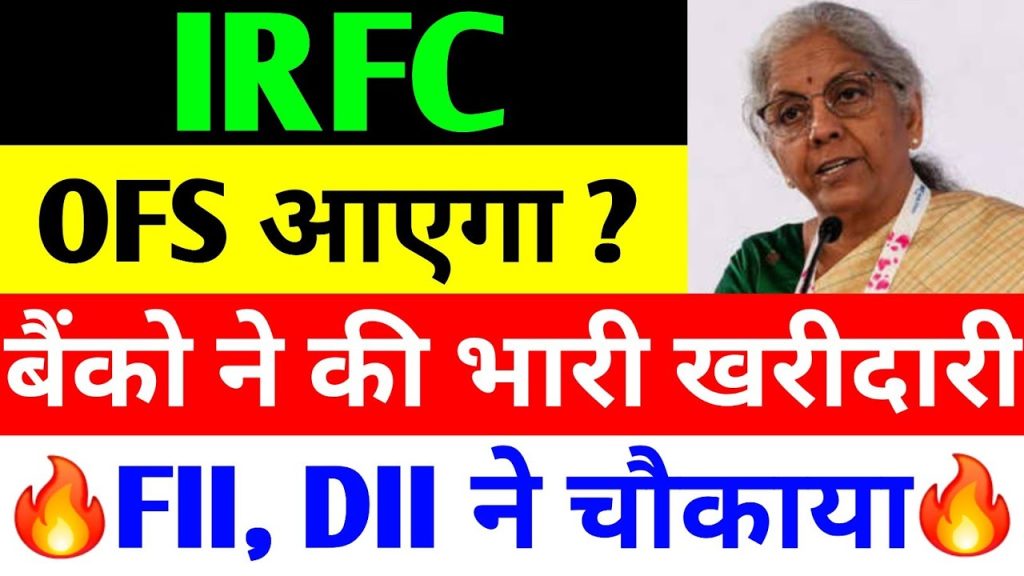
The Indian Railway Finance Corporation (IRFC) has recently captured headlines due to its volatile stock performance and looming regulatory changes. From its 52-week high of ₹229 to a recent low of ₹126, the stock’s sharp decline has left investors questioning its future. This article dives deep into IRFC’s fundamentals, the impact of the proposed Offer for Sale (OFS), institutional activity, and whether this dip presents a buying opportunity.
IRFC Stock Performance: A Rollercoaster Ride
IRFC, a critical player in financing Indian railway infrastructure projects, has seen its shares plummet by nearly 45% from its peak. As of the latest trading session, the stock closed around ₹126, reflecting heightened bearish sentiment. Key factors behind this slump include:
- Profit-Booking: Early investors exiting after the stock’s meteoric rise.
- OFS Uncertainty: Fear of dilution due to the government’s plan to reduce its 86.36% stake to meet SEBI’s 75% promoter holding cap.
- Market Volatility: Broader sell-offs driven by Foreign Institutional Investors (FIIs) withdrawing ₹24,888 crore in February alone.
Should You Invest in IRFC? Key Considerations
Before investing in IRFC, consider the following factors:
- Upcoming OFS: The potential price discount could create a better entry point for investors.
- Long-Term Growth Prospects: IRFC’s role in railway financing makes it a strategic asset.
- Institutional Accumulation: Strong DII and mutual fund interest indicate potential stability.
- Regulatory Compliance: The stake reduction aligns with market regulations, making the stock more attractive in the long run.
Understanding the OFS Threat: What Investors Need to Know
Why Is the OFS Imminent?
SEBI mandates that publicly listed companies maintain promoter holdings below 75%. With the Indian government currently holding 86.36% in IRFC, an OFS of ~11.36% shares is inevitable. This move could introduce significant supply into the market, potentially driving prices lower.
Potential OFS Pricing and Impact
While the government hasn’t announced specifics, OFS typically occurs at a discount to the market price to attract buyers. For instance:
- If IRFC trades at ₹126, a 5–10% discount could price OFS shares between ₹113–₹120.
- Retail investors often receive an additional 5% discount, but bulk selling may create short-term downward pressure.
FIIs vs. DIIs: Who’s Driving the Market?
Foreign Institutional Investors (FIIs): Bearish Sentiment
FIIs have been net sellers in 2024, offloading ₹25,500 crore worth of equities in February. Their IRFC holdings dropped from 1.11% (June 2023) to 1.01% (December 2023), signaling reduced confidence.
Domestic Institutional Investors (DIIs): Countering the Sell-Off
DIIs, including mutual funds and insurance giants, injected ₹21,655 crore into markets this month. In IRFC, their stake rose from 1.07% to 1.24% in Q3 FY24, indicating strategic accumulation during dips.
Mutual Funds Betting Big on IRFC: A Contrarian Signal?
Despite retail investor exits, mutual funds increased their IRFC holdings by 0.17% in December 2023. Top funds boosting exposure include:
- ICICI Prudential Nifty Next 50 Index Fund: ₹75.9 crore investment.
- UTI Nifty Next 50 Index Fund: ₹52.27 crore inflow.
- DSP Nifty 50 Index Fund: ₹9.87 crore stake.
This institutional confidence stems from IRFC’s monopoly in railway financing, government backing, and tax-free bond status.
IRFC Stock Performance and Market Trends
The recent market trends indicate a turbulent phase for IRFC, with its stock losing substantial value from its all-time high. Several factors have contributed to this decline, including foreign institutional investor (FII) sell-offs and overall market volatility.
Stock Movement and Market Pressure
- Market Performance: The Sensex recently closed at 76,638, reflecting a minor decline of 32 points (-0.042%).
- Intraday Movement: The market showed initial gains of nearly 500 points but failed to sustain momentum, closing in the red.
- Foreign Institutional Investors (FII) Activity: FIIs have been aggressively selling in the market. On February 13 alone, they sold ₹2,789 crore worth of shares, following massive sell-offs of ₹4,500 crore and ₹5,000 crore on February 11 and 12, respectively.
- Domestic Institutional Investors (DII) Support: In contrast, DIIs have stepped in to stabilize the market, investing ₹13,148 crore while selling shares worth ₹10,213 crore. Their net investment of approximately ₹2,934 crore has provided some relief to market participants.
Strengths, Weaknesses, and Opportunities for IRFC
Strengths
- Monopoly Status: Sole financier for Indian Railways’ infrastructure projects.
- Strong Asset Quality: Zero NPAs due to sovereign guarantees.
- Tax Benefits: IRFC bonds are tax-free, enhancing appeal to conservative investors.
Weaknesses
- OFS Overhang: Imminent share sale risks further price erosion.
- Interest Rate Sensitivity: Rising rates could increase borrowing costs.
Opportunities
- Railway Expansion: India’s ₹2.4 lakh crore railway budget for FY24 boosts IRFC’s lending pipeline.
- Green Bonds: Potential entry into sustainable finance to fund eco-friendly projects.
Technical Analysis: Key Levels to Watch
- Support: ₹120–₹125 (psychological level and 2023 low).
- Resistance: ₹140–₹150 (50-day moving average).
A break below ₹120 could trigger panic selling, while sustaining above ₹130 may signal recovery.
Retail Investors vs. Institutions: Who’s Smarter?
Retail holdings dipped from 11.48% to 11.39% in Q3 FY24, reflecting panic exits. Meanwhile, institutions capitalized on lower valuations. Historical trends suggest retail investors often sell at lows, missing subsequent rebounds.
Conclusion: Should You Invest in IRFC Now?
IRFC’s current price reflects short-term fears, but its long-term fundamentals remain robust. Consider these steps:
- Wait for OFS Clarity: Monitor government announcements for pricing details.
- Dollar-Cost Averaging: Accumulate small quantities if the stock tests ₹110–₹115.
- Consult Advisors: Align investments with risk appetite and goals.
Final Takeaway: While IRFC faces headwinds, its strategic role in India’s infrastructure growth makes it a compelling watchlist candidate. Stay patient, stay informed!
Disclaimer: This article is for educational purposes only. Consult a financial advisor before making investment decisions.