


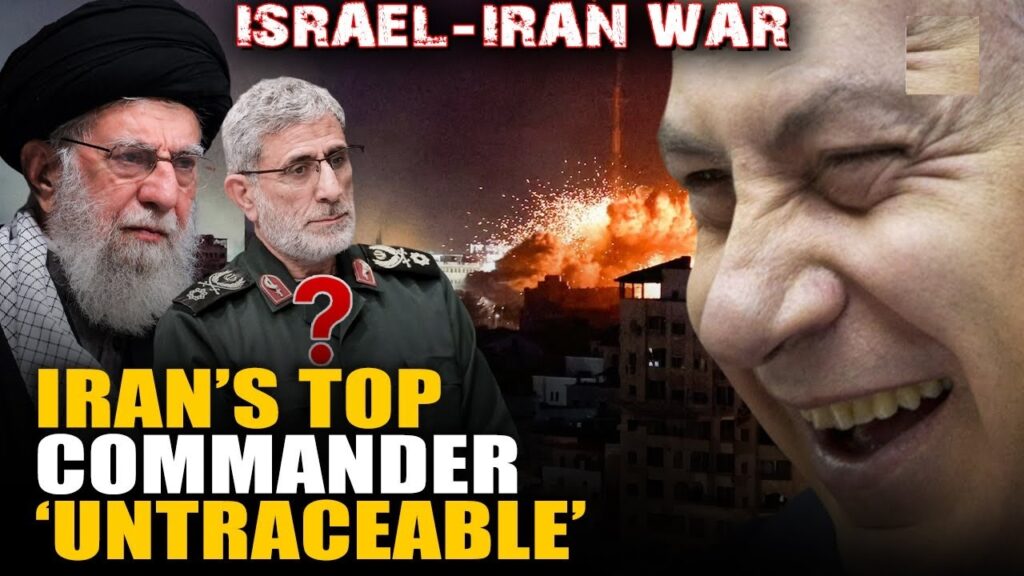
Esmail Qaani, the commander of the Quds Force, a critical division within Iran’s Islamic Revolutionary Guard Corps (IRGC), has been missing following Israeli airstrikes that struck southern Beirut. According to high-ranking Iranian security officials, Qaani has not been heard from since these strikes, which targeted Hezbollah strongholds. Speculation surrounding his fate has sparked global concern about the potential ramifications for Iran’s influence in the region.
Qaani’s Presence in Lebanon After Hezbollah Leader’s Death
Qaani was in Lebanon to address the recent death of Hezbollah’s leader, Sayyed Hassan Nasrallah, who died in an Israeli airstrike in late September. He was reportedly in Dahiyeh, a Hezbollah-dominated area in Beirut, when the attack occurred. The strike also aimed at Hashem Safieddine, believed to be Nasrallah’s successor. Like Qaani, Safieddine has not been seen or heard from since the incident.
Unconfirmed Reports of Qaani’s Death
Various reports have emerged suggesting that Esmail Qaani may have been killed in the strikes, although neither Iran nor Hezbollah has confirmed this. Media outlets from Israel and Turkey have hinted at Qaani’s possible death, while some Lebanese authorities have reportedly stated he was killed. Israeli military officials, however, have yet to verify the death. A more dramatic claim, coming from Saudi media, even suggests that Iran might have executed Qaani on suspicion of collaboration with Israeli intelligence.
Lieutenant Colonel Nadav Shoshani, a spokesperson for the Israeli military, commented that the situation remains unclear. He stated, “When we have more specific results from that strike, we will share it. There’s a lot of questions about who was there and who was not.” Shoshani confirmed that Israeli forces targeted Hezbollah’s intelligence hub in Beirut but provided no specific information on casualties.
Esmail Qaani: Key Figure in Iran’s Military Strategy
At 67, Esmail Qaani has been a pivotal figure in Iran’s military operations, especially since taking over as commander of the Quds Force after Qassem Soleimani was killed in a U.S. drone strike in January 2020. Soleimani, a highly influential figure in the Middle East, had been instrumental in shaping Iran’s relationships with regional allies like Hezbollah in Lebanon, Iraqi militias, and the Houthis in Yemen.
However, Qaani’s leadership has not had the same visibility. Unlike his predecessor, Qaani rarely appears in public, and his ability to forge strong alliances with regional militias has been questioned. His limited proficiency in Arabic, for example, has hindered his influence with Arab militias, particularly in Iraq and Lebanon. Nonetheless, Qaani has vowed to continue Soleimani’s mission to expel U.S. forces from West Asia, declaring that Iran’s only acceptable retribution would be the removal of America from the region.
The Impact of Qaani’s Potential Disappearance
Should Qaani’s death be confirmed, it would mark a significant loss for Iran’s regional operations. The Quds Force plays a critical role in maintaining Iran’s ties with key allies like Hezbollah, the Houthis, and various Shi’ite militias across the Middle East. A loss of leadership within this elite group could weaken Iran’s capacity to manage its proxy forces, particularly as tensions with Israel and other regional powers continue to rise.
Israel’s military has escalated operations in southern Lebanon, claiming that its forces have killed more than 400 Hezbollah fighters since launching a ground offensive. Israeli military spokesperson Rear Admiral Daniel Hagari confirmed that 30 Hezbollah commanders were among those killed. He added, “Since the beginning of the ground maneuver, forces have eliminated some 440 terrorists from the ground and from the air.”
The airstrikes in Beirut were particularly intense, with Israeli jets reportedly conducting 11 consecutive strikes, including targeting Hezbollah’s intelligence headquarters. Qaani’s possible death could exacerbate the already fragile situation, leaving a critical gap in Iran’s military strategy as it faces increased Israeli pressure.
Rising Tensions Between Israel and Hezbollah
The Israeli airstrikes are part of a broader military campaign aimed at diminishing Hezbollah’s presence in Lebanon and curbing Iran’s growing influence in the region. Hezbollah, a crucial ally of Iran, has long served as a proxy force in Lebanon and Syria, where it has played a pivotal role in bolstering Tehran’s ambitions in West Asia.
The potential deaths of both Nasrallah and Qaani represent a profound shift in the regional power dynamic. Without their leadership, Hezbollah’s operational capabilities may be severely compromised, and Iran’s ability to coordinate with its paramilitary allies could weaken.
Furthermore, Iran’s Revolutionary Guards have already suffered significant losses, including the death of Brigadier General Abbas Nilforoushan, who reportedly died alongside Nasrallah in a bunker during the Israeli strikes. If Qaani’s death is confirmed, the conflict could escalate further, plunging the region into prolonged instability.
Conclusion: Uncertainty Clouds Iran’s Regional Strategy
The fate of Esmail Qaani remains a mystery, but his disappearance underscores the broader uncertainties facing Iran’s military operations in the Middle East. Israeli airstrikes have already disrupted Hezbollah’s leadership, and the loss of key figures like Qaani could weaken Iran’s influence at a time when tensions are mounting. As the situation continues to unfold, the Middle East remains on the brink of further conflict, with Israel and Iran locked in an increasingly dangerous standoff.