
Site icon Telangana NavaNirmana Sena

iPhone Air: Apple’s Revolutionary Ultra Thin Smartphone Redefines Mobile Innovation

Apple has once again pushed the boundaries of smartphone engineering with the introduction of the iPhone Air, the company's thinnest iPhone ever created at just 5.6mm thick. This groundbreaking device combines pro-level performance with an impossibly slim design, marking a significant departure from traditional iPhone form factors and establishing an entirely new category in Apple's smartphone lineup. Breakthrough Design: Engineering the Impossible Ultra-Thin Construction with Titanium Excellence The iPhone Air represents a quantum leap in smartphone design philosophy, achieving an unprecedented thickness of just 5.6mm while maintaining structural integrity and durability. The device utilizes a grade 5 titanium frame with an elegant high-gloss mirror finish, making it not only the thinnest iPhone ever but also one of the most durable. At just 165 grams, the iPhone Air is remarkably lightweight despite its large 6.5-inch display, making it more portable than any previous iPhone model. The iPhone Air shown in five distinct colors: Sky Blue, Light Gold, Cloud White, and Space Black The engineering marvel extends to Apple's innovative camera plateau design on the back, which houses the cameras, speaker, and Apple silicon chips. This precision-milled plateau maximizes internal space for the battery while maintaining the device's ultra-slim profile. The plateau design represents a fundamental shift in iPhone architecture, enabling Apple to pack pro-level components into an impossibly thin chassis. iPhone 17 Series Thickness Comparison - iPhone Air Leads as the Thinnest Model Advanced Ceramic Shield Protection Apple has introduced Ceramic Shield 2 technology for the front cover, providing 3x better scratch resistance compared to previous generations. For the first time in iPhone history, Ceramic Shield now protects the back of the device, including the camera plateau, delivering 4x better resistance to cracks than previous iPhone back glass. This dual-layer protection system ensures the iPhone Air maintains its pristine appearance despite its delicate profile. Powerhouse Performance: A19 Pro Chip Excellence MacBook Pro-Level Computing Power The iPhone Air is powered by Apple's cutting-edge A19 Pro chip, which Apple boldly claims delivers "MacBook Pro levels of compute in an iPhone". This remarkable assertion represents the first time Apple has compared iPhone performance to MacBook capabilities, signaling a significant leap in mobile computing power. The A19 Pro features a 6-core CPU with two performance cores and four efficiency cores, delivering the fastest CPU performance in any smartphone. The chip's 5-core GPU includes Neural Accelerators built into each GPU core, providing up to 3x more peak GPU compute compared to the previous generation. This architecture enables seamless handling of graphics-intensive applications, AAA gaming, and advanced AI workloads directly on the device. Early benchmark results suggest the A19 Pro delivers 13-15% faster multi-core CPU performance and 15% faster GPU performance compared to the A18 Pro. Revolutionary Wireless and Cellular Technology The iPhone Air introduces two groundbreaking Apple-designed chips: the N1 wireless networking chip and the C1X cellular modem. The N1 chip enables Wi-Fi 7, Bluetooth 6, and Thread connectivity, improving performance and reliability for features like Personal Hotspot and AirDrop. The C1X modem represents Apple's continued push for chip independence, offering 2x faster performance than the previous C1 modem while consuming 30% less energy. Advanced Camera System: Redefining Mobile Photography 48MP Fusion Main Camera with Computational Excellence Despite its ultra-thin profile, the iPhone Air incorporates a powerful 48MP Fusion Main camera that functions as multiple advanced cameras in one. The camera supports both 1x and 2x zoom capabilities through computational photography, effectively providing 28mm and 35mm focal lengths without requiring additional physical lenses. This innovative approach allows the iPhone Air to maintain its slim profile while delivering exceptional image quality comparable to multi-camera systems. Various color options of the iPhone Air showing front display and back camera design with a single large lens and sleek finish The camera system supports 4K 60fps Dolby Vision recording, ensuring professional-grade video capture capabilities. Apple's updated Photonic Engine captures enhanced detail in low-light conditions while improving color accuracy across all shooting scenarios. The system also supports next-generation portraits with Focus Control, automatically capturing depth information that can be adjusted post-capture. Revolutionary 18MP Center Stage Front Camera The iPhone Air features an innovative 18MP Center Stage front camera that transforms selfie photography and video calling experiences. This advanced front-facing camera automatically adjusts the field of view and can rotate from portrait to landscape without moving the iPhone. When multiple people enter the frame, the camera intelligently expands the field of view to ensure everyone is captured in group selfies. The Dual Capture feature allows simultaneous recording with both front and rear cameras, enabling content creators to capture multiple perspectives in a single recording session. This capability is particularly valuable for social media content creation and professional video applications. iPhone camera app interface showing selfie mode with focus on two faces against a scenic outdoor background, illustrating advanced camera features Display and User Experience Excellence 6.5-Inch Super Retina XDR with ProMotion The iPhone Air features a stunning 6.5-inch Super Retina XDR display with ProMotion technology supporting adaptive refresh rates up to 120Hz. The display delivers 3,000 nits peak outdoor brightness – the highest ever achieved on an iPhone – ensuring excellent visibility even in direct sunlight. The Always-On display efficiently adjusts down to 1Hz when not in use, optimizing battery consumption while maintaining essential information visibility. The display offers 2736×1260-pixel resolution at 460 pixels per inch, delivering sharp, vibrant visuals for all content types. The integration of Dynamic Island provides intuitive access to ongoing activities and notifications, maintaining Apple's signature user experience design language. Enhanced Battery Life and Charging Despite its ultra-thin profile, the iPhone Air delivers impressive 27 hours of video playback on a single charge. Apple has developed a dedicated iPhone Air MagSafe Battery ($99) that extends usage to up to 40 hours of video playback, addressing concerns about battery life in such a slim device. The Adaptive Power mode in iOS 26 intelligently conserves power when needed, further extending battery performance. The device supports 50% charge in 30 minutes with a 20W or higher power adapter, though wireless charging is limited to 20W speeds compared to 25W on other iPhone 17 models. This slight compromise in charging speed is offset by the device's overall power efficiency improvements. Market Positioning and Availability Premium Pricing with Pro Features The iPhone Air starts at $999 for 256GB storage, positioning it between the standard iPhone 17 ($799) and iPhone 17 Pro ($1,099). Storage options include 256GB, 512GB, and 1TB configurations, providing flexibility for different user needs. This pricing strategy reflects Apple's positioning of the iPhone Air as a premium device that offers pro-level performance in a unique form factor. The device is available in four elegant finishes: Sky Blue, Light Gold, Cloud White, and Space Black. These color options emphasize the device's premium positioning and aesthetic appeal. Global eSIM-Only Approach The iPhone Air represents Apple's boldest move toward a completely eSIM-only design globally, with no physical SIM card tray. This decision enables Apple to utilize the space typically occupied by the SIM tray for additional battery capacity, contributing to the device's impressive battery life despite its slim profile. The device supports dual eSIM functionality with two active eSIMs and can store eight or more eSIM profiles. Technical Limitations and Trade-offs 5G and Connectivity Considerations The iPhone Air's ultra-thin design necessitates certain compromises, particularly in 5G connectivity. Unlike other iPhone 17 models that support both sub-6GHz and mmWave 5G, the iPhone Air is limited to sub-6GHz 5G only. While this doesn't significantly impact everyday usage, users in areas with mmWave 5G infrastructure may experience slower peak speeds compared to Pro models. The device also features USB 2 speeds (up to 480 Mbps) through its USB-C connector, compared to USB 3 speeds on Pro models. This limitation may affect users who frequently transfer large files via cable connection. Camera System Compromises To achieve its remarkable thinness, the iPhone Air features a single-lens rear camera system compared to the dual or triple camera arrays found on other iPhone 17 models. While the 48MP Fusion camera delivers excellent results and computational 2x zoom, users seeking ultra-wide or dedicated telephoto capabilities will need to consider the standard iPhone 17 or Pro models. Conclusion: Revolutionary Design Meets Pro Performance The iPhone Air represents Apple's most ambitious smartphone design in years, successfully combining pro-level performance with unprecedented portability. The device challenges traditional smartphone form factors while maintaining the premium features and capabilities users expect from Apple's flagship products. With its A19 Pro chip, advanced camera system, and titanium construction, the iPhone Air establishes itself as a compelling option for users who prioritize design innovation without sacrificing performance. The iPhone Air's introduction marks a significant evolution in Apple's product strategy, creating a new category that bridges the gap between standard and professional iPhone models. For users seeking the ultimate combination of portability, performance, and premium materials, the iPhone Air represents a groundbreaking achievement in smartphone engineering that will likely influence the entire industry's approach to mobile device design. Comparison between the iPhone 17 Pro Max and iPhone Air highlighting a specs battle Available for pre-order starting Friday, September 12, with general availability beginning September 19, the iPhone Air is poised to redefine user expectations for what's possible in smartphone design.

Apple has once again pushed the boundaries of smartphone engineering with the introduction of the iPhone Air, the company’s thinnest iPhone ever created at just 5.6mm thick. This groundbreaking device combines pro-level performance with an impossibly slim design, marking a significant departure from traditional iPhone form factors and establishing an entirely new category in Apple’s smartphone lineup.

Breakthrough Design: Engineering the Impossible

Ultra-Thin Construction with Titanium Excellence

The iPhone Air represents a quantum leap in smartphone design philosophy, achieving an unprecedented thickness of just 5.6mm while maintaining structural integrity and durability. The device utilizes a grade 5 titanium frame with an elegant high-gloss mirror finish, making it not only the thinnest iPhone ever but also one of the most durable. At just 165 grams, the iPhone Air is remarkably lightweight despite its large 6.5-inch display, making it more portable than any previous iPhone model.

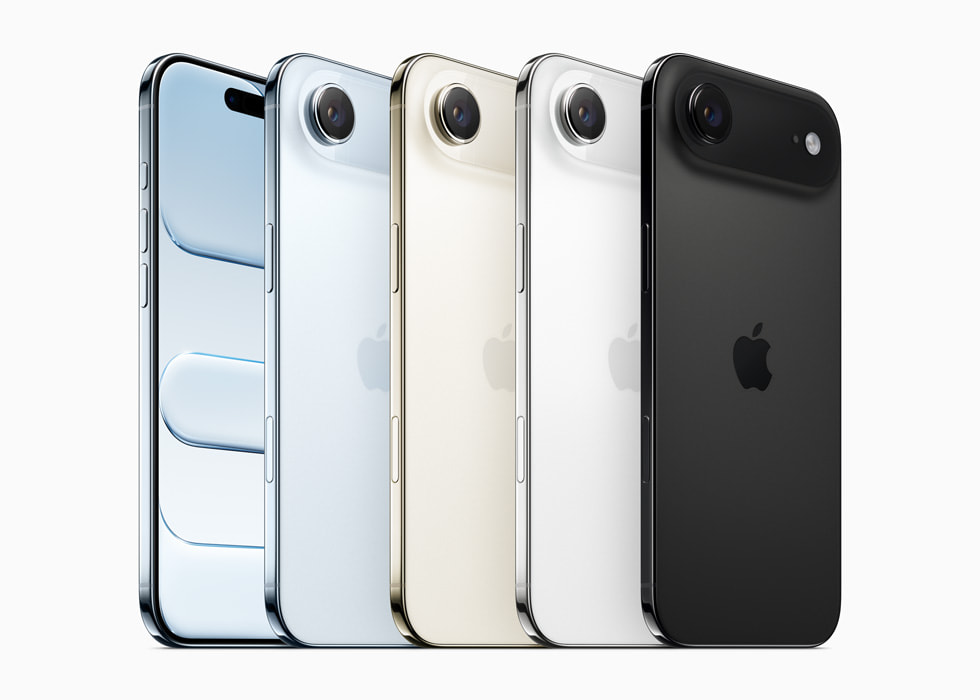
The iPhone Air shown in five distinct colors: Sky Blue, Light Gold, Cloud White, and Space Black apple

The engineering marvel extends to Apple’s innovative camera plateau design on the back, which houses the cameras, speaker, and Apple silicon chips. This precision-milled plateau maximizes internal space for the battery while maintaining the device’s ultra-slim profile. The plateau design represents a fundamental shift in iPhone architecture, enabling Apple to pack pro-level components into an impossibly thin chassis.

iPhone 17 Series Thickness Comparison – iPhone Air Leads as the Thinnest Model

Advanced Ceramic Shield Protection

Apple has introduced Ceramic Shield 2 technology for the front cover, providing 3x better scratch resistance compared to previous generations. For the first time in iPhone history, Ceramic Shield now protects the back of the device, including the camera plateau, delivering 4x better resistance to cracks than previous iPhone back glass. This dual-layer protection system ensures the iPhone Air maintains its pristine appearance despite its delicate profile.

Powerhouse Performance: A19 Pro Chip Excellence

MacBook Pro-Level Computing Power

The iPhone Air is powered by Apple’s cutting-edge A19 Pro chip, which Apple boldly claims delivers “MacBook Pro levels of compute in an iPhone“. This remarkable assertion represents the first time Apple has compared iPhone performance to MacBook capabilities, signaling a significant leap in mobile computing power. The A19 Pro features a 6-core CPU with two performance cores and four efficiency cores, delivering the fastest CPU performance in any smartphone.

The chip’s 5-core GPU includes Neural Accelerators built into each GPU core, providing up to 3x more peak GPU compute compared to the previous generation. This architecture enables seamless handling of graphics-intensive applications, AAA gaming, and advanced AI workloads directly on the device. Early benchmark results suggest the A19 Pro delivers 13-15% faster multi-core CPU performance and 15% faster GPU performance compared to the A18 Pro.

Revolutionary Wireless and Cellular Technology

The iPhone Air introduces two groundbreaking Apple-designed chips: the N1 wireless networking chip and the C1X cellular modem. The N1 chip enables Wi-Fi 7, Bluetooth 6, and Thread connectivity, improving performance and reliability for features like Personal Hotspot and AirDrop. The C1X modem represents Apple’s continued push for chip independence, offering 2x faster performance than the previous C1 modem while consuming 30% less energy.

Advanced Camera System: Redefining Mobile Photography

48MP Fusion Main Camera with Computational Excellence

Despite its ultra-thin profile, the iPhone Air incorporates a powerful 48MP Fusion Main camera that functions as multiple advanced cameras in one. The camera supports both 1x and 2x zoom capabilities through computational photography, effectively providing 28mm and 35mm focal lengths without requiring additional physical lenses. This innovative approach allows the iPhone Air to maintain its slim profile while delivering exceptional image quality comparable to multi-camera systems.

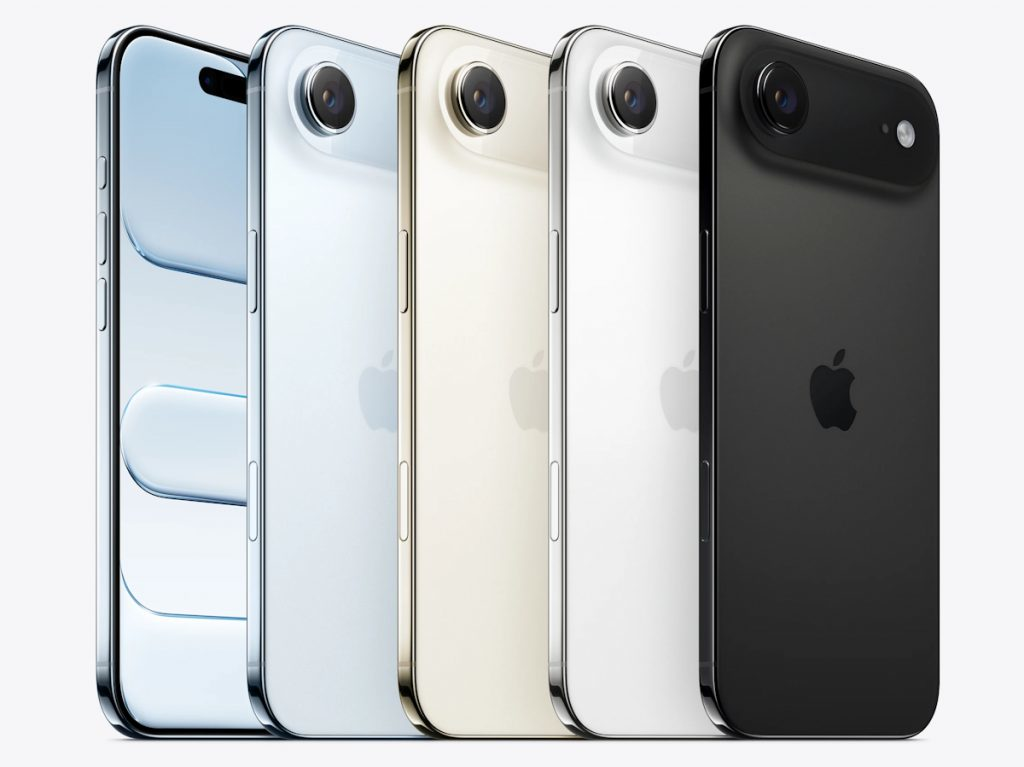
Various color options of the iPhone Air showing front display and back camera design with a single large lens and sleek finish soyacincau

The camera system supports 4K 60fps Dolby Vision recording, ensuring professional-grade video capture capabilities. Apple’s updated Photonic Engine captures enhanced detail in low-light conditions while improving color accuracy across all shooting scenarios. The system also supports next-generation portraits with Focus Control, automatically capturing depth information that can be adjusted post-capture.apple+1

Revolutionary 18MP Center Stage Front Camera

The iPhone Air features an innovative 18MP Center Stage front camera that transforms selfie photography and video calling experiences. This advanced front-facing camera automatically adjusts the field of view and can rotate from portrait to landscape without moving the iPhone. When multiple people enter the frame, the camera intelligently expands the field of view to ensure everyone is captured in group selfies.

The Dual Capture feature allows simultaneous recording with both front and rear cameras, enabling content creators to capture multiple perspectives in a single recording session. This capability is particularly valuable for social media content creation and professional video applications.


iPhone camera app interface showing selfie mode with focus on two faces against a scenic outdoor background, illustrating advanced camera features apple

Display and User Experience Excellence

6.5-Inch Super Retina XDR with ProMotion

The iPhone Air features a stunning 6.5-inch Super Retina XDR display with ProMotion technology supporting adaptive refresh rates up to 120Hz. The display delivers 3,000 nits peak outdoor brightness – the highest ever achieved on an iPhone – ensuring excellent visibility even in direct sunlight. The Always-On display efficiently adjusts down to 1Hz when not in use, optimizing battery consumption while maintaining essential information visibility.

The display offers 2736×1260-pixel resolution at 460 pixels per inch, delivering sharp, vibrant visuals for all content types. The integration of Dynamic Island provides intuitive access to ongoing activities and notifications, maintaining Apple’s signature user experience design language.

Enhanced Battery Life and Charging

Despite its ultra-thin profile, the iPhone Air delivers impressive 27 hours of video playback on a single charge. Apple has developed a dedicated iPhone Air MagSafe Battery ($99) that extends usage to up to 40 hours of video playback, addressing concerns about battery life in such a slim device. The Adaptive Power mode in iOS 26 intelligently conserves power when needed, further extending battery performance.

The device supports 50% charge in 30 minutes with a 20W or higher power adapter, though wireless charging is limited to 20W speeds compared to 25W on other iPhone 17 models. This slight compromise in charging speed is offset by the device’s overall power efficiency improvements.

Market Positioning and Availability

Premium Pricing with Pro Features

The iPhone Air starts at $999 for 256GB storage, positioning it between the standard iPhone 17 ($799) and iPhone 17 Pro ($1,099). Storage options include 256GB, 512GB, and 1TB configurations, providing flexibility for different user needs. This pricing strategy reflects Apple’s positioning of the iPhone Air as a premium device that offers pro-level performance in a unique form factor.apple+2

The device is available in four elegant finishes: Sky Blue, Light Gold, Cloud White, and Space Black. These color options emphasize the device’s premium positioning and aesthetic appeal.

Global eSIM-Only Approach

The iPhone Air represents Apple’s boldest move toward a completely eSIM-only design globally, with no physical SIM card tray. This decision enables Apple to utilize the space typically occupied by the SIM tray for additional battery capacity, contributing to the device’s impressive battery life despite its slim profile. The device supports dual eSIM functionality with two active eSIMs and can store eight or more eSIM profiles.

Technical Limitations and Trade-offs

5G and Connectivity Considerations

The iPhone Air’s ultra-thin design necessitates certain compromises, particularly in 5G connectivity. Unlike other iPhone 17 models that support both sub-6GHz and mmWave 5G, the iPhone Air is limited to sub-6GHz 5G only. While this doesn’t significantly impact everyday usage, users in areas with mmWave 5G infrastructure may experience slower peak speeds compared to Pro models.

The device also features USB 2 speeds (up to 480 Mbps) through its USB-C connector, compared to USB 3 speeds on Pro models. This limitation may affect users who frequently transfer large files via cable connection.

Camera System Compromises

To achieve its remarkable thinness, the iPhone Air features a single-lens rear camera system compared to the dual or triple camera arrays found on other iPhone 17 models. While the 48MP Fusion camera delivers excellent results and computational 2x zoom, users seeking ultra-wide or dedicated telephoto capabilities will need to consider the standard iPhone 17 or Pro models.

Conclusion: Revolutionary Design Meets Pro Performance

The iPhone Air represents Apple’s most ambitious smartphone design in years, successfully combining pro-level performance with unprecedented portability. The device challenges traditional smartphone form factors while maintaining the premium features and capabilities users expect from Apple’s flagship products. With its A19 Pro chip, advanced camera system, and titanium construction, the iPhone Air establishes itself as a compelling option for users who prioritize design innovation without sacrificing performance.

The iPhone Air’s introduction marks a significant evolution in Apple’s product strategy, creating a new category that bridges the gap between standard and professional iPhone models. For users seeking the ultimate combination of portability, performance, and premium materials, the iPhone Air represents a groundbreaking achievement in smartphone engineering that will likely influence the entire industry’s approach to mobile device design.

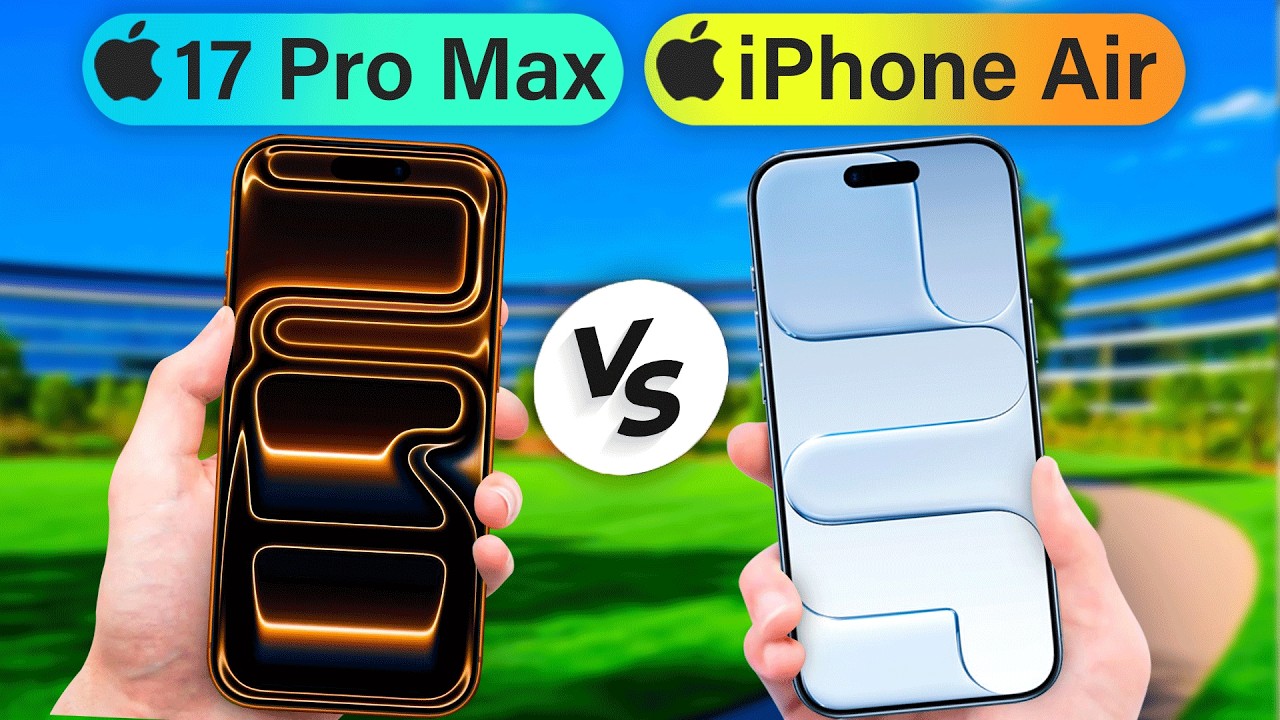
Comparison between the iPhone 17 Pro Max and iPhone Air highlighting a specs battle youtube

Available for pre-order starting Friday, September 12, with general availability beginning September 19, the iPhone Air is poised to redefine user expectations for what’s possible in smartphone design.

Exit mobile version