


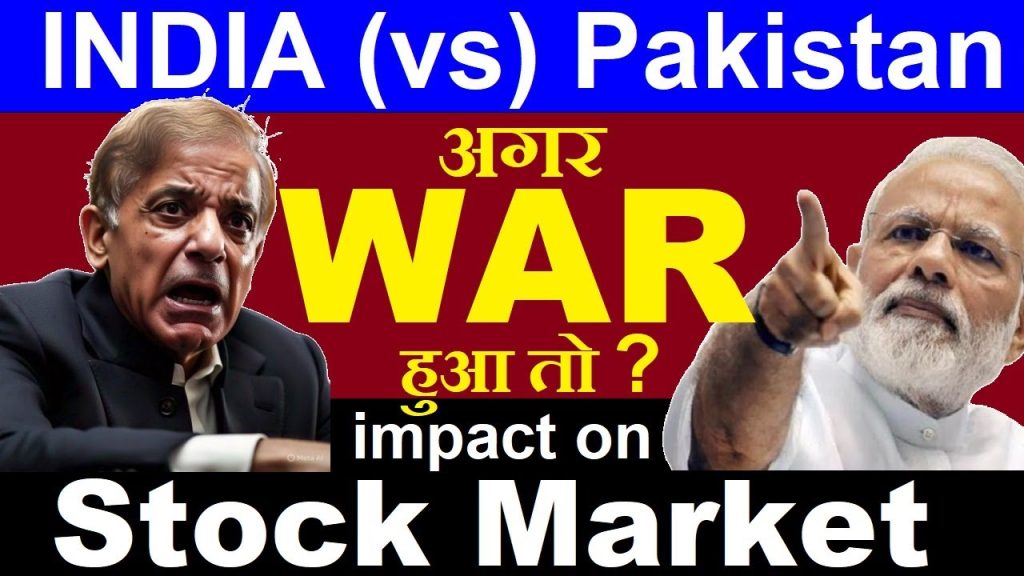
The escalating tensions between India and Pakistan have once again captured global attention, raising concerns about their potential economic fallout. As diplomatic relations strain and historical agreements like the Indus Water Treaty and Shimla Agreement face suspension, investors are left wondering: how do these geopolitical conflicts affect the stock market? This article dives deep into the historical and economic implications of India-Pakistan tensions, analyzing their impact on financial markets, investor sentiment, and long-term economic stability. By exploring past conflicts, market reactions, and the broader geopolitical landscape, we aim to provide actionable insights for investors navigating these turbulent times.
Understanding India-Pakistan Tensions: A Historical Perspective
India and Pakistan have a long history of geopolitical friction, marked by wars, terrorist attacks, and diplomatic standoffs. From the Kargil War to the 2001 Parliament attack and the 26/11 Mumbai attacks, these events have consistently disrupted regional stability. Recent developments, such as India’s suspension of the Indus Water Treaty and Pakistan’s counter-suspension of the Shimla Agreement, signal a new chapter in this ongoing rivalry. These actions, driven by both nations’ strategic interests, have heightened fears of escalation, prompting investors to reassess risks in the Indian and Pakistani markets.
Key Historical Conflicts and Their Market Impact
To understand the potential consequences of current tensions, let’s examine how past India-Pakistan conflicts have influenced financial markets:
- Kargil War (1999)
The Kargil War, a full-fledged conflict initiated by Pakistan, saw intense military engagement. India’s decisive victory came at a cost: the Indian stock market, tracked by indices like the Sensex and Nifty, experienced significant declines. Investor panic and uncertainty drove a sharp sell-off, with markets dropping by double-digit percentages during the conflict’s peak. However, post-war recovery was swift as India’s military success restored confidence. - 2001 Parliament Attack
The terrorist attack on India’s Parliament, attributed to Pakistan-based groups, triggered a diplomatic crisis. While not a full-scale war, the event led to heightened border tensions and a temporary market downturn. The Sensex fell by approximately 5-7% in the immediate aftermath, reflecting investor fears of escalation. Markets stabilized as diplomatic efforts de-escalated the situation. - 26/11 Mumbai Attacks (2008)
The Mumbai terror attacks, orchestrated by Pakistan-based militants, shook global confidence in India’s security. The Sensex plummeted by nearly 10% in the days following the attacks, compounded by the ongoing global financial crisis. However, India’s robust response, including diplomatic pressure and internal security reforms, facilitated a gradual market recovery. - Uri Attack and Surgical Strike (2016)
The Uri attack, followed by India’s surgical strike across the Line of Control, marked a shift in India’s military posture. Markets initially dipped by 3-5% due to uncertainty but quickly rebounded as India’s decisive action bolstered investor confidence. The targeted nature of the strike minimized long-term economic disruption. - Balakot Airstrike (2019)
India’s airstrike on a terrorist camp in Balakot, Pakistan, in response to the Pulwama attack, caused a brief market wobble. The Sensex and Nifty dropped by 2-3% amid fears of retaliation. However, global support for India’s anti-terrorism stance and Pakistan’s restrained response limited the market’s downside.
These examples highlight a clear pattern: India-Pakistan tensions consistently trigger short-term market volatility, but long-term impacts depend on the conflict’s duration and resolution. Full-scale wars, like Kargil, cause deeper market corrections, while limited engagements, like surgical strikes, result in fleeting disruptions.
How Geopolitical Tensions Affect Stock Markets
Geopolitical conflicts, such as those between India and Pakistan, influence stock markets through several channels. Understanding these mechanisms helps investors anticipate and navigate market reactions.
1. Investor Sentiment and Risk Aversion
Geopolitical uncertainty fuels fear, prompting investors to adopt a risk-off approach. During India-Pakistan tensions, foreign institutional investors (FIIs) often reduce exposure to Indian equities, leading to capital outflows. For instance, during the Kargil War, FIIs withdrew significant funds, exacerbating market declines. Domestic investors, too, may shift to safer assets like gold or fixed-income securities, further pressuring stock prices.
2. Economic Disruptions
Conflicts disrupt trade, supply chains, and economic activity. India’s suspension of the Indus Water Treaty, for example, could impact Pakistan’s agriculture-dependent economy, potentially destabilizing its markets. Conversely, Pakistan’s retaliatory actions, such as suspending the Shimla Agreement, may strain India’s diplomatic relations, affecting investor confidence. Prolonged tensions could disrupt cross-border trade, which, though limited, supports certain industries.
3. Inflation and Fiscal Strain
Wars and military escalations are costly. Governments divert resources to defense, increasing fiscal deficits and potentially driving inflation. During a hypothetical India-Pakistan war, India’s defense spending could surge, straining public finances. As noted in historical conflicts, inflation spikes can double the cost of essentials like food, fuel, and electricity, eroding consumer purchasing power and corporate profitability. Pakistan, already grappling with economic challenges, would face even steeper inflationary pressures, further weakening its currency and markets.
4. Sector-Specific Impacts
Geopolitical tensions disproportionately affect certain sectors:
- Defense: Companies like Bharat Electronics and Hindustan Aeronautics often benefit from increased defense budgets, seeing stock price gains during conflicts.
- Energy: Rising oil prices, driven by global supply concerns, hurt energy-intensive industries like manufacturing and transportation.
- FMCG: Fast-moving consumer goods companies may face margin pressures due to inflation but often remain resilient due to steady demand.
- Banking: Financial institutions face risks from loan defaults and reduced economic activity, leading to underperformance during crises.
The Economic Stakes: Why War Hurts Both Nations
A full-scale war between India and Pakistan would have devastating economic consequences, setting both nations back decades. Let’s explore why avoiding war is in both countries’ best interests.
India’s Economic Aspirations
India, the world’s fifth-largest economy, aims to become a $10 trillion economy by 2030. Its stock market, with the Sensex hovering around 80,000 and Nifty at 24,000, reflects robust investor confidence. A war would derail this progress by:
- Triggering capital flight and market crashes.
- Increasing defense spending at the expense of infrastructure and social programs.
- Driving inflation, which could double the cost of living for millions.
- Weakening India’s global trade position, particularly with Western nations wary of regional instability.
India’s government, led by Prime Minister Narendra Modi, has historically prioritized diplomatic resolutions to avoid such outcomes. The 2019 Balakot airstrike, for instance, was a measured response that minimized escalation while asserting India’s resolve.
Pakistan’s Economic Vulnerability
Pakistan’s economy, plagued by high debt, low GDP growth, and reliance on IMF bailouts, is ill-equipped to withstand war. Its stock market, tracked by the KSE-100 index, is highly sensitive to geopolitical shocks. A conflict would:
- Exacerbate inflation, already a chronic issue, making essentials unaffordable.
- Deepen dependence on foreign aid from countries like Saudi Arabia and China.
- Deter foreign investment, further weakening the Pakistani rupee.
- Disrupt agriculture, a key economic driver, especially if water-sharing agreements collapse.
Prime Minister Shehbaz Sharif faces immense pressure to stabilize Pakistan’s economy, making war an undesirable option. However, domestic political dynamics and military influence could complicate de-escalation efforts.
The Geopolitical Chessboard
The India-Pakistan rivalry is not isolated; it’s part of a broader geopolitical landscape. China, a key ally of Pakistan, benefits from regional instability that weakens India’s economic rise. By supporting Pakistan diplomatically and financially, China indirectly challenges India’s growth. Western nations, meanwhile, seek to curb India’s ascent to maintain global economic dominance. A war would serve these external interests by diverting India and Pakistan’s resources from development to conflict.
Historical Market Recoveries: Lessons for Investors
Despite the immediate turmoil caused by India-Pakistan tensions, history shows that markets are resilient. Let’s revisit key examples to draw lessons for investors:
- Post-Kargil Recovery
After the Kargil War, the Sensex rebounded within months, driven by India’s victory and global economic optimism. Investors who held steady or bought during the dip reaped significant gains as the market climbed. - Post-26/11 Rebound
The 2008 Mumbai attacks coincided with the global financial crisis, amplifying market losses. However, India’s decisive response and economic reforms fueled a recovery, with the Sensex doubling within two years. - Post-Balakot Stability
The 2019 Balakot airstrike caused a brief market dip, but the Sensex and Nifty hit new highs within months, supported by strong domestic fundamentals and global confidence in India’s anti-terrorism stance.
The common thread? Markets recover when conflicts are contained, and governments restore stability. Investors who remain disciplined, avoiding panic-driven sales, often benefit from post-crisis rallies.
Strategies for Investors During Geopolitical Tensions
Navigating stock market volatility during India-Pakistan tensions requires a strategic approach. Here are actionable tips to protect and grow your portfolio:
1. Diversify Your Portfolio
Spread investments across sectors and asset classes to mitigate risks. Defensive sectors like FMCG and pharmaceuticals tend to outperform during crises, while gold and government bonds provide safe havens.
2. Focus on Long-Term Fundamentals
Geopolitical shocks are often short-lived. Focus on companies with strong balance sheets, consistent earnings, and competitive advantages. Blue-chip stocks like Reliance Industries, TCS, and HDFC Bank have historically weathered volatility well.
3. Monitor Macro Indicators
Keep an eye on inflation, interest rates, and foreign fund flows. Rising oil prices or FII outflows could signal deeper market corrections, prompting a shift to safer assets.
4. Capitalize on Defense Stocks
Increased defense budgets during conflicts boost companies in the sector. Stocks like Bharat Dynamics and Larsen & Toubro often see gains during India-Pakistan tensions.
5. Avoid Panic Selling
History shows that markets rebound after geopolitical crises. Selling during a dip locks in losses, while holding or buying quality stocks at discounted prices can yield long-term gains.
6. Stay Informed
Follow credible news sources and market analyses to separate fact from speculation. Misinformation during conflicts can exaggerate market reactions, creating opportunities for savvy investors.
The Role of Diplomacy in Market Stability
Both India and Pakistan have strong incentives to avoid war. Diplomatic efforts, backed by international mediators, often de-escalate tensions. For instance, during the 2019 Balakot crisis, global powers like the U.S. and Saudi Arabia played key roles in preventing escalation. Prime Minister Modi’s emphasis on economic growth and Prime Minister Sharif’s focus on stabilizing Pakistan’s economy suggest both leaders prioritize diplomacy over conflict.
However, diplomacy is not foolproof. Pakistan’s internal challenges, including political instability and military influence, could lead to miscalculations. Similarly, India’s assertive foreign policy under Modi may prompt stronger responses to provocations, as seen in the surgical strikes and Balakot airstrike. Investors must stay vigilant, monitoring diplomatic developments alongside market trends.
The Broader Economic Impact of War
A hypothetical India-Pakistan war would have far-reaching consequences beyond stock markets. Let’s explore the broader economic implications:
1. Inflation Surge
Wars drive inflation by increasing defense spending and disrupting supply chains. In India, the cost of essentials like milk, fuel, and electricity could double, squeezing household budgets. Pakistan, already facing high inflation, would see even steeper price hikes, further impoverishing its citizens.
2. Economic Regression
Wars set economies back by decades. Ukraine’s ongoing conflict with Russia, for example, has pushed its economy back 25 years. India and Pakistan, both with ambitious growth targets, would face similar setbacks, with GDP growth stalling and infrastructure development halting.
3. Global Trade Disruptions
India’s role as a global IT and manufacturing hub would be jeopardized by war, deterring foreign investment and disrupting exports. Pakistan’s textile and agricultural exports would also suffer, deepening its economic crisis.
4. Increased Debt and Dependency
Financing a war would force both nations to borrow heavily, increasing debt burdens. Pakistan’s reliance on IMF and Chinese loans would intensify, while India might face higher borrowing costs, impacting its credit rating.
Conclusion: Navigating Uncertainty with Confidence
India-Pakistan tensions are a stark reminder of the fragility of geopolitical stability and its impact on financial markets. Historical conflicts, from Kargil to Balakot, show that while markets face short-term volatility, they recover when stability is restored. Investors can navigate these challenges by diversifying portfolios, focusing on long-term fundamentals, and capitalizing on opportunities in defensive and defense-related stocks.
For India and Pakistan, the stakes are high. A war would devastate their economies, drive inflation, and derail growth aspirations. Both Prime Minister Modi and Prime Minister Sharif have strong incentives to pursue diplomacy, supported by global powers seeking regional stability. By staying informed, disciplined, and strategic, investors can weather the storm of India-Pakistan tensions and emerge stronger in the long run.